At some point, almost every entrepreneur realizes that the audience they spent years building does not actually belong to them.
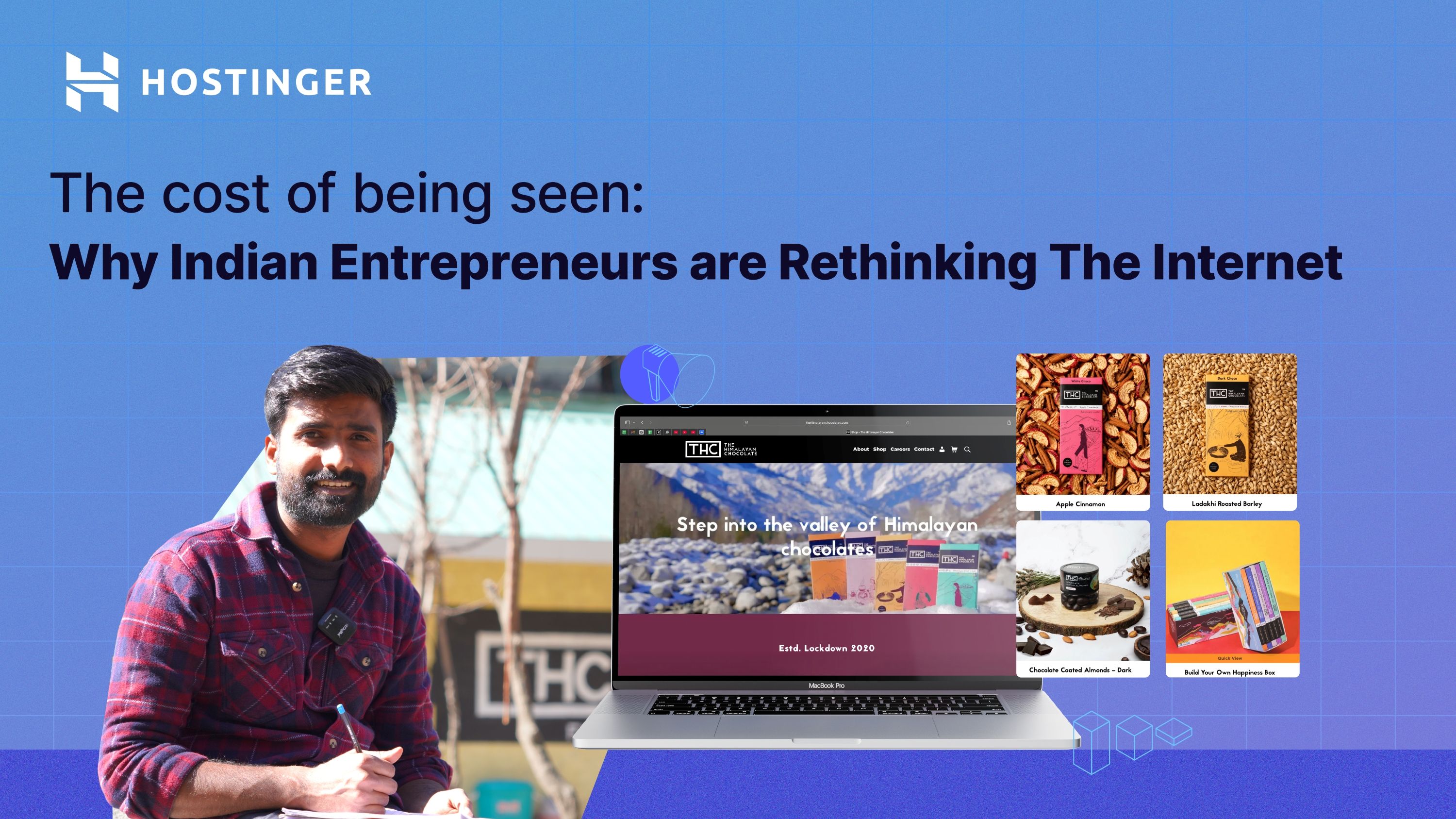
ForRohan Keshewar, a chocolatier based in Manali, this moment arrived when he realized his growth was hit by a “discovery dead-end.” Tourists would buy his handmade bars from The Himalayan Chocolate, fall in love with the product, and head home, only to find they had no way to reach him again. Without a dedicated digital address, his brand was a ghost once the customer scrolled past a post or left the mountains.
Rohan’s solution wasn't to buy more ads, but to stop "renting" his presence. By building a dedicated website and moving it to Hostinger, he transformed a fleeting social media presence into an owned digital storefront. The results were immediate: apart from a pan-India reach, online orders witnessed a sharp surge and a steady monthly revenue of Rs 50,000 to Rs 1 lakh. Today, the business is doubling in revenue year on year — all achieved with zero marketplace listings and zero ad spend.
His experience is becoming less of an exception and more of a template. Organic reach of social media for brand pages in India fell 40-60% between 2025 and 2026. On most social platforms, only 2-6% of followers see any post without paid promotion. Buying back that visibility costs Rs 600-700 per 1,000 impressions. Reaching your own audience can run Rs 50,000 or more per campaign. Across the country, entrepreneurs are arriving at the same conclusion Keshewar reached in Manali: building on a platform you do not own is a foundation that can give way at any time.
Some entrepreneurs are not waiting around. A garment maker in Surat has taken her margins back. A fitness coach in Coimbatore no longer splits revenue with a marketplace. A first-generation startup founder in Lucknow gets found on search engines without spending a rupee on ads. These entrepreneurs have realized that while social media is a great storefront, it is an unreliable foundation.
The cost of renting
The struggle with advertising is only the beginning. When you build on a platform you do not own, you pay a "rent" that goes beyond cash. On marketplaces, combined charges often exceed 40%. This means on a Rs 1,000 product, Rs 400 is gone before returns or discounts.
The risk is also operational. If a social media or messaging business account gets suspended overnight, there is no reliable appeals process. The audience disappears, the communication channel closes, and for many businesses, so does most of the revenue. This vulnerability is driving a massive shift in how the next generation of Indian entrepreneurs think about the internet.
The new face of Indian entrepreneurship
This shift is not just happening in metros. India now has 2-2.5 million active digital creators influencing over $350 billion in consumer spending annually, per a 2025 BCG report. Nearly half of recognized small businesses come from Tier II and Tier III cities. The Hostinger India Sentiment Survey (March 2026) puts a finer point on it: 58% of people planning their first website in India are from rural or Tier II areas, most working alone.
However, the survey surfaces a critical misunderstanding in the market. While 72% of Indians with a website plan to switch providers within 12 months, 47% of respondents still name a social media platform when asked to identify an "online presence".
Nearly half the market has not yet separated owning a website from simply being on a platform. For entrepreneurs who act now, that is the gap. For most, the move to a website was a practical necessity rather than a vague strategy. Some 41% of Indian entrepreneurs who built their first website say the trigger was needing to connect messaging tools, logistics partners, and payment gateways. They moved because they offer a level of business-wide integration and operational control that is simply unattainable when you’re confined to a third-party platform.
The end of the technical barrier
This transition is accelerating because the wall between an idea and a live website has finally crumbled. Two major constraints gave way at once: cost and complexity.
A year ago, a fitness coach or salon owner who needed a booking flow with confirmations would have paid a freelancer Rs 15,000 to Rs 3,00,000 and waited weeks. Today, Hostinger’s AI tool for building websites and web apps, Horizons, generates a usable site from a plain-language description in an afternoon, starting at Rs 609 a month. A lead tracker or order dashboard that once meant a Rs 40,000 job now takes a single day.
This technical ease arrived just as the economics of social media became unsustainable. Search engines now reward owned websites in ways they cannot reward a social profile. With UPI payments now frictionless and direct-to-brand purchasing mainstream, a standalone website carries a level of credibility a social page no longer does. The data bears this out. On Hostinger, 57% of new Indian users go live within a day of signing up, and buyer volume has grown 39% year over year.
The math of independence
When you move from rented land to owned property, the numbers work differently. Retargeted audiences convert 2-3x better than cold traffic. Direct re-engagement over chat and email accounts for 30-50% of repeat revenue among strong Direct-to-Consumer (D2C) brands. This level of precision is simply not possible when a marketplace owns the buyer relationship.
For product businesses, moving to an owned channel where payment gateway fees run 1.5-2% recovers 15-20 percentage points of margin per order. For service businesses, an optimized website generates up to twice the leads of social media and referrals alone. It is the difference between surviving on a platform and owning a brand.
Keshewar’s numbers tell the rest of the story. The site now generates Rs 50,000-Rs 1 lakh a month through organic search and a QR code on the packaging, with zero ad spend.
"Direct-to-customer is the future. You get a lot of control. You can track how orders reach your customers, handle issues directly, and issue refunds easily," says Keshewar, who has purposefully stayed off large ecommerce marketplaces.
Keshewar’s story is becoming the new blueprint for all Indian entrepreneurs. As organic reach continues to tighten and marketplace fees climb, the distinction between "being online" and "owning your presence" will define who scales and who stagnates.
For India’s next million entrepreneurs, the shift to an owned platform is the final step in taking back control of their margins and their audience. The technical barriers have vanished. The only thing left for them to decide is whether they want to keep paying rent or start building their own home.
Original Article
(Disclaimer – This post is auto-fetched from publicly available RSS feeds. Original source: Yourstory. All rights belong to the respective publisher.)