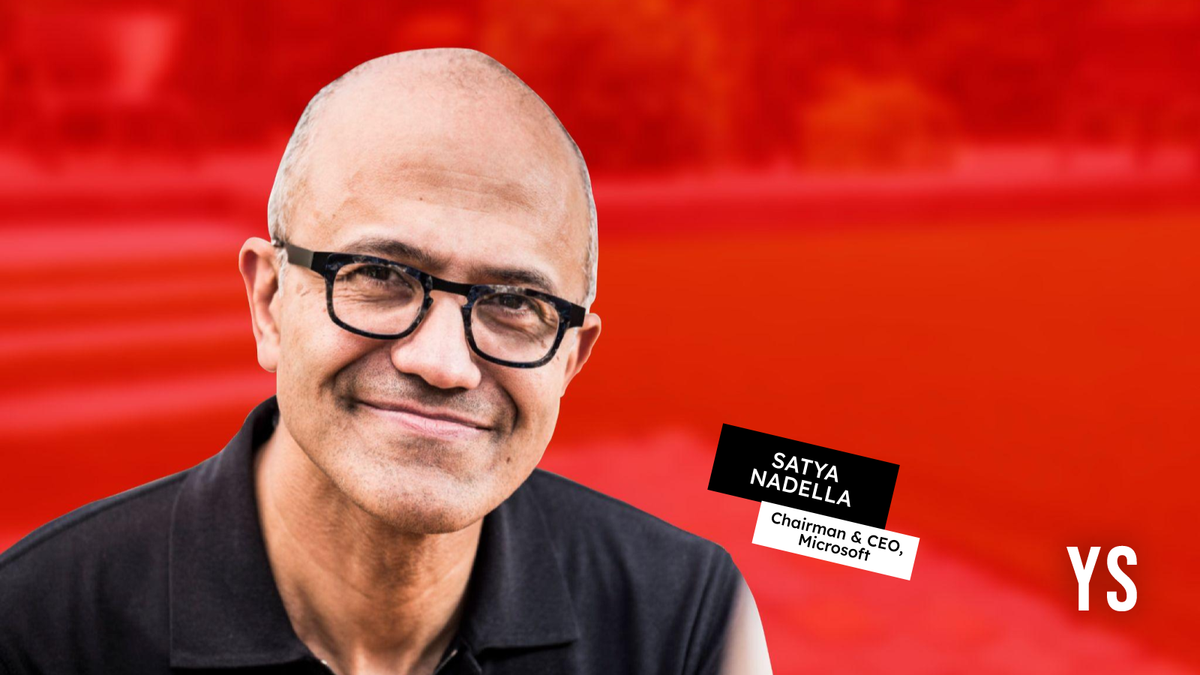
Microsoft posted strong top- and bottom-line growth for the third quarter of its 2026 fiscal year, fuelled by strong AI-driven growth in its cloud segment, even as the company continues to ramp up its capital investments.
The core of this performance lies in the Microsoft Cloud, which clocked $54.5 billion in revenue this quarter, a 29% increase compared to the previous year.
“It was a record third quarter, powered by the continued strength of the Microsoft Cloud,” Microsoft Chairman and CEO Satya Nadella said during the company’s third quarter (Q3) earnings call.
The software giant’s total revenue increased 18% year-on-year to $82.9 billion, while net profit grew to $31.8 billion, up 23% compared to the year-ago period.
Perhaps one of the most interesting figures is the AI annual revenue run rate which has now surpassed $37 billion, rising 123% over the previous year. A run rate is a financial method of predicting future performance based on current data.
When looking at segment revenues, the business remains balanced across three primary pillars. The productivity and business processes segment, which includes Office and LinkedIn, generated $35 billion in revenue, an increase of 17% YoY. This growth was driven by the Microsoft 365 Commercial cloud which grew by 19%.
The intelligent cloud segment, which houses the Azure platform, recorded $34.7 billion in revenue, a 30% increase over the previous year. Azure and other cloud services grew by 40%.
Executive Vice President and Chief Financial Officer Amy Hood, explained that this performance reflected strong execution and growing demand for the Microsoft Cloud.
The third segment, more personal computing, saw a slight decline of 1% with revenue at $13.2 billion, due to lower hardware sales in the Xbox and Surface lines. Xbox hardware revenue plummeted by 33% as console sales slowed.
However, search advertising revenue, which includes the AI-powered Bing and Edge browser, grew by 12%. Nadella said that Bing monthly active users reached 1 billion for the first time this quarter.
Focus on infra and silicon
To maintain its business momentum, Microsoft is engaging in an infrastructure build-out of unprecedented proportions. The company added one gigawatt of datacenter capacity this quarter alone and is on track to double its total global footprint within just two years.
Capital expenditure (capex) for the quarter was $31.9 billion. Looking ahead, Hood provided a massive projection, noting that for calendar year 2026 the company expects to invest roughly $190 billion in capex.
Hood said that roughly two thirds of the capex was for short-lived assets, primarily GPUs and CPUs. The remaining third of the spend is dedicated to long-lived assets like land and buildings which the company expects to support revenue generation for the next 15 years.
Microsoft’s big tech peers Meta, Alphabet, and Amazon have also sharply increased capital spending to expand server and data centre capacity as AI-driven growth lifts computing demand, despite concerns about a potential AI bubble, with their combined capex expected to exceed $650 billion in fiscal 2026.
A major area of focus is the company’s move into custom silicon to reduce its dependence on external chip providers.
Microsoft is now deploying its Maia 200 AI accelerator, which according to Nadella, offers a 30% improvement in tokens per dollar, compared to other chips in its fleet. A token in AI terms is a basic unit of text that a model processes.
The company is also working to develop in-house AI models alongside partner offerings.
Operational layers
While the company is spending heavily on chips and datacenters, it is simultaneously tightening its belt regarding personnel. Total headcount has declined year-over-year.
The company recently announced a voluntary retirement programme, which will cost approximately $900 million in one-time charges. Hood noted that total company headcount declined year-over-year as they focus on building high-performing teams.
Despite the strong growth, there is a supply-demand imbalance. Microsoft currently has more demand for AI services than it has the capacity to provide. Hood warned that the company expects to remain capacity constrained at least through 2026.
Additionally, the cost of components is rising. The company expects to pay an additional $25 billion (as part of the $190 billion) in 2026 solely due to higher pricing for the parts needed to build servers and datacenters.
The company also faces significant legal and regulatory hurdles. There is a long-standing dispute with the IRS which is seeking an additional tax payment of $28.9 billion plus penalties. And, the company is dealing with General Data Protection Regulation (GDPR) compliance issues in Europe, specifically regarding LinkedIn’s advertising practices.
Outlook
The strategic outlook for Microsoft remains focused on creating a flywheel effect where AI usage generates more data which in turn makes the AI agents more effective.
Nadella said that the amount of data in the company’s Fabric OneLake system increased nearly four times over the last year. He noted that the physics of cybersecurity has changed as AI compresses the window between vulnerability and exploitation. This shows another area of focus where AI is being used as a defensive shield against increasingly sophisticated digital threats.
Hood said revenue in the next quarter is expected at $86.7–$87.8 billion, implying 13%–15% growth, with stronger commercial performance partly offset by consumer softness.
Excluding the impact of OpenAI, other income and expense is projected at roughly negative $100 million, as interest income will be outweighed by interest expense. Recently, Microsoft and OpenAI announced a new arrangement the gives the AI major freedom to be on multiple cloud platforms and also simplifies the financial ties between the two companies.
Capital expenditure is expected to exceed $40 billion, as part of continued capacity expansion, including about $5 billion from higher component costs and variability from finance leases, Hood noted.
Original Article
(Disclaimer – This post is auto-fetched from publicly available RSS feeds. Original source: Yourstory. All rights belong to the respective publisher.)