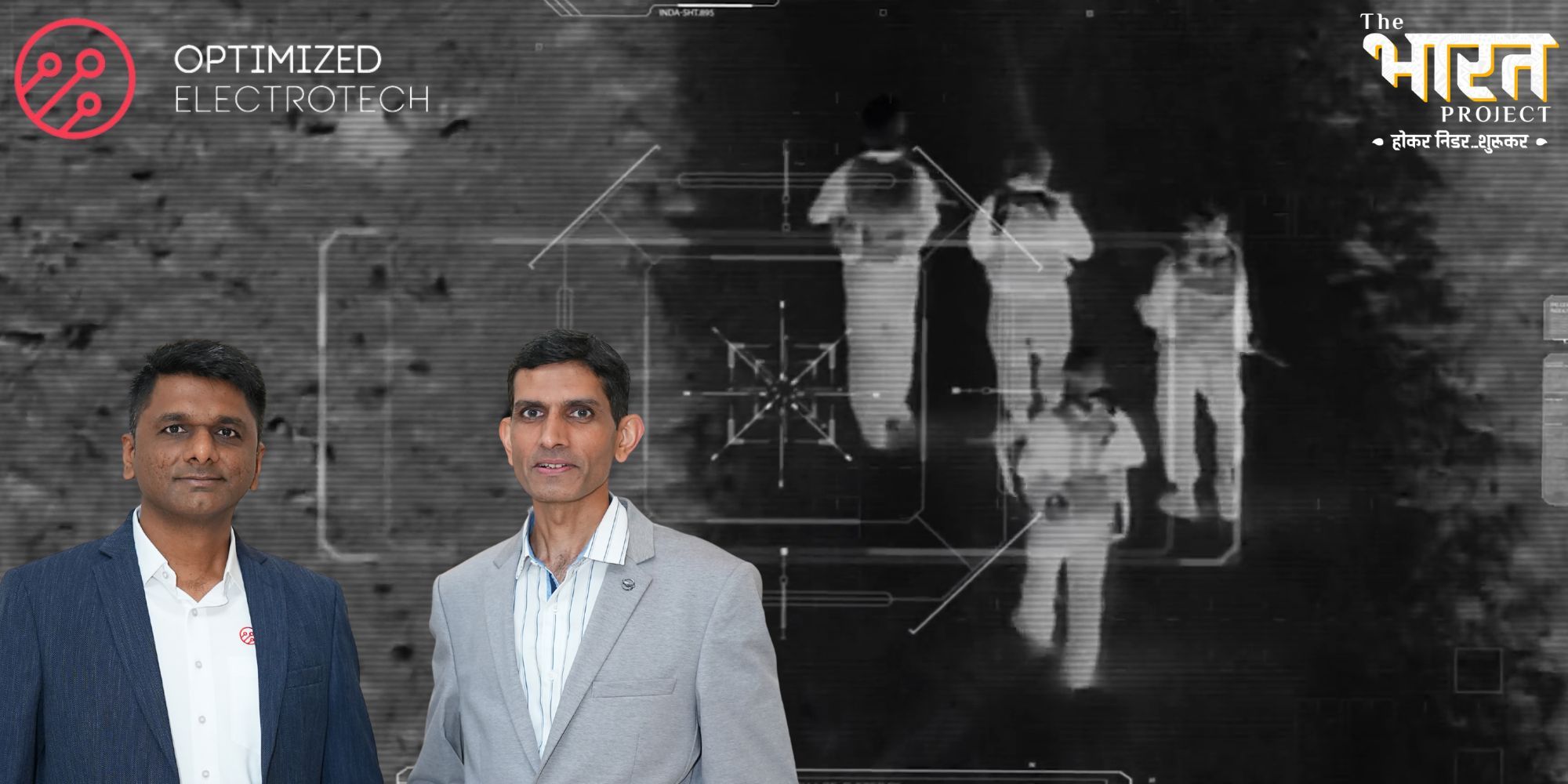
India has built strong capabilities across multiple strategic technologies, including launch vehicles, space missions, and defence systems. However, in the domain of electro-optics—particularly in advanced imaging, sensing, detection, and interpretation—we have historically relied on external sources, highlighting a critical gap in indigenous capability. Optimized Electrotech was founded in 2017 to address this gap.
Sandeep Shah has worked on detector characterisation systems for ISRO for over two decades, contributing to programmes such as Cartosat, Chandrayaan, and Mangalyaan, signal monitoring facility for IRNSS and other mission critical systems. Over time, a pattern became clear: India had strong system-level capability, but limited ownership of electro-optical technologies for Defence and Homeland Security.
Policy changes created the opening. The Defence Acquisition Procedure (DAP 2016), alongside the broader Aatmanirbhar Bharat push, made it viable for startups to build for defence with indigenous technology.
Sandeep partnered with Dharin Shah, who brings over two decades of experience in semiconductors and system design, including work at Texas Instruments and multiple patents, to build a company focused on owning the entire imaging stack.
From imaging to decision
Optimized Electrotech builds electro-optical systems designed to deliver real-time awareness in mission-critical environments. These systems combine sensors, precision optics, embedded electronics, and AI into a single platform that can detect and classify objects directly at the Edge of the device.
The shift is in how these systems are used. Traditional surveillance depends on continuous human monitoring. The company’s approach moves this to a “man-on-the-loop” model, where detection and classification are automated, and human intervention is required only for validation.
That difference affects outcomes. Detection happens earlier. Response times reduce. Operators spend less time scanning feeds and more time acting on confirmed inputs.
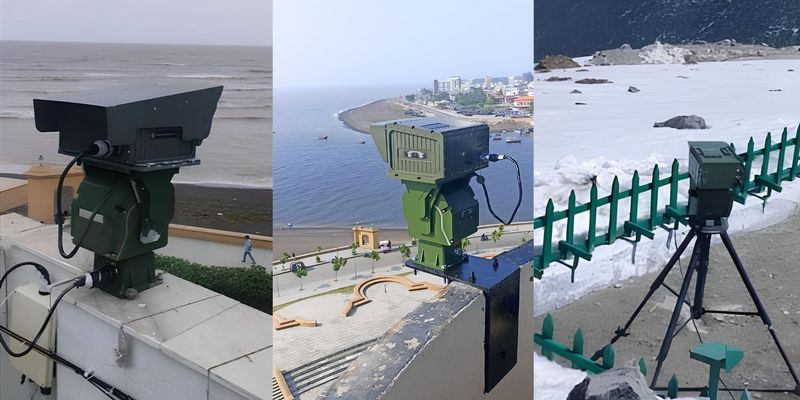
The company builds across the full stack of Electro-Optics, optics, opto-mechanics, electronics, software, and AI models, rather than assembling imported subsystems. This control allows systems to be configured for different operational environments, from high-altitude regions to coastal zones, where standard imported solutions often need adaptation.
Its work is backed by a growing intellectual property base, with 4 patents in electro-optical and imaging technologies. The company has also received a technology transfer from ISRO, strengthening its access to space-grade capabilities for defence and Homeland Security applications.
The inflection point
The first few years were focused on building capability. The work involved developing the core imaging stack and validating performance across different use cases. This phase was capital-intensive and time-consuming, but it set the foundation for deployment.
Recognition came through multiple wins under the Ministry of Defence’s iDEX programme, including the DISC Challenge, Open Challenge, and ADITI Challenge. The company is the only startup in India to have secured all three across the defence and space domains.
Deployments followed. The company’s systems are used by organisations including the Indian Army, Indian Navy, ISRO, Gujarat Police, Ministry of Electronics and Information Technology (MeitY), Bharat Dynamics Limited, Bharat Electronics Limited, India Optel Limited, and L&T Defence.
In one example, its smart weapon sight WolfSight, used on the 30 mm Automatic Grenade Launcher, reduced training time for achieving a first-salvo hit from approximately 1,500 man-hours to under 40 minutes.
A controlled market, defined by access
The electro-optical systems market has long been dominated by global players like Safran, Teledyne FLIR, L3Harris, and Thales, while India has largely focused on assembling imported tech.
Optimized Electrotech is taking a different route by building and owning its technology end-to-end. It operates across defence, space, and homeland security use cases like border surveillance, coastal monitoring, weapon sights, loitering munition payloads, and space imaging.
The company works with defence forces, government bodies, PSUs, and private OEMs, offering both full systems and subsystems. Its revenue comes from supplying and maintaining these systems, including ongoing AI and data updates, so they adapt to changing needs.
Revenue comes from supplying and maintaining systems, with continued AI updates and lifecycle support. The company has raised over Rs 100 crore from investors and about Rs 30 crore in government grants, with a new round in progress.
A key challenge is restricted access to critical components due to stringent export controls of other nations. Next, the company is gearing up for global expansion and developing its own satellite systems, with plans for a future Earth observation constellation. The core idea stays the same: India should build the systems that see.
Original Article
(Disclaimer – This post is auto-fetched from publicly available RSS feeds. Original source: Yourstory. All rights belong to the respective publisher.)