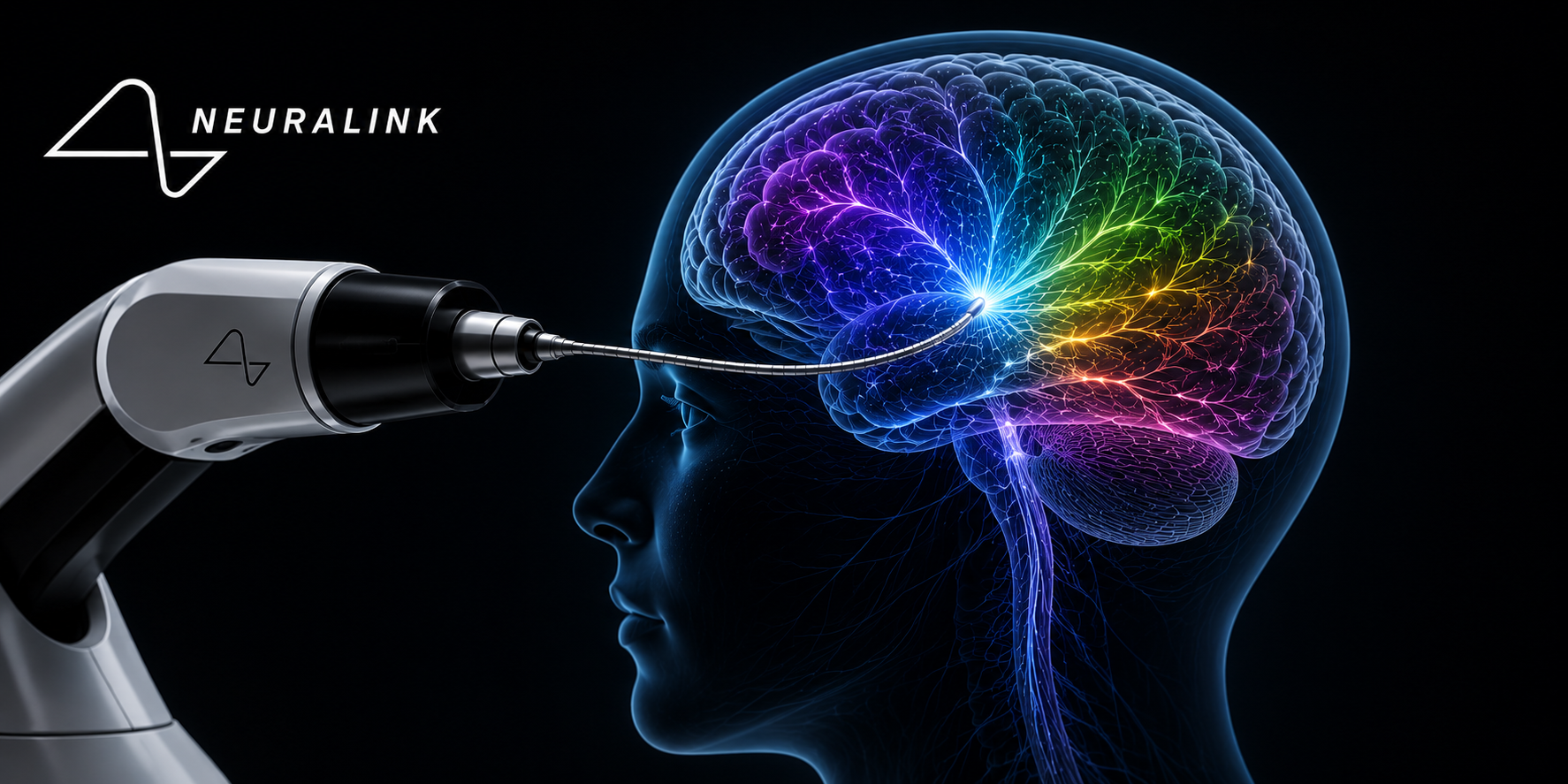
Elon Musk has shared a new update on Neuralink’s next-generation surgical robot, saying the company is building a system capable of reaching any region of the brain.
The announcement, highlighted on 7 May 2026, signals a broader ambition for Neuralink’s brain-computer interface technology beyond movement-related conditions.
Neuralink expands its surgical ambitions
According to Musk’s update, the company is developing a surgical robot designed to access any part of the brain with high precision. Neuralink says the long-term goal is to create a “generalised neural interface” that could eventually help address a wide range of neurological conditions originating in the brain.
The robot is designed to implant ultrathin electrode threads directly into brain tissue. These threads are thinner than a human hair and are intended to capture and transmit electrical signals from neurons.
How the surgical robot works
Neuralink describes the robot as a highly precise automated system that behaves almost like a microscopic sewing machine. The machine inserts flexible neural threads into carefully selected brain regions while attempting to avoid blood vessels and sensitive tissue.
According to reports, the brain naturally shifts slightly during breathing and heartbeat, which makes precision surgery extremely difficult. Neuralink says the robot uses advanced cameras and sensors to navigate these movements and minimise bleeding or scarring during implantation.
Why reaching the whole brain matters
Earlier Neuralink systems primarily focused on areas linked to motor control, helping users interact with computers through thought. The newer robot could potentially expand Neuralink’s scope to many more neurological conditions by accessing additional regions of the brain.
Reports noted that this broader access could eventually support research into conditions such as Parkinson’s disease, epilepsy, paralysis, and sensory disorders. Neuralink has also previously discussed projects like “Blindsight,” aimed at restoring some degree of vision for blind patients.
Brain-computer interfaces enter a new phase
The update reflects how brain-computer interface companies are shifting from experimental implants toward scalable medical systems. Neuralink has repeatedly said automation is essential if brain implants are ever to move beyond small clinical trials into broader healthcare deployment.
Industry observers say robotic automation could reduce surgical complexity, improve consistency, and potentially lower long-term procedure costs. However, the field still faces major challenges around safety, regulation, long-term durability, and ethical oversight.
Competition in neurotechnology is accelerating
Neuralink remains one of the highest-profile companies in the brain-interface sector, though competitors are advancing rapidly. Several companies and research groups globally are also developing next-generation neural implants and less invasive interfaces.
The broader race is increasingly centred on how safely companies can connect brains with computers while scaling the technology for real-world medical use. Analysts say surgical robotics may become one of the defining competitive advantages in this space over the next decade.
 1492 people loved this story
Mind control: All you need to know about Elon Musk’s Neuralink implanting brain chip
What comes next for Neuralink
Neuralink has not yet provided a commercial timeline for the new robot, but Musk has repeatedly stated that the company aims to automate brain implant procedures on a large scale in the coming years.
For now, the latest update suggests Neuralink is moving beyond narrow proof-of-concept demonstrations toward a broader platform strategy. If the company succeeds in safely accessing multiple brain regions with robotic precision, it could significantly expand the future applications of brain-computer interfaces across medicine and human-computer interaction.
Original Article
(Disclaimer – This post is auto-fetched from publicly available RSS feeds. Original source: Yourstory. All rights belong to the respective publisher.)