Urban Company Business Model for Home Services and Products
How services, products and InstaHelp fit together at Urban Company

Key Takeaways
- FY26 revenue from operations rose 35.9% to ₹1,555.5 crore.
- Services brought in ₹1,060 crore of the FY26 revenue.
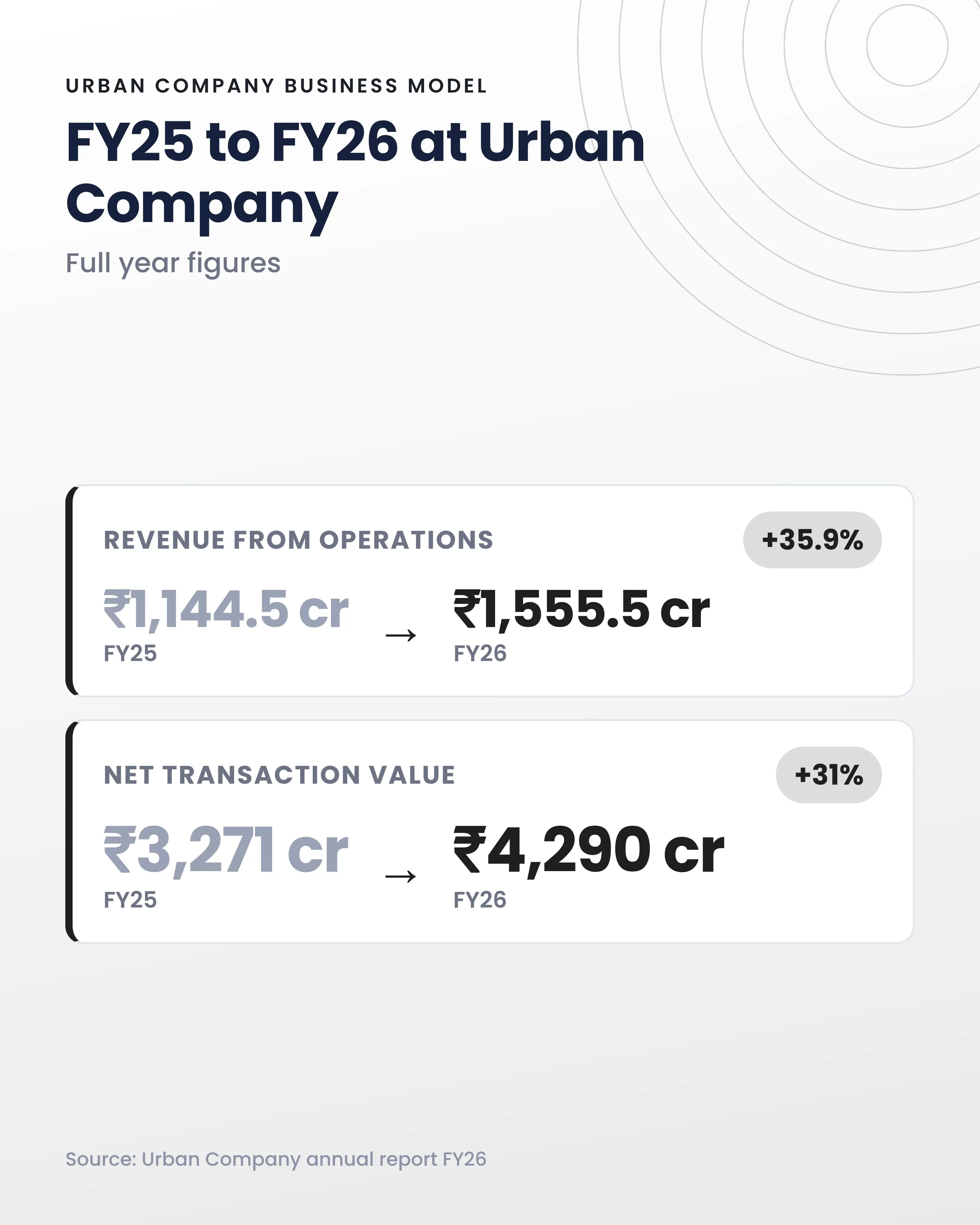
- FY26 net transaction value was ₹4,290 crore from 8.4 million users.
- Q2 FY27 revenue from operations was ₹537 crore, up 41% year on year.
Table of Contents 12 sections
- Urban Company at a glance
- What Urban Company does
- How Urban Company makes money
- Urban Company revenue model across four segments
- Urban Company business model canvas
- InstaHelp and the core business
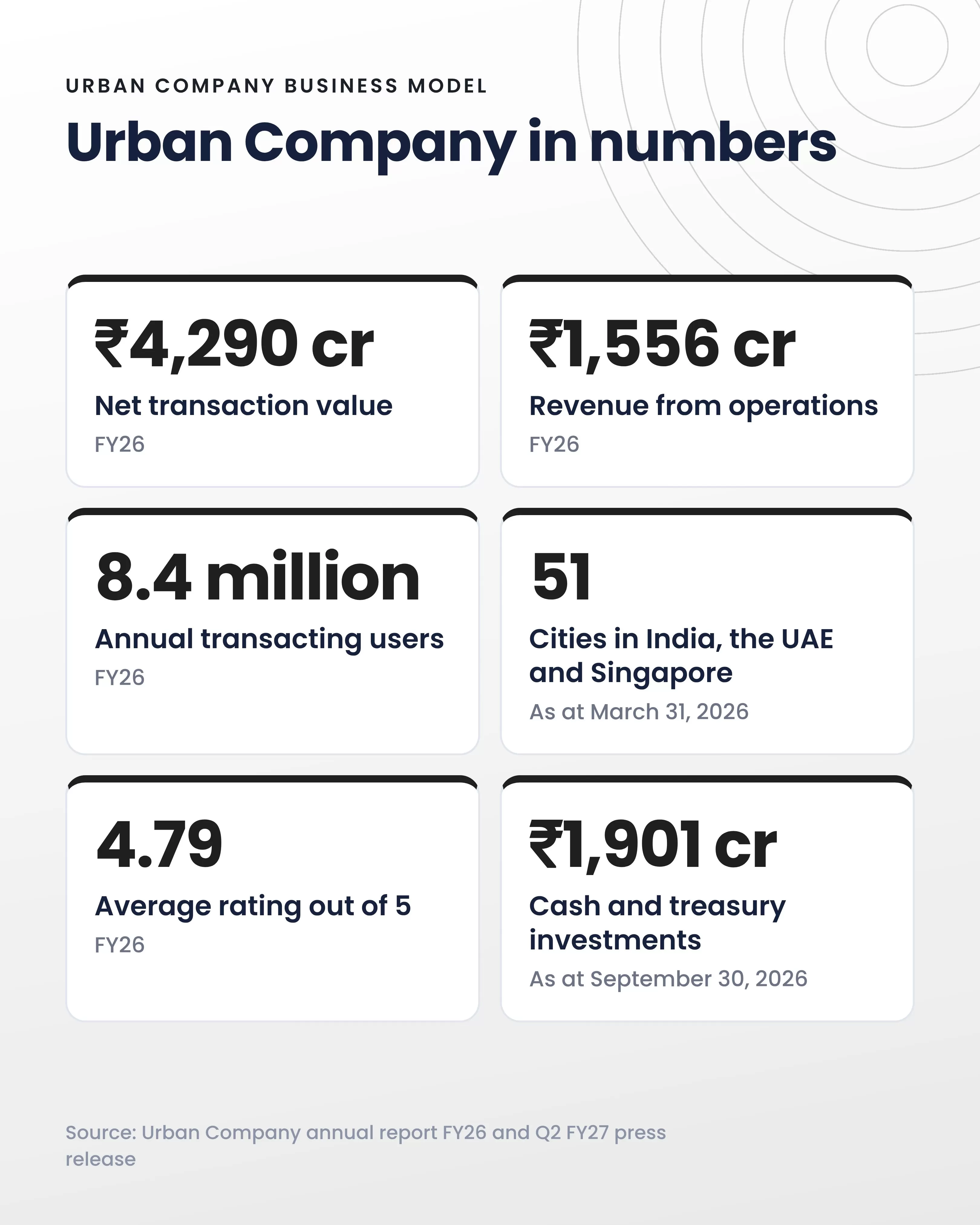
- Urban Company in numbers
- Urban Company's journey so far
- Who Urban Company competes with
- Challenges Urban Company faces
- Conclusion on the Urban Company business model
- FAQs
The Urban Company business model runs an app where households book home and beauty services from trained independent professionals. It also sells products to those professionals and sells its own Native devices. In FY26 its revenue from operations was ₹1,555.5 crore, up 35.9% from ₹1,144.5 crore in FY25.
The company recorded a net loss after tax of ₹234.81 crore in FY26. In FY25 it had reported a profit of ₹239.8 crore, which included a one-time deferred tax credit of ₹211.2 crore. In Q2 FY27 its revenue from operations was ₹537 crore, up 41% year on year.
Urban Company at a glance
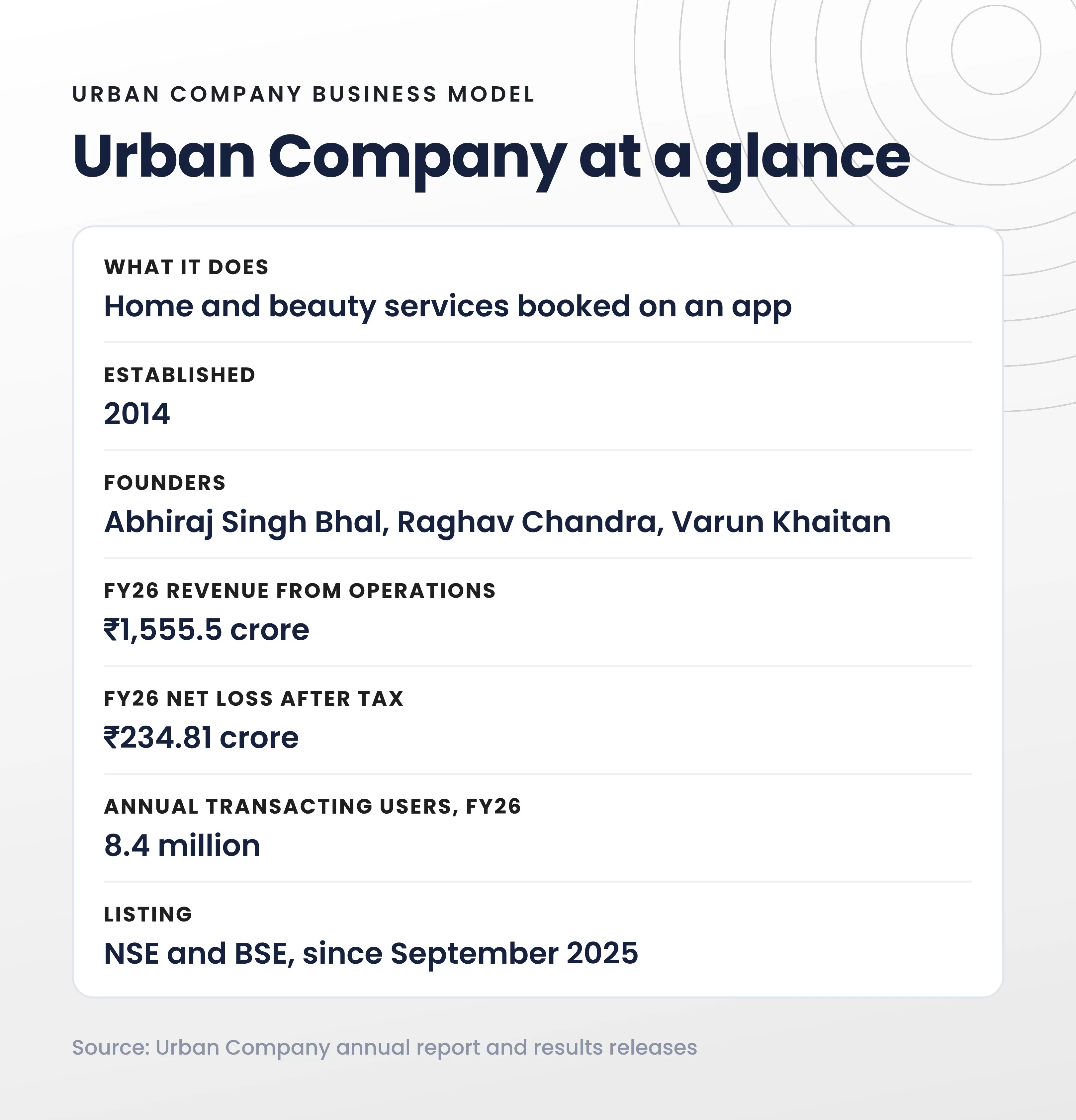
| Item | Detail |
|---|---|
| What it does | Home and beauty services booked on an app, plus Native water purifiers and door locks |
| Established | 2014 |
| Founders | Abhiraj Singh Bhal, Raghav Chandra and Varun Khaitan |
| Corporate office | Gurugram |
| FY26 revenue from operations | ₹1,555.5 crore |
| FY26 net loss after tax | ₹234.81 crore |
| FY26 net transaction value | ₹4,290 crore |
| Annual transacting users, FY26 | 8.4 million |
| Cash and treasury investments | ₹1,901 crore at September 30, 2026 |
| Listing | NSE (URBANCO) and BSE since September 17, 2025 |
What Urban Company does
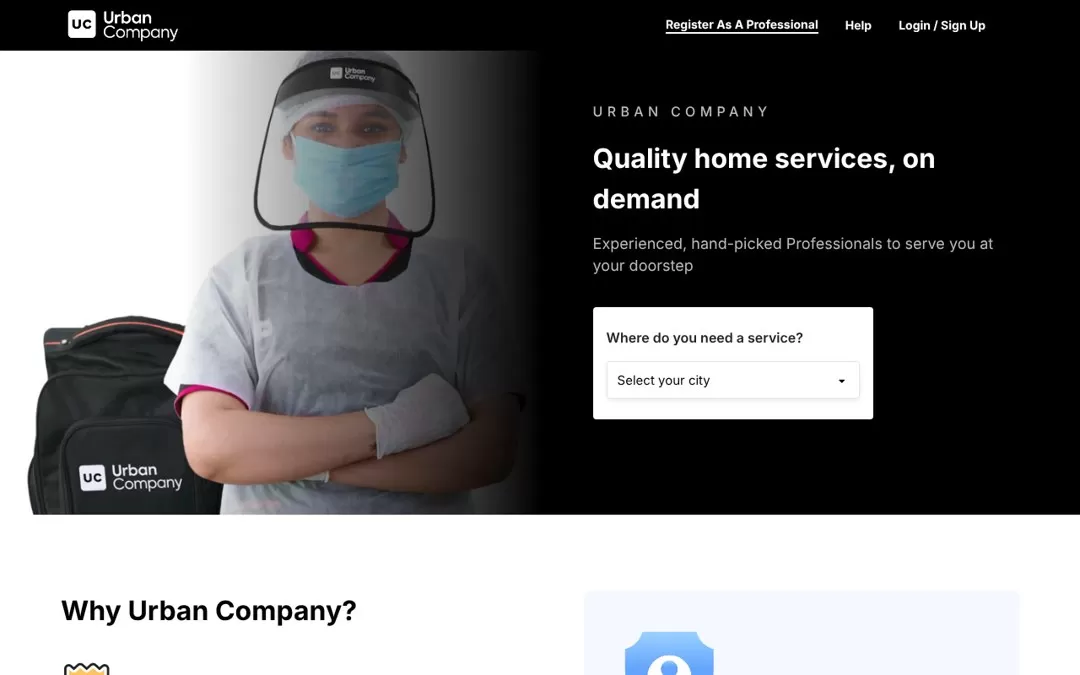
Urban Company, formerly UrbanClap, connects customers with independent service professionals for home and beauty needs. The services include cleaning, pest control, electrician and plumbing work, carpentry, appliance repair, painting, and salon and spa services. The professionals are background verified and receive training, tools, consumables and insurance support from the company.
The platform operated in 51 cities in India, the UAE and Singapore at March 31, 2026, with 59,473 monthly active service partners on average in FY26 and an average rating of 4.79 out of 5. Its customers numbered 8.4 million annual transacting users in FY26.
How Urban Company makes money
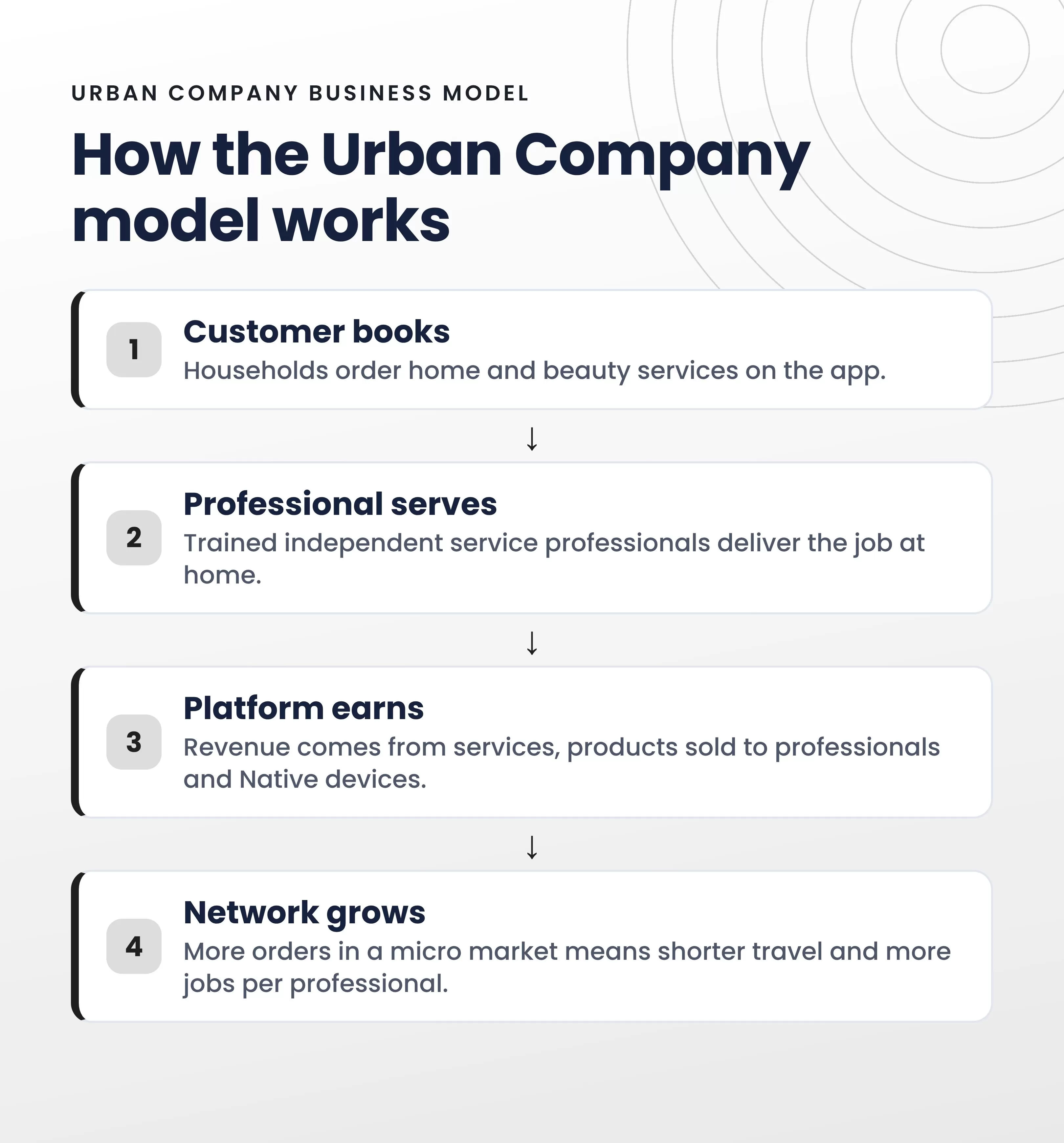
The Urban Company revenue model has three streams. It earns revenue from platform services provided to consumers, from selling products to service professionals for use during a job, and from selling Native products to consumers. Net transaction value (NTV) is the amount consumers pay for services and Native products, gross of taxes and net of discounts and cancellations or returns. Revenue from operations is a different, smaller figure.
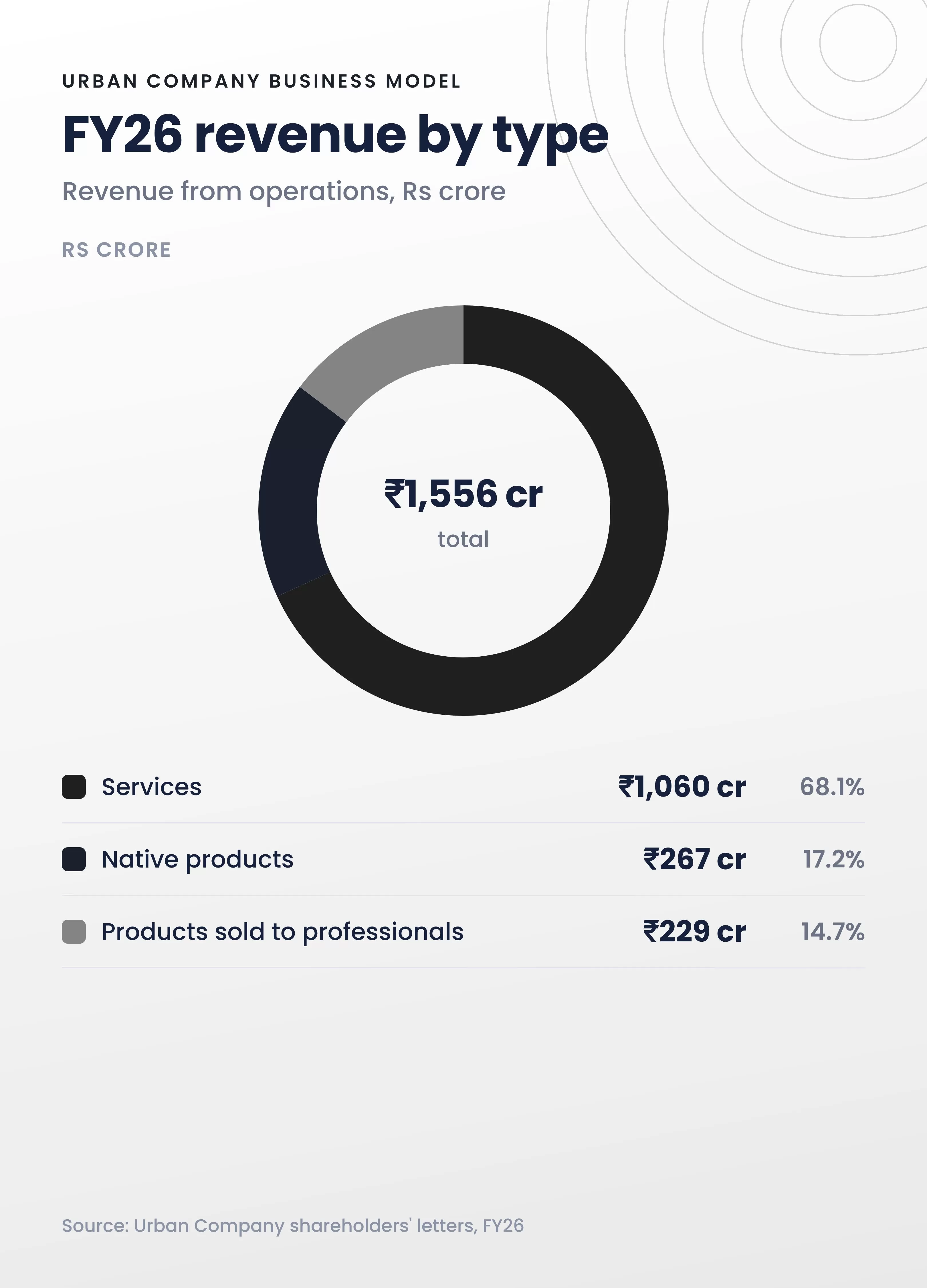
In FY26 services brought in ₹1,060 crore, Native products ₹267 crore and products sold to professionals ₹229 crore. Services were about 68% of the ₹1,556 crore total. A year earlier the three streams were ₹840 crore, ₹116 crore and ₹188 crore.
Urban Company revenue model across four segments
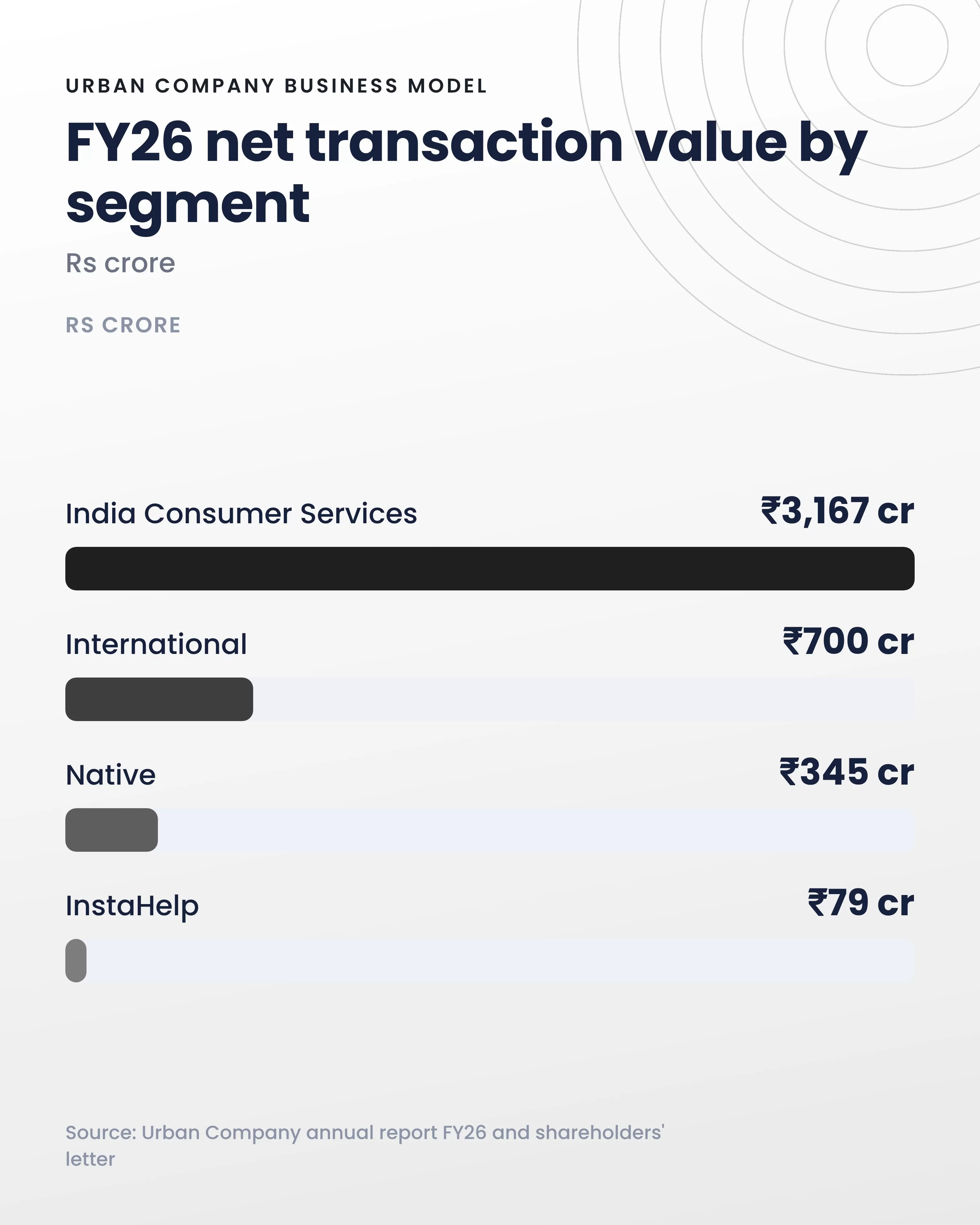
The company reports four segments. India Consumer Services is the largest, with ₹3,167 crore of NTV and ₹1,086.6 crore of revenue in FY26. International (the UAE and Singapore) had ₹700 crore of NTV and ₹184.6 crore of revenue. Native had ₹345 crore of NTV and ₹266.9 crore of revenue. InstaHelp, the home help service, had ₹79 crore of NTV and ₹17.4 crore of revenue.
Saudi Arabia is run as a 50-50 joint venture with SMASCO from January 1, 2025, so only the share of its loss appears in the consolidated results.
Urban Company business model canvas
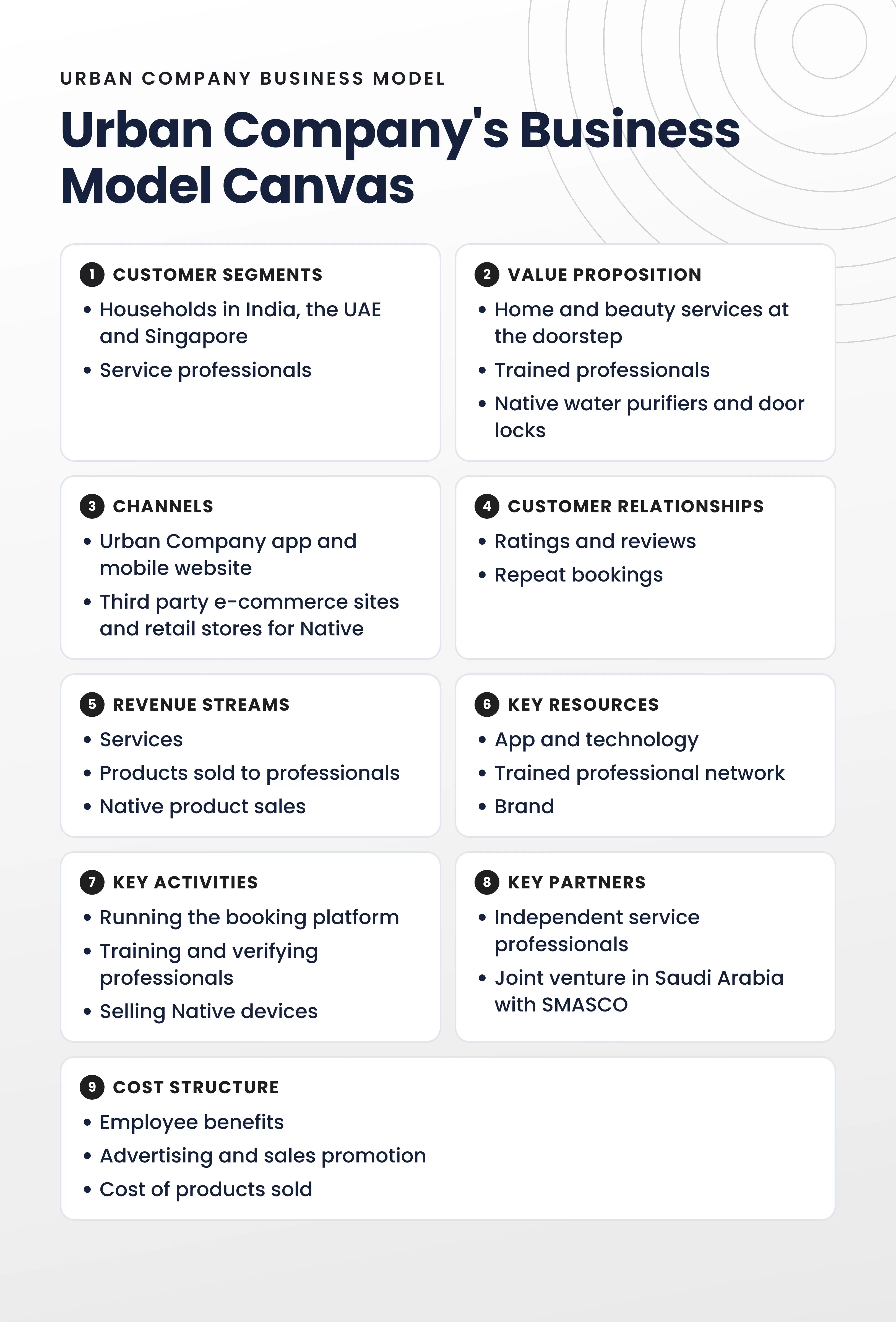
The canvas shows households and service professionals as the two groups the platform serves. The app and mobile website are the main channels, while Native devices are also sold on third party e-commerce sites and in retail stores. Employee benefits, advertisement expenses and the cost of products sold are among the costs the company reports.
InstaHelp and the core business
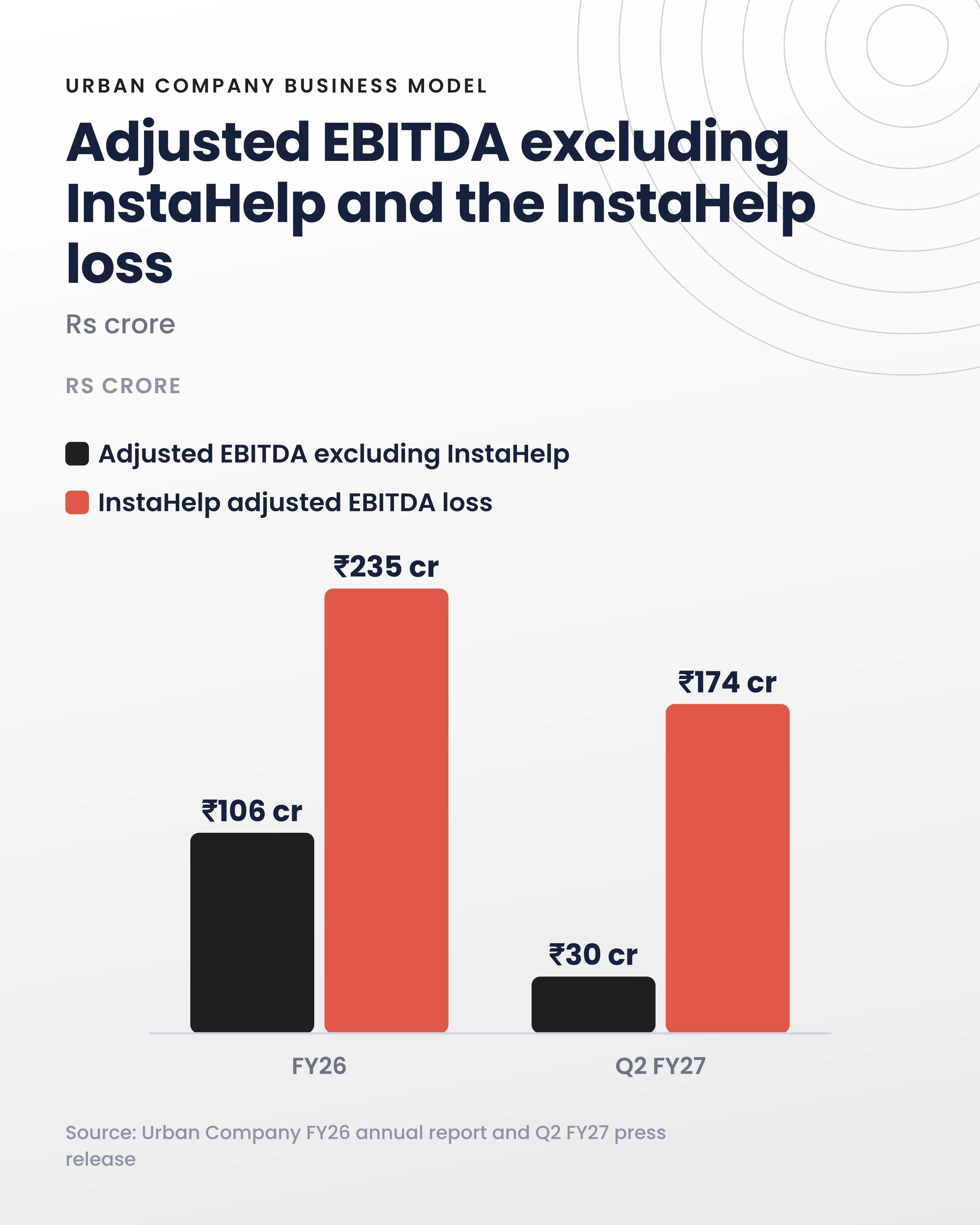
The company reports results with and without InstaHelp. In FY26 adjusted EBITDA excluding InstaHelp was ₹106 crore, while InstaHelp had an adjusted EBITDA loss of ₹234.8 crore, which gave a consolidated adjusted EBITDA loss of ₹129 crore. InstaHelp started from near zero at the start of FY26 and handled about 2.7 million orders in Q4 FY26.
In Q2 FY27 adjusted EBITDA excluding InstaHelp was ₹30 crore, and the InstaHelp investment was ₹174 crore, for a consolidated adjusted EBITDA loss of ₹144 crore. InstaHelp fulfilled 6.2 million orders in the quarter. In its Q4 FY26 letter the company said InstaHelp losses would stay elevated in coming quarters.
Urban Company in numbers
Annual transacting users reached nearly 10 million in Q2 FY27, when the platform delivered 15.1 million orders, up 103% year on year.
Urban Company's journey so far
| When | What happened |
|---|---|
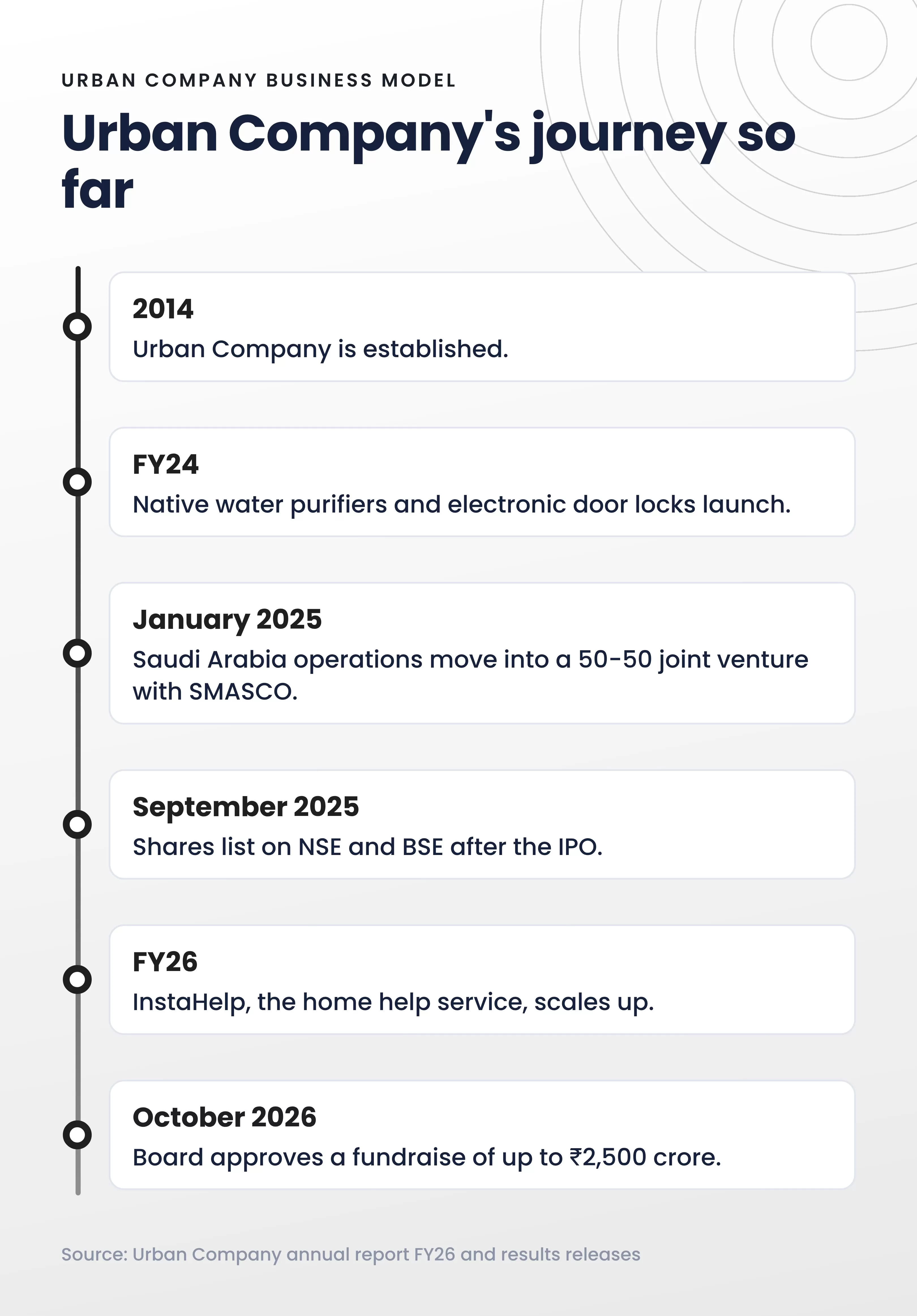
| 2014 | Urban Company is established |
| FY24 | Native water purifiers and electronic door locks launch |
| January 2025 | Saudi Arabia operations move into a 50-50 joint venture with SMASCO |
| September 2025 | IPO bidding from September 10 to 12, and listing on NSE and BSE on September 17 |
| FY26 | InstaHelp scales up from near zero |
| October 2026 | Board approves a fundraise of up to ₹2,500 crore, subject to shareholder approval |
Who Urban Company competes with
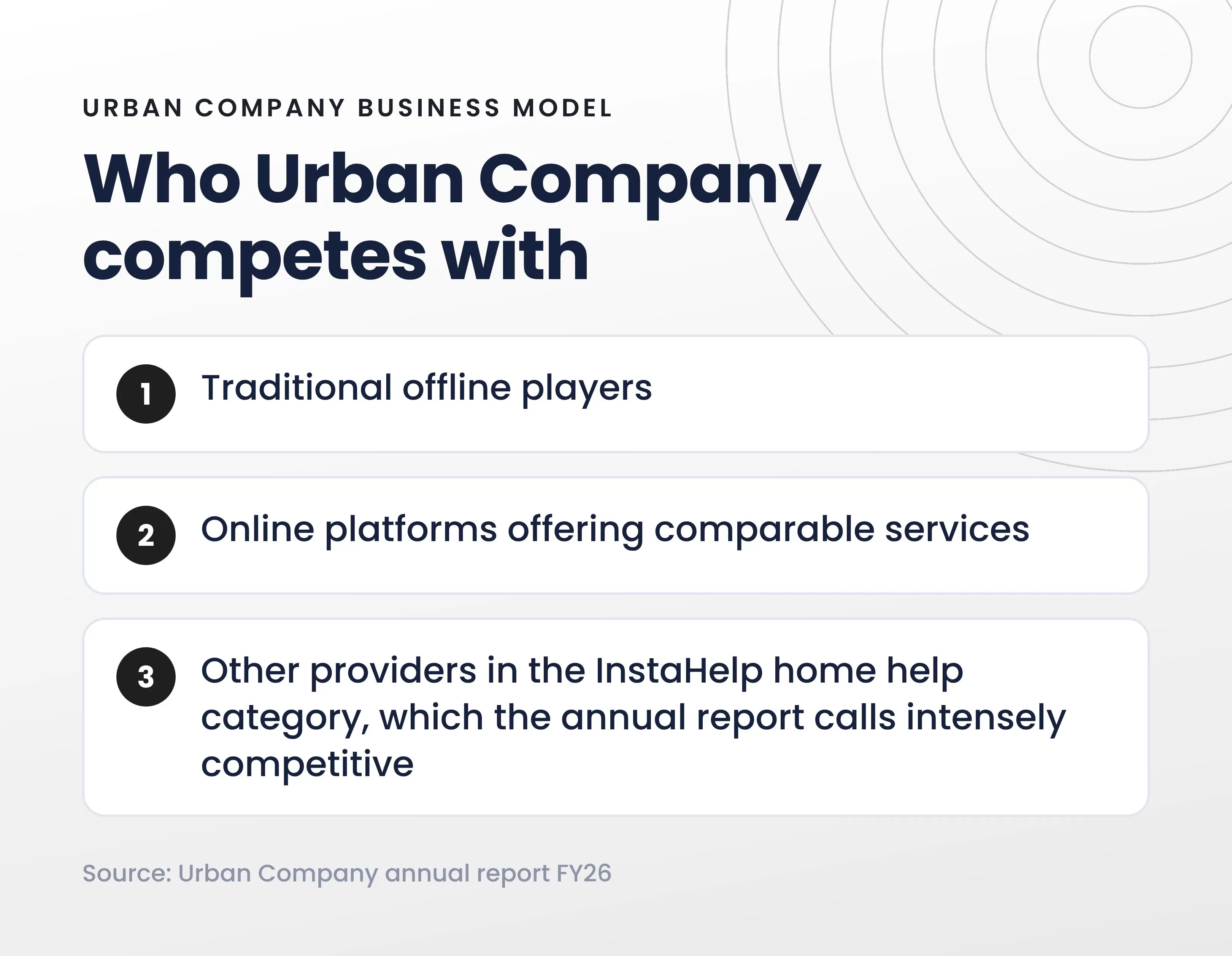
The annual report names traditional offline players and online platforms offering comparable services as competition. It also describes intense competition in the InstaHelp category.
Challenges Urban Company faces
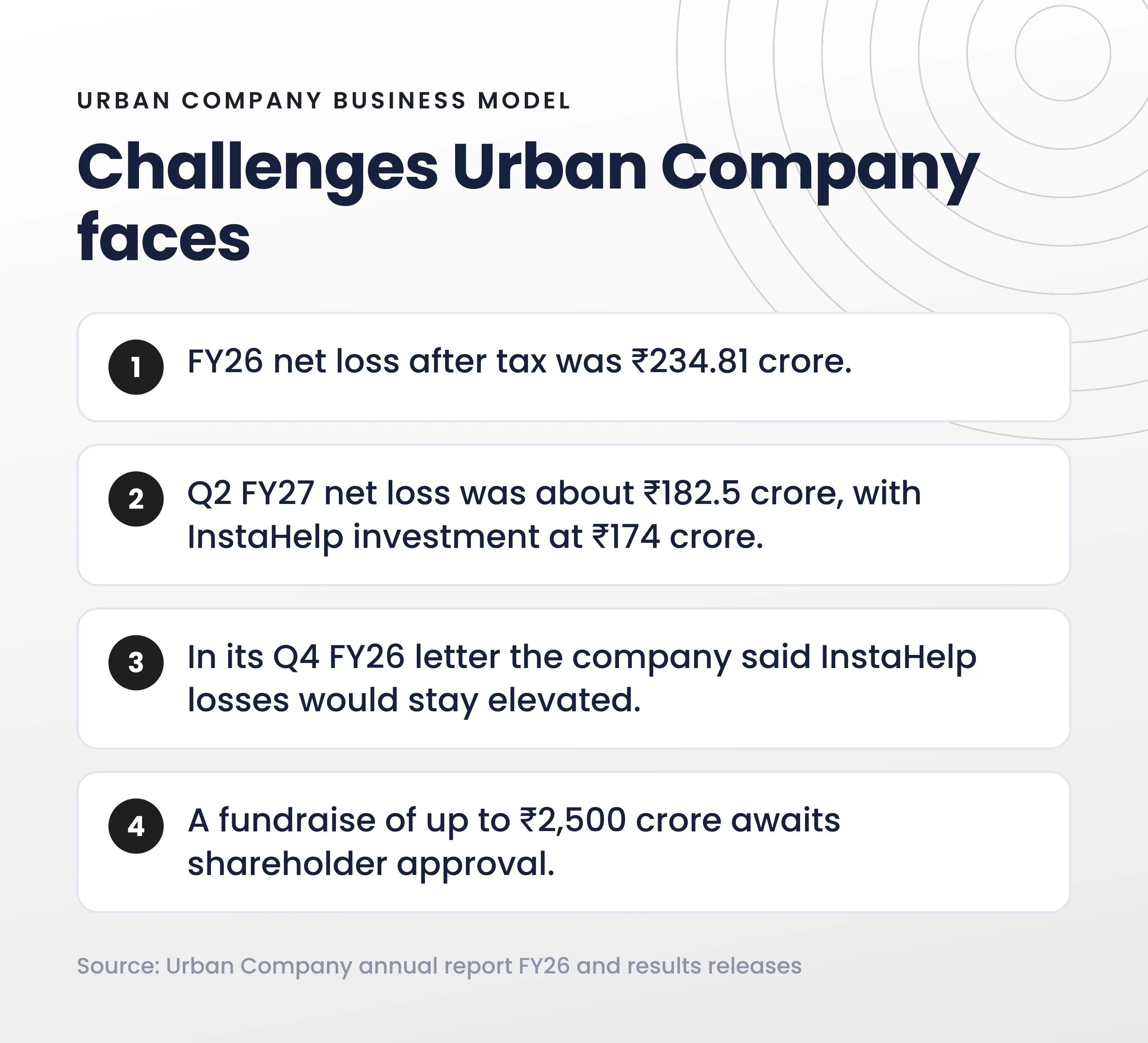
The company reported a net loss after tax of ₹234.81 crore in FY26 and about ₹182.5 crore in Q2 FY27. Its consolidated adjusted EBITDA was a loss of ₹144 crore in Q2 FY27, with ₹174 crore invested in InstaHelp. It has said it targets consolidated adjusted EBITDA breakeven by Q3 FY28.
On October 16, 2026 the board approved a fundraise of up to ₹2,500 crore, which needs shareholder approval. The company closed Q2 FY27 with ₹1,901 crore in cash and treasury investments.
Conclusion on the Urban Company business model
Urban Company runs an app where households book home and beauty services from trained independent professionals in India, the UAE and Singapore. Its revenue comes from services, from products sold to professionals and from Native devices.
FY26 revenue from operations was ₹1,555.5 crore, net transaction value was ₹4,290 crore and the net loss after tax was ₹234.81 crore. In Q2 FY27 revenue from operations was ₹537 crore.