The Ola Business Model of Electric Scooters, Bikes and Cells
How Ola Electric makes and sells electric two-wheelers and cells.

Key Takeaways
- FY26 revenue from operations was ₹2,253 crore, against ₹4,514 crore in FY25.
- Its FY26 net loss was ₹1,833 crore, against ₹2,276 crore in FY25.
- It delivered 173,794 vehicles in FY26 and 39,192 in Q1 FY27.
- Q1 FY27 revenue was ₹455 crore on 39,192 vehicles delivered.
Table of Contents 12 sections
- Ola Electric at a glance
- What Ola Electric does
- How Ola Electric makes money in the Ola business model
- Ola Electric revenue over recent quarters
- Ola Electric revenue model and the Business Model Canvas
- Ola Electric revenue and net loss over two years
- Key operating numbers
- Ola Electric's journey so far
- Who Ola Electric competes with
- Cash flow, volumes and funding at Ola Electric
- Conclusion on the Ola business model
- FAQs
The Ola business model, in the form of Ola Electric Mobility Limited, is built on designing and making electric scooters and motorcycles and selling them directly to customers, with its own battery cells made at a Gigafactory. Ola Electric reported revenue from operations of ₹2,253 crore and a net loss of ₹1,833 crore for FY26, the year ended 31 March 2026.
The latest quarter reported is Q1 FY27 (April to June 2026), with revenue from operations of ₹455 crore on 39,192 vehicles delivered. This post covers the listed electric vehicle company, Ola Electric Mobility Limited, founded by Bhavish Aggarwal.
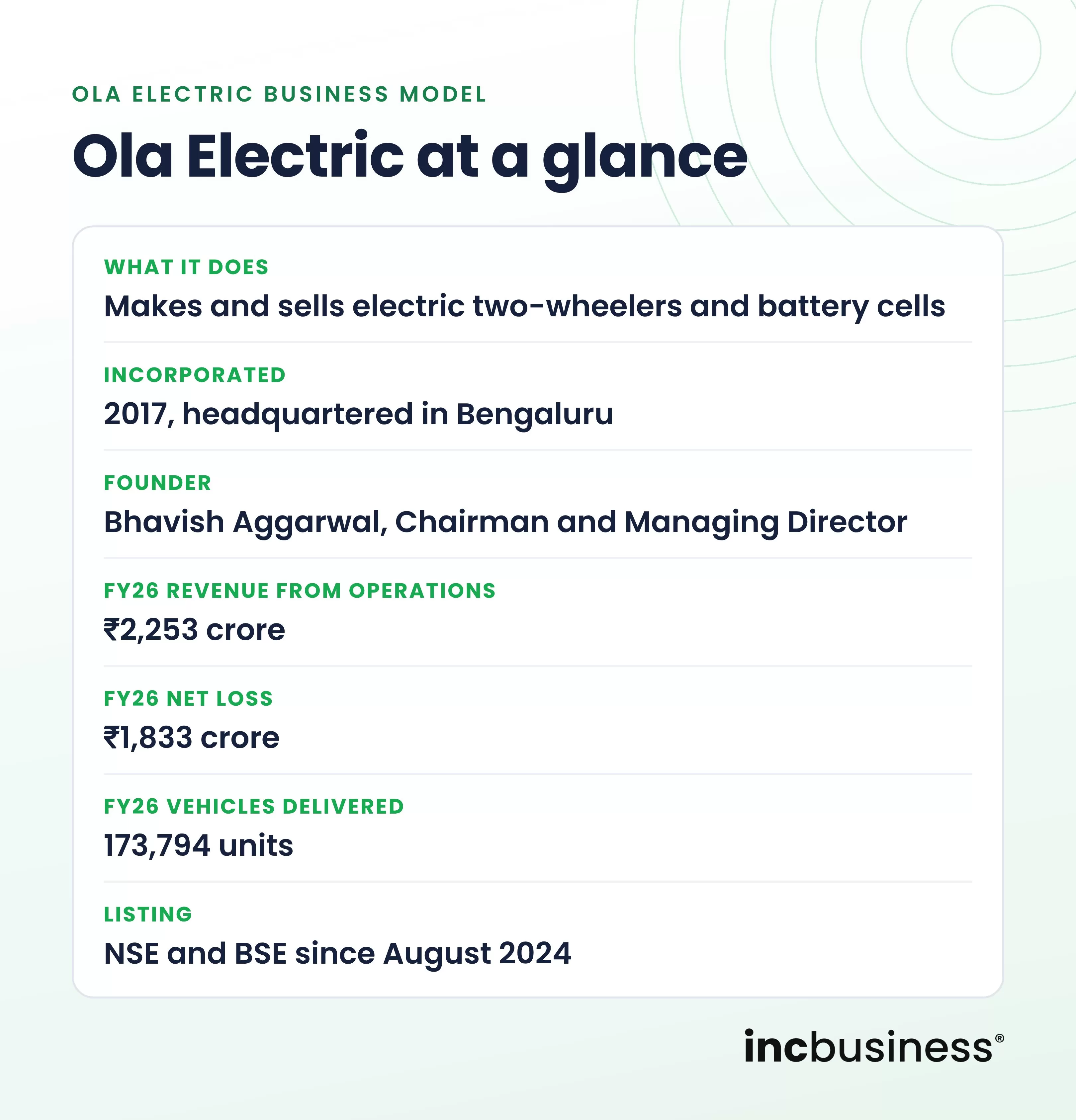
Ola Electric at a glance
| Item | Detail |
|---|---|
| What it does | Makes and sells electric scooters and motorcycles, and makes battery cells |
| Incorporated | 2017, registered office in Bengaluru |
| Founder | Bhavish Aggarwal, Chairman and Managing Director |
| FY26 revenue from operations | ₹2,253 crore |
| FY26 net loss | ₹1,833 crore |
| FY26 vehicles delivered | 173,794 units |
| Latest quarter (Q1 FY27) | ₹455 crore revenue from operations, 39,192 vehicles delivered |
| Listing | Listed on NSE and BSE in August 2024 at an issue price of ₹76 a share |
What Ola Electric does
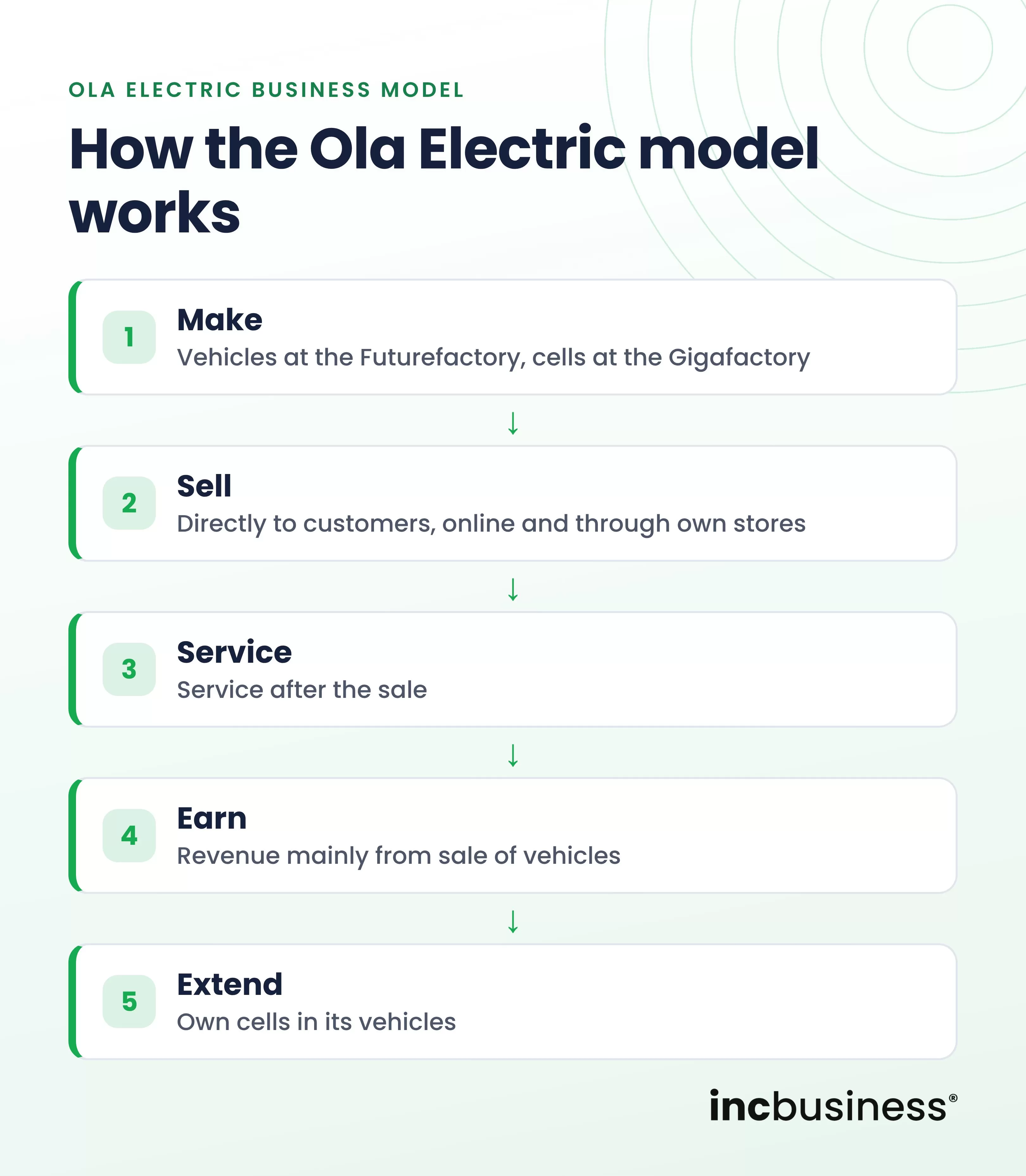
Ola Electric makes electric two-wheelers at its Futurefactory in Tamil Nadu, where it produces vehicles and parts such as battery packs, motors and vehicle frames. It sells through a direct-to-customer network across India and an online presence. Its Q1 FY27 press release says it is also entering a broader dealership model.
The company also makes battery cells. Its 4680 Bharat Cell is already used in vehicles, and its Gigafactory had 2.5 GWh of operational capacity in May 2026, with installation to 6 GWh largely complete. The company has also built an energy storage product named Shakti and says it is developing another, Mahashakti.

How Ola Electric makes money in the Ola business model
Almost all of Ola Electric's revenue comes from its automotive segment, which sells vehicles. In Q1 FY27 the company reported consolidated revenue from operations of ₹455 crore, and its press release put auto revenue at about ₹455 crore. The company also reports a cell segment, which was still ramping up.
Ola Electric revenue over recent quarters
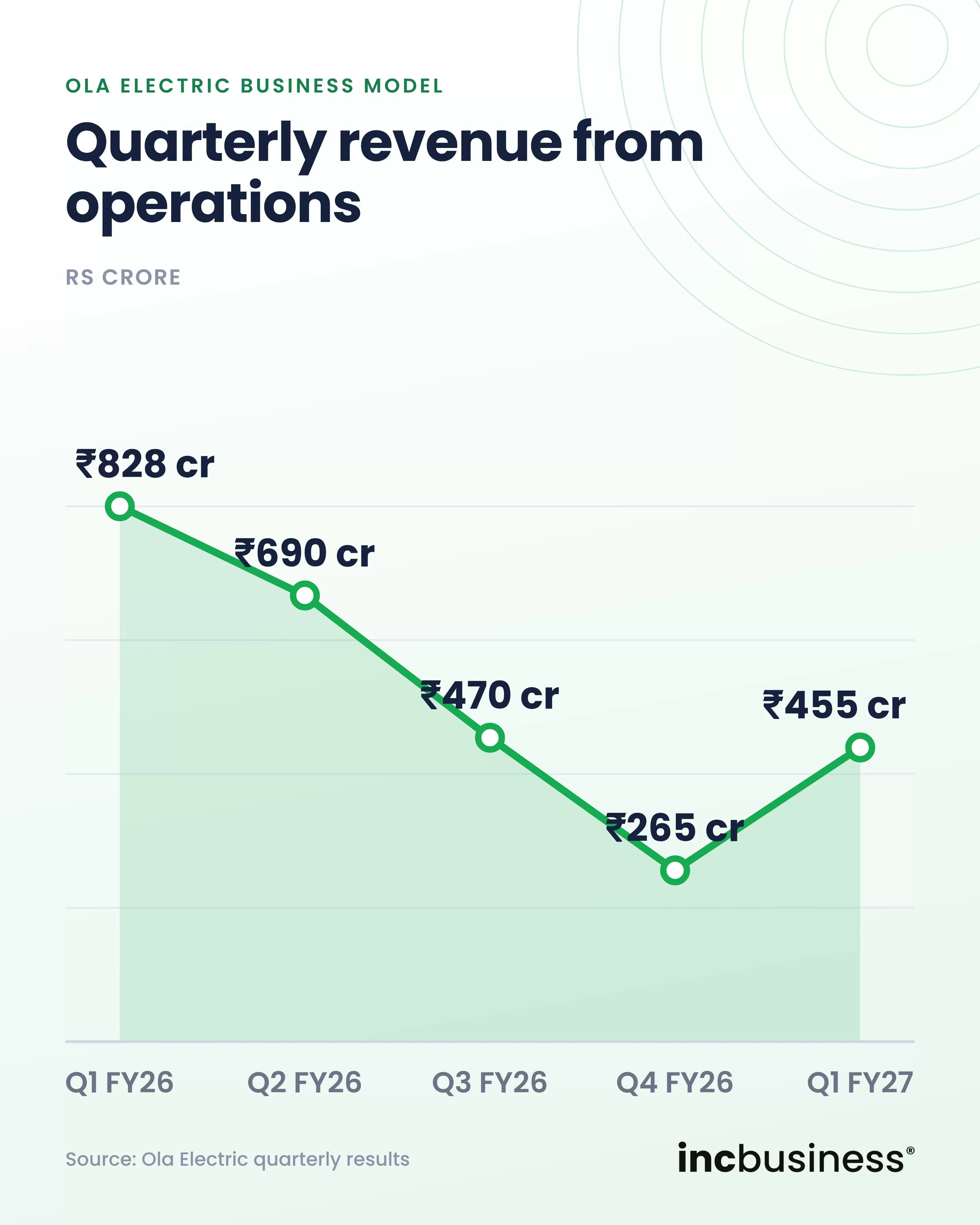
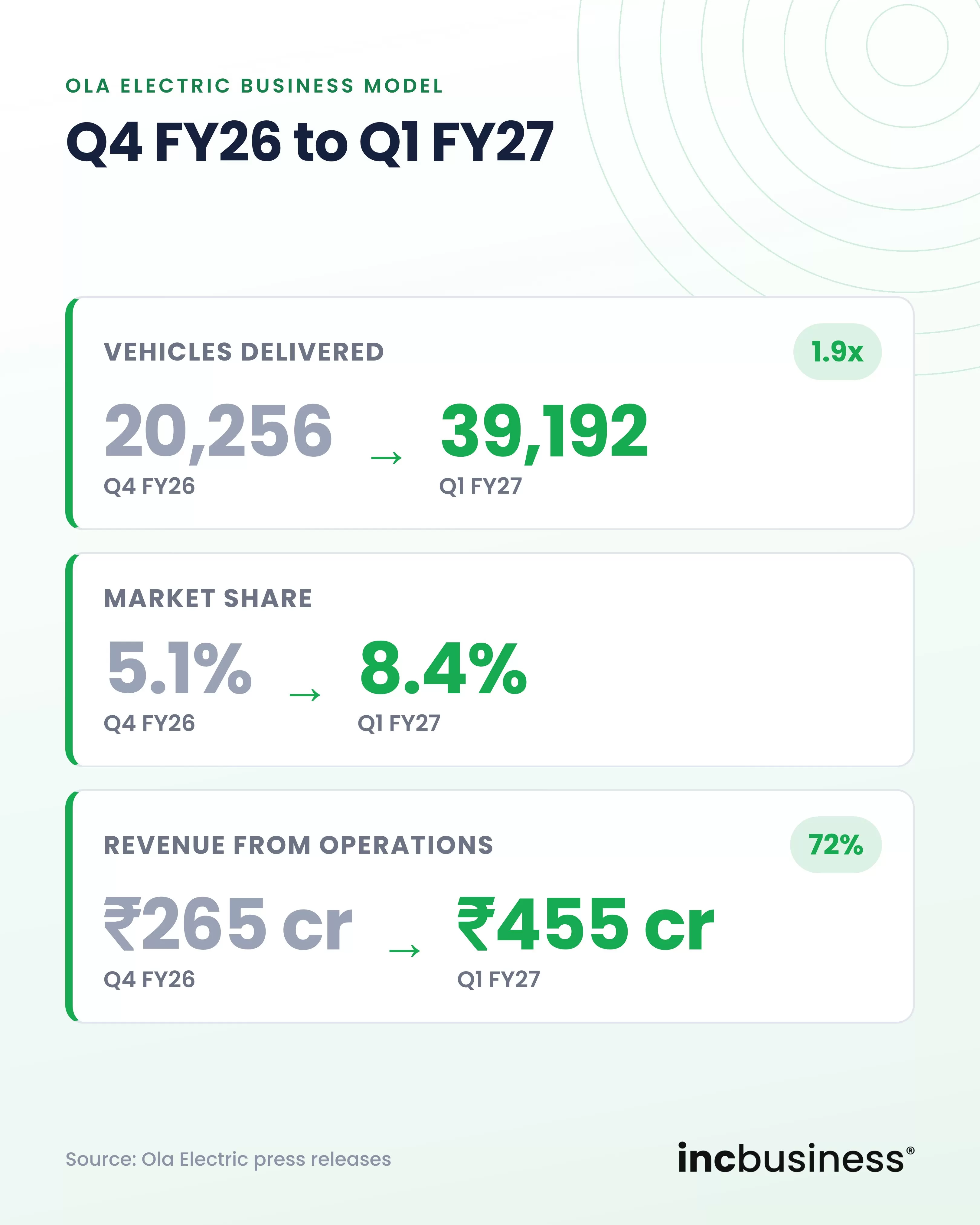
Revenue from operations was ₹828 crore in Q1 FY26, ₹690 crore in Q2, ₹470 crore in Q3 and ₹265 crore in Q4. It rose to ₹455 crore in Q1 FY27. The company said Q1 FY27 deliveries rose from about 20,256 units in Q4 FY26 to about 39,192 units, and its market share rose from 5.1% to 8.4%.
Ola Electric revenue model and the Business Model Canvas
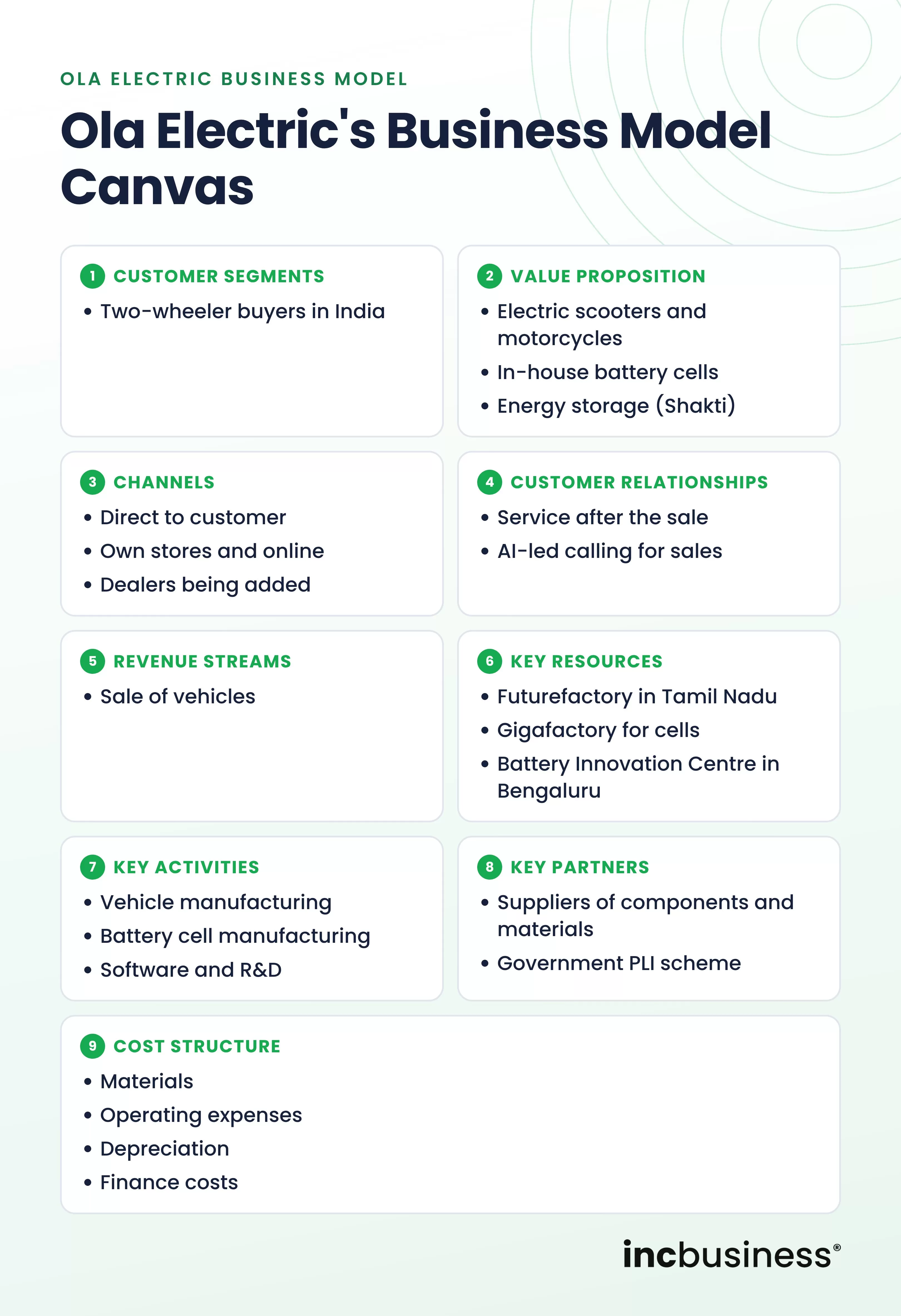
The Ola Electric revenue model rests on selling vehicles directly, with the company running manufacturing, sales and service itself. The canvas below sets out its nine blocks.
Ola Electric revenue and net loss over two years
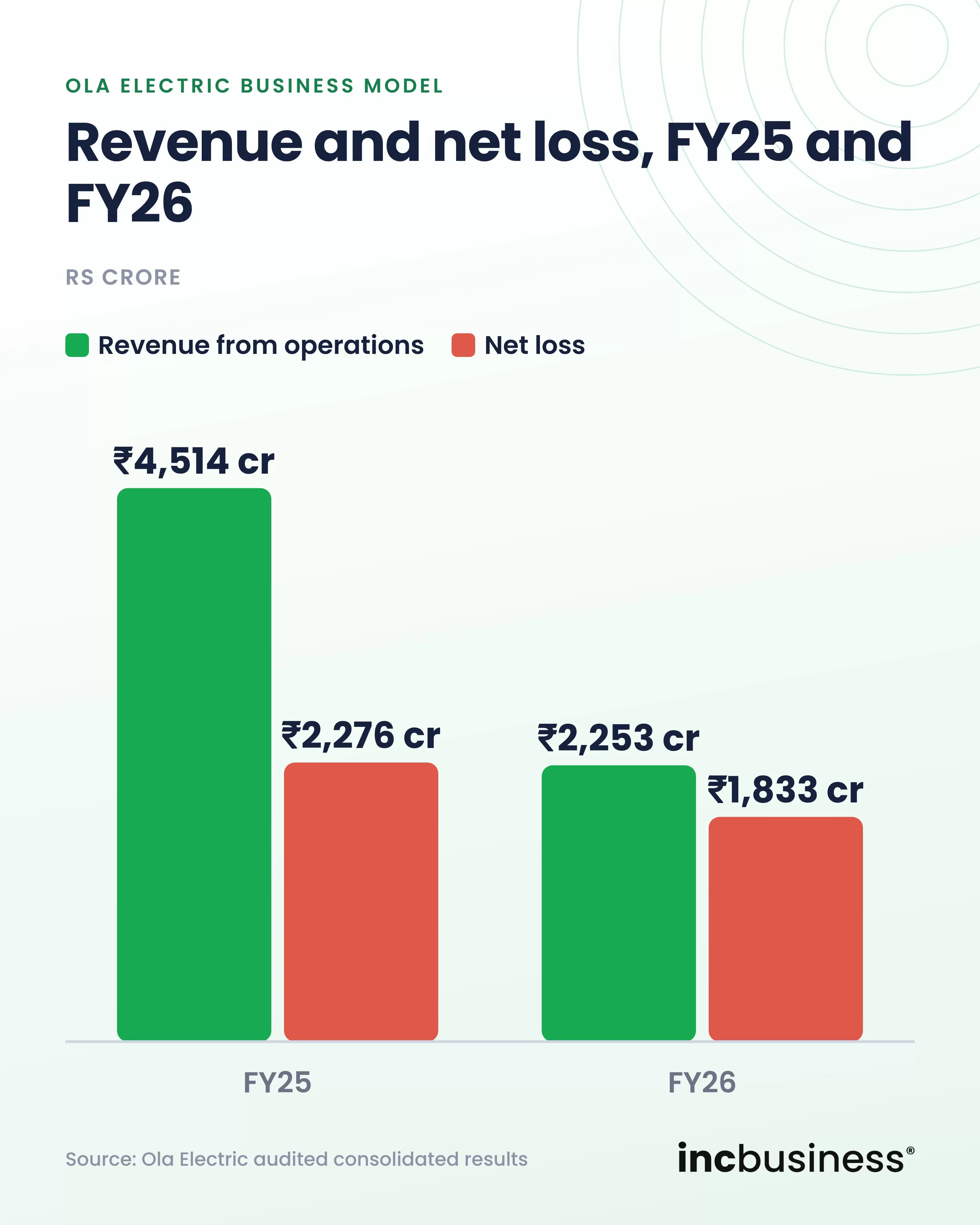
Revenue from operations fell from ₹4,514 crore in FY25 to ₹2,253 crore in FY26. The net loss was ₹2,276 crore in FY25 and ₹1,833 crore in FY26. The company said FY26 volumes were lower than it wanted and called the year a reset year.
Key operating numbers
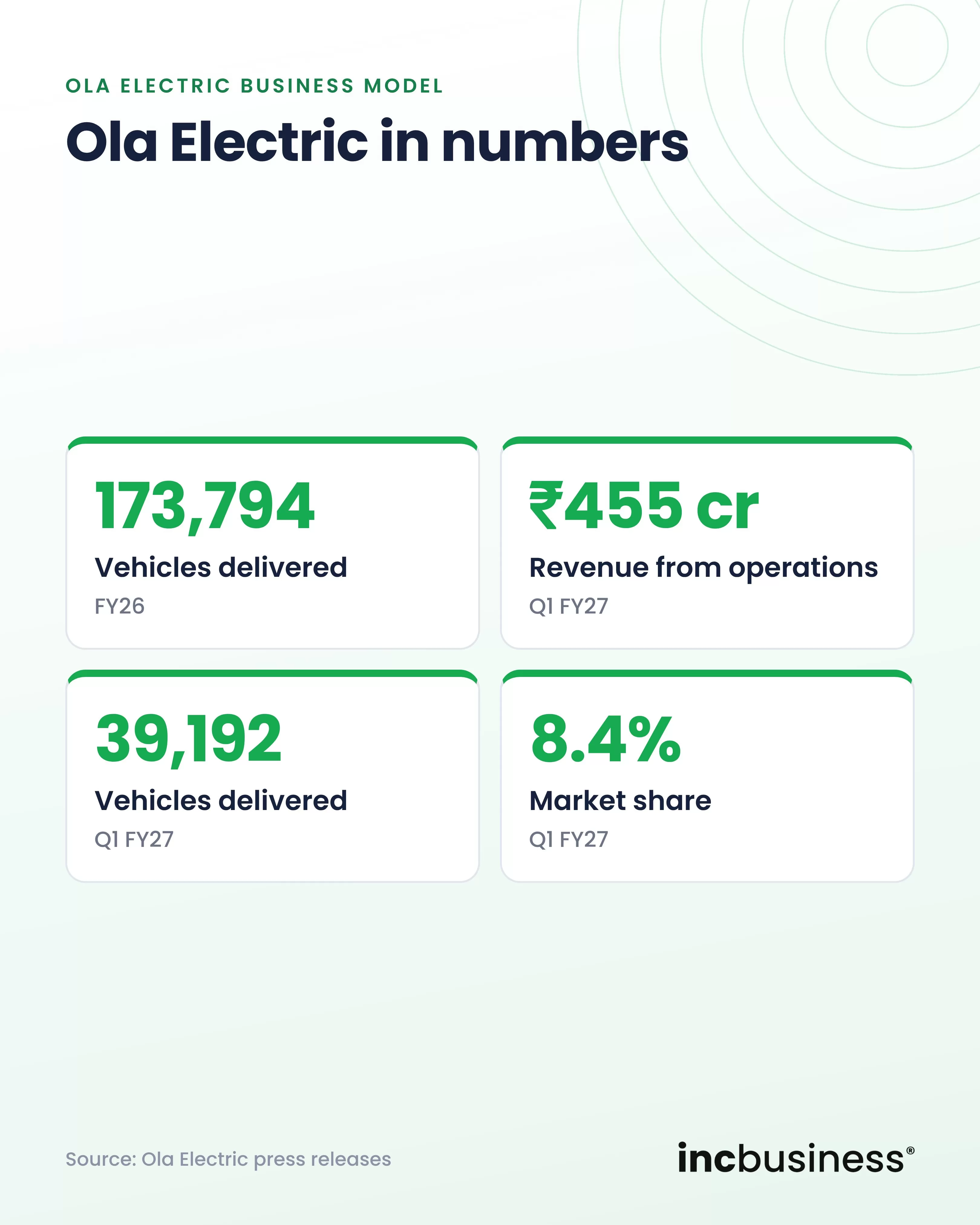
Ola Electric delivered 173,794 units in FY26 and 20,256 units in Q4 FY26. Q4 FY26 was its first operating cash flow positive quarter, with consolidated cash flow from operations of ₹91 crore. For the full year, cash flow from operations was negative ₹775 crore, against negative ₹2,391 crore in FY25.
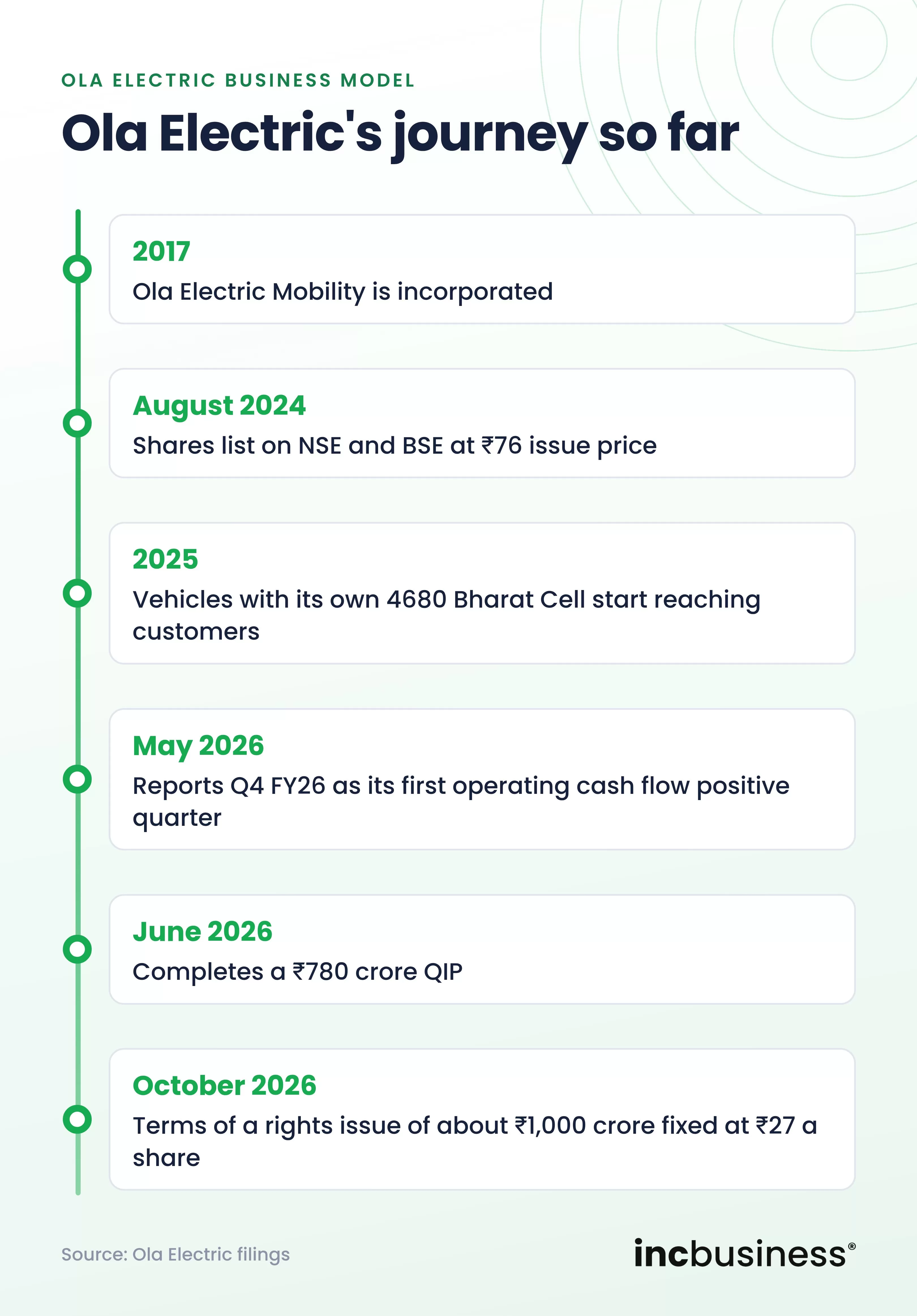
Ola Electric's journey so far
| When | What happened |
|---|---|
| 2017 | Ola Electric Mobility is incorporated |
| August 2024 | Shares list on NSE and BSE at the ₹76 issue price |
| 2025 | Vehicles powered by its own 4680 Bharat Cell begin reaching customers |
| May 2026 | Q4 FY26 results show its first operating cash flow positive quarter |
| June 2026 | Completes a ₹780 crore qualified institutions placement |
| October 2026 | Terms of a rights issue of about ₹1,000 crore are fixed at ₹27 a share |
Who Ola Electric competes with
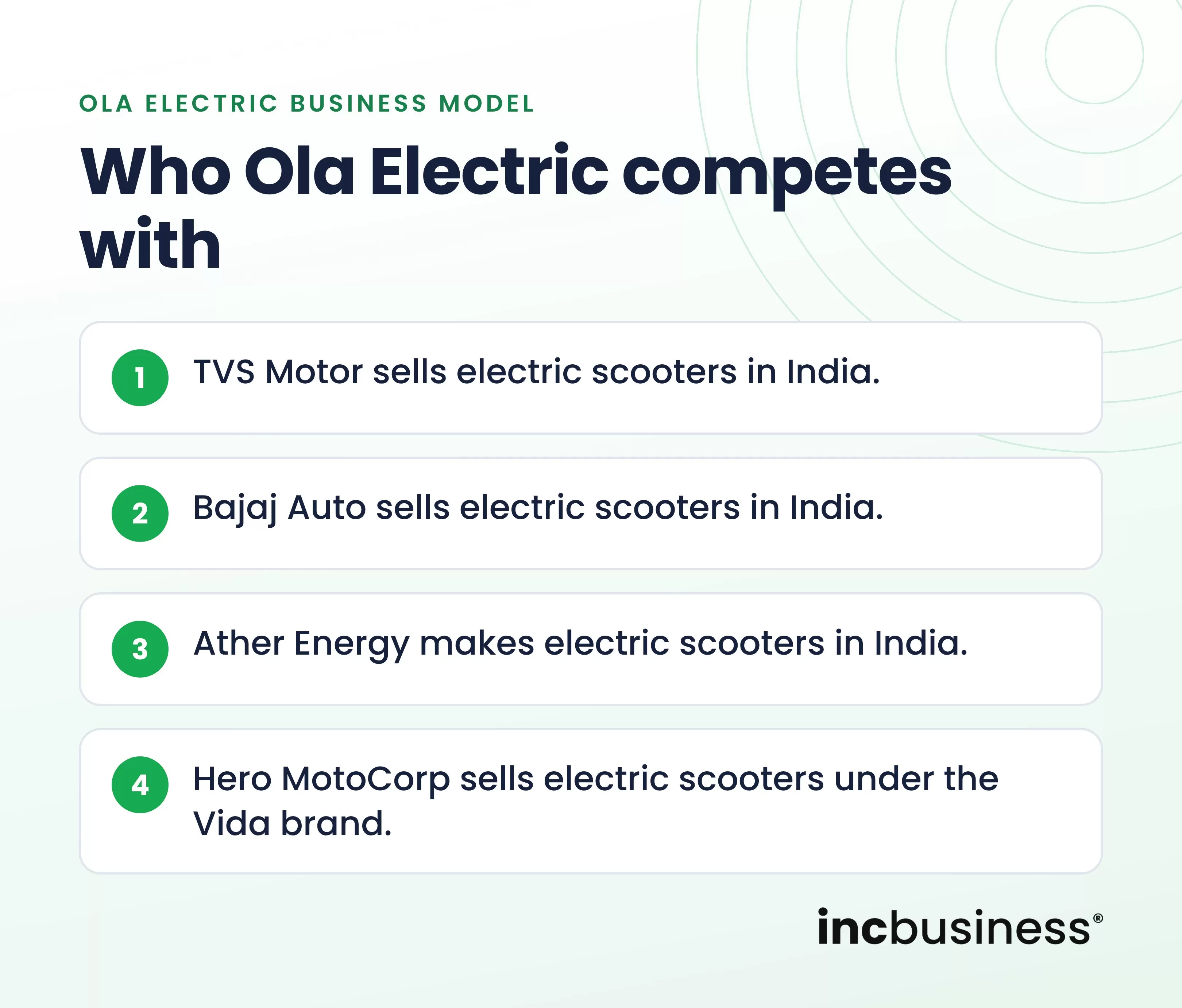
Ola Electric competes in India's electric two-wheeler market with TVS Motor, Bajaj Auto, Ather Energy and Hero MotoCorp, whose electric brand is Vida.
Cash flow, volumes and funding at Ola Electric
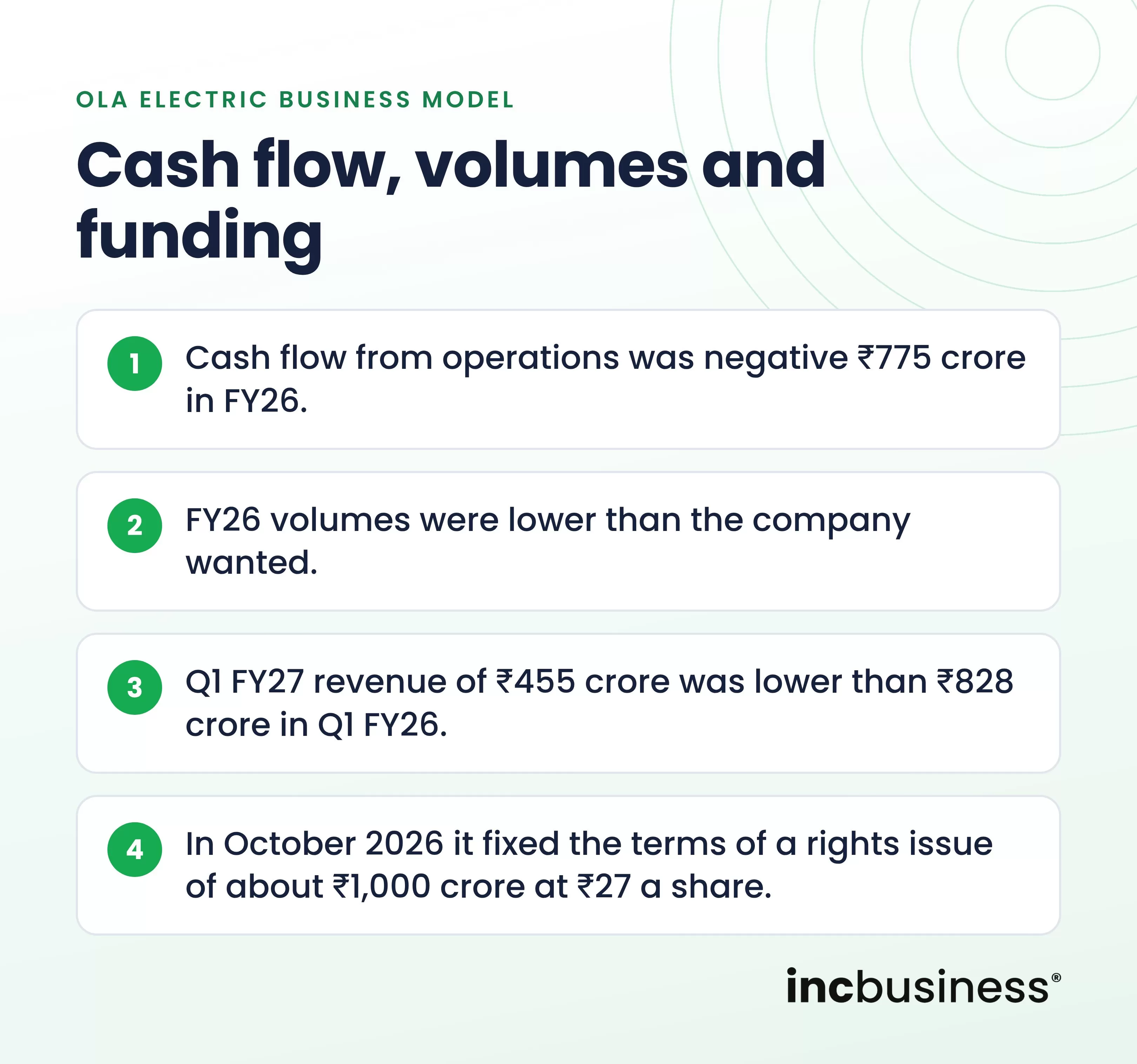
Cash flow from operations was negative ₹775 crore in FY26, against negative ₹2,391 crore in FY25. The company said FY26 volumes were lower than it wanted, and Q1 FY27 revenue of ₹455 crore was lower than the ₹828 crore of Q1 FY26. In October 2026 it fixed the terms of a rights issue of about ₹1,000 crore at ₹27 a share.
Conclusion on the Ola business model
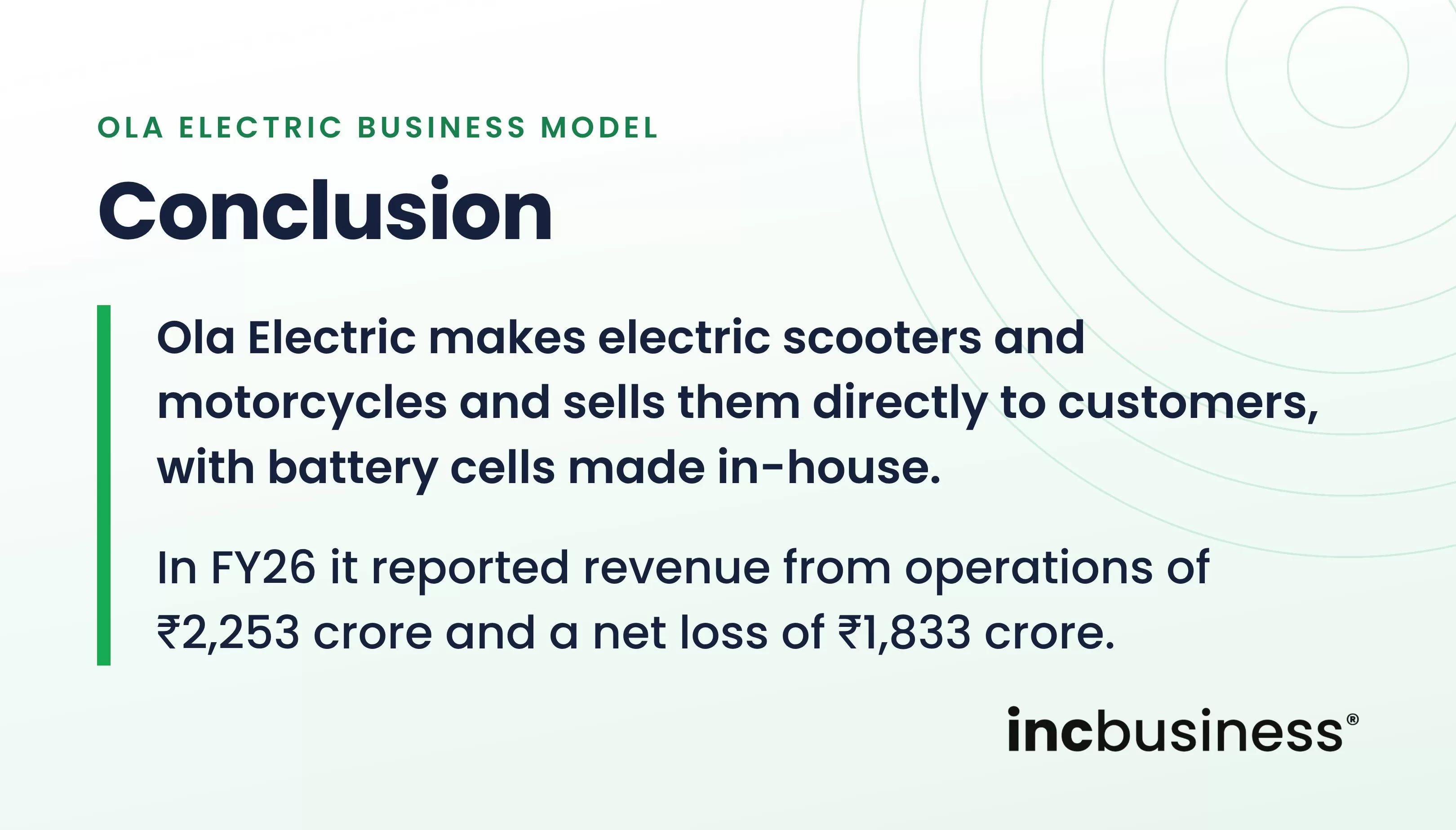
Ola Electric makes electric scooters and motorcycles at its Futurefactory and sells them directly to customers, with battery cells made in-house for vehicles and energy storage. Almost all revenue comes from vehicle sales.
For FY26 it reported revenue from operations of ₹2,253 crore and a net loss of ₹1,833 crore, and for Q1 FY27 revenue from operations of ₹455 crore on 39,192 vehicles delivered.