Ola Electric Business Model From Factory to Dealer Showroom
How Ola Electric makes and sells electric scooters, motorcycles and cells.

Key Takeaways
- FY26 revenue from operations was ₹2,253 crore, against ₹4,514 crore in FY25.
- Ola Electric reported a consolidated loss of ₹1,833 crore in FY26.
- Vehicle sales brought in ₹1,848 crore of FY26 revenue from operations.
- By 8 November 2026 it had 255 dealer partners running 319 stores.
Table of Contents 11 sections
- Ola Electric at a glance
- What Ola Electric does
- How the Ola Electric business model makes money
- Ola Electric's Business Model Canvas
- Ola Electric revenue and profit over three years
- How the Ola Electric dealership model works
- Ola Electric's journey so far
- Who Ola Electric competes with
- Challenges Ola Electric faces
- Conclusion on the Ola Electric business model
- FAQs
The Ola Electric business model is built on making electric scooters, motorcycles and battery cells in its own plants and selling them to Indian riders, with smaller income from spare parts, software, insurance commission, subscriptions and government incentives. Ola Electric Mobility Limited is listed on the NSE and BSE.
In FY26 (April 2025 to March 2026), its consolidated revenue from operations was ₹2,253 crore and its loss was ₹1,833 crore. In Q2 FY27 (July to September 2026), revenue from operations was ₹421 crore and the loss was ₹362 crore. In November 2026 the company stopped taking orders at its own stores and moved its sales to dealer partners.
Ola Electric at a glance
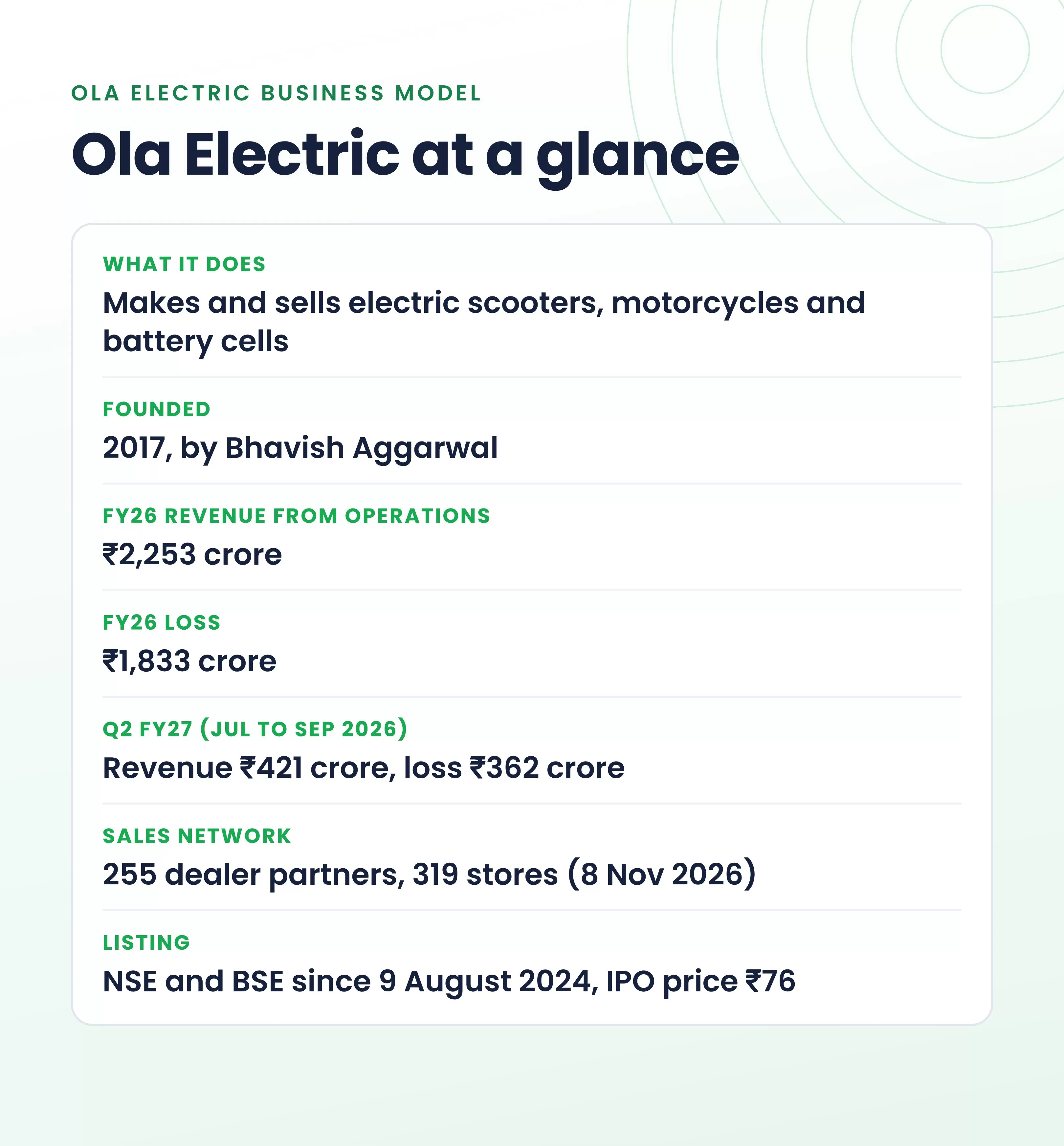
| Item | Detail |
|---|---|
| What it does | Designs, makes and sells electric scooters and motorcycles; makes lithium-ion cells and the Shakti home battery |
| Founded | 2017 |
| Founder | Bhavish Aggarwal, Chairman and Managing Director |
| Revenue from operations, FY26 | ₹2,253 crore (FY25: ₹4,514 crore) |
| Loss, FY26 | ₹1,833 crore (FY25: ₹2,276 crore) |
| Latest quarter, Q2 FY27 | Revenue ₹421 crore, loss ₹362 crore |
| Sales network | 255 dealer partners with 319 stores, as of 8 November 2026 |
| Listing | NSE and BSE since 9 August 2024; IPO price ₹76 a share |
What Ola Electric does
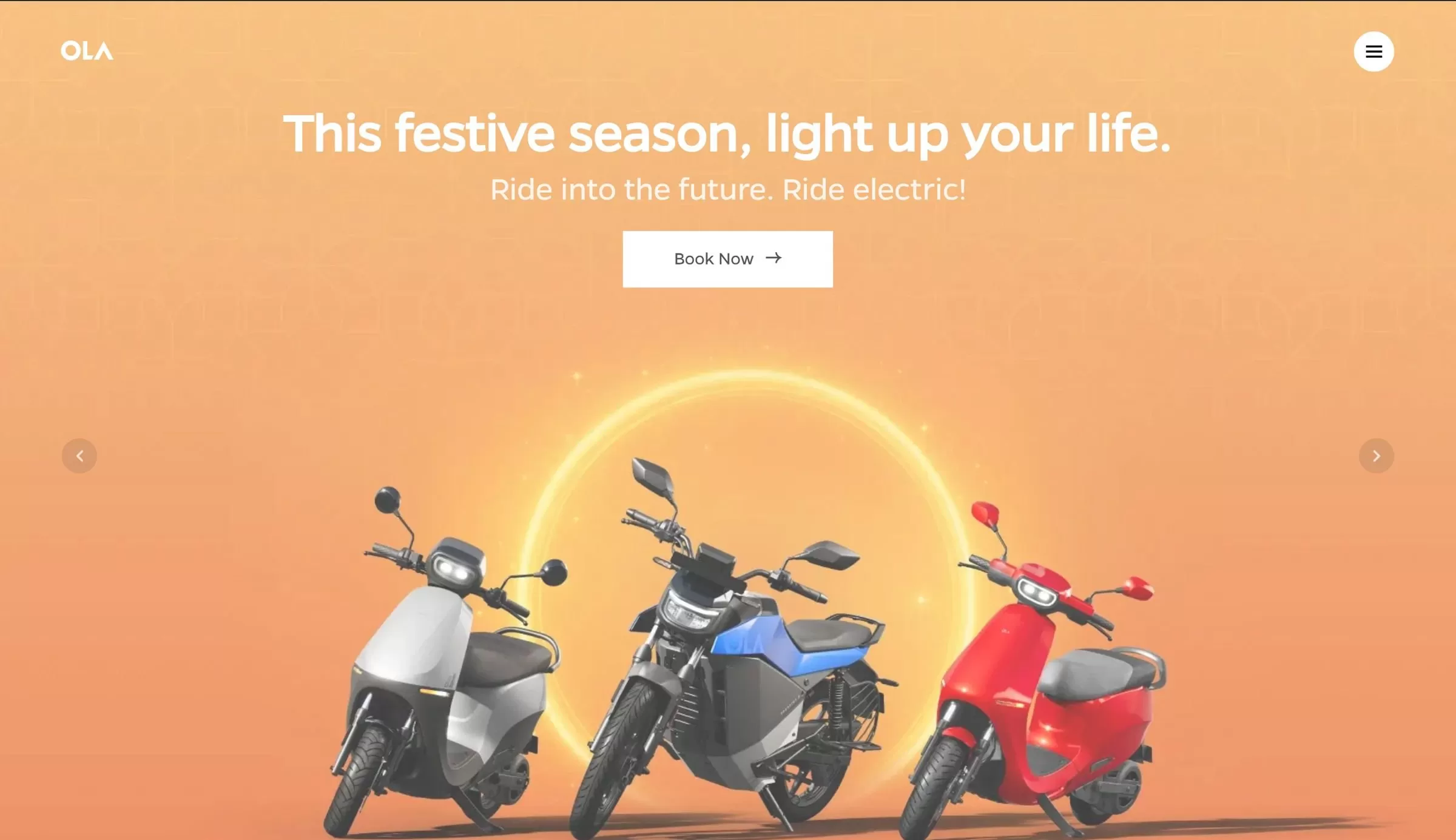
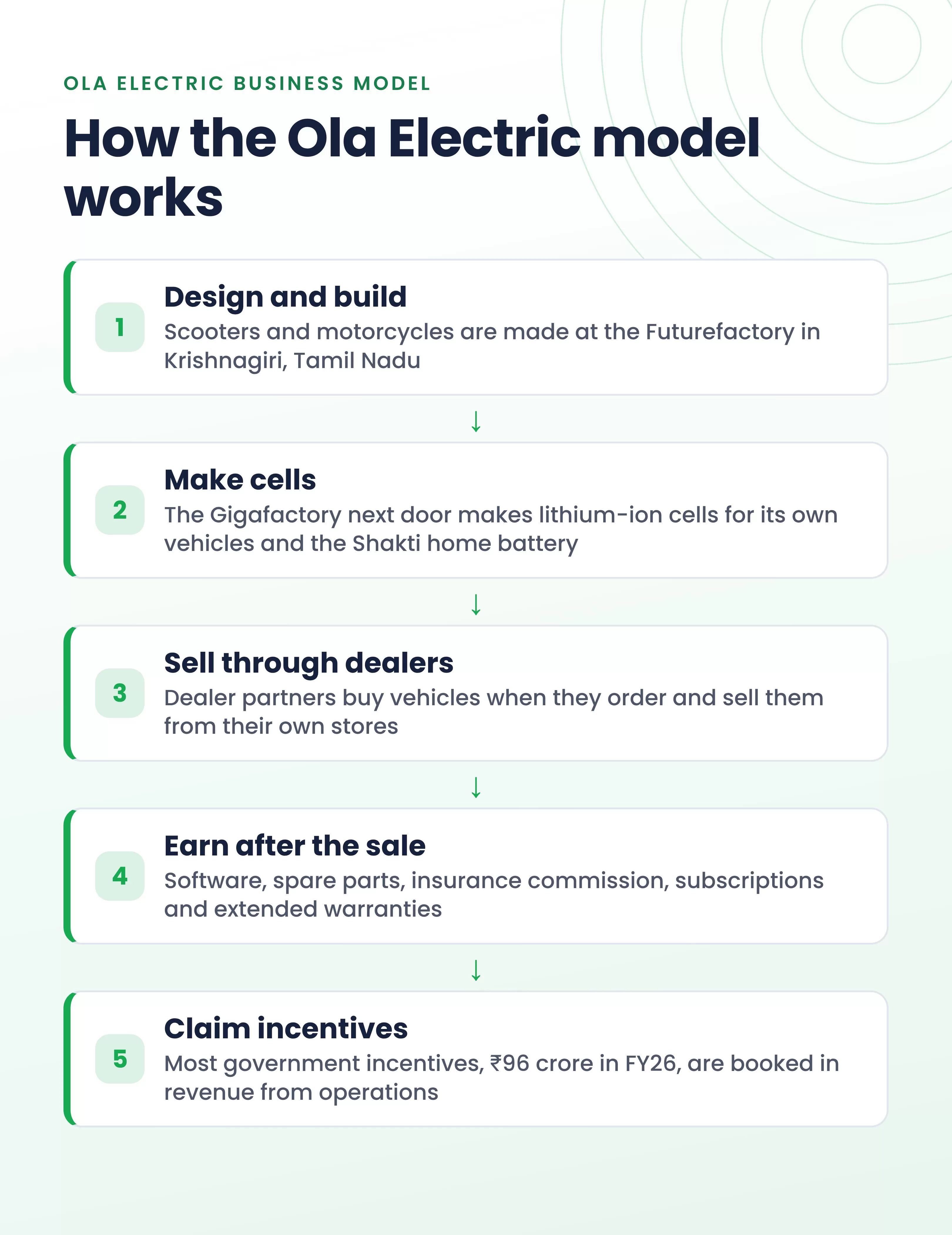
Ola Electric sells the S1 range of electric scooters and the Roadster range of electric motorcycles. The vehicles are made at the Ola Futurefactory in Krishnagiri, Tamil Nadu. Next to it, the Ola Gigafactory makes lithium-ion cells, including the 4680 Bharat Cell, which go into its own vehicles and into Shakti, a battery storage product for homes and businesses.
Its vehicles run on MoveOS, the company's own operating system, which gets updates over the air. Buyers can pay for extra software features through MoveOS+, and the company also sells spare parts, accessories and extended warranties.
How the Ola Electric model works
How the Ola Electric business model makes money
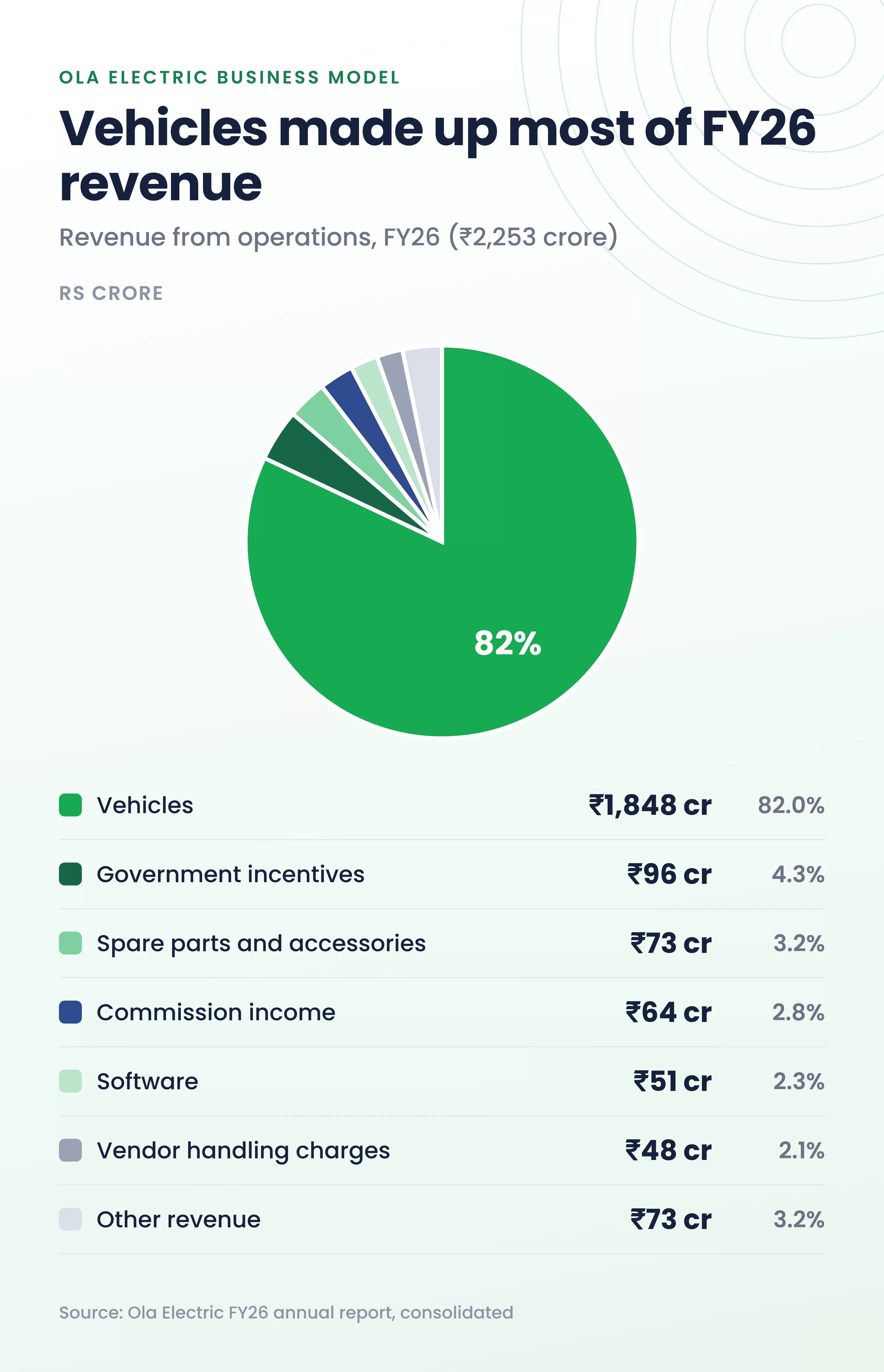
Most of the money comes from selling vehicles. In FY26, vehicle sales were ₹1,848 crore, or about 82% of the ₹2,253 crore revenue from operations. The rest came from these streams:
- Government incentives, ₹96 crore. Incentives under government schemes, booked as other operating revenue.
- Spare parts and accessories, ₹73 crore. Spare parts brought in ₹65 crore and accessories ₹8 crore.
- Commission income, ₹64 crore. Commission earned from a related party for distributing and servicing motor insurance policies for the vehicles it sells.
- Software, ₹51 crore. Software sold with or for its vehicles, a line that had no revenue in FY25.
- Vendor handling charges, ₹48 crore. Charges recognised when a vehicle is delivered.
- Other revenue, ₹73 crore. Subscription income of ₹26 crore, other services of ₹25 crore, scrap sales of ₹11 crore, extended warranty services of ₹10 crore and ₹1 crore of other revenue.
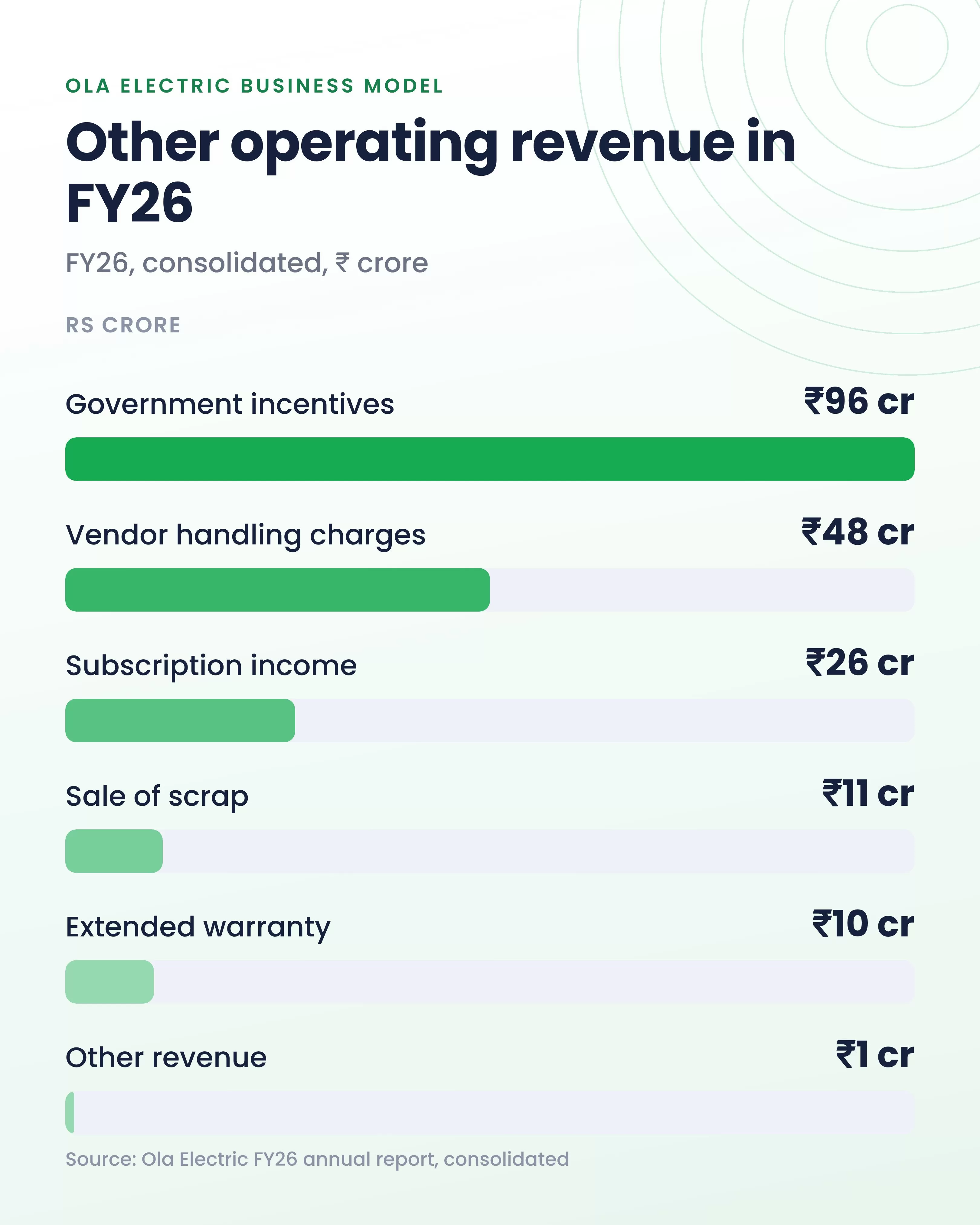
Ola Electric revenue beyond vehicle sales
The company groups government incentives, vendor handling charges, subscriptions, scrap, extended warranties and ₹1 crore of other revenue as "other operating revenue". This added up to ₹192 crore in FY26. Government incentives were the largest part of it at ₹96 crore, down from ₹390 crore in FY25.
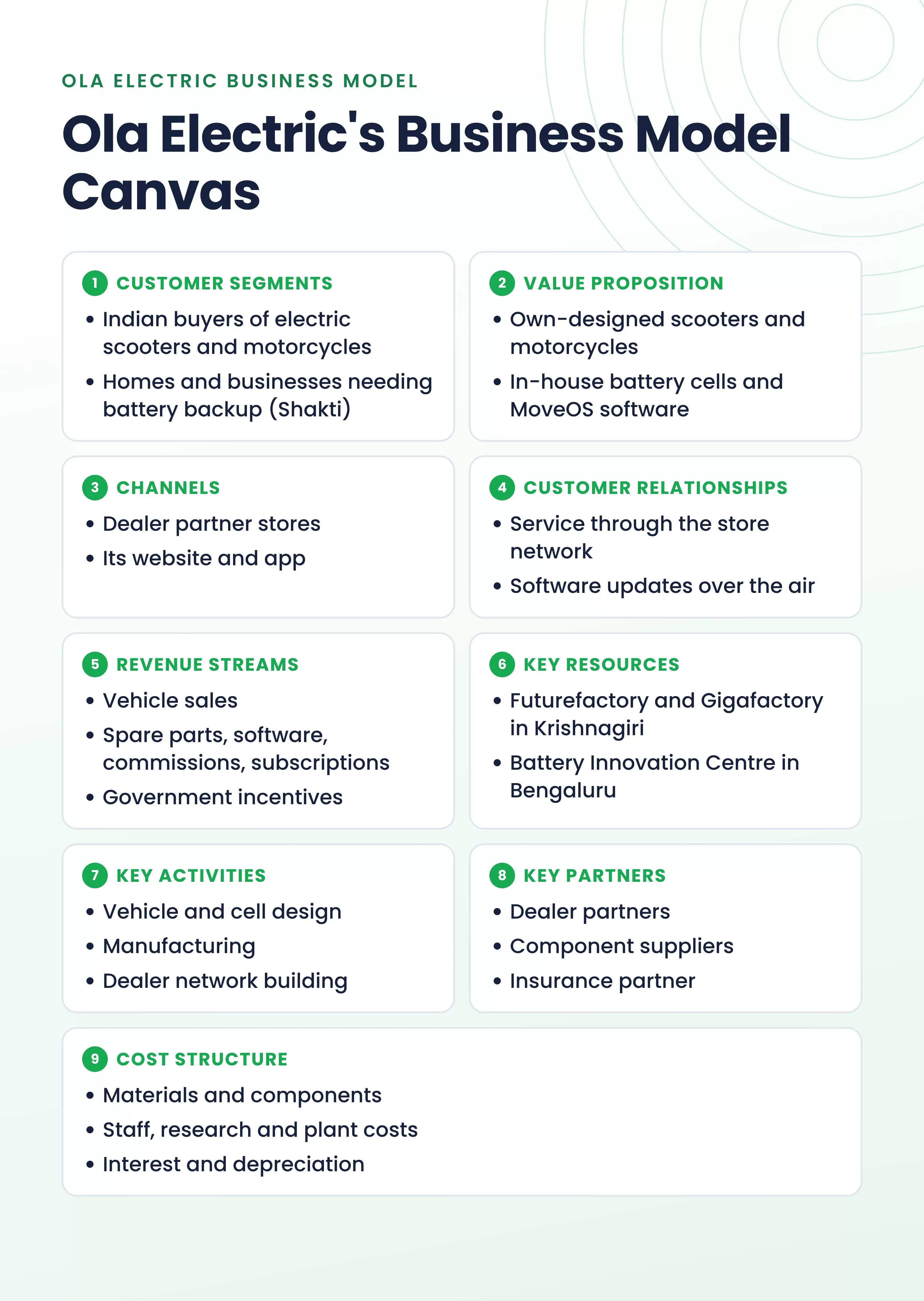
Ola Electric's Business Model Canvas
The canvas below sets out who Ola Electric sells to, what it offers, how it reaches buyers and where its revenue and costs come from.
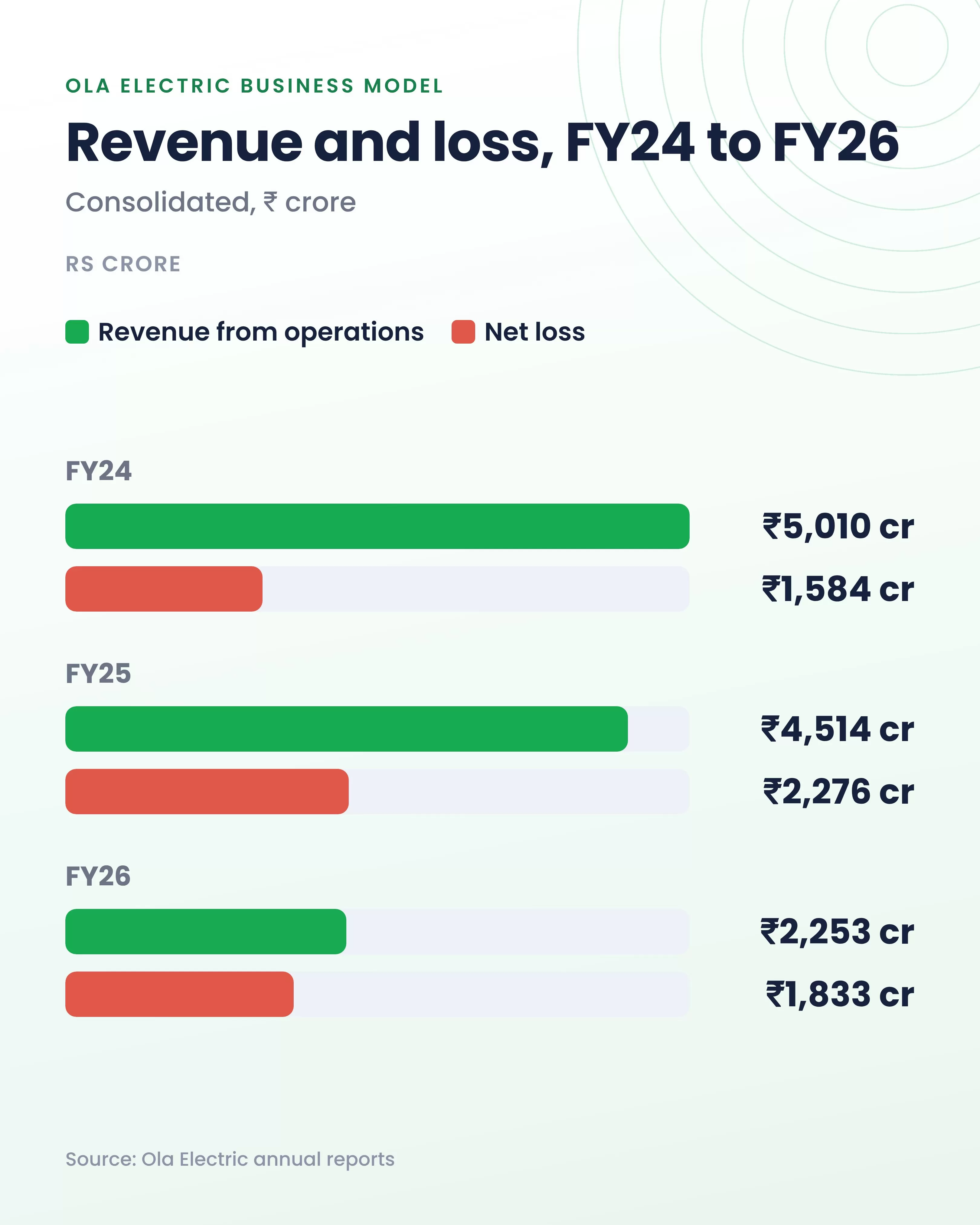
Ola Electric revenue and profit over three years
Revenue from operations was ₹5,010 crore in FY24, ₹4,514 crore in FY25 and ₹2,253 crore in FY26. The company reported a loss in each of these years: ₹1,584 crore in FY24, ₹2,276 crore in FY25 and ₹1,833 crore in FY26.
Its consolidated gross margin rose from 17.9% in FY25 to 30.6% in FY26. Gross margin is what is left from revenue after the cost of making the vehicles, before staff, rent, marketing, interest and depreciation.
Quarterly revenue
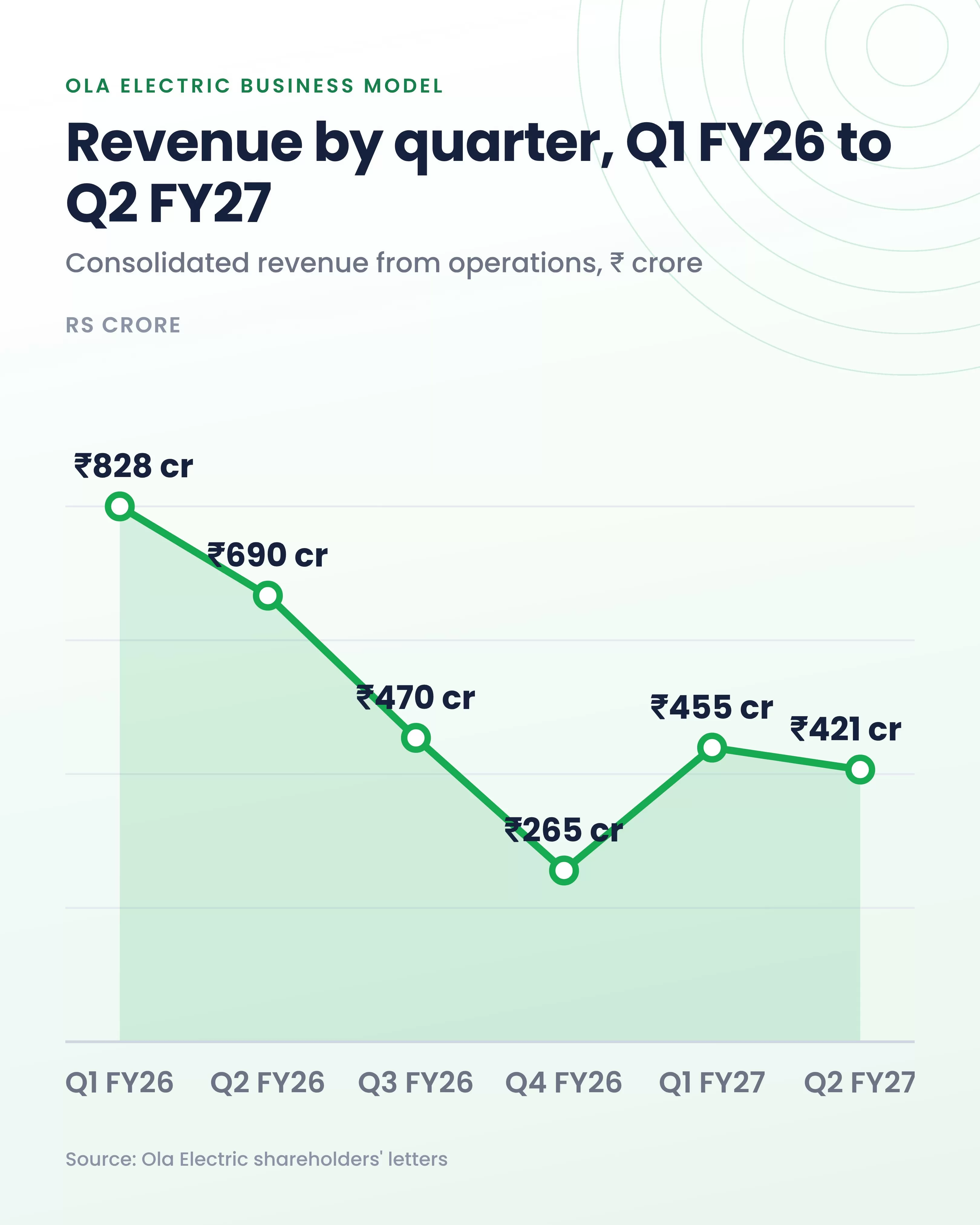
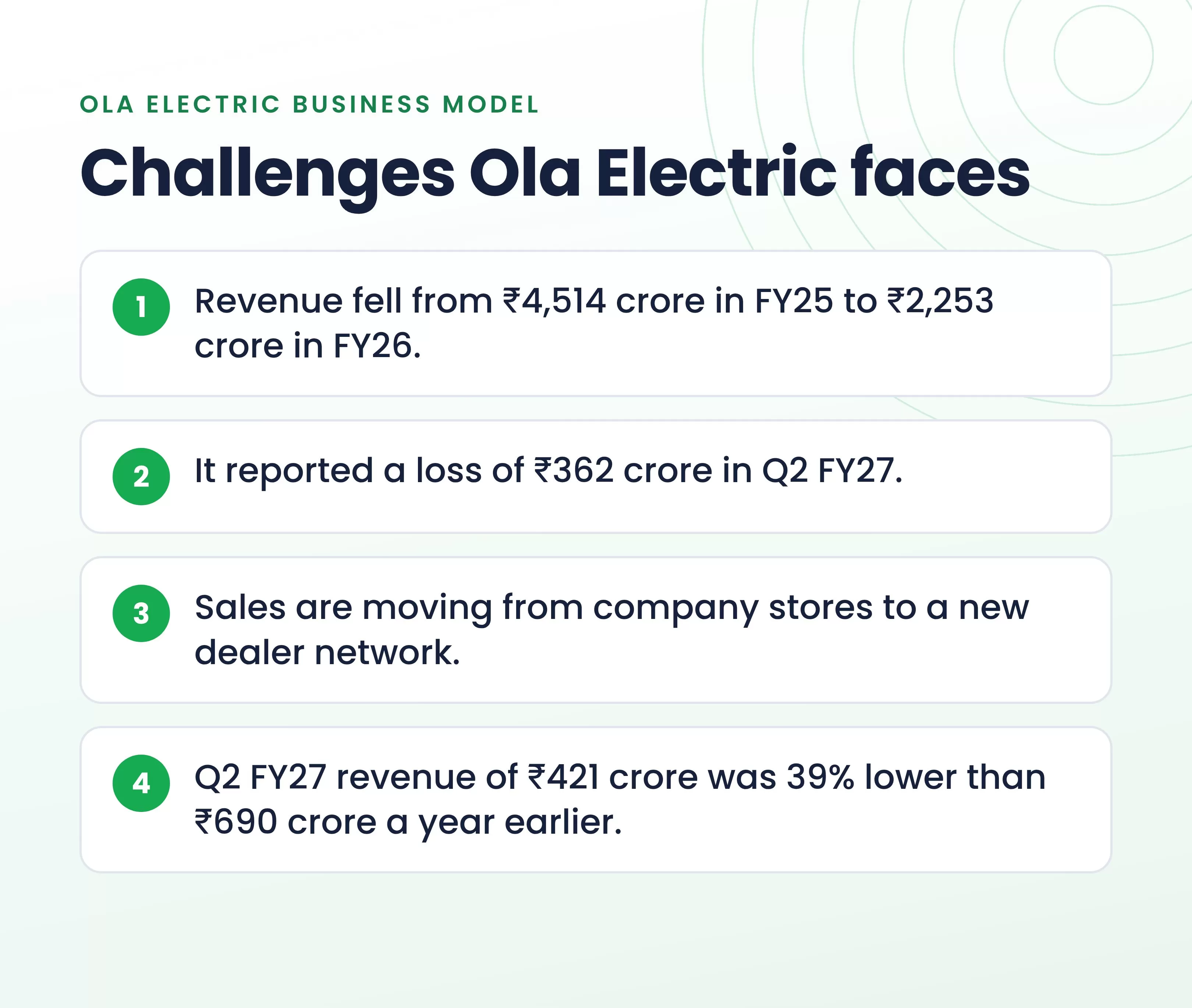
Quarterly revenue from operations went from ₹828 crore in Q1 FY26 to ₹265 crore in Q4 FY26, then to ₹455 crore in Q1 FY27 and ₹421 crore in Q2 FY27. The Q2 FY27 figure was 39% lower than the ₹690 crore of Q2 FY26. The Q2 FY27 loss of ₹362 crore compares with ₹418 crore a year earlier and ₹336 crore in Q1 FY27.
How the Ola Electric dealership model works
Until August 2026, Ola Electric sold directly to buyers through its own company stores and online, without dealers. In August 2026 it opened its sales and service network to dealer partners, and the first dealer stores went live on 4 September 2026.
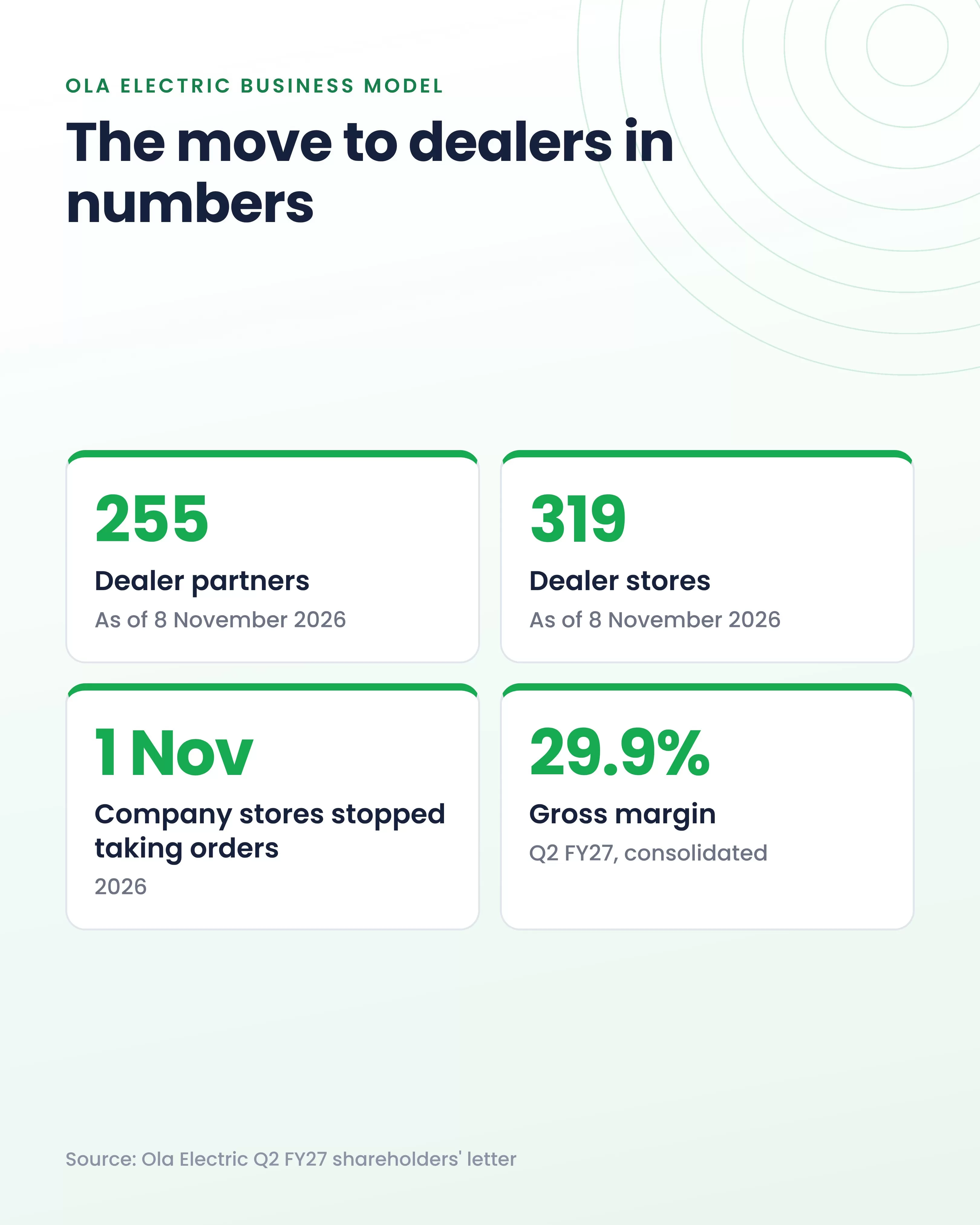
Under the dealer model, dealers pay for vehicles when they order them and keep the stock in their own stores. The company stopped taking orders at its own stores on 1 November 2026. As of 8 November 2026 it had 255 dealer partners running 319 stores. Its consolidated gross margin in Q2 FY27 was 29.9%.
Ola Electric's journey so far
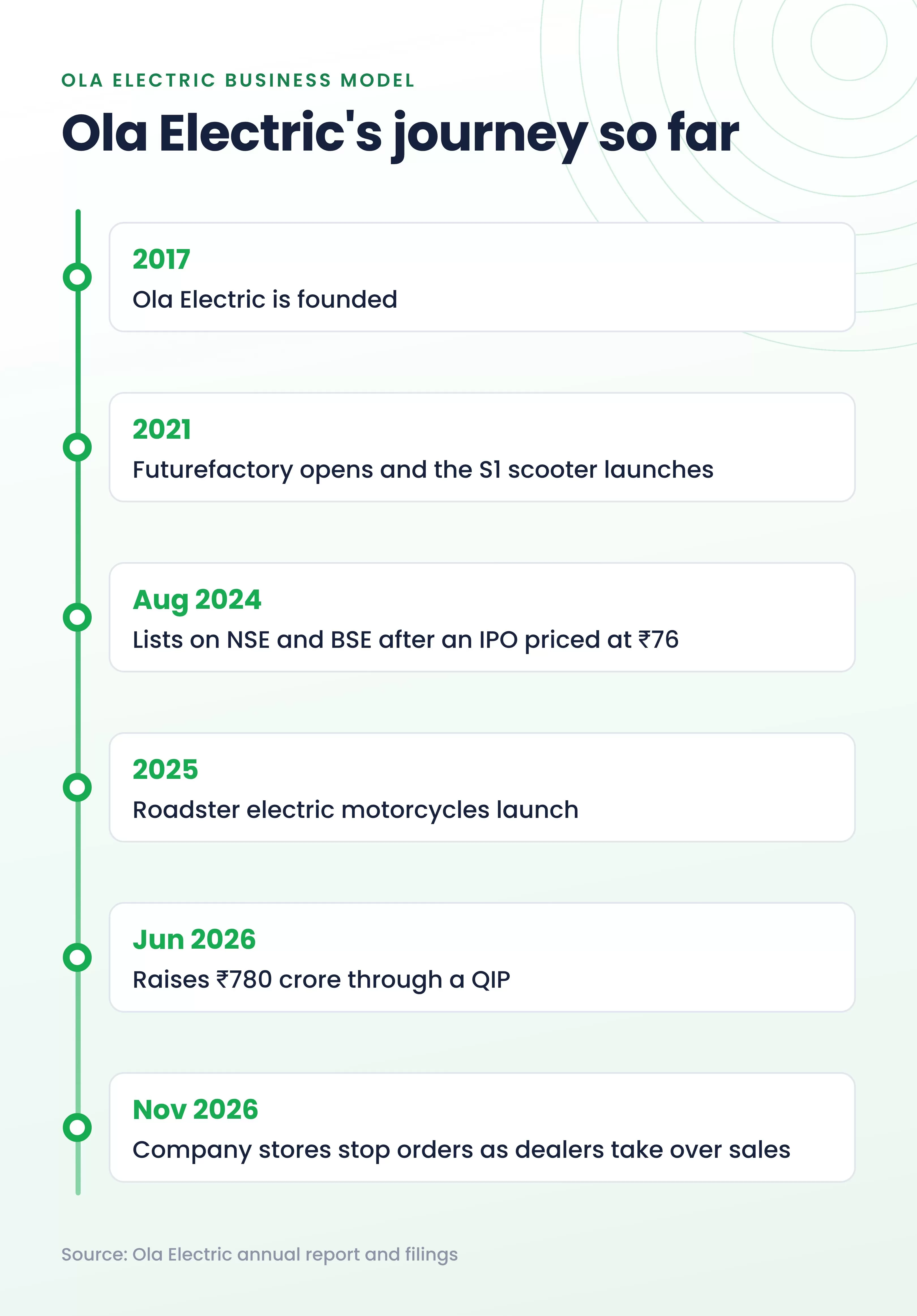
| When | What happened |
|---|---|
| 2017 | Ola Electric is founded |
| 2021 | The Futurefactory opens in Krishnagiri and the S1 scooter launches |
| August 2024 | Lists on the NSE and BSE after an IPO priced at ₹76 a share |
| 2025 | Launches the Roadster series of electric motorcycles |
| June 2026 | Raises ₹780 crore through a qualified institutional placement at ₹35.86 a share |
| October 2026 | Runs a rights issue of up to about ₹1,000 crore at ₹27 a share |
| November 2026 | Company stores stop taking orders as dealer partners take over sales |
Who Ola Electric competes with
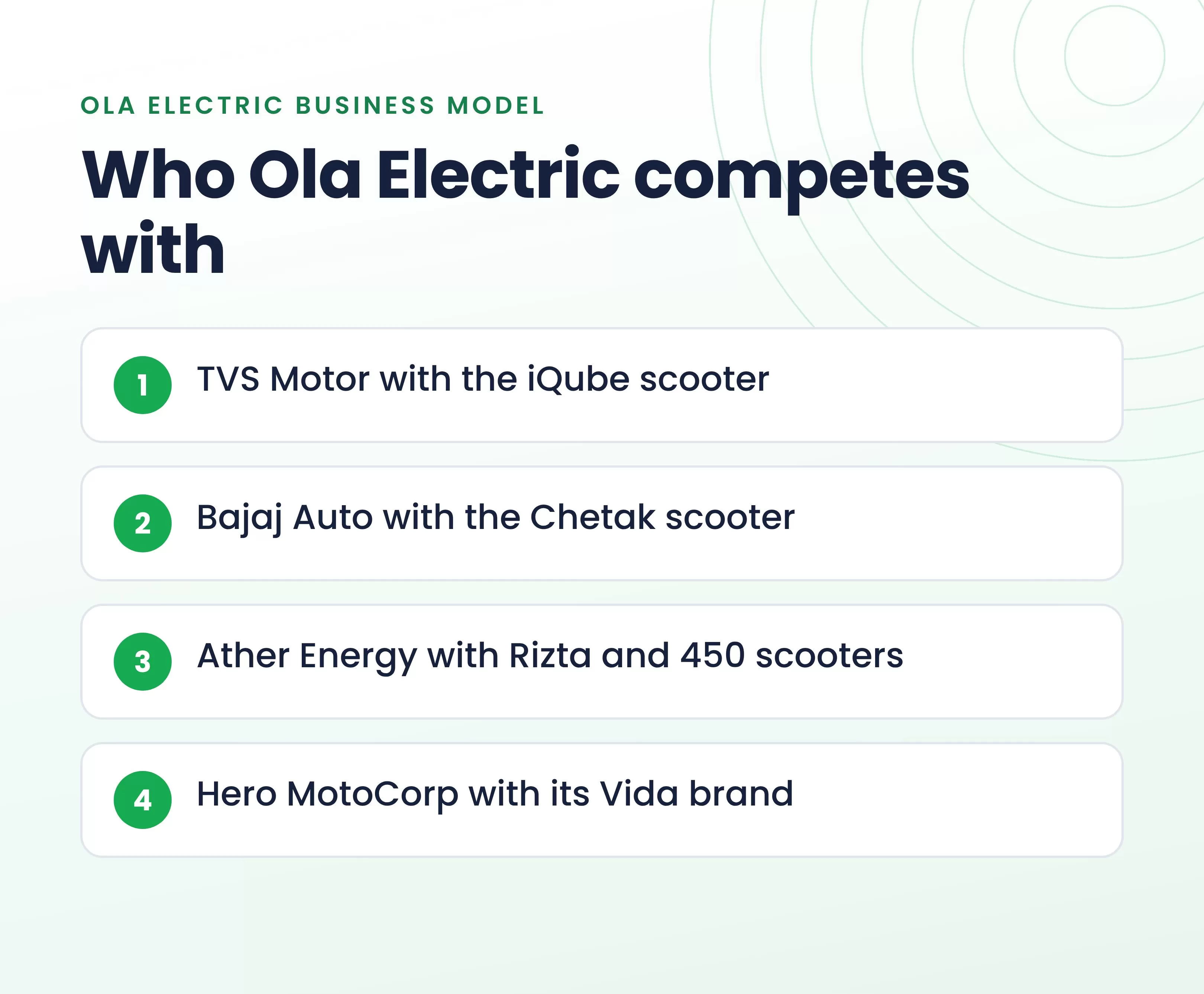
In electric two-wheelers, Ola Electric competes with TVS Motor (iQube), Bajaj Auto (Chetak), Ather Energy (Rizta and 450 scooters) and Hero MotoCorp (Vida). Read how a rival sells in the Ather Energy Business Model of Scooters, Software and Chargers.
Challenges Ola Electric faces
- Revenue from operations fell from ₹4,514 crore in FY25 to ₹2,253 crore in FY26.
- It has reported a loss in every year shown here, and in each quarter from Q1 FY26 to Q2 FY27.
- Its sales are moving from company stores to a dealer network that started in September 2026.
Conclusion on the Ola Electric business model
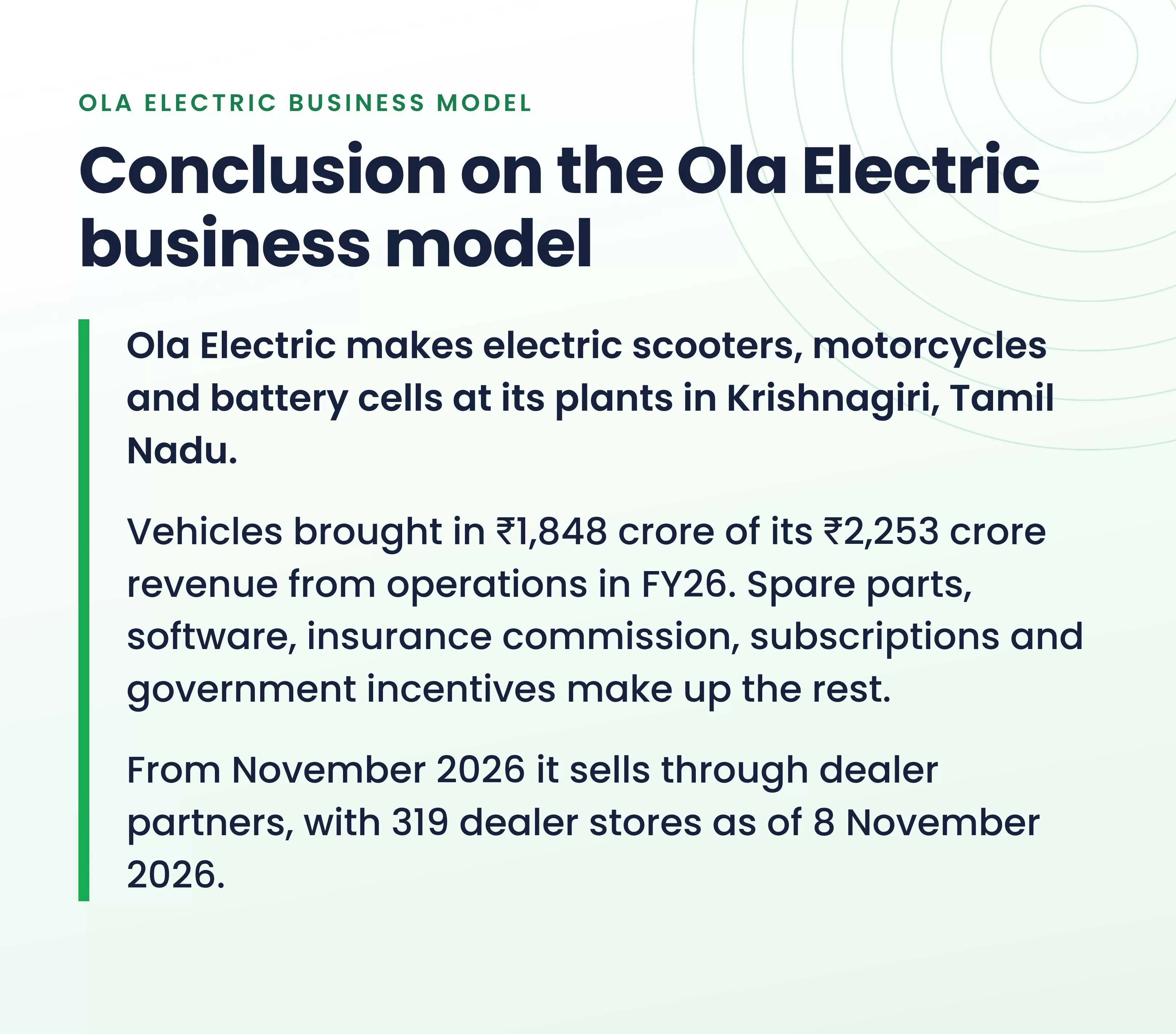
Ola Electric makes electric scooters, motorcycles and battery cells at its plants in Krishnagiri, Tamil Nadu, and sells them to riders across India. Vehicle sales brought in ₹1,848 crore of its ₹2,253 crore revenue from operations in FY26, with spare parts, software, insurance commission, subscriptions and government incentives making up the rest. It reported a loss of ₹1,833 crore for FY26.
From November 2026 its vehicles are sold through dealer partners, who buy stock from the company and sell it from their own stores. As of 8 November 2026 there were 319 such stores.