Snitch Business Model of Menswear Sold Online and in Stores
How Snitch designs menswear and sells it online, on marketplaces and in stores.

Key Takeaways
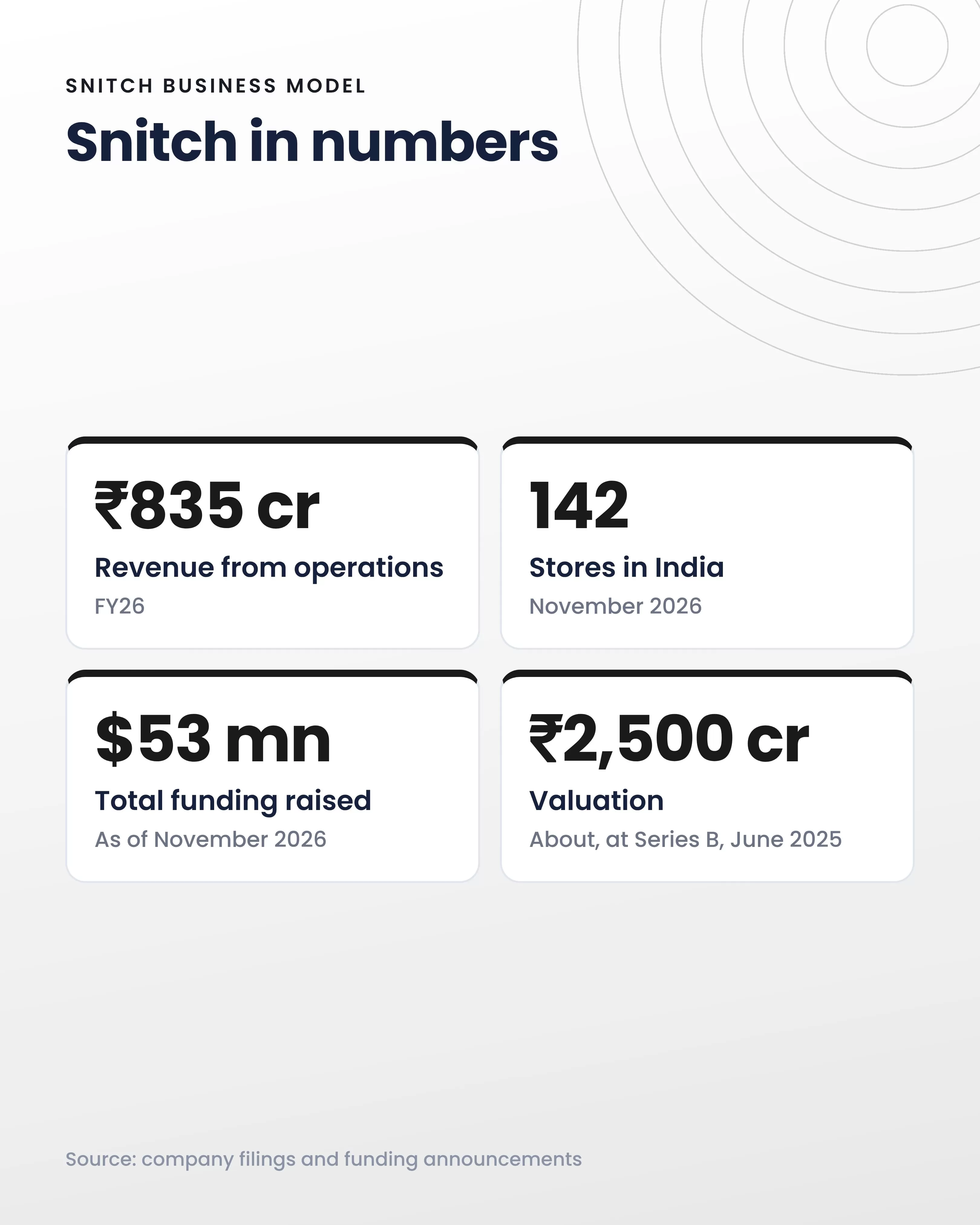
- Snitch's FY26 revenue from operations rose about 68% to ₹835 crore.
- Snitch reported a net loss of ₹27 crore in FY26, after ₹1.7 crore in FY25.
- Snitch's website listed 142 stores across India in November 2026.
- Its June 2025 Series B of $40 million valued it at about ₹2,500 crore.
Table of Contents 11 sections
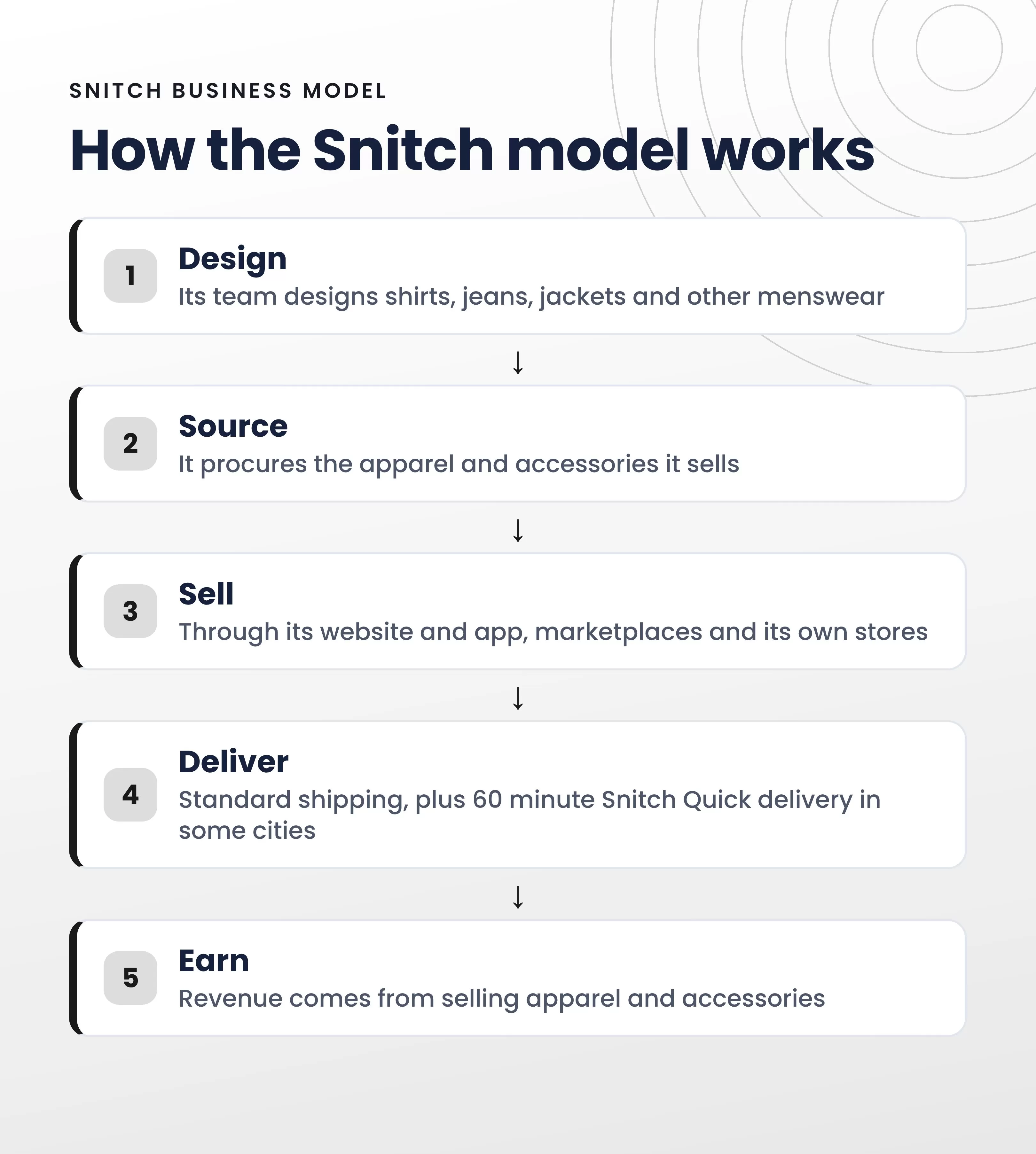
In the Snitch business model, the Bengaluru company designs its own fast fashion clothes for men and sells them on its website and app, on online marketplaces and in its own stores. Selling apparel and accessories is its main revenue stream.
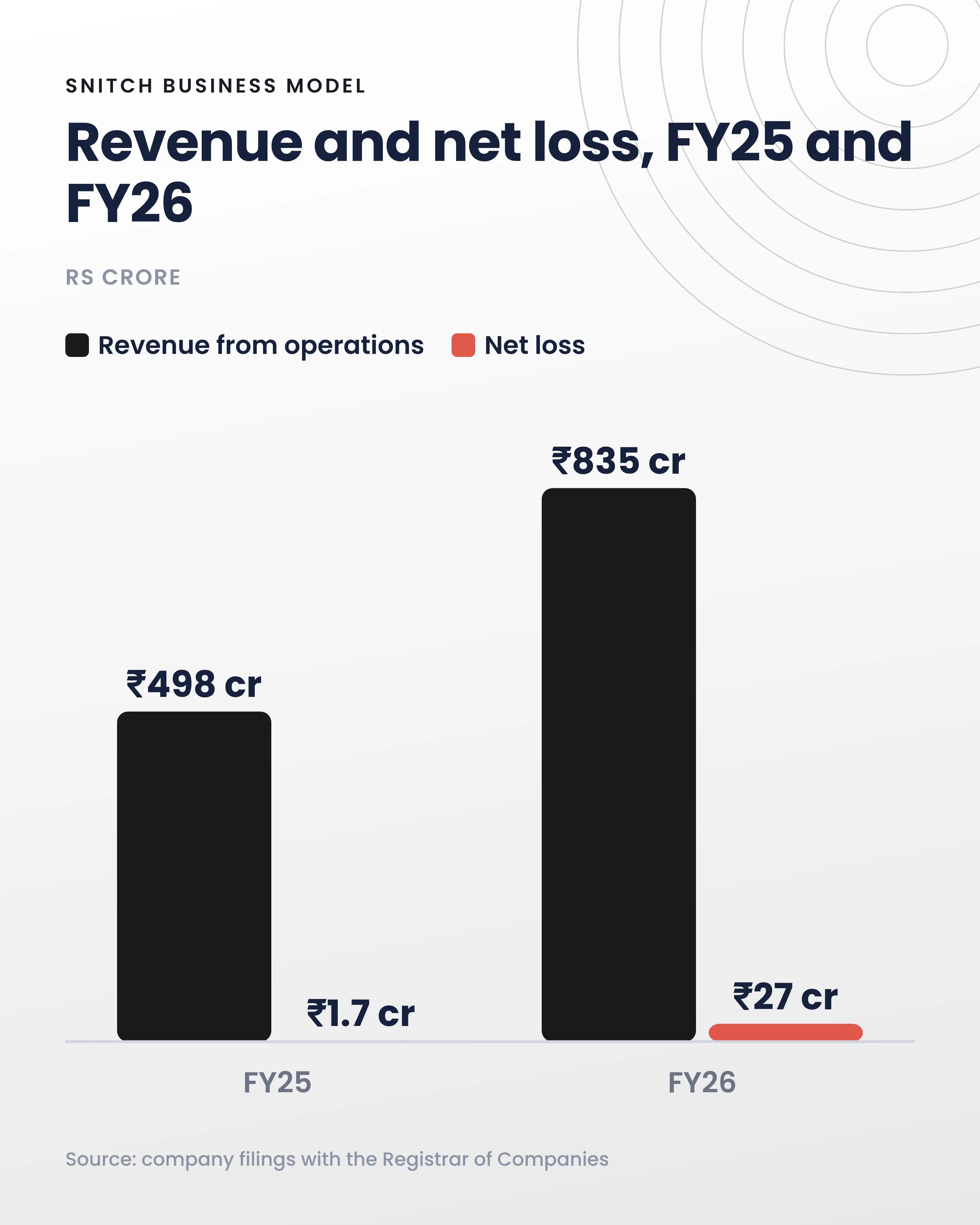
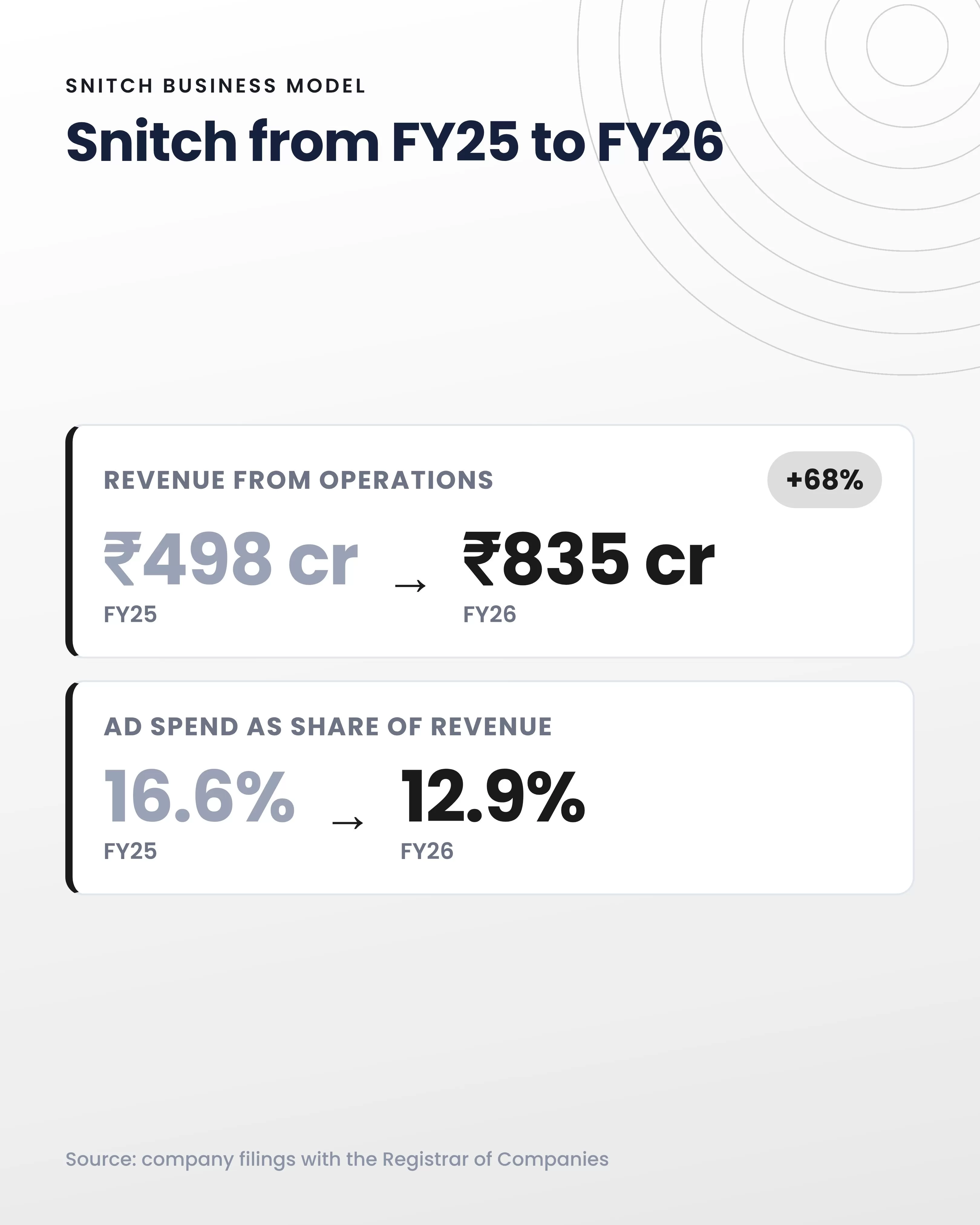
In FY26 (April 2025 to March 2026), Snitch's revenue from operations rose about 68% to ₹835 crore, up from ₹498 crore in FY25. It reported a net loss of ₹27 crore for the year, after a net loss of ₹1.7 crore in FY25.
Snitch at a glance
| Item | Details |
|---|---|
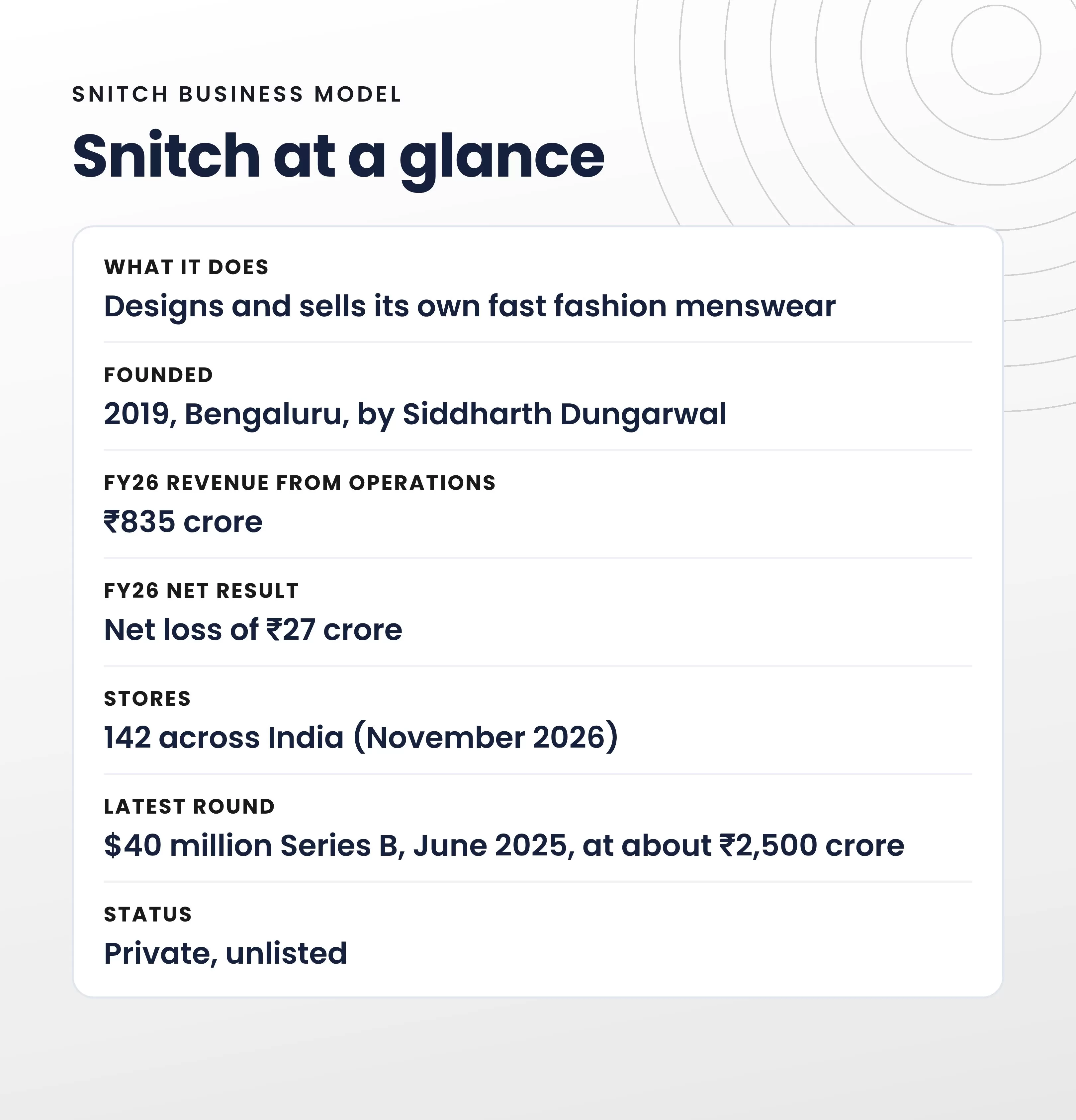
| What it does | Designs and sells its own fast fashion menswear |
| Founded | 2019, Bengaluru |
| Founder | Siddharth Dungarwal (founder and CEO) |
| Revenue from operations (FY26) | ₹835 crore |
| Net result (FY26) | Net loss of ₹27 crore |
| Total expenses (FY26) | ₹873 crore |
| Stores | 142 across India, as listed on its website in November 2026 |
| Latest funding | $40 million Series B led by 360 ONE Asset, June 2025, at a valuation of about ₹2,500 crore |
| Listing status | Private, unlisted |
What Snitch does
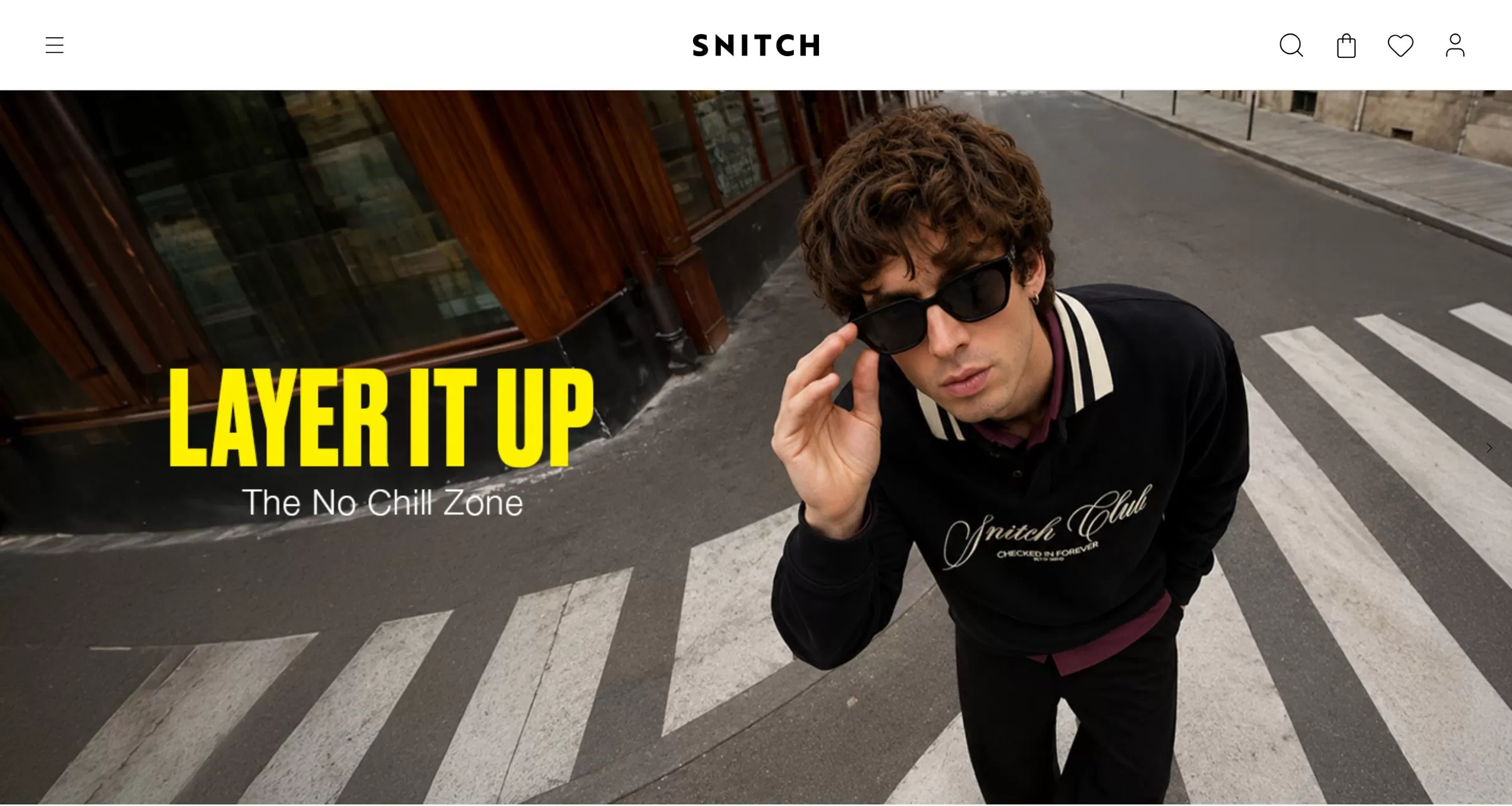
Snitch makes casual and trend-led clothes for young men. Its range covers shirts, T-shirts, jeans, trousers, jackets, sweaters and hoodies, and it has added shoes and accessories. New designs reach the site often, which is the core of a fast fashion brand: short design cycles and frequent new styles.
Siddharth Dungarwal started Snitch in 2019 as a brand that sold to other businesses. During the Covid-19 pandemic it moved to selling directly to shoppers online. It has since added a chain of its own stores, so the same designs now sell online and on the high street.
Its biggest single cost is procuring the apparel and accessories it sells under the Snitch name.
How Snitch makes money
Snitch earns almost all of its money from selling the clothes and accessories it designs. In FY26, that sale of apparel and accessories brought in ₹835 crore of revenue from operations. Adding other income took its total income to ₹849 crore.
The money comes in through three channels:
- Online, own channels. Its own website and app.
- Online marketplaces. Fashion and shopping platforms that list Snitch's products.
- Offline stores. Its own stores, which carry rent and staff costs but let shoppers try clothes on.
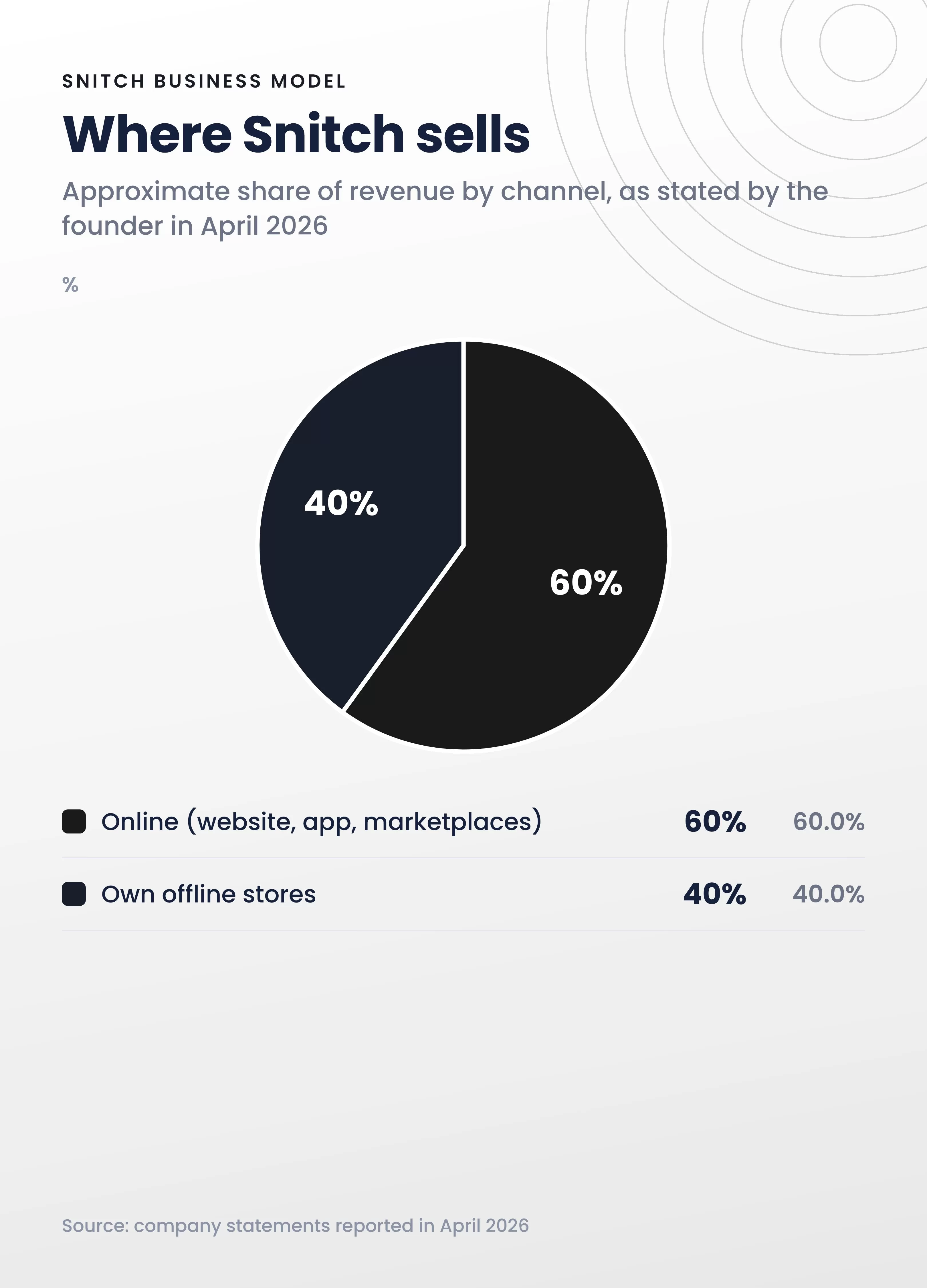
In April 2026 the founder said online channels brought in about 60% of revenue and offline stores about 40%.
Snitch business strategy in stores and quick delivery
Snitch's stores now do two jobs. They sell to walk-in shoppers, and they act as local hubs for Snitch Quick, a 60 minute delivery service that started as a pilot in Bengaluru in October 2025. Orders placed on the app are packed at a nearby store and delivered within 60 minutes.
The website listed 142 Snitch stores across India in November 2026. In July 2026 Snitch bought Berrylush, a women's western wear brand, which keeps its own name. The deal terms were not disclosed.
Snitch's Business Model Canvas
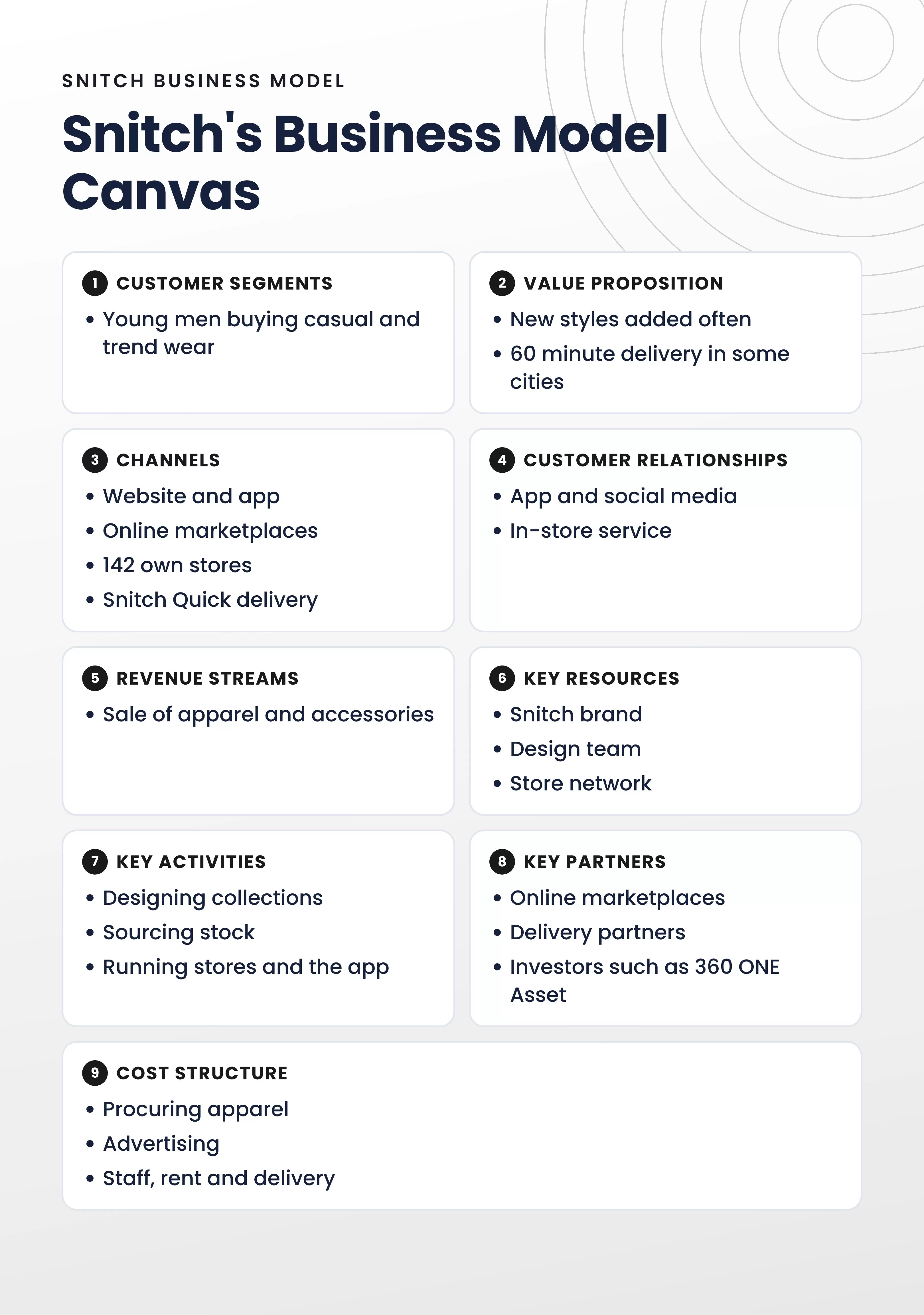
The canvas below sets out the nine building blocks of the business, from who buys to where the costs sit.
Snitch revenue and profit over three years
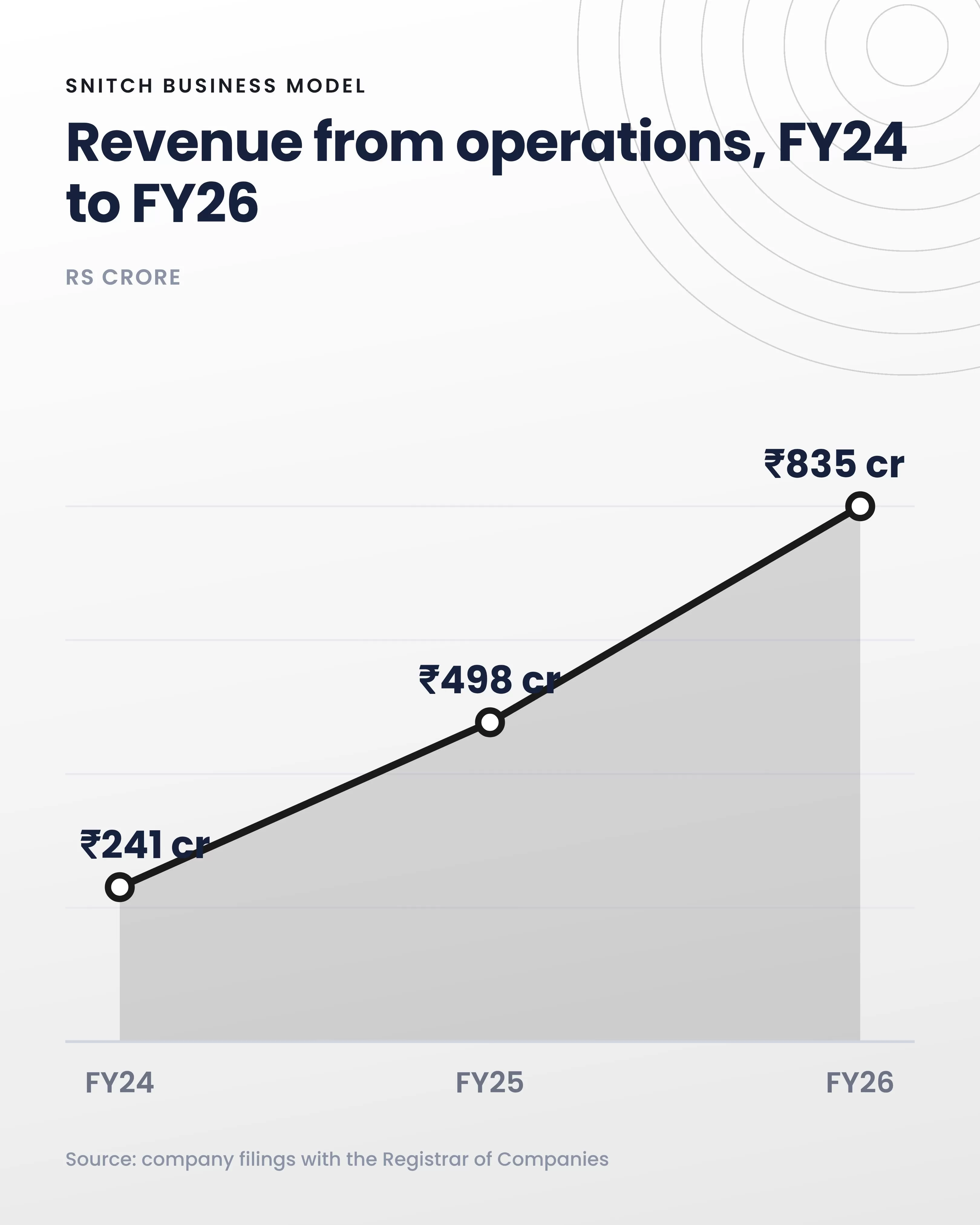
Snitch's revenue from operations was ₹241 crore in FY24, when it made a small net profit of about ₹4 crore. Revenue rose to ₹498 crore in FY25 and ₹835 crore in FY26.
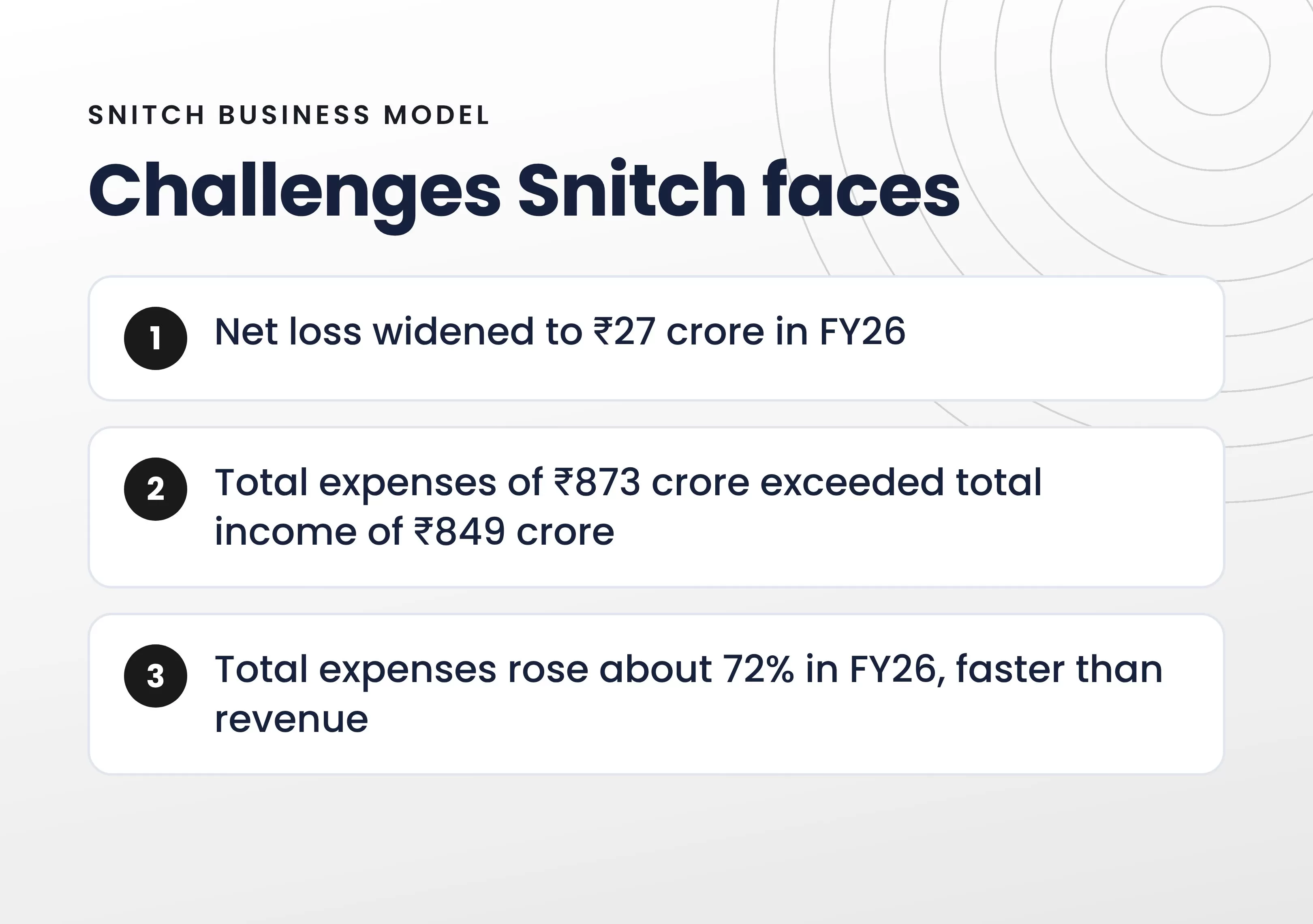
The bottom line moved the other way. Snitch reported a net loss of ₹1.7 crore in FY25 and ₹27 crore in FY26. Total expenses rose about 72% to ₹873 crore in FY26, faster than revenue. Its EBITDA margin was minus 3% for the year.
Advertising and the key numbers
Snitch spent ₹108 crore on advertising and marketing in FY26, up from ₹82.6 crore in FY25. As revenue grew faster than ad spend, advertising fell from about 16.6% of revenue in FY25 to about 12.9% in FY26.
Snitch's journey so far
| When | What happened |
|---|---|
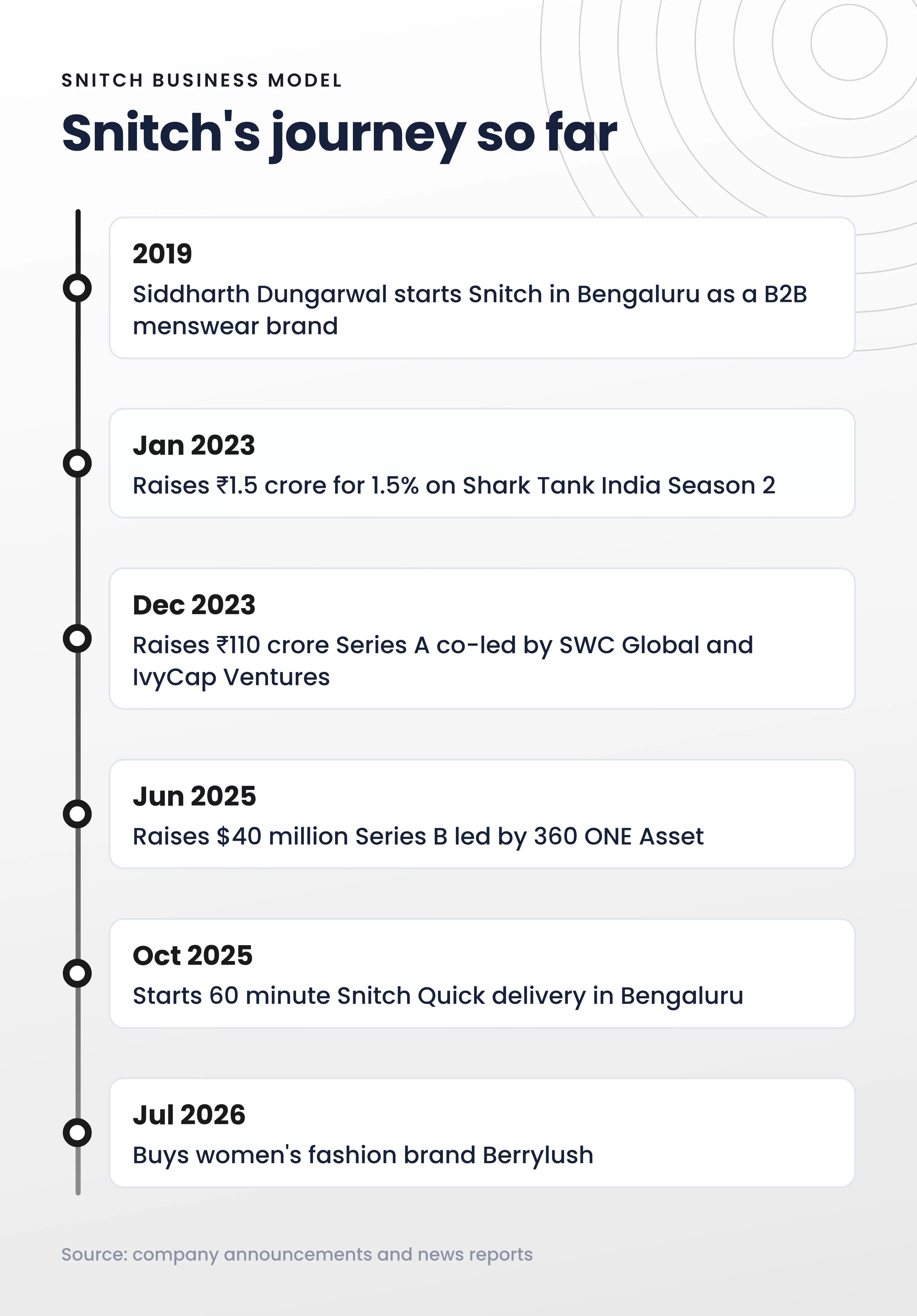
| 2019 | Siddharth Dungarwal starts Snitch in Bengaluru as a B2B menswear brand |
| January 2023 | Raises ₹1.5 crore for 1.5% equity on Shark Tank India Season 2 |
| December 2023 | Raises ₹110 crore in a Series A round co-led by SWC Global and IvyCap Ventures |
| June 2025 | Raises $40 million in a Series B round led by 360 ONE Asset, at a valuation of about ₹2,500 crore |
| October 2025 | Starts the 60 minute Snitch Quick delivery pilot in Bengaluru |
| July 2026 | Acquires women's fashion brand Berrylush |
In all, Snitch has raised about $53 million from investors.
Who Snitch competes with
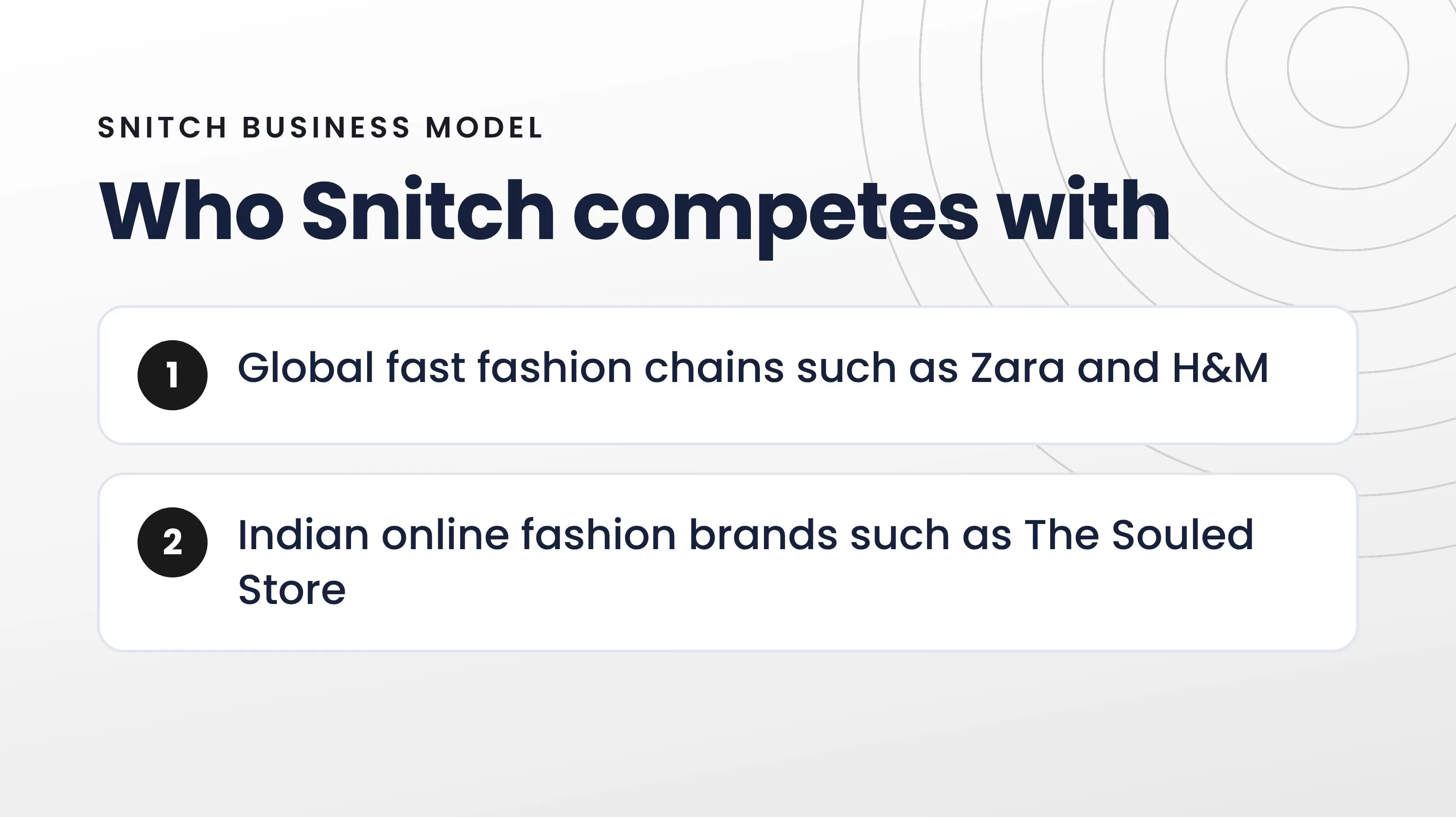
Global fast fashion chains such as Zara and H&M sell similar styles in Indian malls and online. Indian online-first brands such as The Souled Store target the same young shoppers.
Challenges Snitch faces
Snitch's net loss widened to ₹27 crore in FY26, as total expenses of ₹873 crore were higher than total income of ₹849 crore. Opening more stores also adds fixed costs such as rent and staff.
Conclusion on the Snitch business model
Snitch designs its own fast fashion menswear and earns its revenue by selling it on its website and app, on online marketplaces and through 142 stores, some of which also handle 60 minute deliveries.
In FY26 its revenue from operations was ₹835 crore and it reported a net loss of ₹27 crore. Its last funding round, a $40 million Series B in June 2025, valued it at about ₹2,500 crore.