Pilgrim Business Model of Own Brand Skin, Hair and Makeup Sales
How Pilgrim sells its own beauty products online and in stores.

Key Takeaways
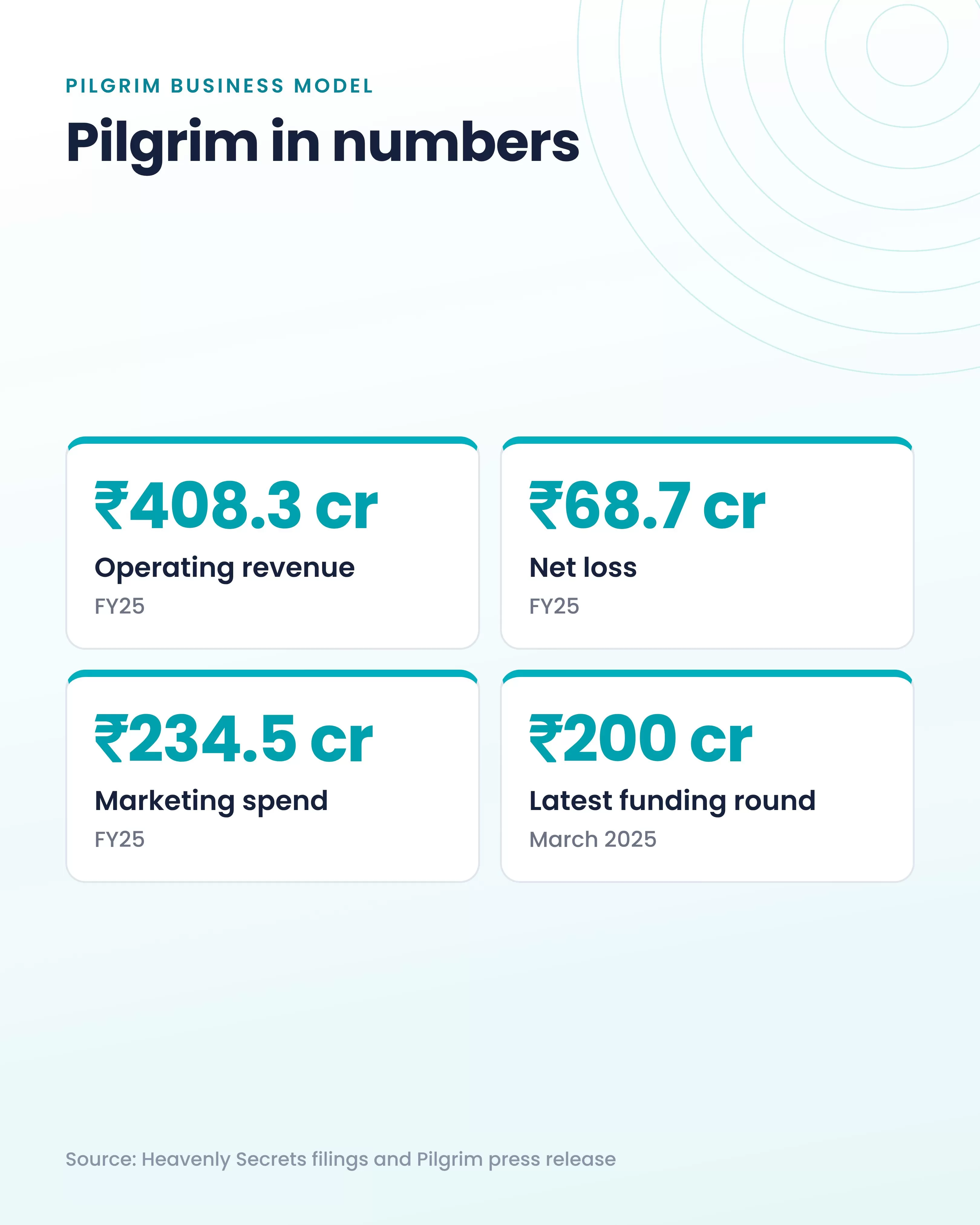
- FY25 operating revenue was ₹408.3 crore, up from ₹198.7 crore.
- Pilgrim reported a net loss of ₹68.7 crore in FY25.
- Marketing spend was ₹234.5 crore in FY25, 48% of total expenses.
- It raised ₹200 crore in March 2025 at about ₹3,000 crore pre-money.
Table of Contents 13 sections
- Pilgrim at a glance
- What Pilgrim does
- How Pilgrim makes money
- Pilgrim revenue growth, FY22 to FY25
- Pilgrim's Business Model Canvas
- Pilgrim revenue and profit, FY23 to FY25
- Marketing, the key cost in the model
- How Pilgrim has funded the business
- Pilgrim's journey so far
- Who Pilgrim competes with
- Challenges Pilgrim faces
- Conclusion on the Pilgrim business model
- FAQs
The Pilgrim business model is built on selling its own skin care, hair care, makeup and fragrance products under the Pilgrim brand, online and increasingly through stores. Almost all of its income comes from product sales.
In FY25 (the year to March 2025), Pilgrim's operating revenue was ₹408.3 crore, up from ₹198.7 crore in FY24. Its net loss was ₹68.7 crore, up from ₹26.3 crore a year earlier. The company behind the brand is Heavenly Secrets Pvt Ltd.
Pilgrim at a glance
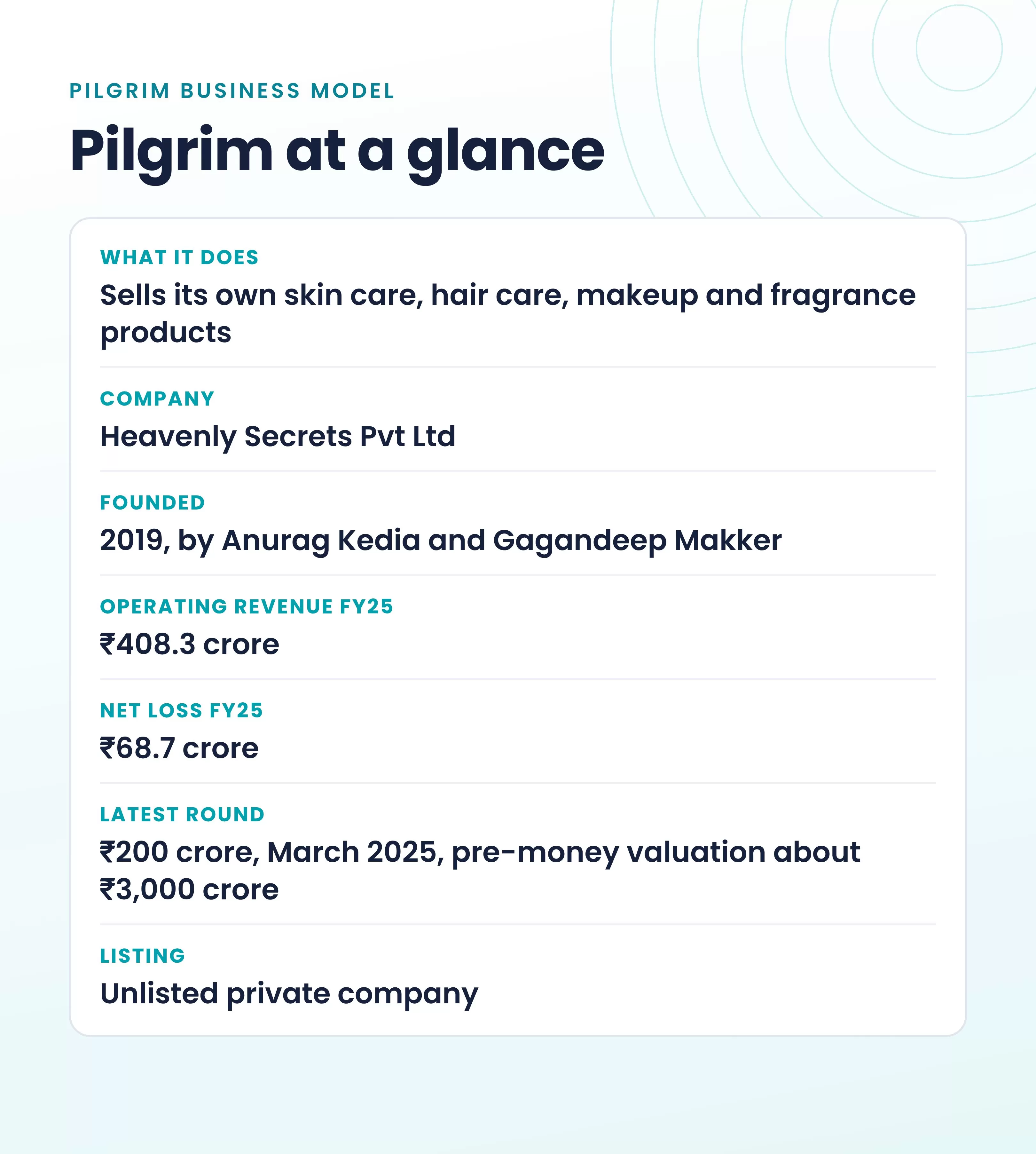
| Item | Detail |
|---|---|
| What it does | Sells its own skin care, hair care, makeup and fragrance products |
| Company | Heavenly Secrets Pvt Ltd |
| Founded | 2019 |
| Founders | Anurag Kedia and Gagandeep Makker |
| Operating revenue (FY25) | ₹408.3 crore |
| Total income (FY25) | ₹417.7 crore |
| Net loss (FY25) | ₹68.7 crore |
| Total expenses (FY25) | ₹486.4 crore |
| Latest funding round | ₹200 crore in March 2025, at a pre-money valuation of about ₹3,000 crore |
| Listing status | Unlisted private company |
What Pilgrim does

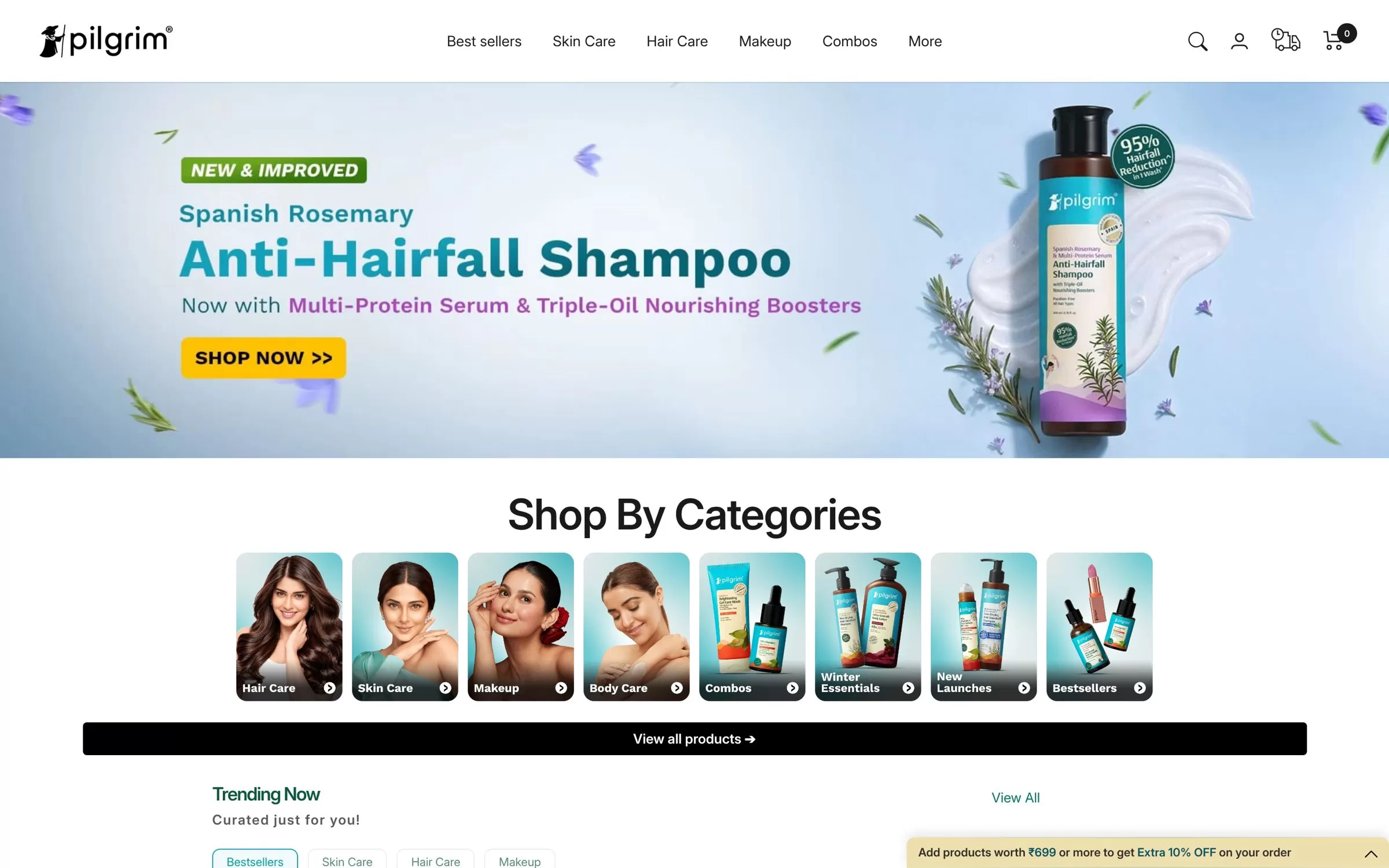
Pilgrim is an Indian beauty and personal care brand. Its range covers hair care, skin care, makeup, body care and fragrances, sold mainly under the Pilgrim name.
Pilgrim sells directly to shoppers through its own website and app. It also sells on large online marketplaces and has added an offline presence through its own stores and partner stores.
Where Pilgrim sells its products
Online, Pilgrim sells on its own website and app and on major e-commerce platforms. Offline, it sells through its own stores and through partner stores that stock its range alongside other brands. Its retail presence has been growing.
How Pilgrim makes money
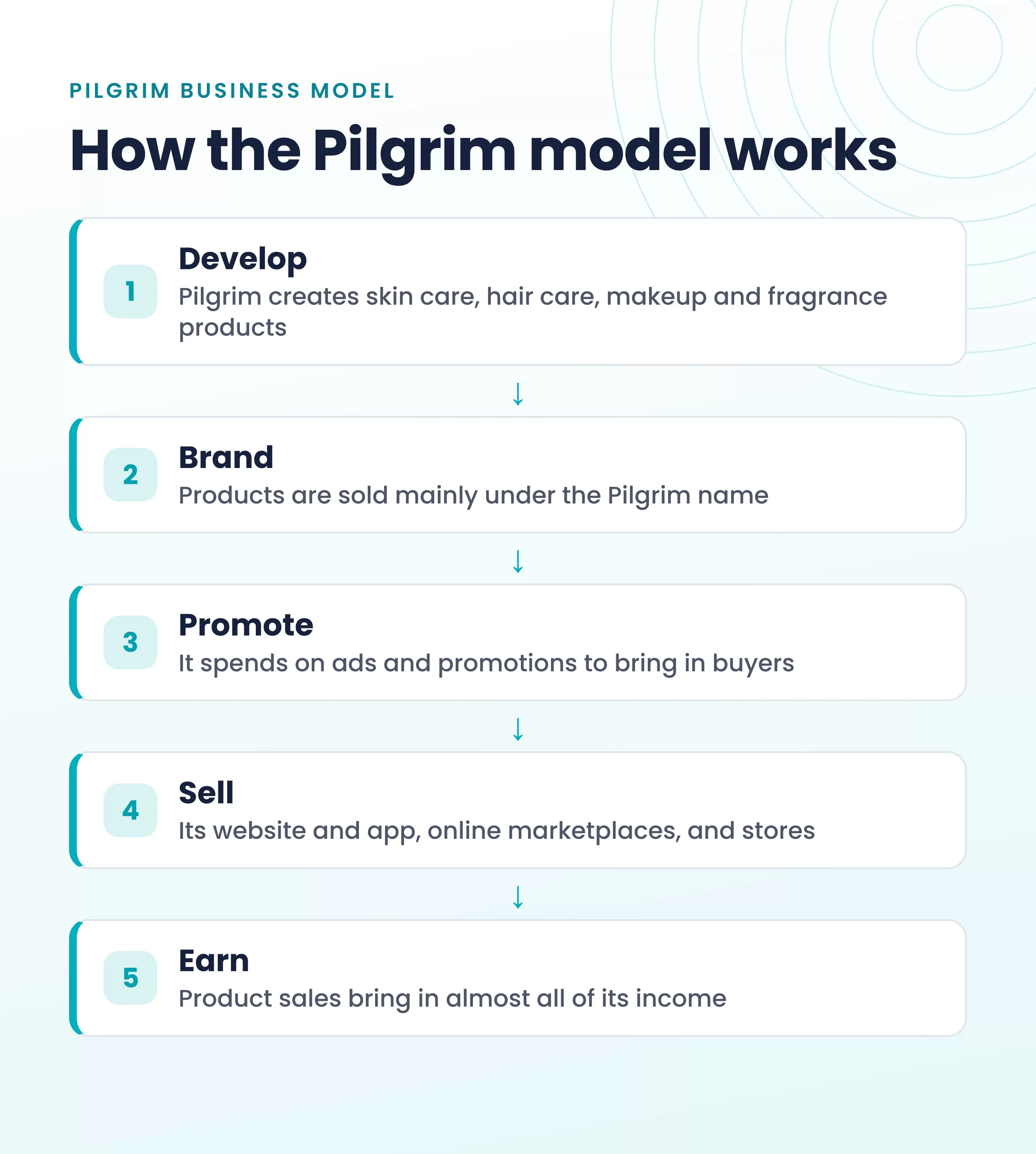
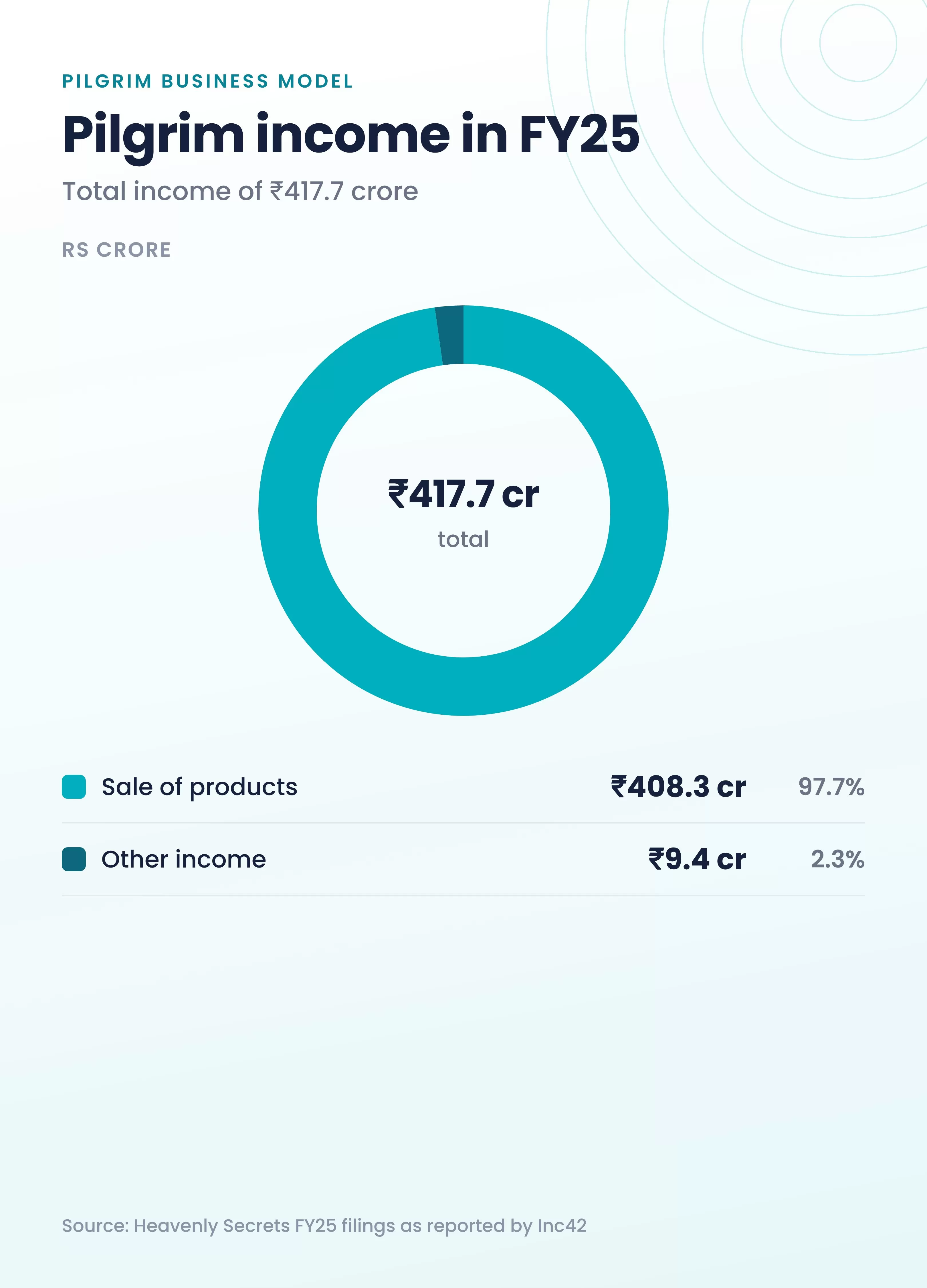
Pilgrim earns almost all of its money by selling its products. In FY25, the sale of products brought in ₹408.3 crore. Other income added about ₹9.4 crore. Together these made a total income of ₹417.7 crore.
That means product sales were about 97.7% of total income in FY25, and other income was about 2.3%.
Its products are sold mainly under the Pilgrim brand.
Pilgrim revenue growth, FY22 to FY25
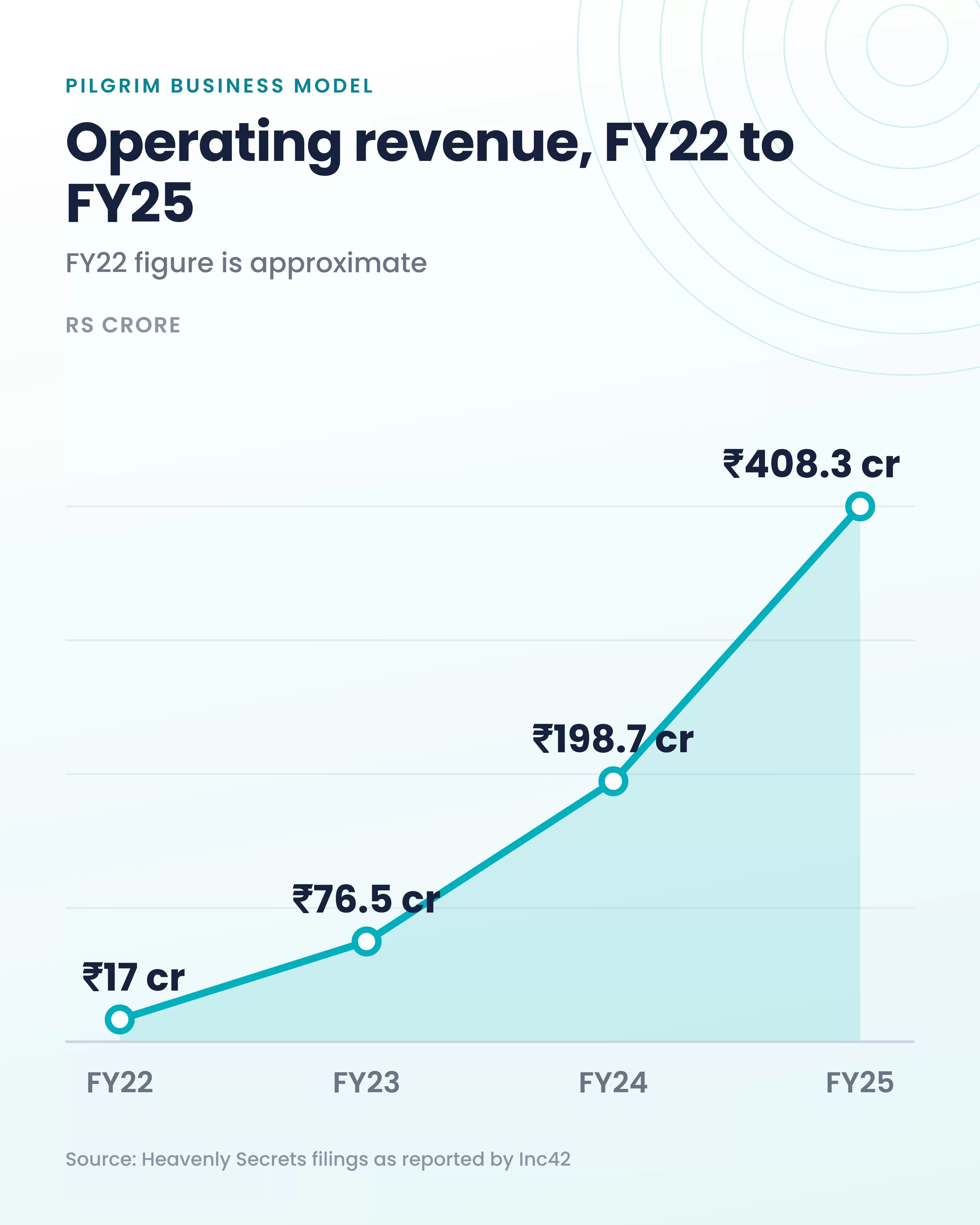
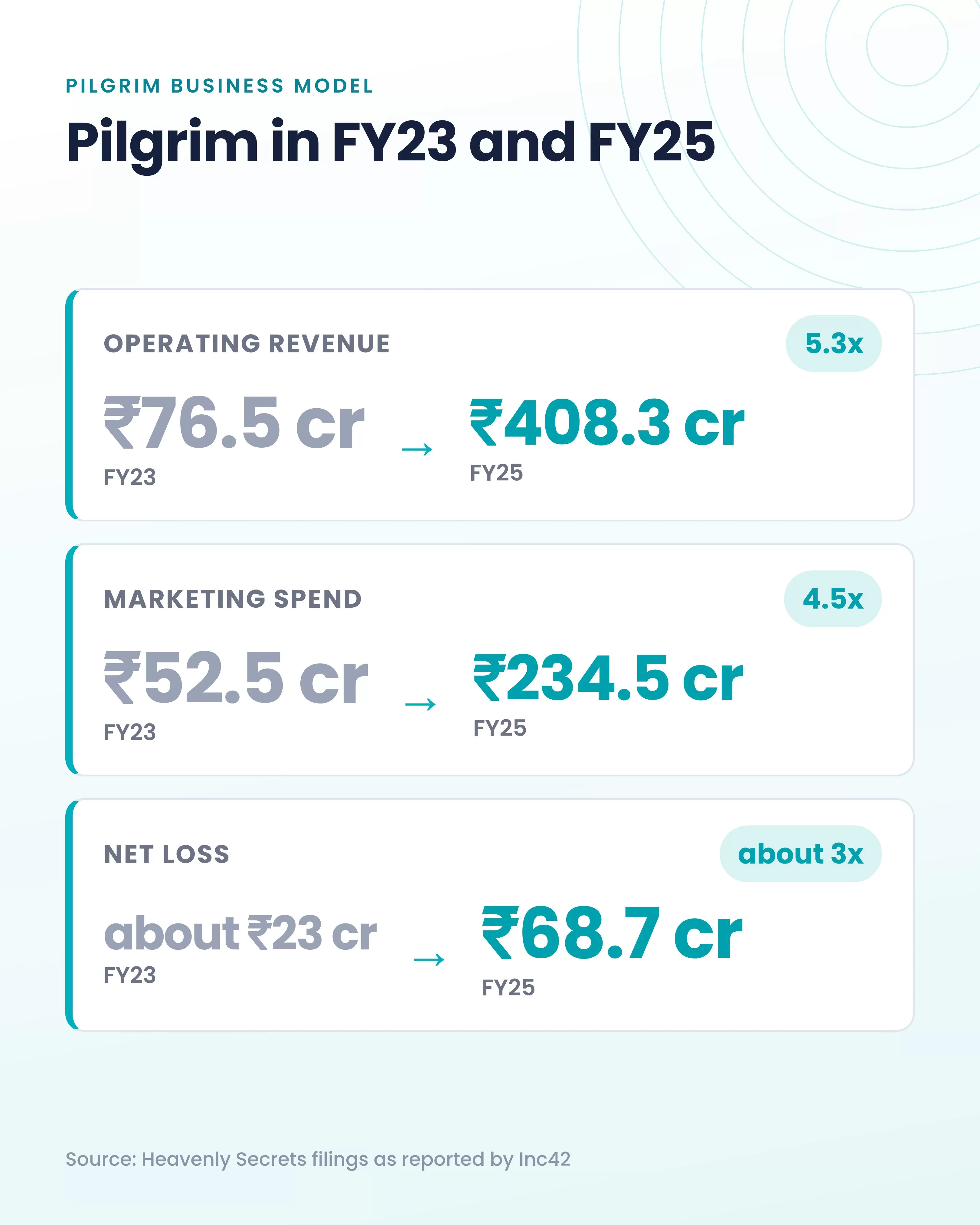
Operating revenue was about ₹17 crore in FY22 and ₹76.5 crore in FY23. It then rose to ₹198.7 crore in FY24 and ₹408.3 crore in FY25. Between FY23 and FY25, operating revenue grew about 5.3 times.
Pilgrim's Business Model Canvas
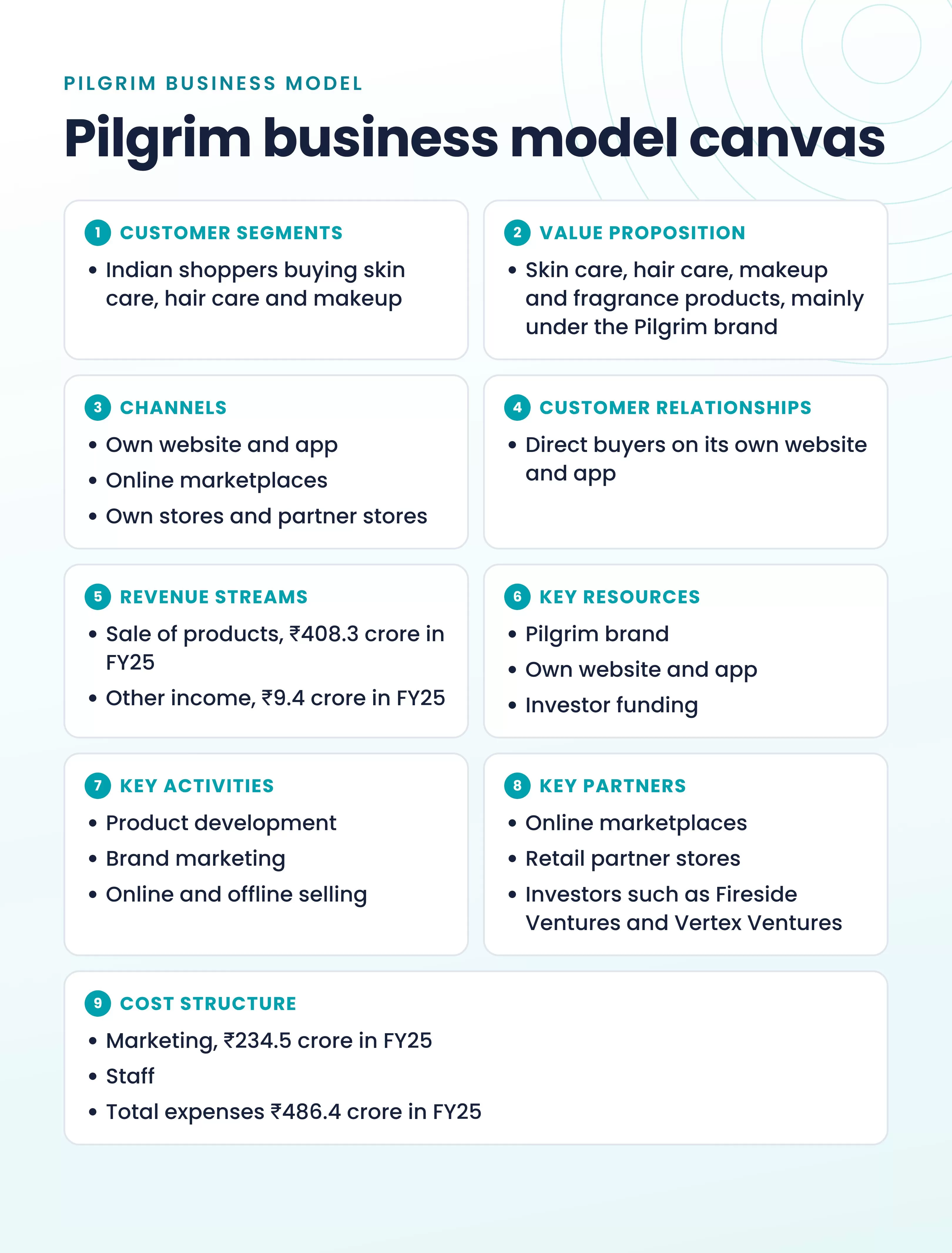
The canvas below sets out who Pilgrim sells to, what it offers, how it reaches buyers and where its money comes from and goes.
Pilgrim revenue and profit, FY23 to FY25
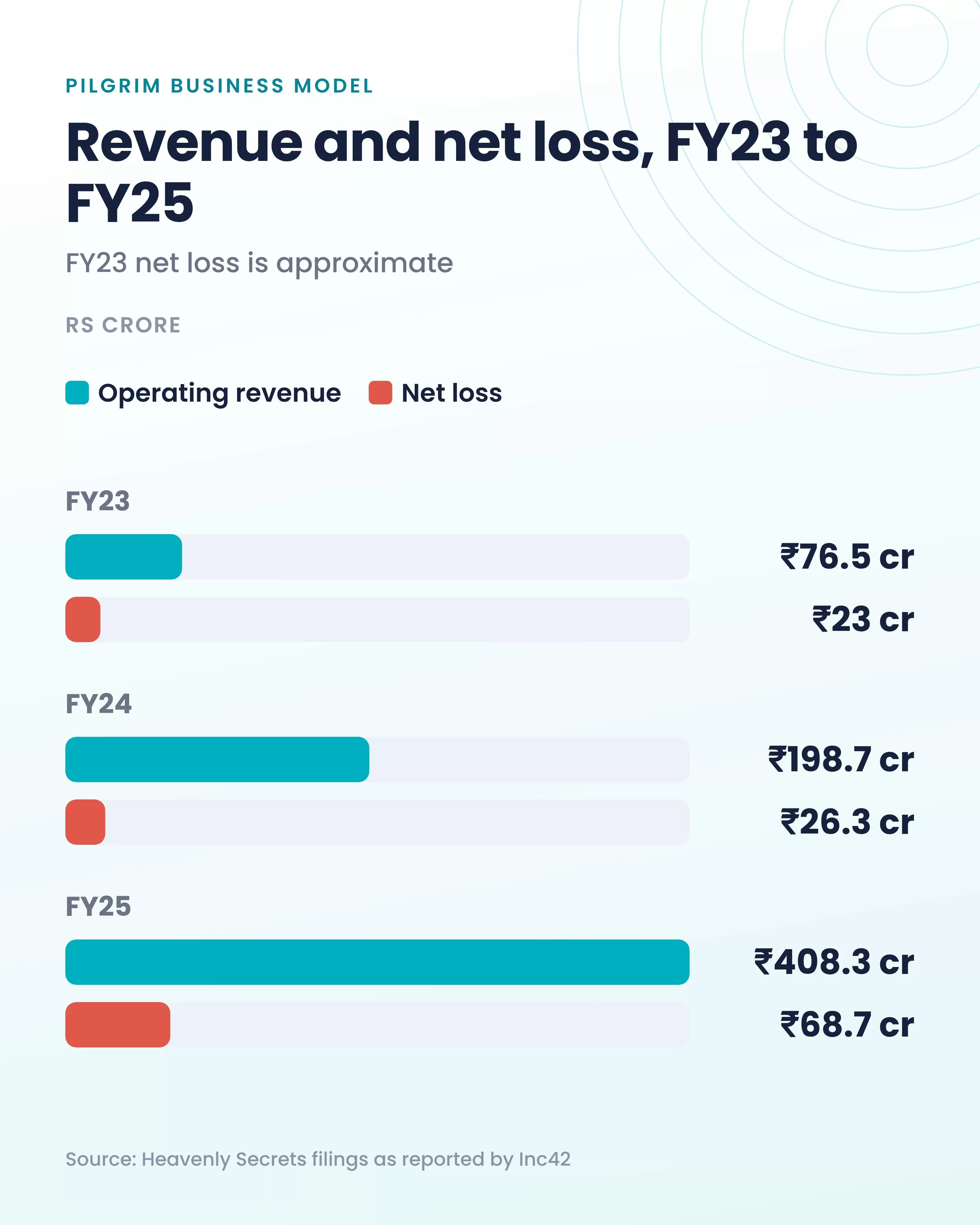
Pilgrim has reported a net loss in each of the last three reported years. The net loss was about ₹23 crore in FY23, ₹26.3 crore in FY24 and ₹68.7 crore in FY25. Total expenses in FY25 were ₹486.4 crore, against total income of ₹417.7 crore.
Marketing, the key cost in the model
Advertising and promotion is Pilgrim's largest cost. Its advertising and promotion was ₹52.5 crore in FY23, ₹108.8 crore in FY24 and ₹234.5 crore in FY25. In FY25, marketing made up 48% of total expenses.
How Pilgrim has funded the business
Pilgrim reported a net loss in each of FY23, FY24 and FY25, and it has raised money from investors in several rounds. Its backers include Fireside Ventures, Vertex Ventures Southeast Asia and India, and the Narotam Sekhsaria Family Office. The March 2025 round mixed new shares sold by the company with shares sold by existing holders, and set a pre-money valuation of about ₹3,000 crore.
Pilgrim's journey so far
| When | What happened |
|---|---|
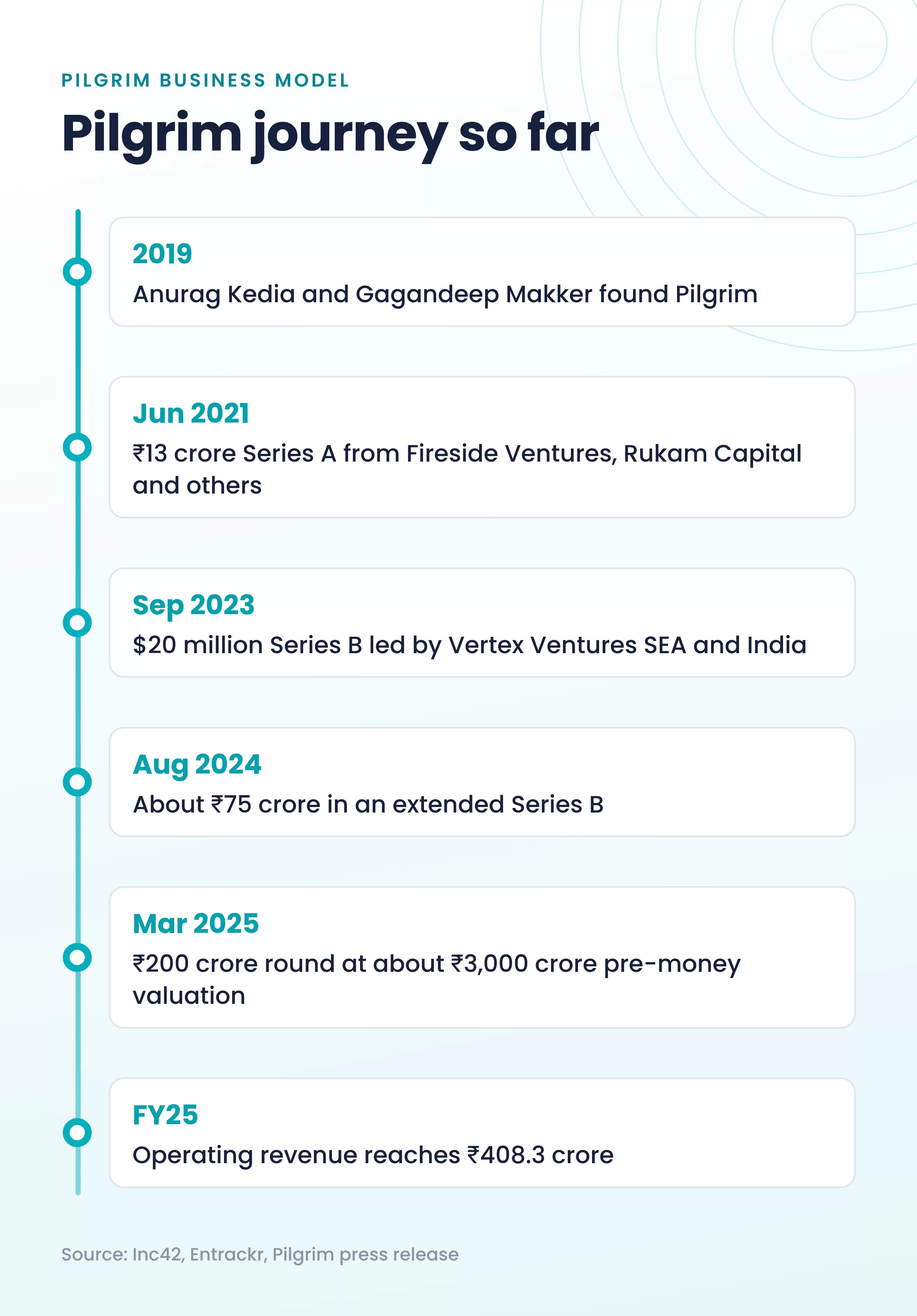
| 2019 | Anurag Kedia and Gagandeep Makker found Pilgrim |
| June 2021 | Raises ₹13 crore in a Series A round from investors including Fireside Ventures and Rukam Capital |
| September 2023 | Raises $20 million in a Series B round led by Vertex Ventures Southeast Asia and India |
| August 2024 | Raises about ₹75 crore in an extended Series B round |
| March 2025 | Raises ₹200 crore through primary and secondary deals at a pre-money valuation of about ₹3,000 crore |
| FY25 | Operating revenue reaches ₹408.3 crore |
Who Pilgrim competes with
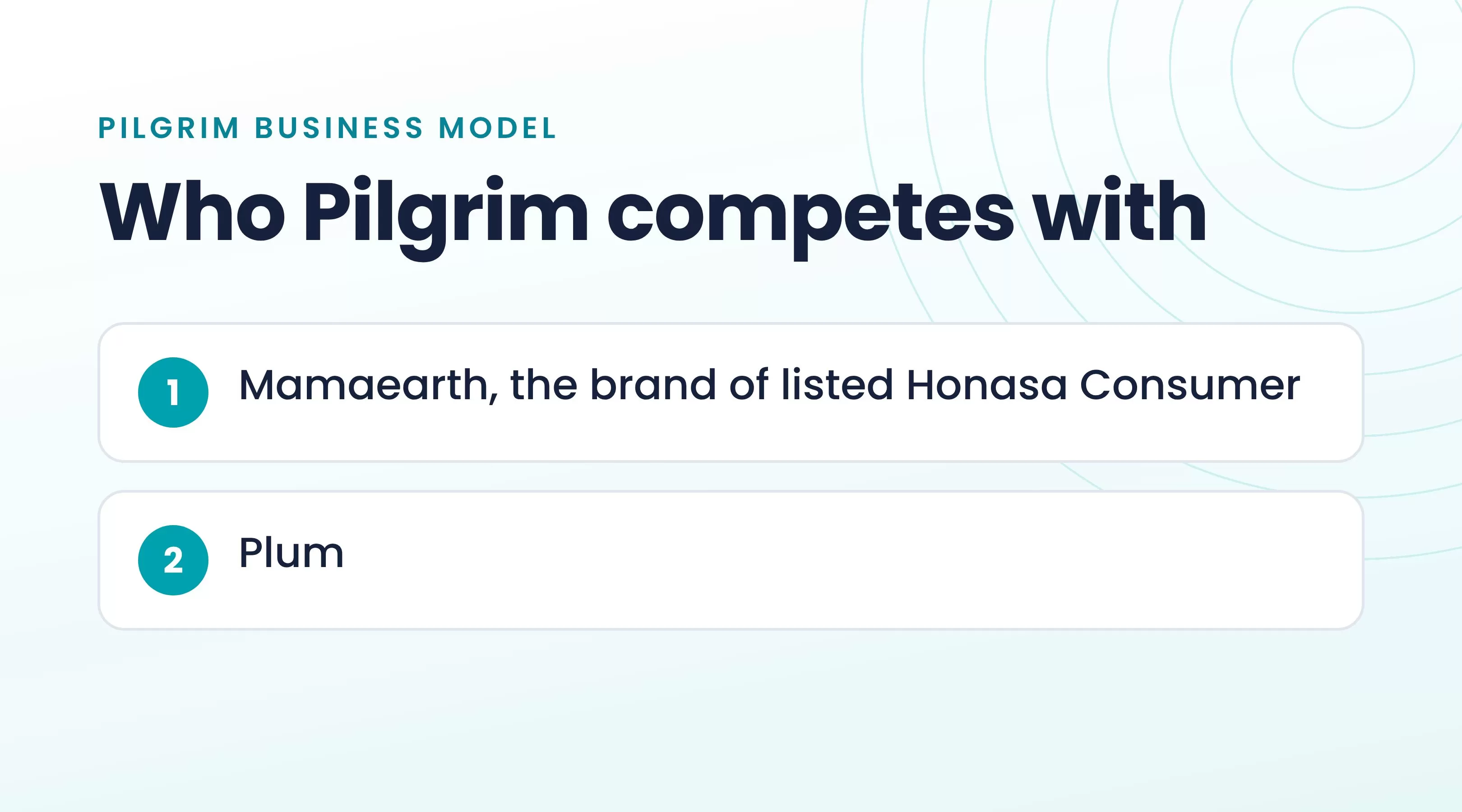
Pilgrim's rivals include Mamaearth, the brand of the listed company Honasa Consumer, and Plum.
Challenges Pilgrim faces
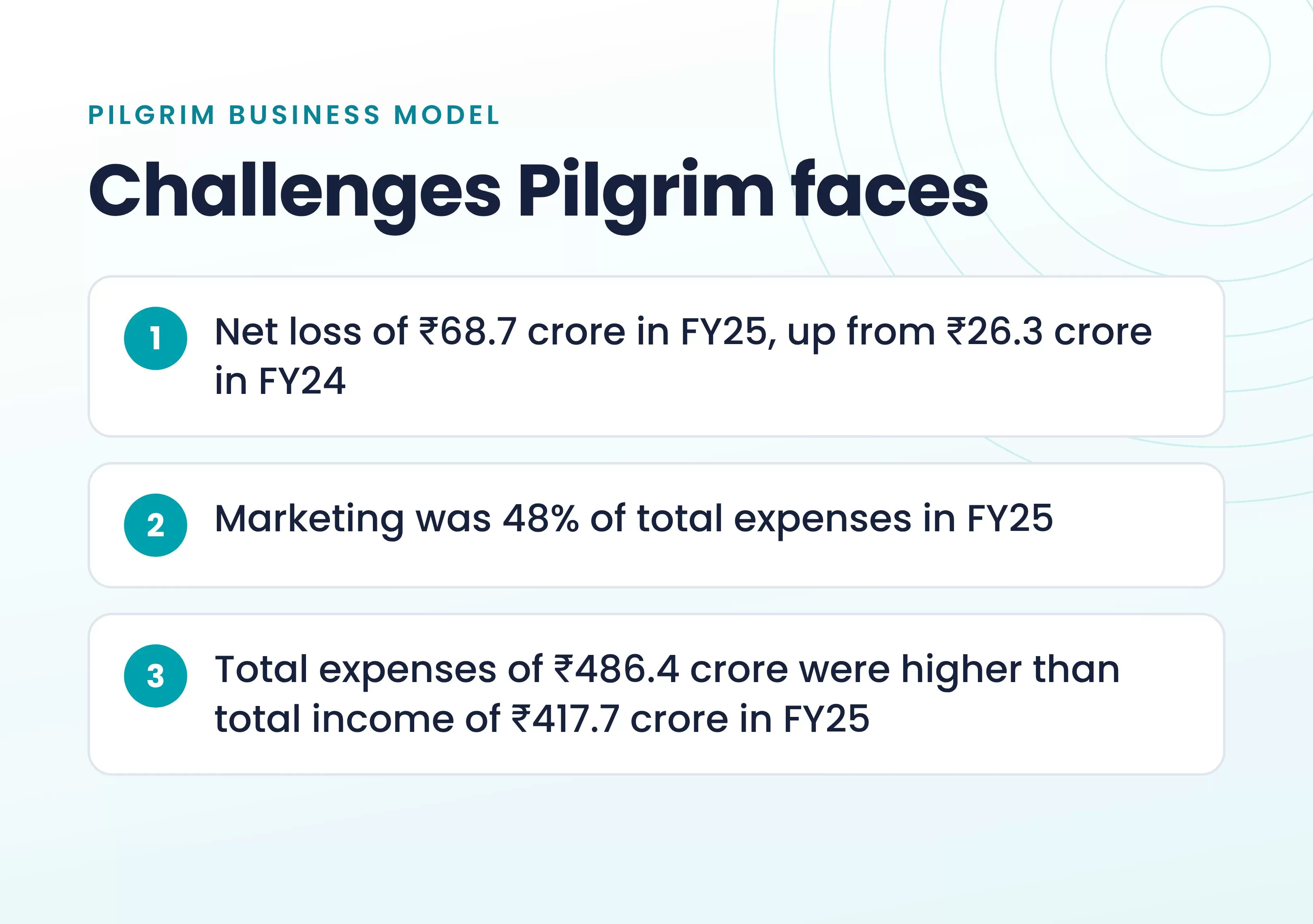
Pilgrim's net loss rose to ₹68.7 crore in FY25 as its spending grew faster than its income. Marketing was its largest expense, and total expenses of ₹486.4 crore were higher than total income of ₹417.7 crore.
Conclusion on the Pilgrim business model
Pilgrim develops and sells its own skin care, hair care, makeup and fragrance products, mainly under the Pilgrim brand. It reaches shoppers through its own website and app, online marketplaces, and its own and partner stores, and almost all of its income comes from product sales.
In FY25, its operating revenue was ₹408.3 crore and its net loss was ₹68.7 crore. Its latest funding round, in March 2025, raised ₹200 crore at a pre-money valuation of about ₹3,000 crore.