IRCTC Business Model of Rail Tickets, Catering, Water and Tours
How IRCTC earns from tickets, catering, water and tours.

Key Takeaways
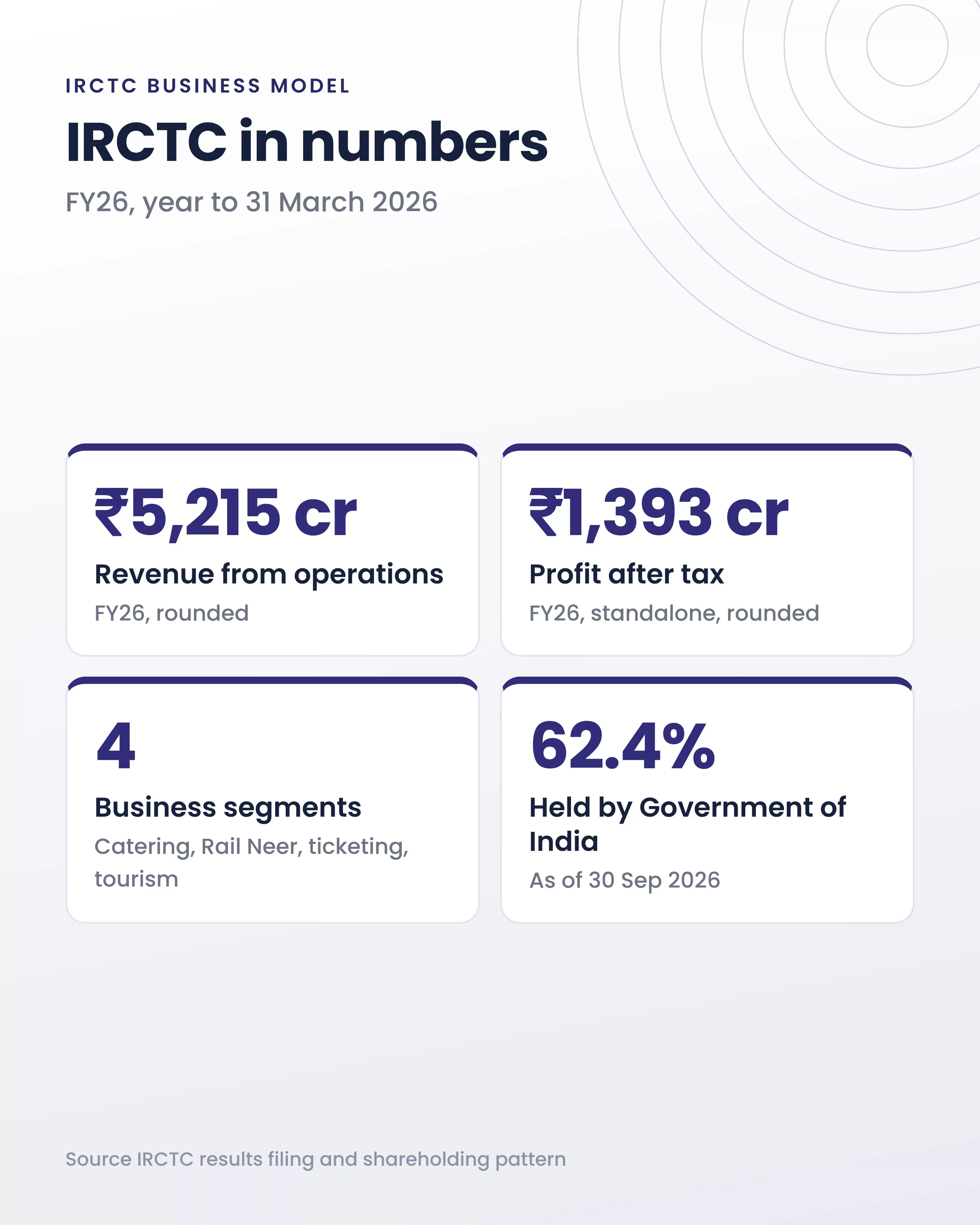
- FY26 revenue from operations was ₹5,214.86 crore, up 11.55% from ₹4,674.77 crore.
- Standalone profit after tax in FY26 was ₹1,393.37 crore, up about 6% on FY25.
- Catering was the largest segment in FY26 with revenue of ₹2,398.75 crore.
- The Government of India held 62.4% of IRCTC as of 30 September 2026.
Table of Contents 11 sections
The IRCTC business model rests on four lines of business: online railway tickets, catering, Rail Neer packaged water and tours. In FY26 (the year to 31 March 2026) IRCTC reported revenue from operations of ₹5,214.86 crore and a standalone profit after tax of ₹1,393.37 crore.
IRCTC is a Government of India company that sells services connected to Indian Railways. This post explains how IRCTC makes money, segment by segment.
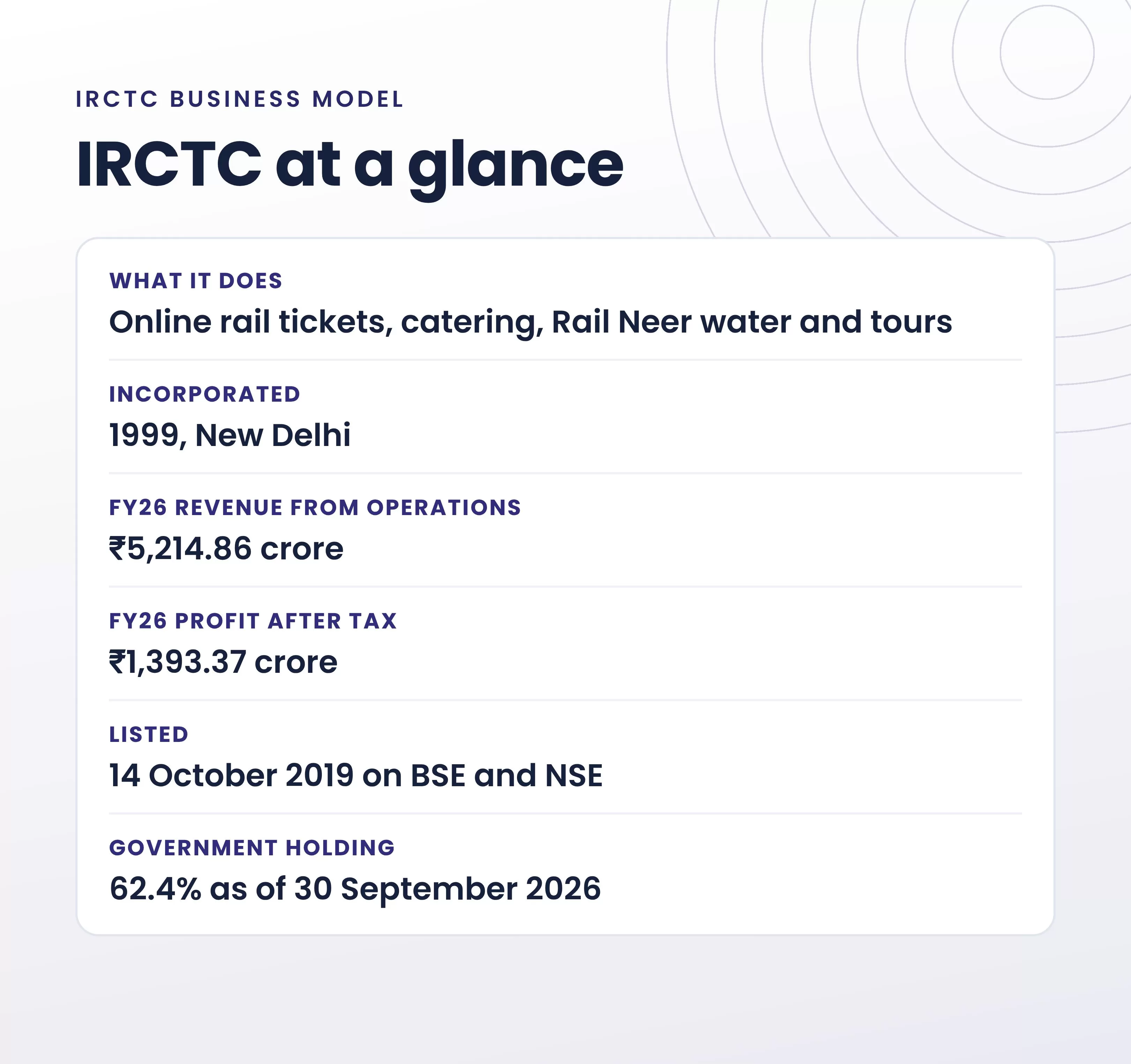
IRCTC at a glance
| What it does | Online rail tickets, catering, Rail Neer packaged water and tours |
|---|---|
| Incorporated | 1999, New Delhi |
| FY26 revenue from operations | ₹5,214.86 crore |
| FY26 profit after tax (standalone) | ₹1,393.37 crore |
| Listed | 14 October 2019 on BSE and NSE |
| Government of India holding | 62.4% as of 30 September 2026 |
| Subsidiary | IRCTC Payments Ltd |
What IRCTC does
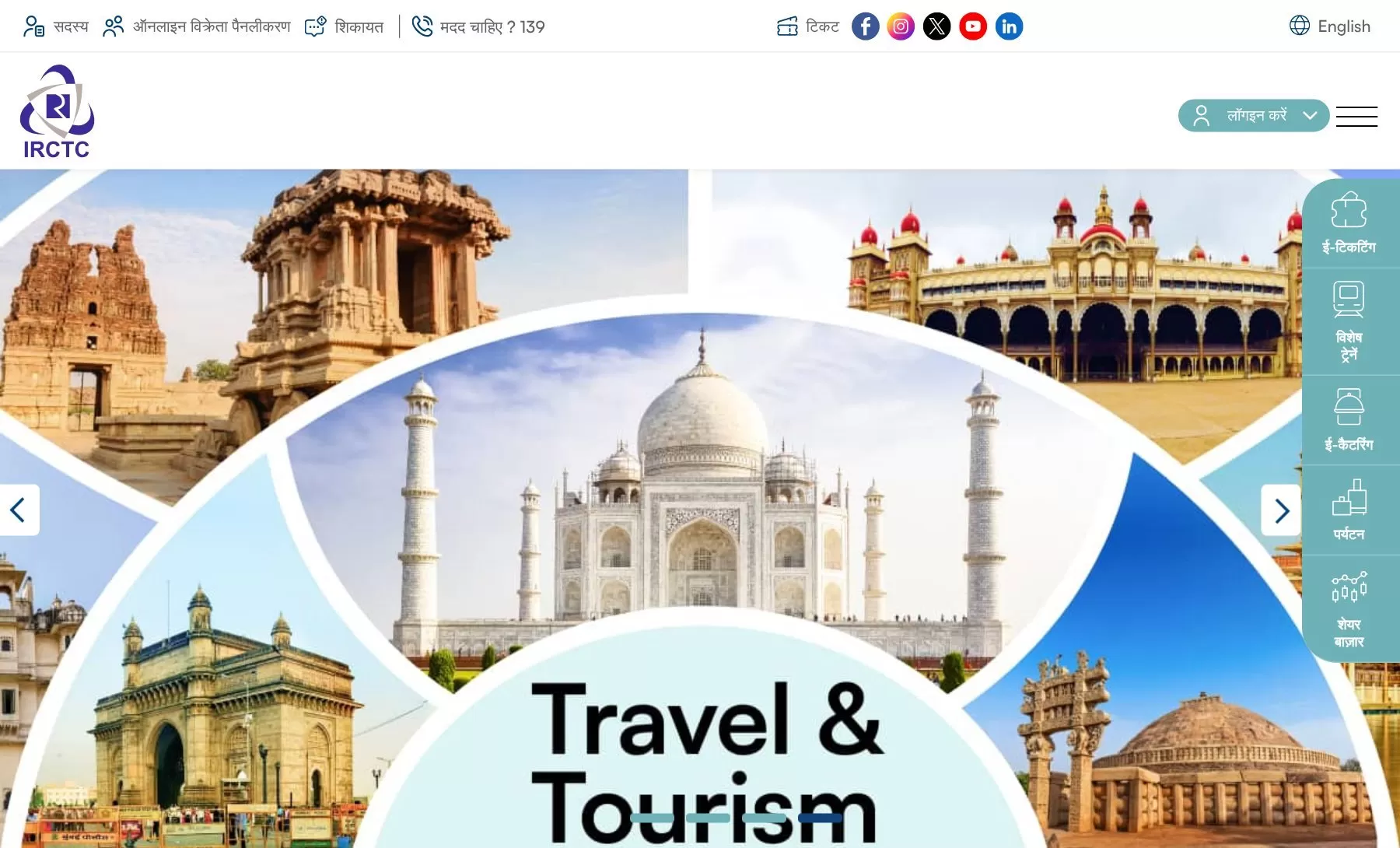
IRCTC was incorporated in 1999 and is based in New Delhi. It handles online railway ticketing, catering and packaged water for Indian Railways. Its shares listed on BSE and NSE on 14 October 2019, and it was conferred Navratna status in March 2025.
IRCTC has one subsidiary, IRCTC Payments Ltd. In August 2025 the company received an in-principle approval from the Reserve Bank of India for this subsidiary to operate as a payment aggregator. IRCTC reports its results on a standalone and a consolidated basis, and its revenue from operations is the same on both.
How IRCTC makes money
IRCTC reports four segments. Catering is the largest by revenue, followed by internet ticketing and tourism. Rail Neer, its packaged drinking water, is the fourth segment.
| Segment | FY26 revenue | FY26 segment result |
|---|---|---|
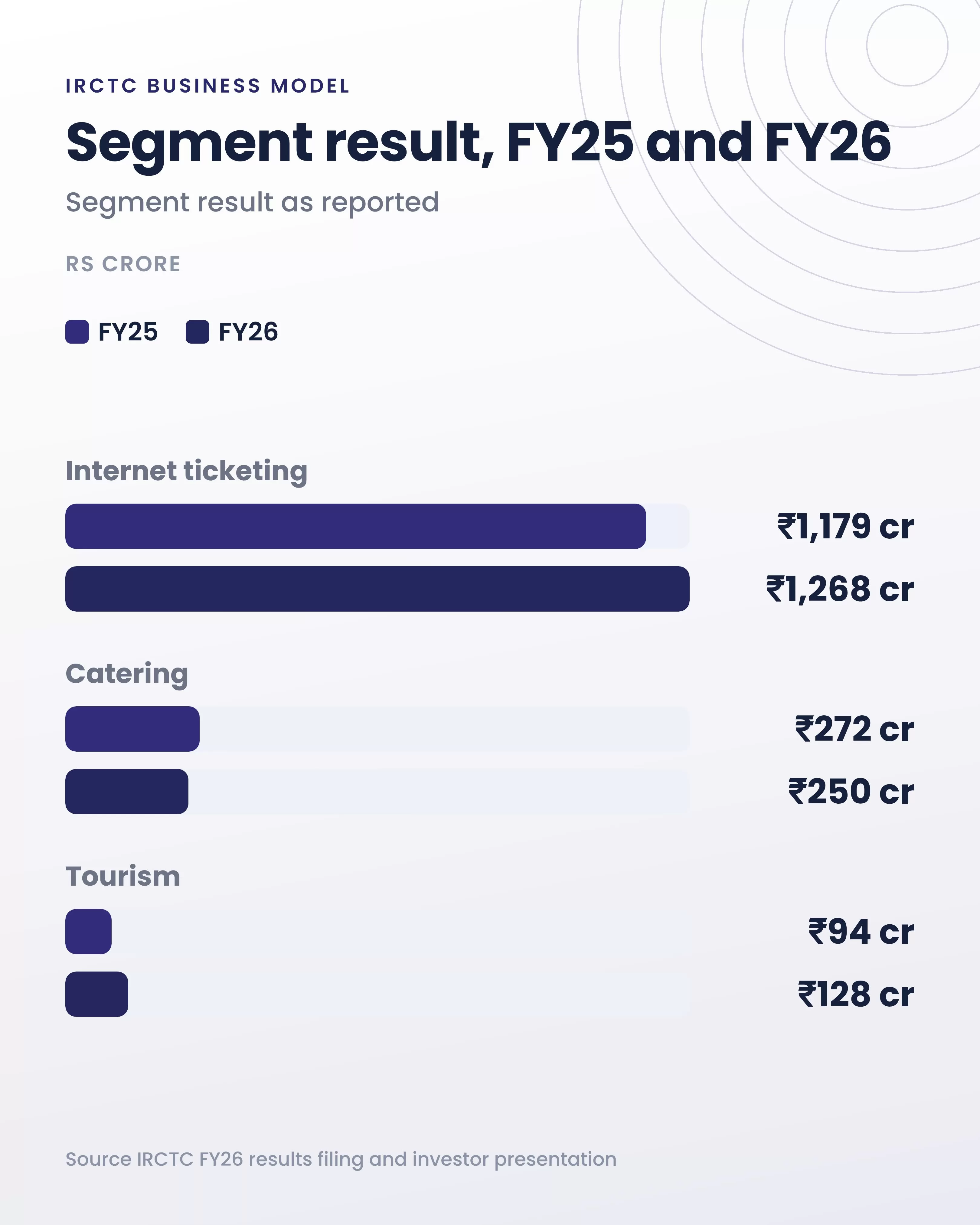
| Catering | ₹2,398.75 crore | about ₹250 crore |
| Internet ticketing | ₹1,535.51 crore | about ₹1,268 crore |
| Tourism | ₹890.08 crore | about ₹128 crore |
Rail Neer, the fourth segment, is not shown in the table.
IRCTC revenue model by segment
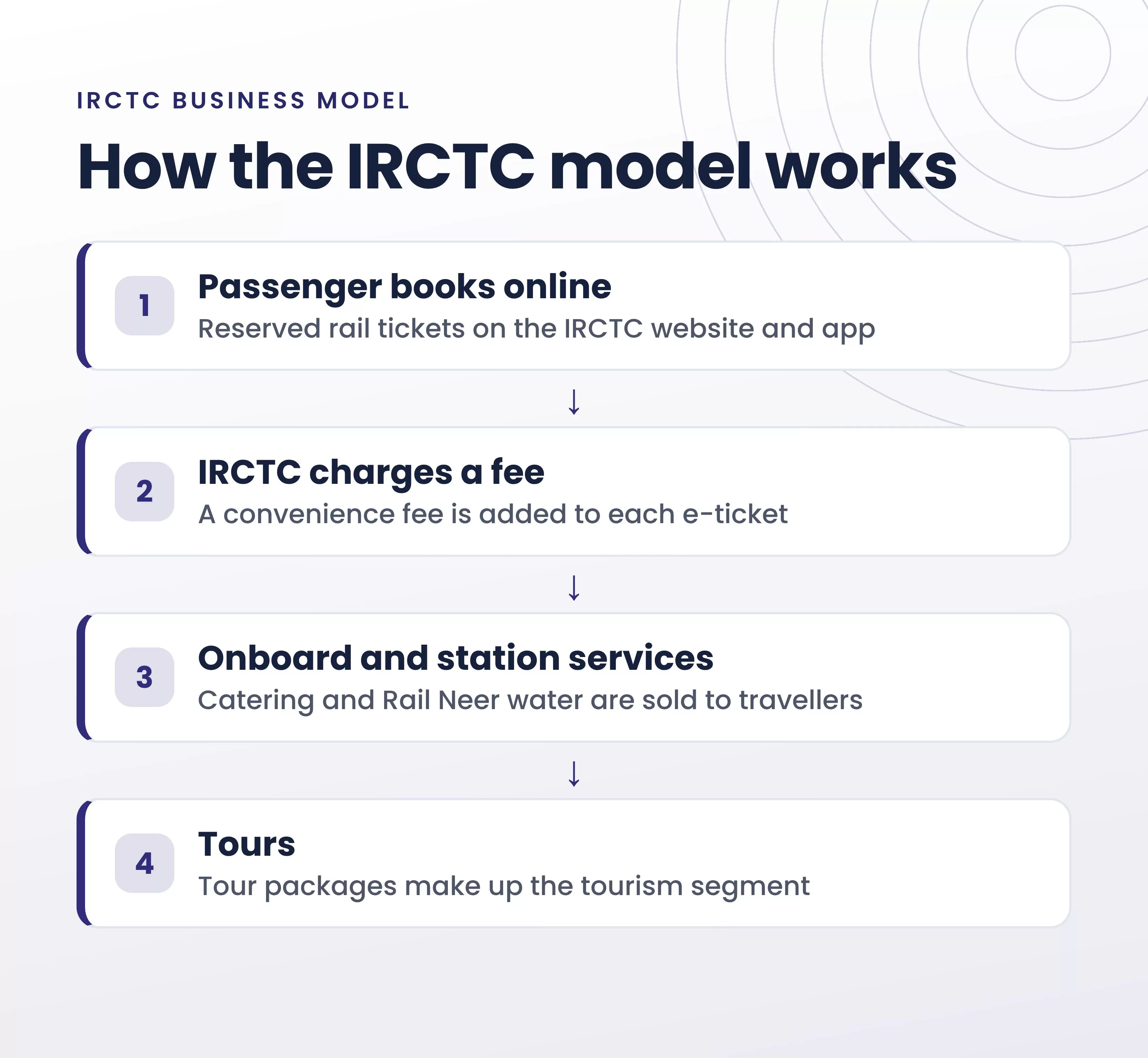
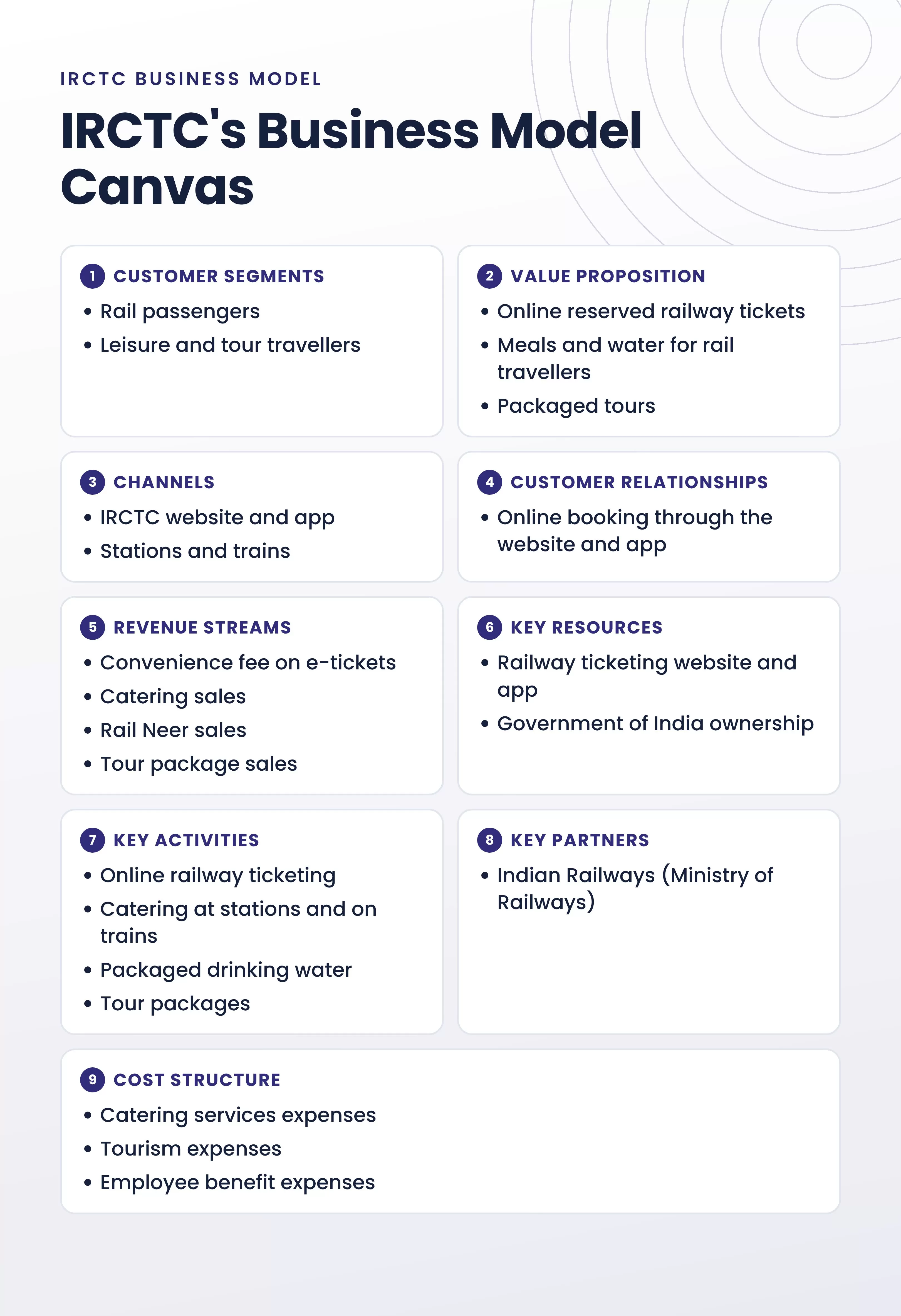
In internet ticketing, passengers book reserved railway tickets on the IRCTC website and app. IRCTC adds a convenience fee to each e-ticket.
Catering covers meals at stations and on trains. Tourism covers tour packages. In FY26 the internet ticketing segment earned a result of about ₹1,268 crore on revenue of ₹1,535.51 crore.
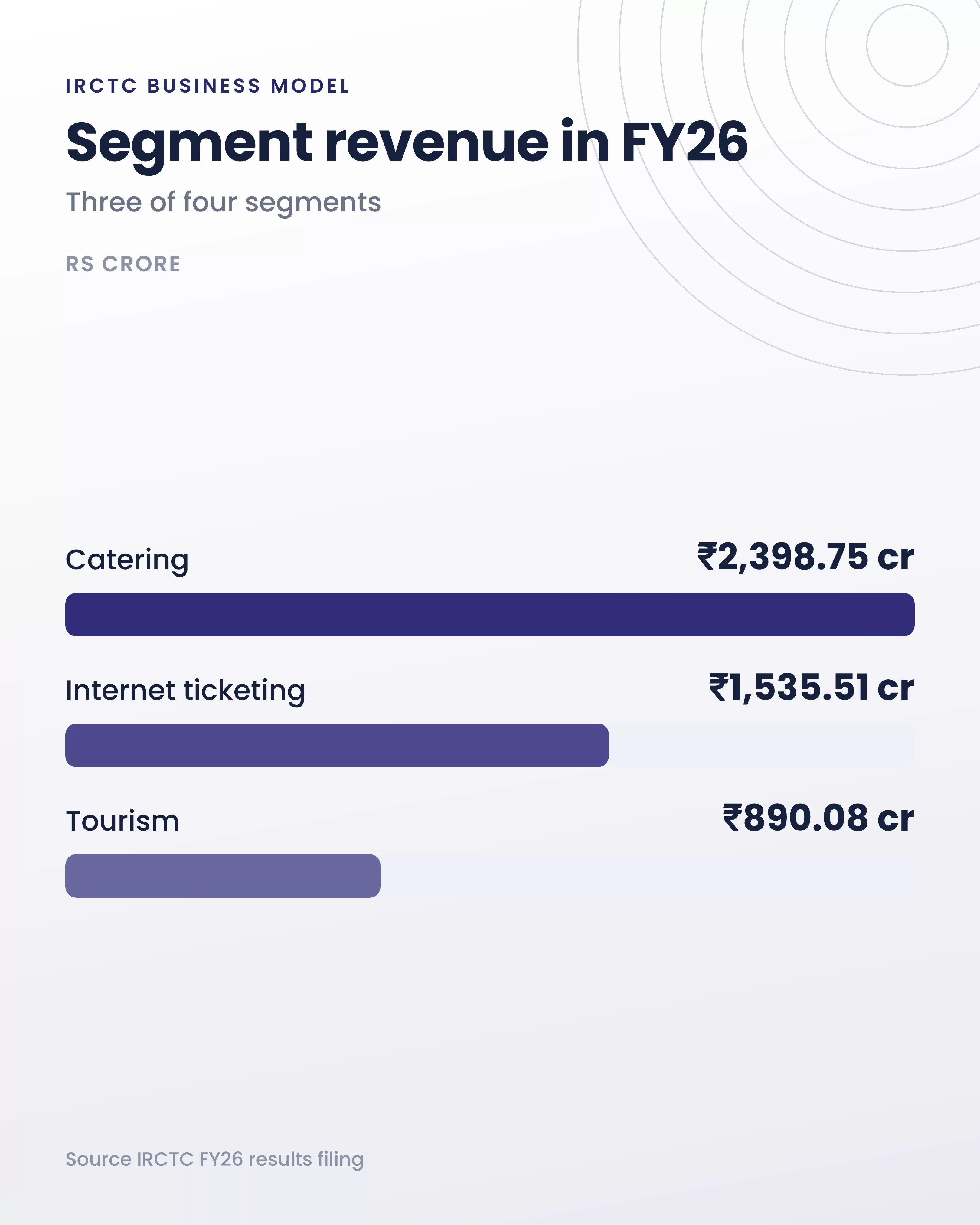
Compared with FY25, catering revenue rose from about ₹2,125 crore to ₹2,398.75 crore, internet ticketing from about ₹1,426 crore to ₹1,535.51 crore, and tourism from about ₹745 crore to ₹890.08 crore.
IRCTC reports four segments in its results. Catering sells meals at stations and on trains. Internet ticketing sells reserved railway tickets through the website and app. Tourism sells tour packages. Rail Neer sells packaged drinking water. Each segment is reported with its own revenue and its own segment result, which is why the segment charts below show catering, ticketing and tourism side by side.
IRCTC's Business Model Canvas
IRCTC revenue and profit over three years
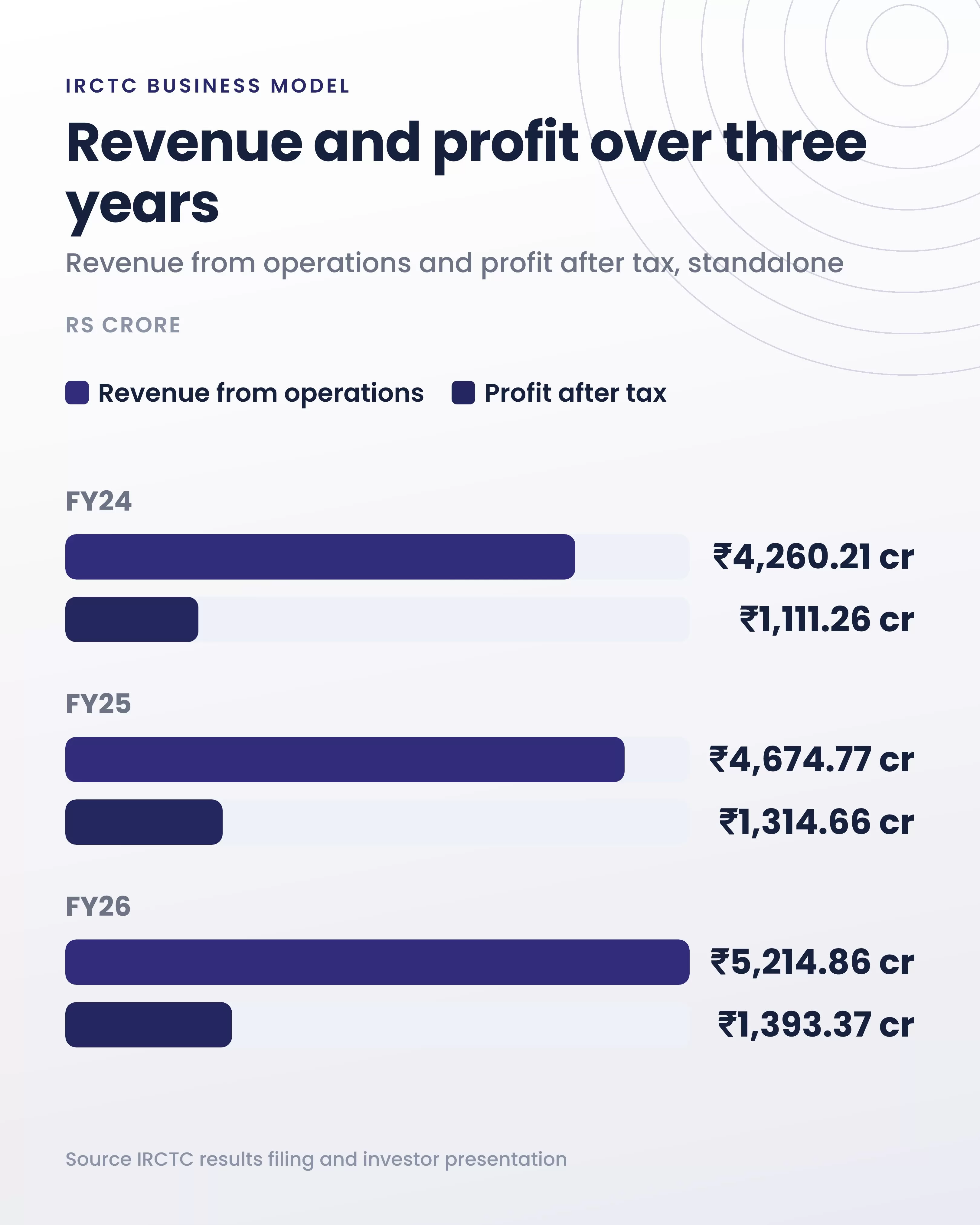
Revenue from operations was ₹4,260.21 crore in FY24, ₹4,674.77 crore in FY25 and ₹5,214.86 crore in FY26, a rise of 11.55% in FY26. Standalone profit after tax was ₹1,111.26 crore, ₹1,314.66 crore and ₹1,393.37 crore in the same years, a rise of about 6% in FY26.
The latest quarter
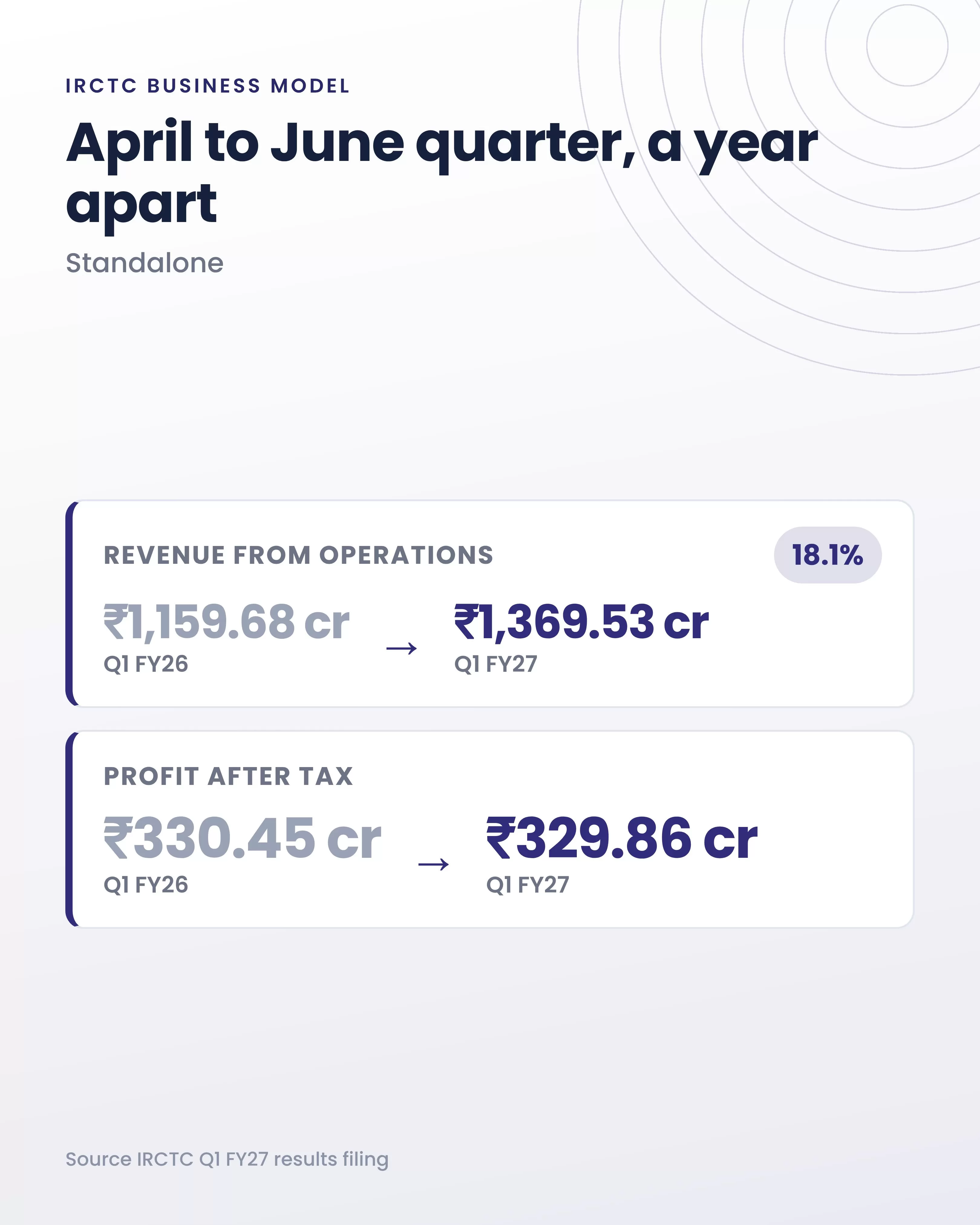
For April to June 2026 (Q1 FY27), standalone revenue from operations was ₹1,369.53 crore, up 18.1% from ₹1,159.68 crore a year earlier. Profit after tax was ₹329.86 crore against ₹330.45 crore. The board approved these results on 12 August 2026.
IRCTC's journey so far
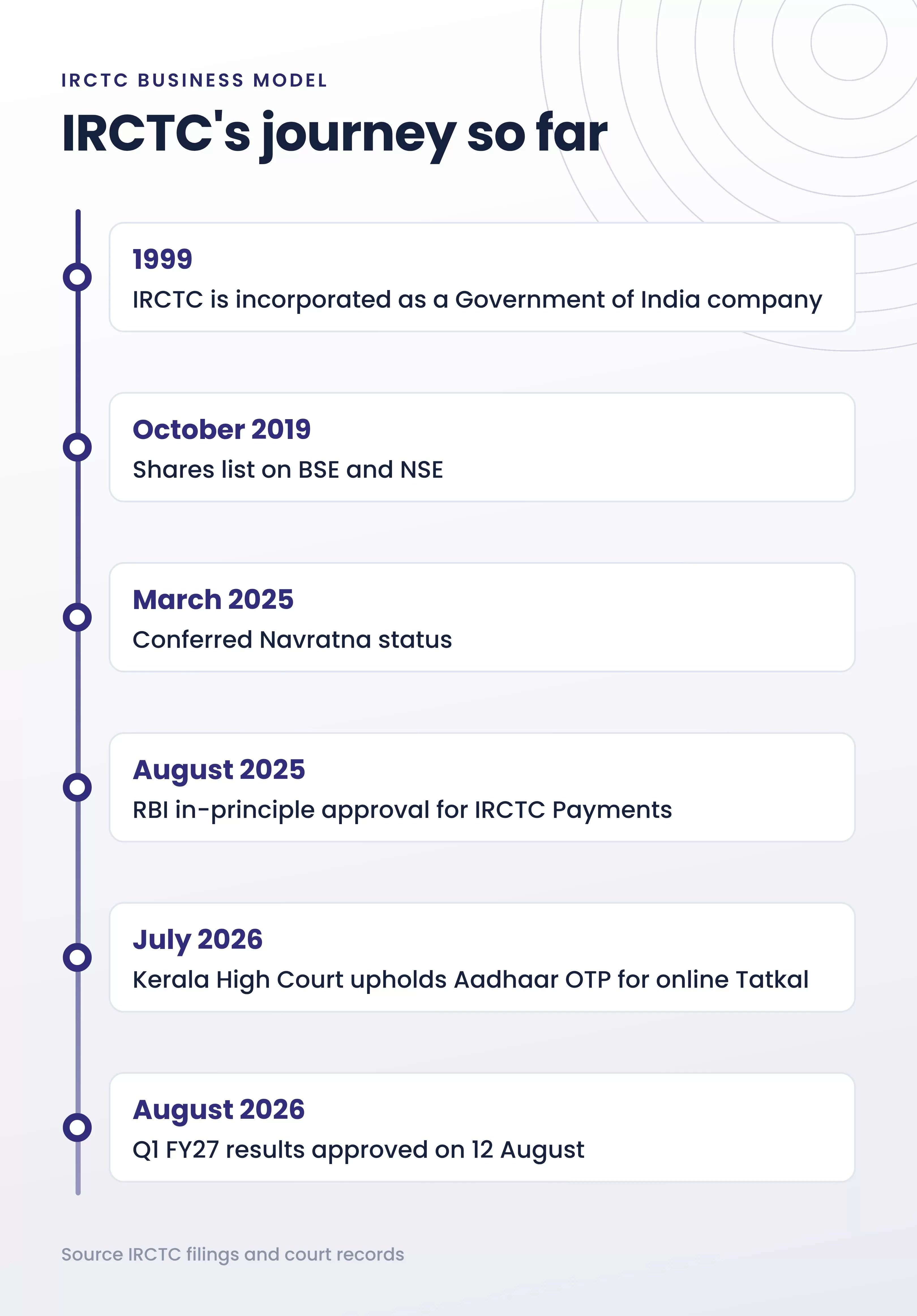
| When | What happened |
|---|---|
| 1999 | IRCTC is incorporated |
| October 2019 | Shares list on BSE and NSE |
| March 2025 | Conferred Navratna status |
| August 2025 | RBI in-principle approval for IRCTC Payments |
| July 2026 | Kerala High Court upholds Aadhaar OTP for online Tatkal |
| August 2026 | Q1 FY27 results approved |
Recent results and legal developments
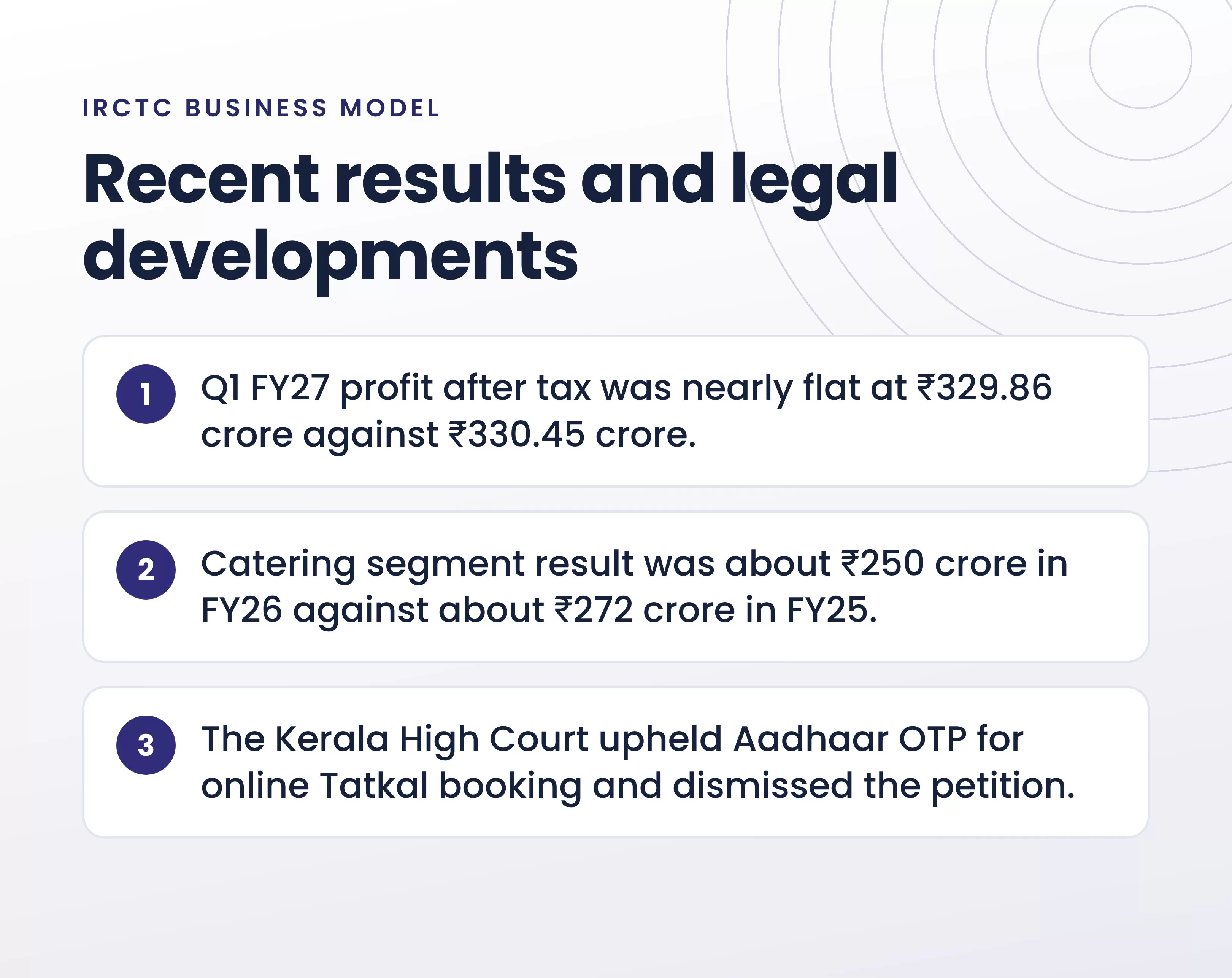
Q1 FY27 profit after tax was nearly flat at ₹329.86 crore. The catering segment result was about ₹250 crore in FY26 against about ₹272 crore in FY25.
In July 2026 the Kerala High Court upheld Aadhaar OTP authentication for online Tatkal booking and dismissed a petition against it.
Conclusion on the IRCTC business model
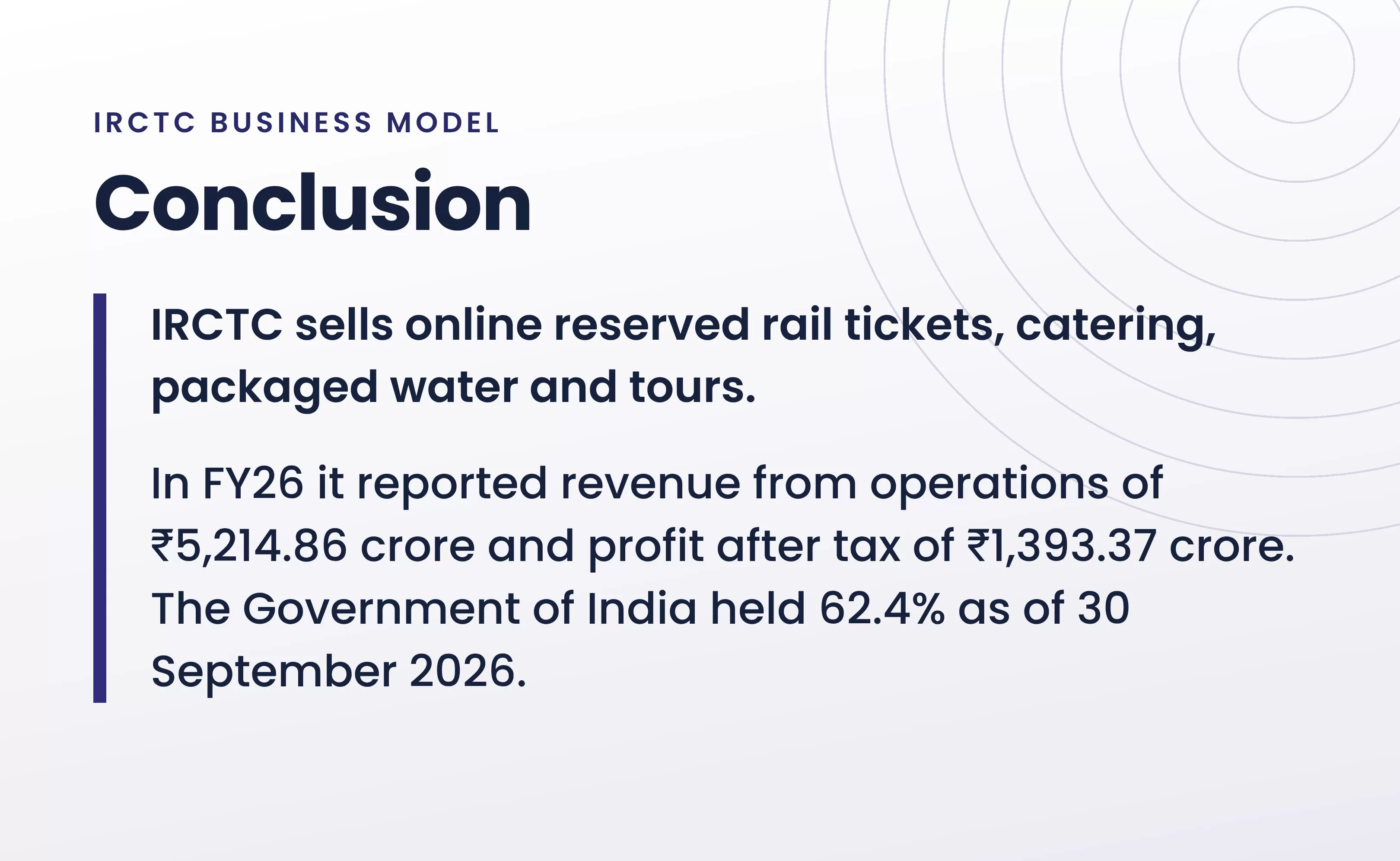
IRCTC sells online reserved railway tickets, catering, Rail Neer packaged water and tours. Customers reach it through its website and app, at stations and on trains, and ticketing carries a convenience fee on each e-ticket.
In FY26 it reported revenue from operations of ₹5,214.86 crore and standalone profit after tax of ₹1,393.37 crore. The Government of India held 62.4% as of 30 September 2026.