
Razorpay Business Model for Online Payments and Business Banking
How Razorpay earns fees on payments and adds business banking.

Key Takeaways
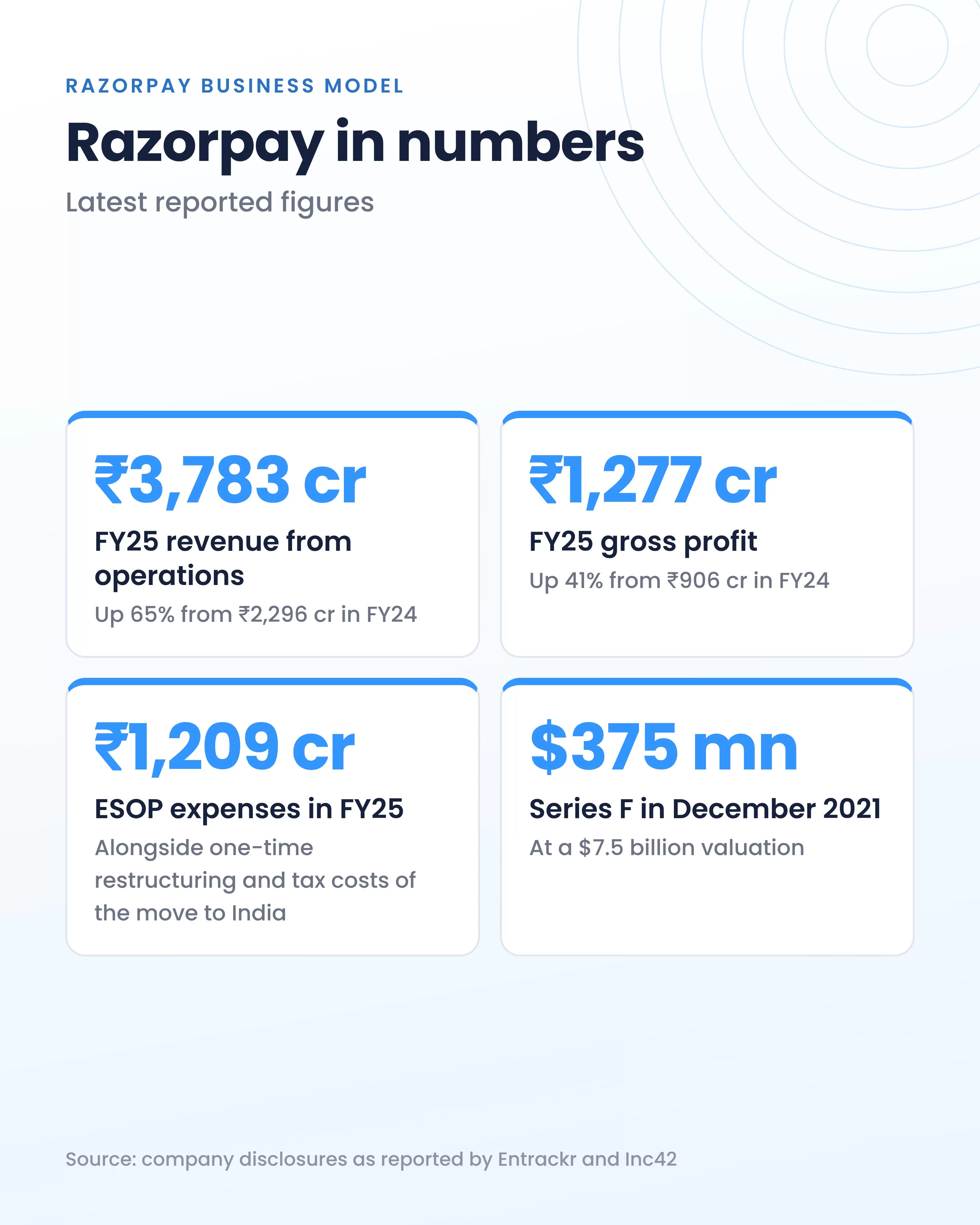
- FY25 revenue from operations rose 65% to ₹3,783 crore.
- FY25 gross profit rose 41% to ₹1,277 crore from ₹906 crore.
- Its 2021 Series F raised $375 million at a $7.5 billion valuation.
- SEBI approval for its IPO was reported in November 2026.
Table of Contents 11 sections
The Razorpay business model is built on payments: Razorpay lets businesses accept money online and charges a fee on the payments it processes, and it adds business banking and other products on top. Its FY25 revenue from operations was ₹3,783 crore and its gross profit was ₹1,277 crore.
The company is not listed yet. It filed draft IPO papers confidentially with SEBI in June 2026, and SEBI approval for the issue was reported in November 2026.
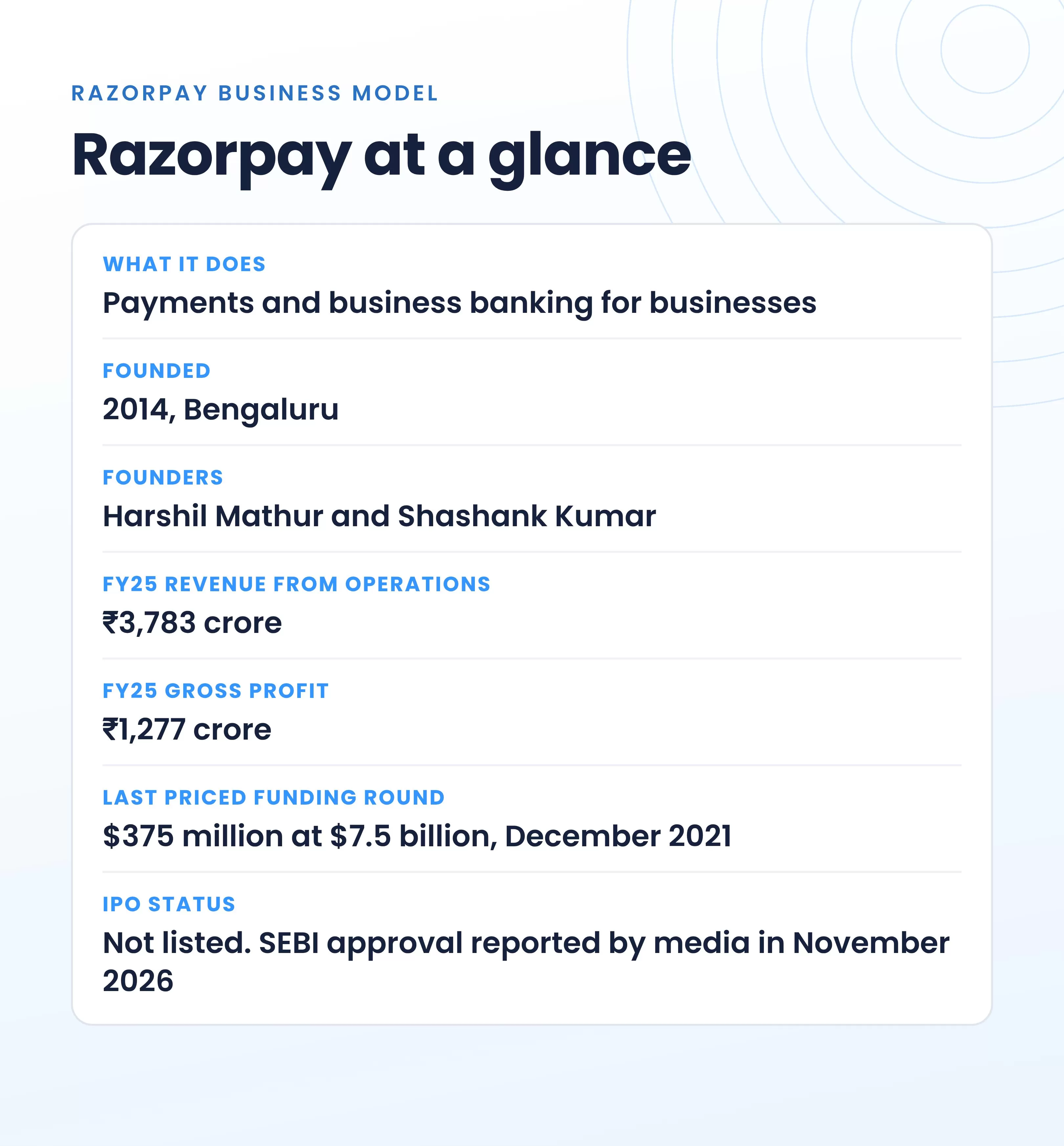
Razorpay at a glance
| Item | Detail |
|---|---|
| What it does | Payments and business banking for businesses |
| Founded | 2014, Bengaluru |
| Founders | Harshil Mathur and Shashank Kumar |
| FY25 revenue from operations | ₹3,783 crore |
| FY25 gross profit | ₹1,277 crore |
| Last priced funding round | $375 million Series F at a $7.5 billion valuation, December 2021 |
| IPO status | Not listed. Draft papers filed confidentially in June 2026 |
What Razorpay does
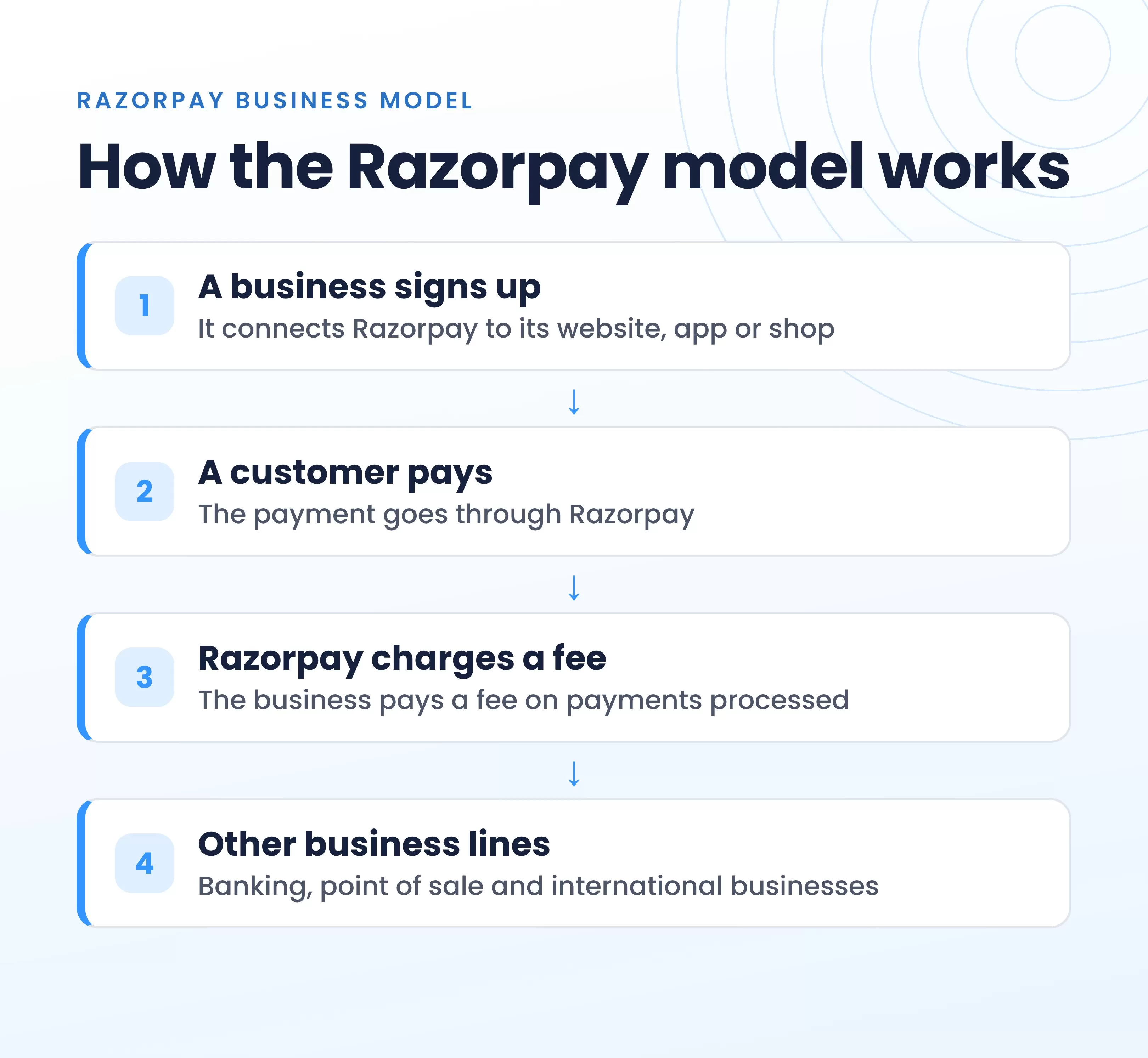
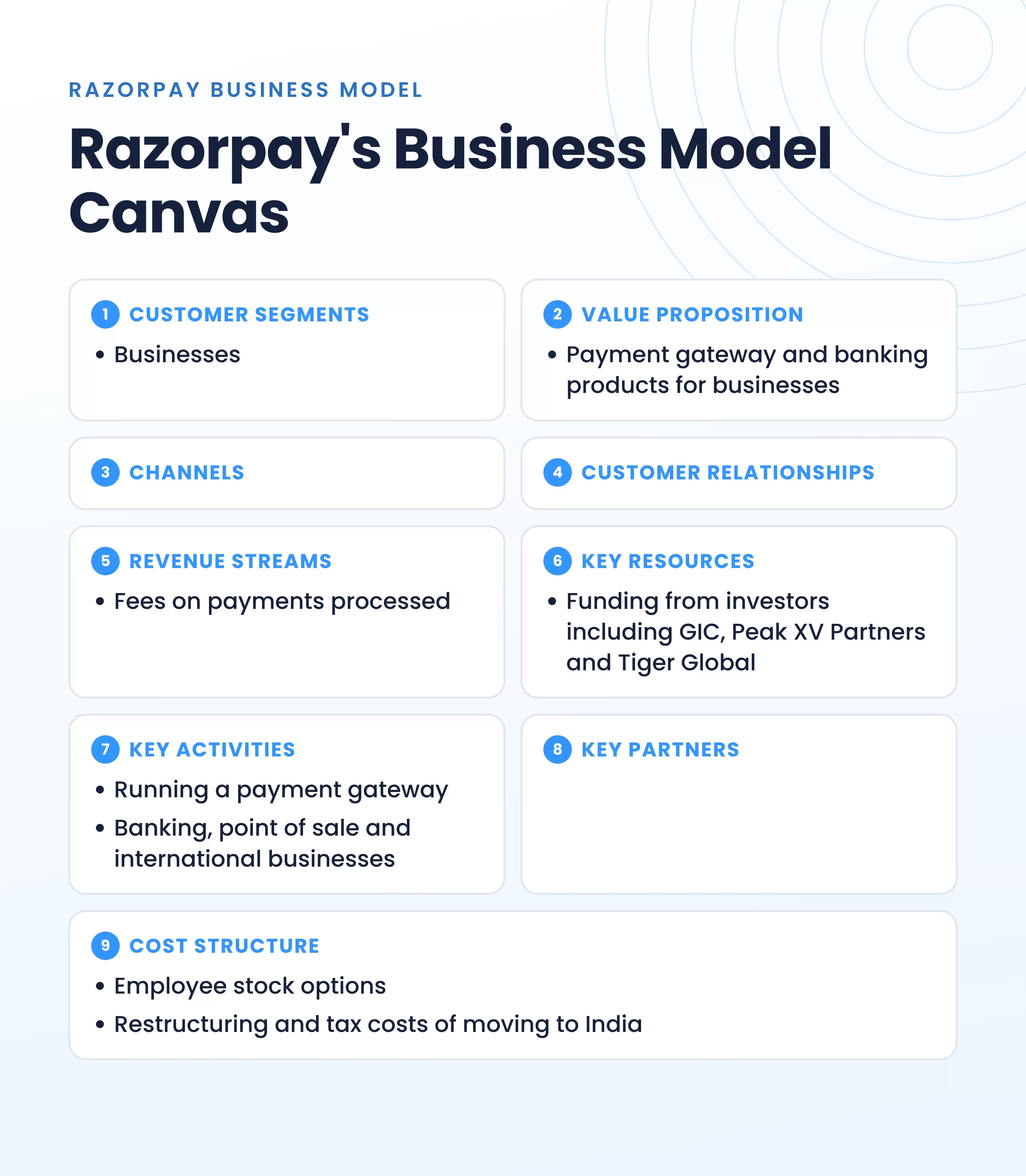
Razorpay is a Bengaluru-based payments and business banking company, founded in 2014 by Harshil Mathur and Shashank Kumar. A business connects Razorpay to its website, app or shop to accept payments from its customers.
Beyond the payment gateway, it also runs banking, point of sale and international businesses.
How Razorpay makes money
Razorpay charges businesses a fee on the payments it processes. Banking, point of sale and international payments are among its other business lines. Inc42 reported that no revenue split by product was given with its FY25 results.
Razorpay revenue and gross profit
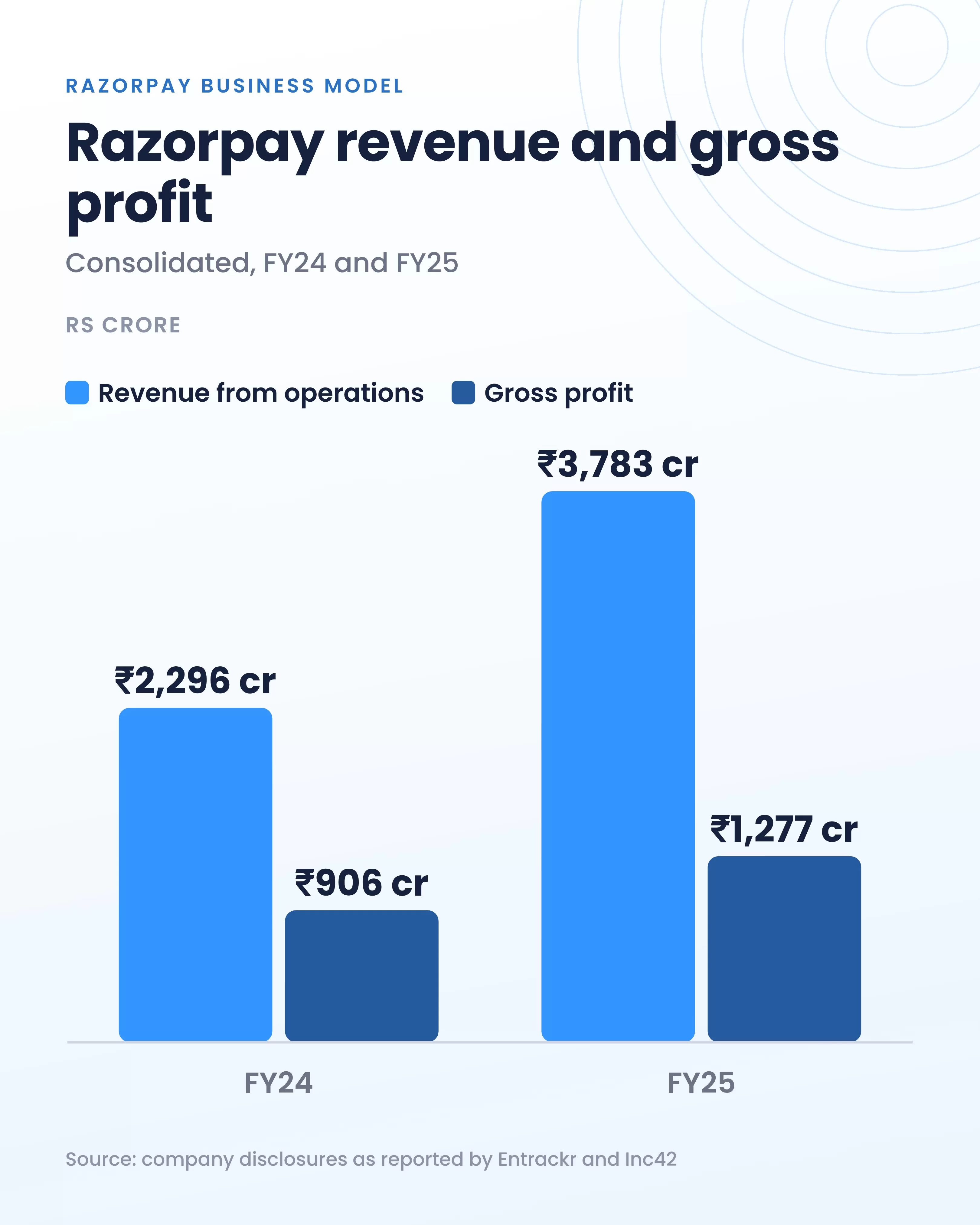
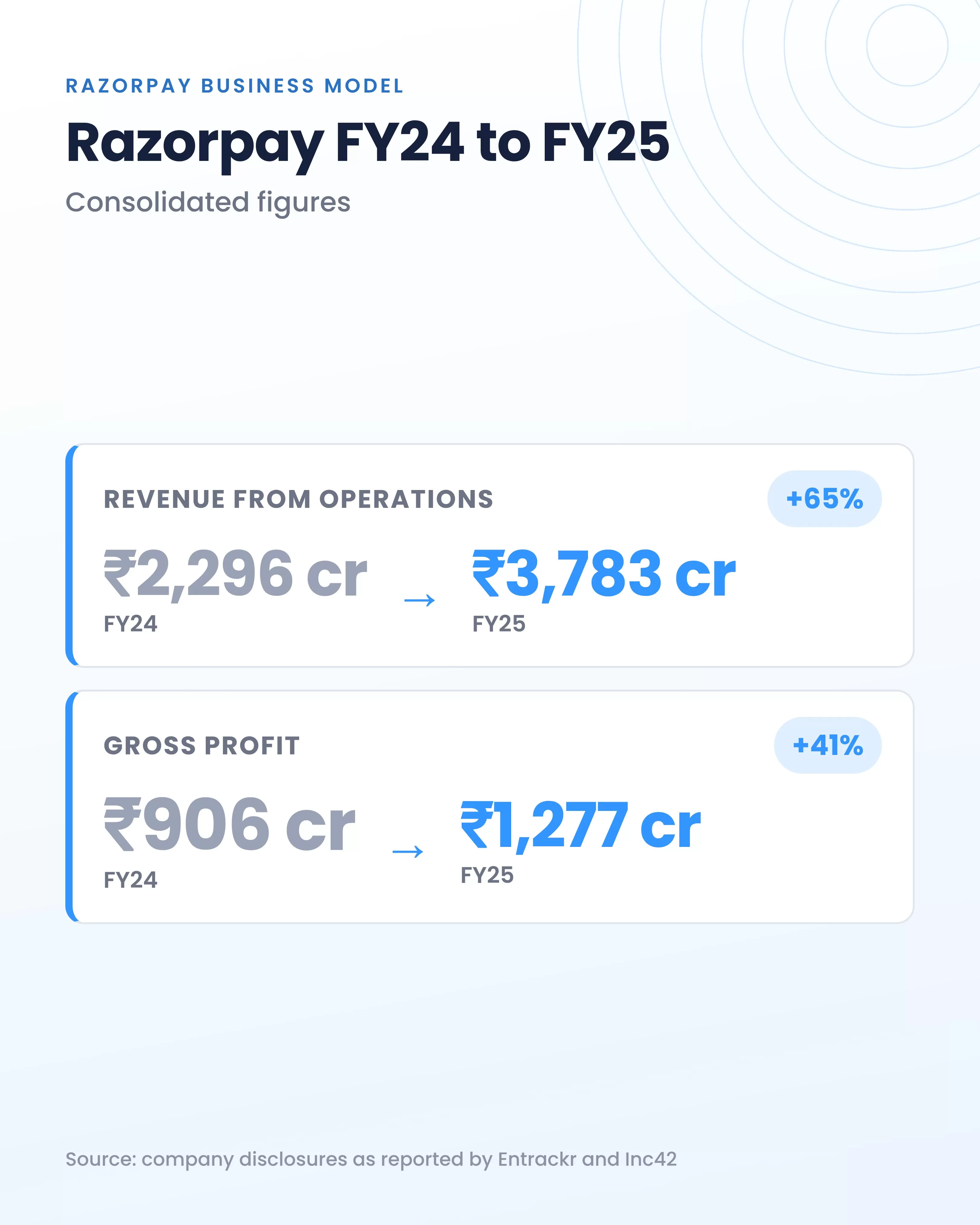
Razorpay revenue from operations rose 65% to ₹3,783 crore in FY25, from ₹2,296 crore in FY24. Gross profit rose 41% to ₹1,277 crore, from ₹906 crore. FY25 is the year ended March 2025, on a consolidated basis.
FY25 also carried ₹1,209 crore of ESOP expenses, alongside one-time restructuring and tax costs, which the company linked to moving its parent from the US to India. That move, known as a reverse flip, was completed in 2025.
Razorpay's Business Model Canvas
Razorpay valuation and funding
The last priced round was a $375 million Series F in December 2021, at a $7.5 billion valuation. Its investors include GIC, Peak XV Partners and Tiger Global. No newer priced round has been reported, and the IPO is reported to target a valuation of about $5 billion.
Razorpay's journey so far
| When | What happened |
|---|---|
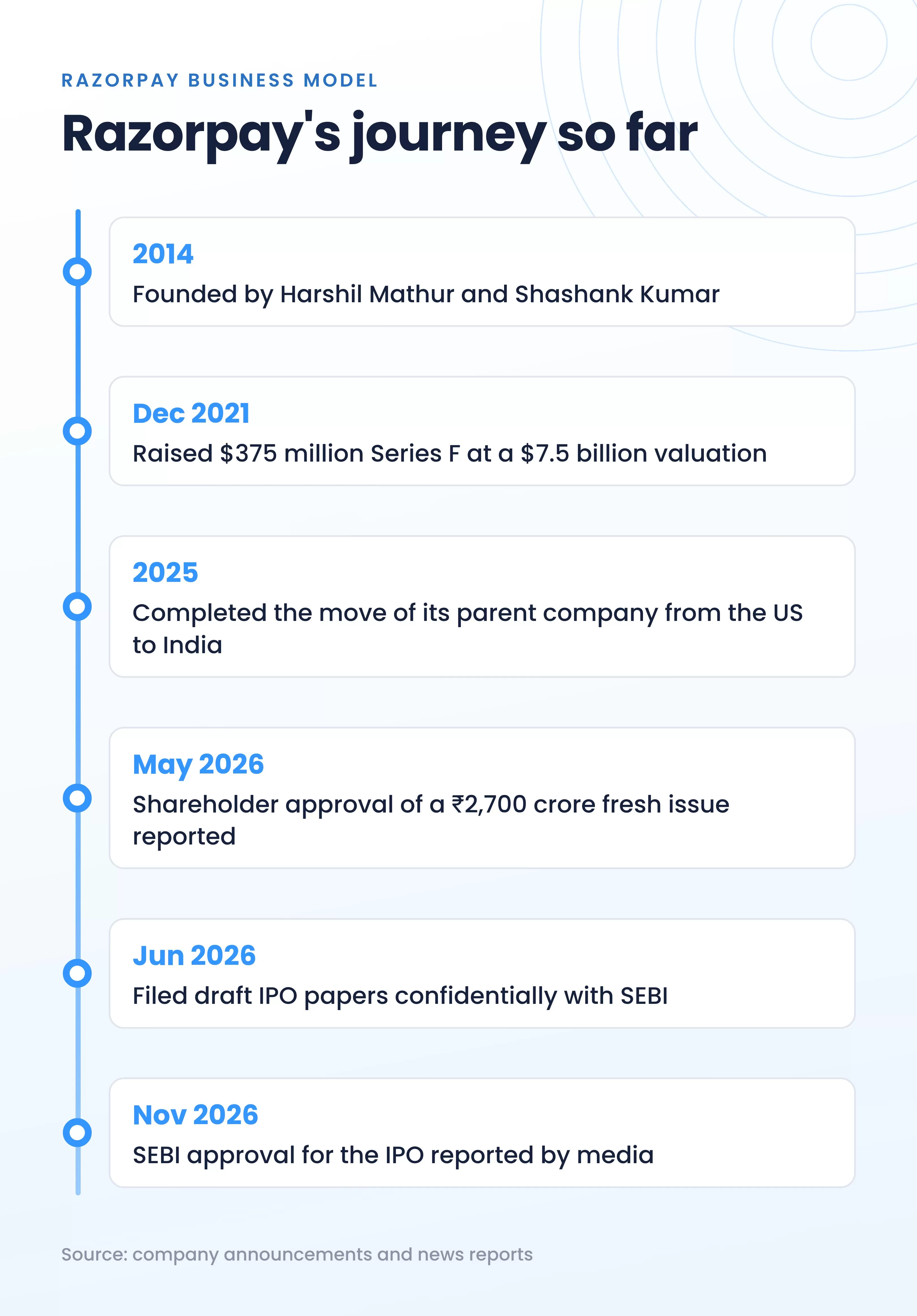
| 2014 | Founded by Harshil Mathur and Shashank Kumar |
| December 2021 | Raised $375 million Series F at a $7.5 billion valuation |
| 2025 | Completed the move of its parent company from the US to India |
| May 2026 | Shareholder approval of a fresh issue of up to ₹2,700 crore reported |
| June 2026 | Filed draft IPO papers confidentially with SEBI |
| November 2026 | SEBI approval for an IPO reported by media, with the size reported between about ₹5,000 and ₹6,500 crore |
Razorpay IPO status
In May 2026 it was reported that shareholders had approved a fresh issue of up to ₹2,700 crore, and Razorpay filed draft papers through SEBI's confidential route in June 2026. In November 2026 media reports, citing sources, said SEBI had approved an issue, with the size reported between about ₹5,000 and ₹6,500 crore. The issue is a fresh issue plus an offer for sale, and the split has not been disclosed.
The IPO is reported to target a valuation of about $5 billion. The last priced round, the December 2021 Series F, was at $7.5 billion. Razorpay is not yet listed, and the reports describe the issue as a fresh issue plus an offer for sale, with the split between the two not disclosed. The company was founded in 2014 and is based in Bengaluru.
Razorpay's FY25 costs and IPO status
FY25 included ₹1,209 crore of ESOP expenses, and Razorpay is not yet listed.
Conclusion on the Razorpay business model
Razorpay is a payments and business banking company that earns fees on the payments it processes for businesses, with banking, point of sale and international products alongside.
Its FY25 revenue from operations was ₹3,783 crore and gross profit was ₹1,277 crore. It is not yet listed, and its last priced funding round was the $375 million Series F at a $7.5 billion valuation in December 2021.


