PhysicsWallah Business Model of Online Courses and Centres
How the exam preparation company earns from courses sold online and in centres.

Key Takeaways
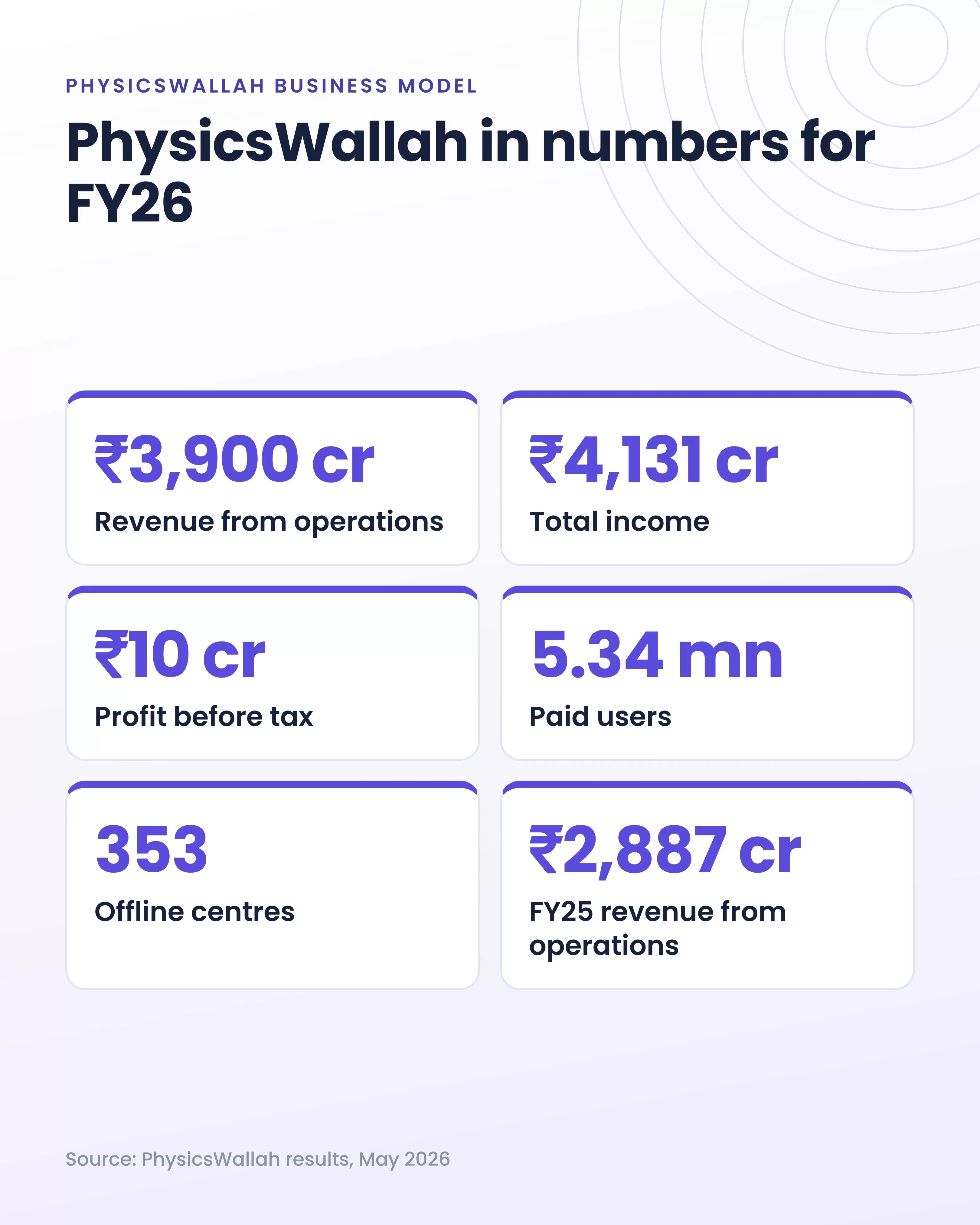
- FY26 revenue from operations was ₹3,900 crore, up 35% on FY25.
- Online courses brought ₹1,954 crore and offline centres ₹1,774 crore in FY26.
- It reported a profit before tax of ₹10 crore and a net loss of ₹24 crore for FY26.
- It had 5.34 million paid users and 353 offline centres at the end of FY26.
Table of Contents 11 sections
- PhysicsWallah at a glance
- What PhysicsWallah does
- How PhysicsWallah makes money from online and offline courses
- PhysicsWallah revenue growth by channel
- PhysicsWallah's Business Model Canvas
- PhysicsWallah revenue, profit before tax and net loss
- PhysicsWallah in numbers
- PhysicsWallah listing and IPO
- PhysicsWallah's journey so far
- Conclusion on the PhysicsWallah business model
- FAQs
The PhysicsWallah business model is built on selling exam preparation courses, online through its app and offline through its own coaching centres. In FY26 the company reported revenue from operations of ₹3,900 crore and a net loss of ₹24 crore.
PhysicsWallah began as a YouTube channel in 2016 and was founded as a company in 2020. It has been listed on the NSE and BSE since 18 November 2025. This page explains how it earns, how its channels split the revenue and how its network has grown.
PhysicsWallah at a glance
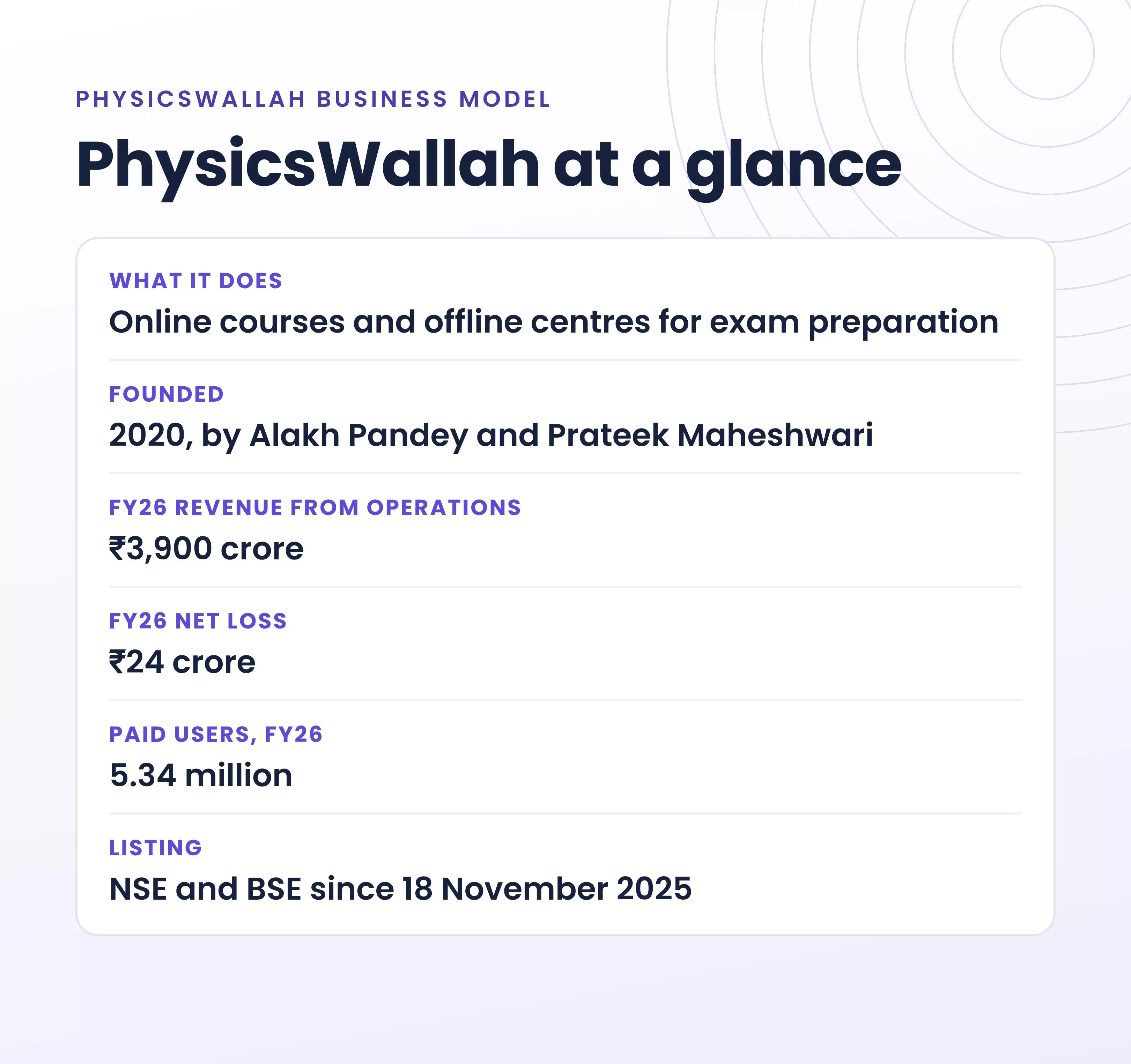
| Item | Detail |
|---|---|
| What it does | Online courses and offline centres for exam preparation |
| Founded | 2020, by Alakh Pandey and Prateek Maheshwari |
| FY26 revenue from operations | ₹3,900 crore, up 35% on FY25 |
| FY26 total income | ₹4,131 crore |
| FY26 profit before tax | ₹10 crore |
| FY26 net loss | ₹24 crore |
| Paid users, FY26 | 5.34 million |
| Offline centres, 31 March 2026 | 353 |
| Listing | NSE and BSE since 18 November 2025, issue price ₹109 |
What PhysicsWallah does
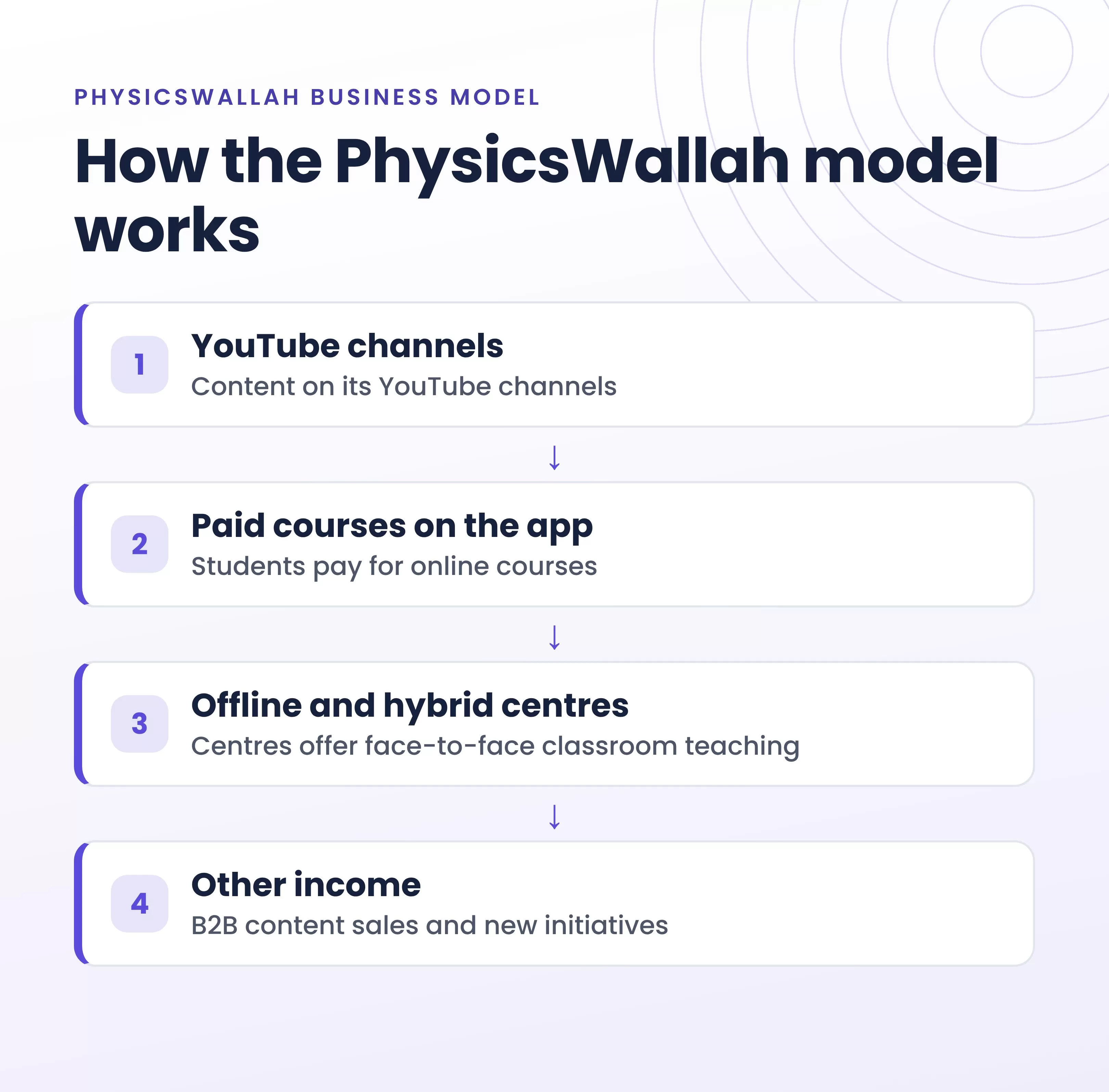
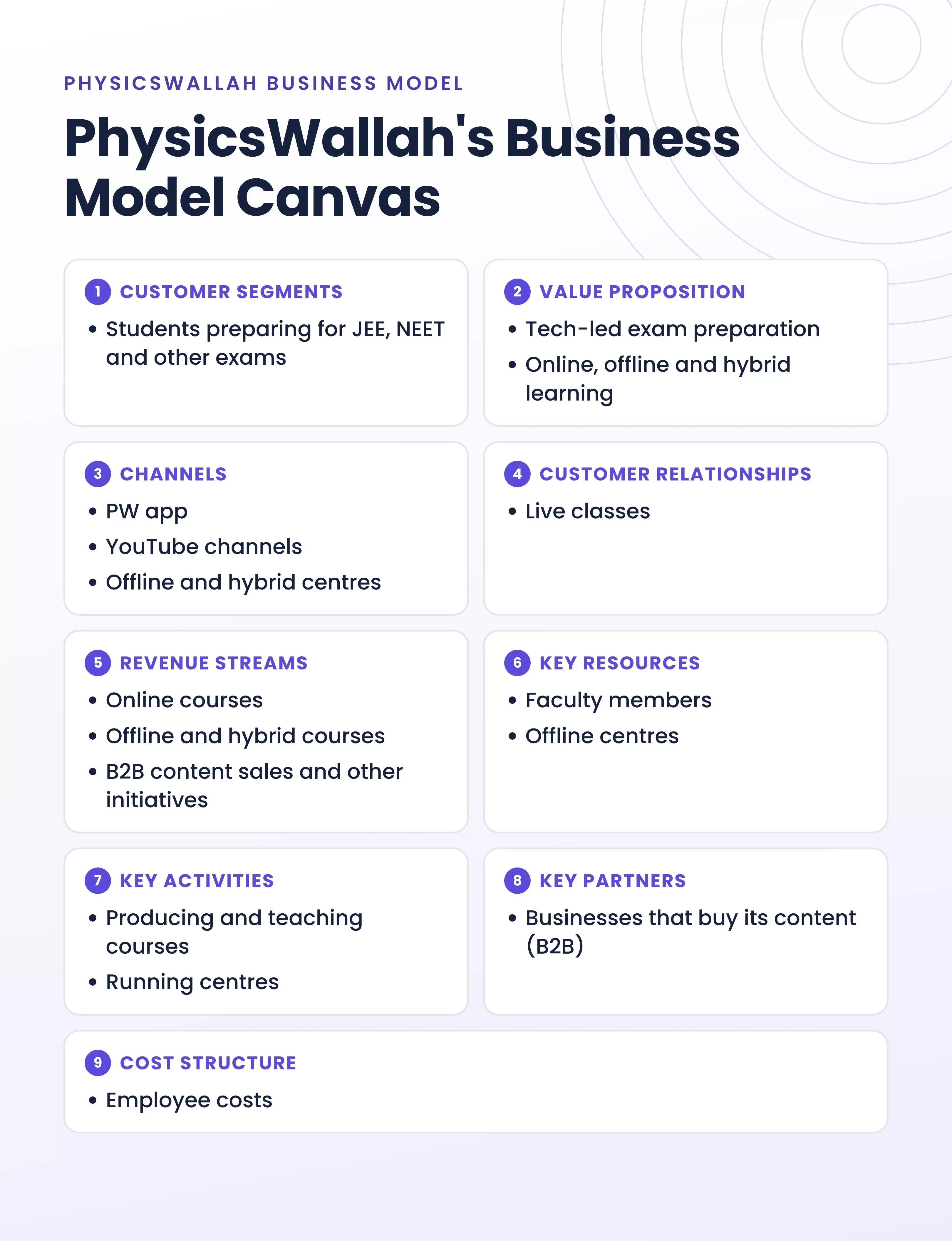
PhysicsWallah is an education platform that offers courses through its own app, tech-enabled offline and hybrid centres, and YouTube channels.
The company was earlier named Physicswallah Private Limited and is now PhysicsWallah Limited. It describes itself as a tech-enabled education company that teaches through online, offline and hybrid formats.

How PhysicsWallah makes money from online and offline courses
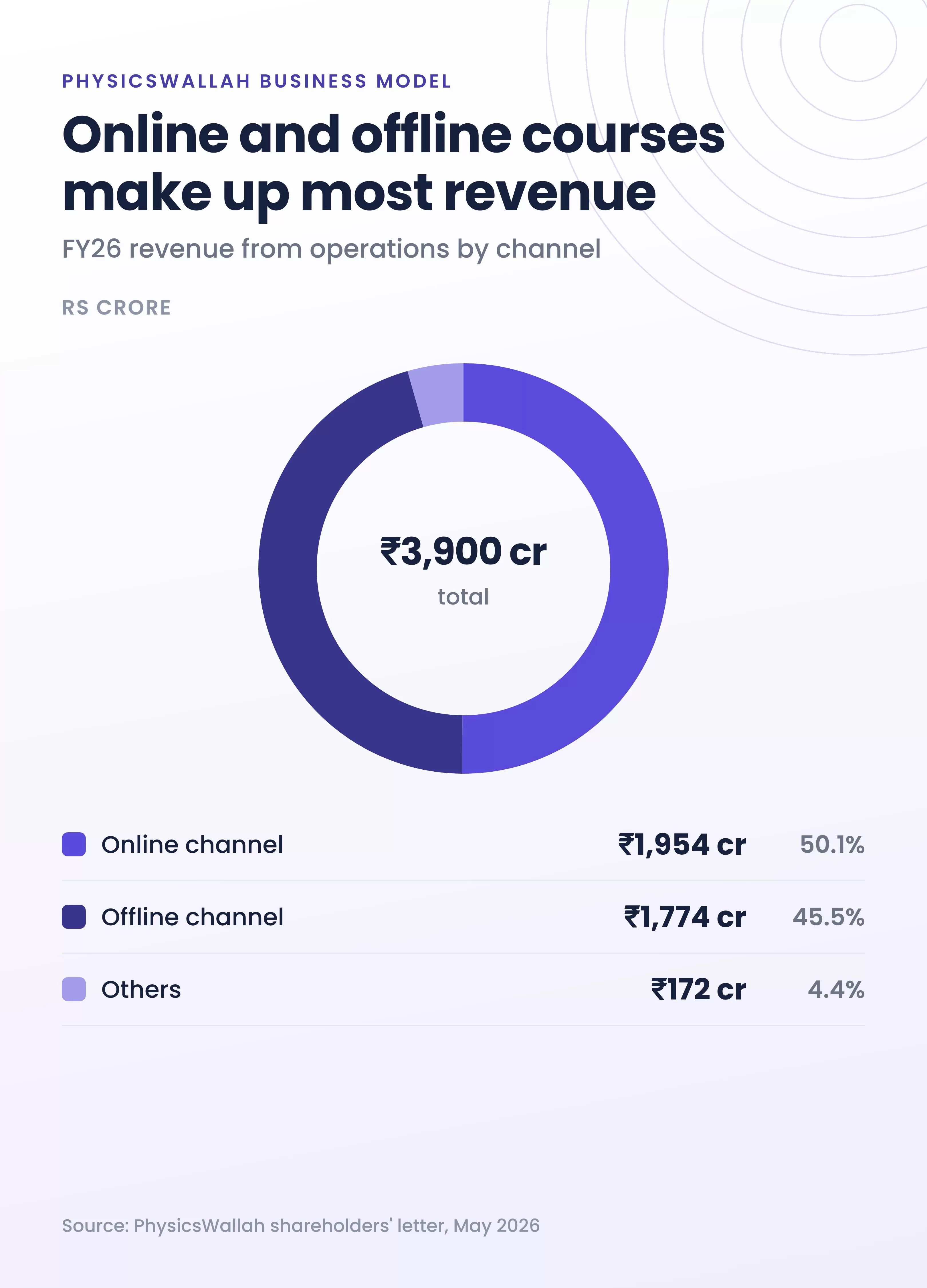
PhysicsWallah reports its revenue from operations in three parts. In FY26 the online channel brought in ₹1,954 crore, the offline channel ₹1,774 crore and others ₹172 crore. The others line covers B2B content sales and other new initiatives. Together they make the ₹3,900 crore total.
Online revenue is about 50% of the total and offline about 45%. The three parts add up as ₹1,954 crore plus ₹1,774 crore plus ₹172 crore. Revenue from operations in FY25 was ₹2,887 crore, so the FY26 figure is about ₹1,013 crore higher.
PhysicsWallah revenue growth by channel
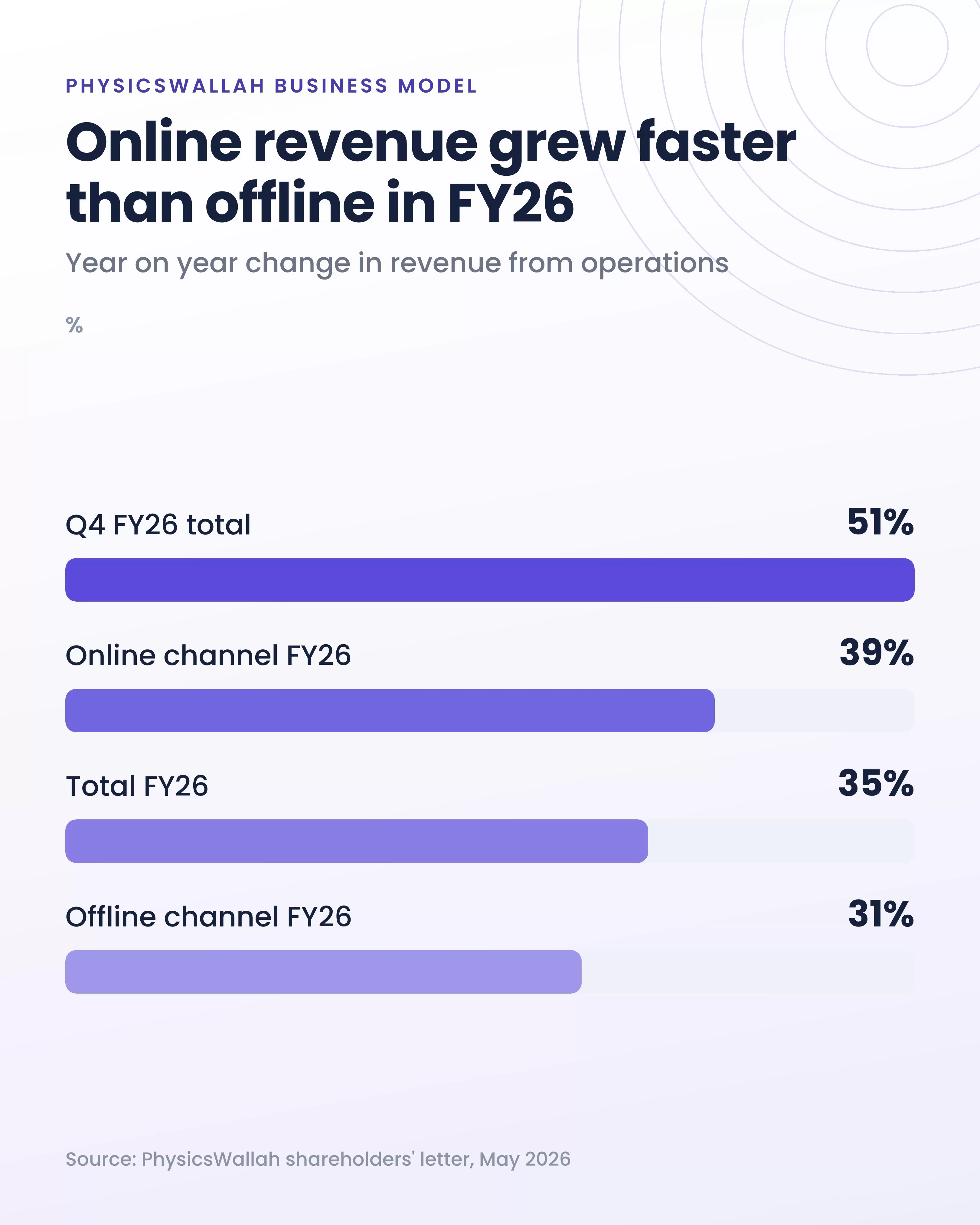
Online revenue grew 39% in FY26 and offline revenue grew 31%. Total revenue from operations grew 35%. In the March quarter of FY26, revenue grew 51% year on year.
PhysicsWallah's Business Model Canvas
PhysicsWallah revenue, profit before tax and net loss
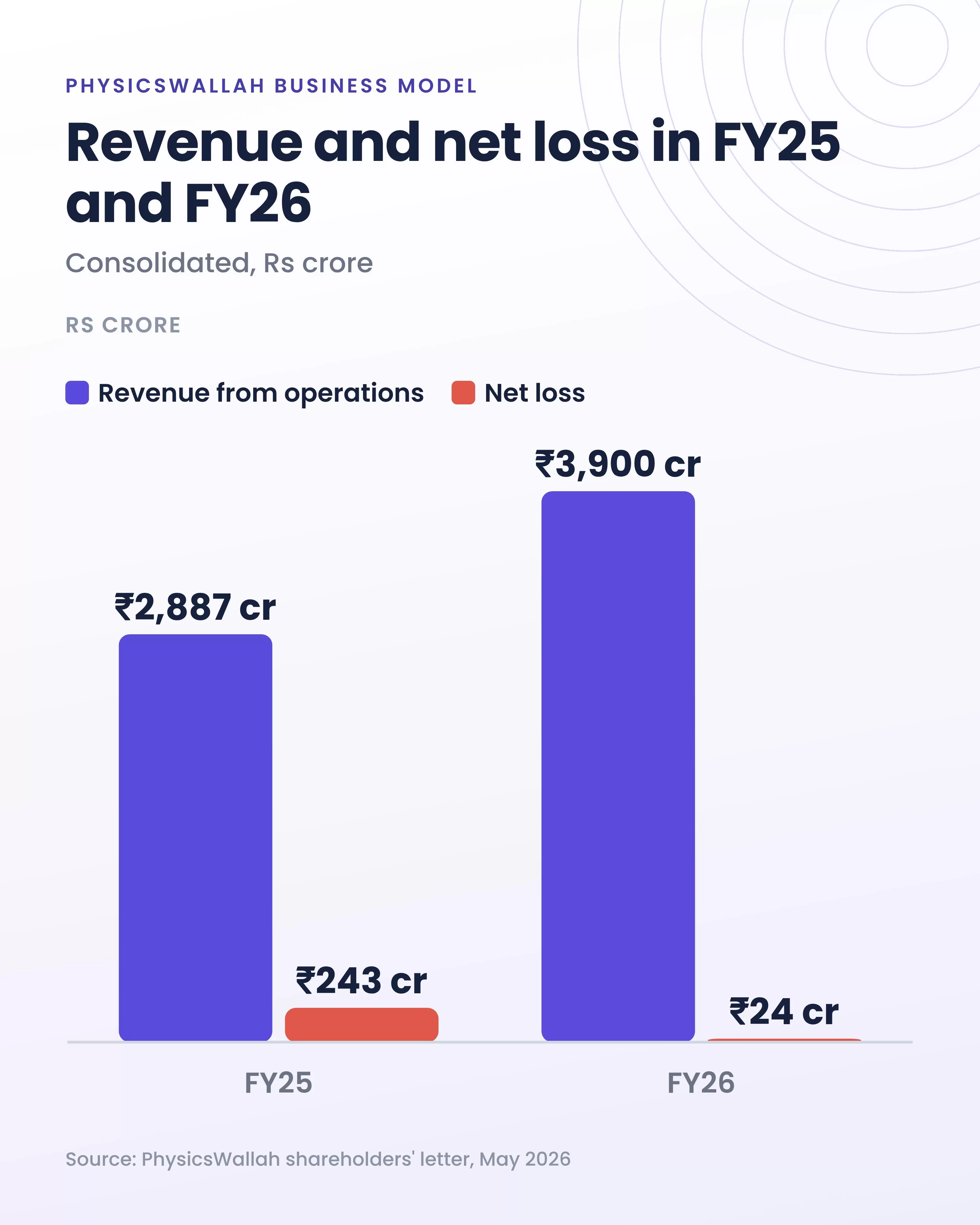
Revenue from operations was ₹3,900 crore in FY26 against ₹2,887 crore in FY25. The net loss was ₹24 crore in FY26 against ₹243 crore in FY25. The company reported a profit before tax of ₹10 crore in FY26.
Total income, which adds other income to revenue from operations, was ₹4,131 crore in FY26 against ₹3,039 crore in FY25.
PhysicsWallah in numbers
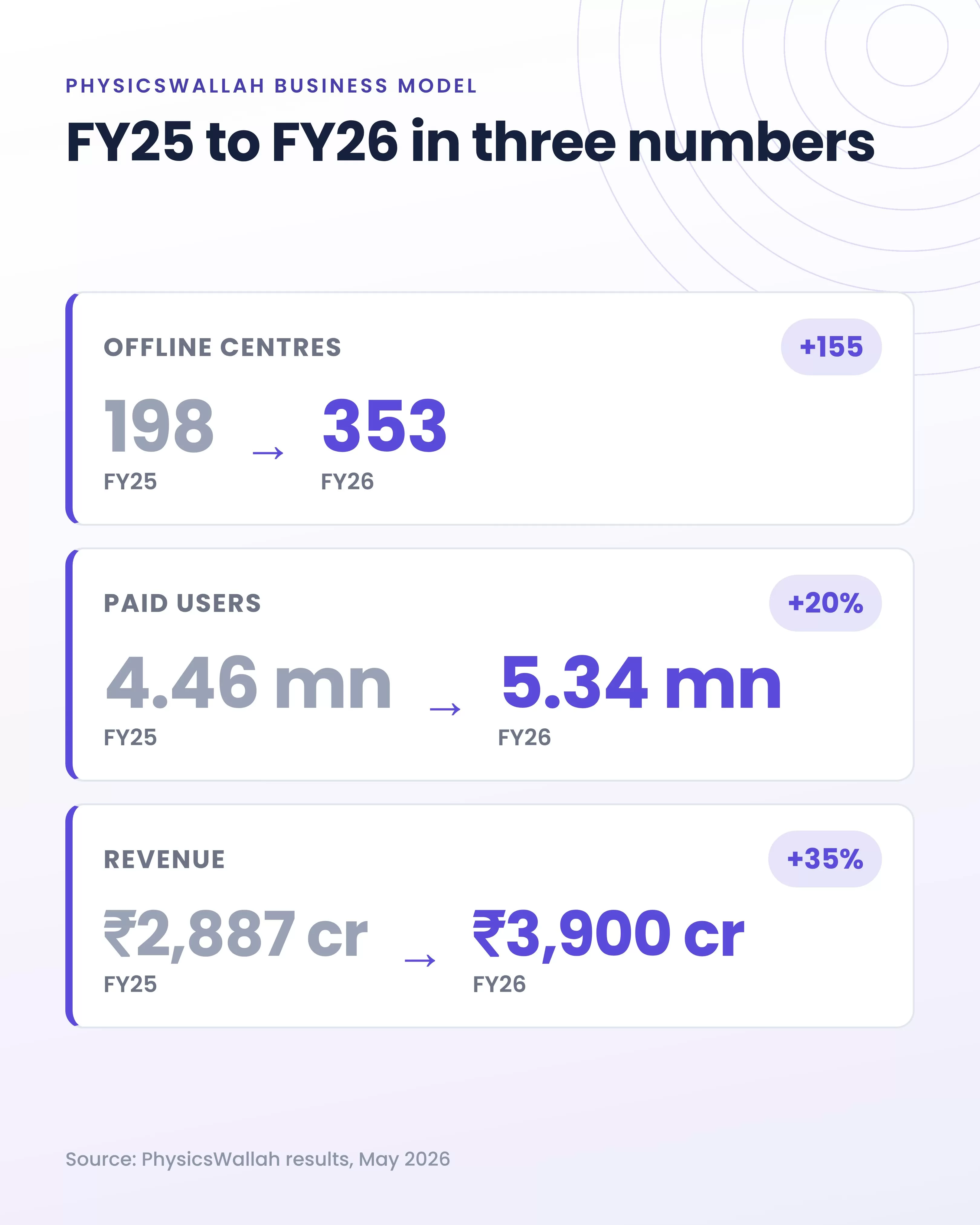
Paid users rose from 4.46 million in FY25 to 5.34 million in FY26. The offline network grew from 198 centres to 353.
For the September 2026 quarter, PhysicsWallah reported revenue from operations of ₹1,242 crore, up 18.2% year on year, and had 370 offline centres at 30 September 2026 against 314 a year earlier.
The quarter ended 30 September 2026 was the second quarter of FY27. In that quarter the company reported revenue from operations of ₹1,242 crore, up 18.2% year on year, and a profit after tax. The paid user count rose from 4.46 million in FY25 to 5.34 million in FY26, and the offline centre count rose by 155 to 353 over the same year.
PhysicsWallah listing and IPO
PhysicsWallah listed on the NSE and BSE on 18 November 2025. The IPO was worth ₹3,480 crore, made up of a fresh issue of ₹3,100 crore and an offer for sale of ₹380 crore, and was priced at ₹109 per share.
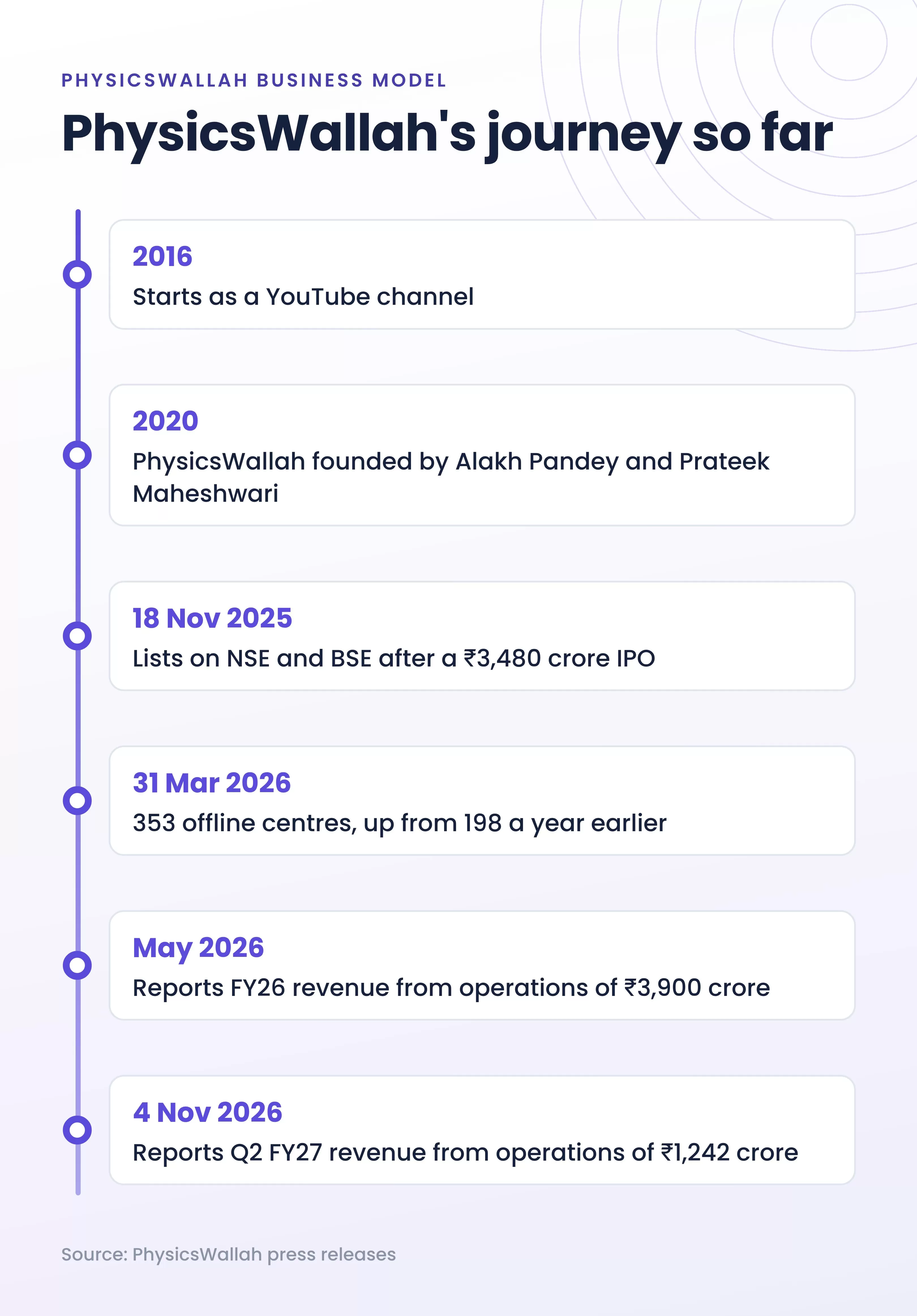
PhysicsWallah's journey so far
| When | What happened |
|---|---|
| 2016 | Starts as a YouTube channel |
| 2020 | PhysicsWallah is founded by Alakh Pandey and Prateek Maheshwari |
| 18 November 2025 | Lists on the NSE and BSE after a ₹3,480 crore IPO |
| 31 March 2026 | 353 offline centres, up from 198 a year earlier |
| May 2026 | Reports FY26 revenue from operations of ₹3,900 crore |
| 4 November 2026 | Reports Q2 FY27 revenue from operations of ₹1,242 crore |
Conclusion on the PhysicsWallah business model
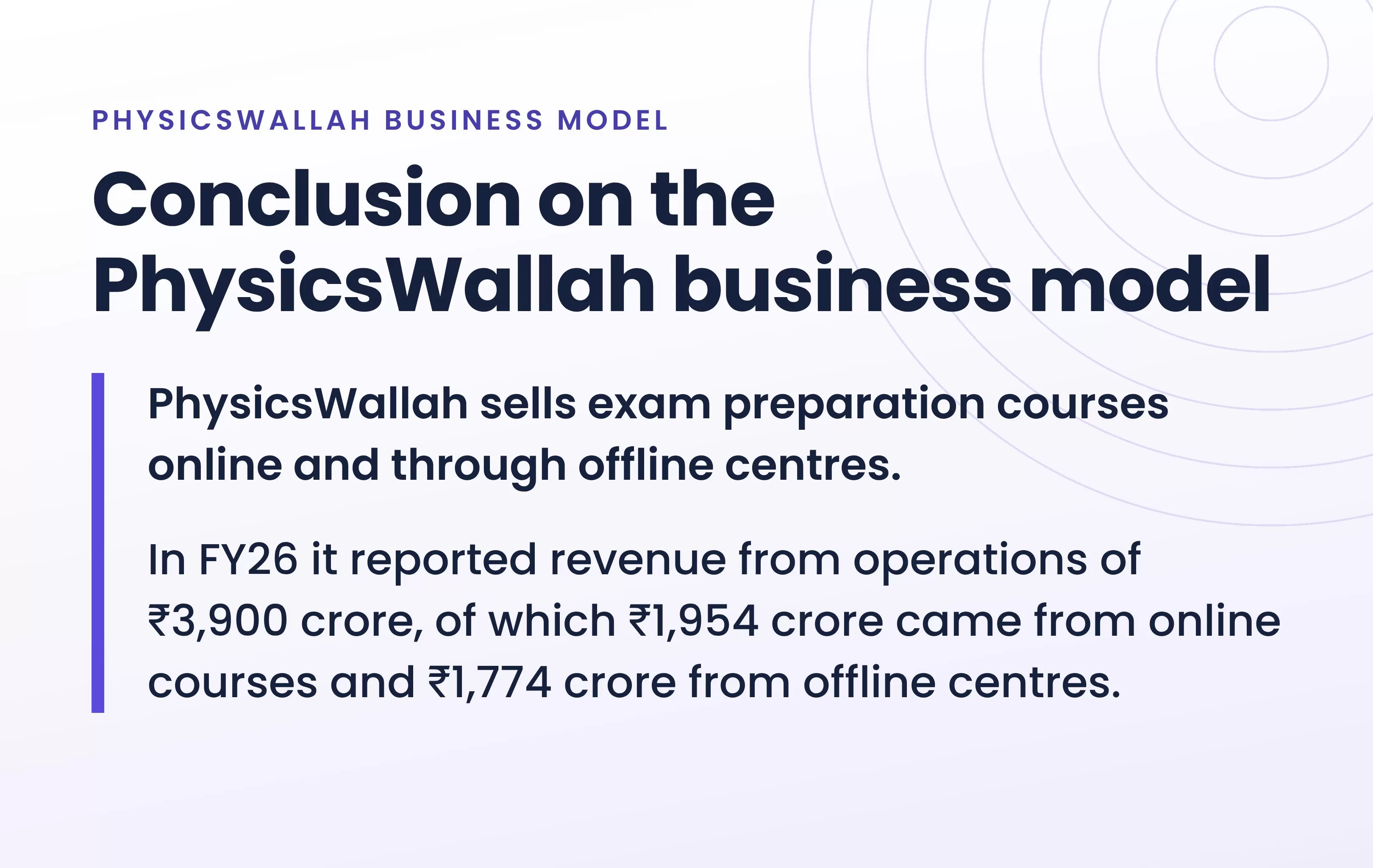
PhysicsWallah sells exam preparation courses through its app, YouTube channels and offline centres. In FY26 it reported revenue from operations of ₹3,900 crore, of which ₹1,954 crore came from online courses and ₹1,774 crore from offline centres.
It reported a profit before tax of ₹10 crore and a net loss of ₹24 crore for FY26, with 5.34 million paid users and 353 offline centres at the end of the year.
More from IncBusiness
- How the Zomato Business Model Earns From Restaurants and Diners
- Groww Business Model Across Broking, Lending and Wealth