Factories record everything. Parameters are logged, outputs are tracked, and deviations are noted with discipline. Yet most of that information never becomes a decision.
Even in digitised environments, the result is often a dashboard. Data is visible, but the process behind it remains fragmented, spread across systems, formats, and teams. DesignX is built around making those processes visible and usable.
The problem beneath the machines
It began with processes, not machines. Founder Rajat Srivastav spent over a decade inside manufacturing environments, observing how teams relied on logbooks and scattered systems to manage operations. The information was there, but it wasn’t structured or easy to use.
The challenge lay in organising and interpreting that data. Each factory operated differently, making large-scale digitisation complex and uncertain. The insight was clear. If process digitisation could scale while preserving context, it could unlock significant value. That thinking led to Df-OS, and later, Vish.ai.
Capturing what factories already know
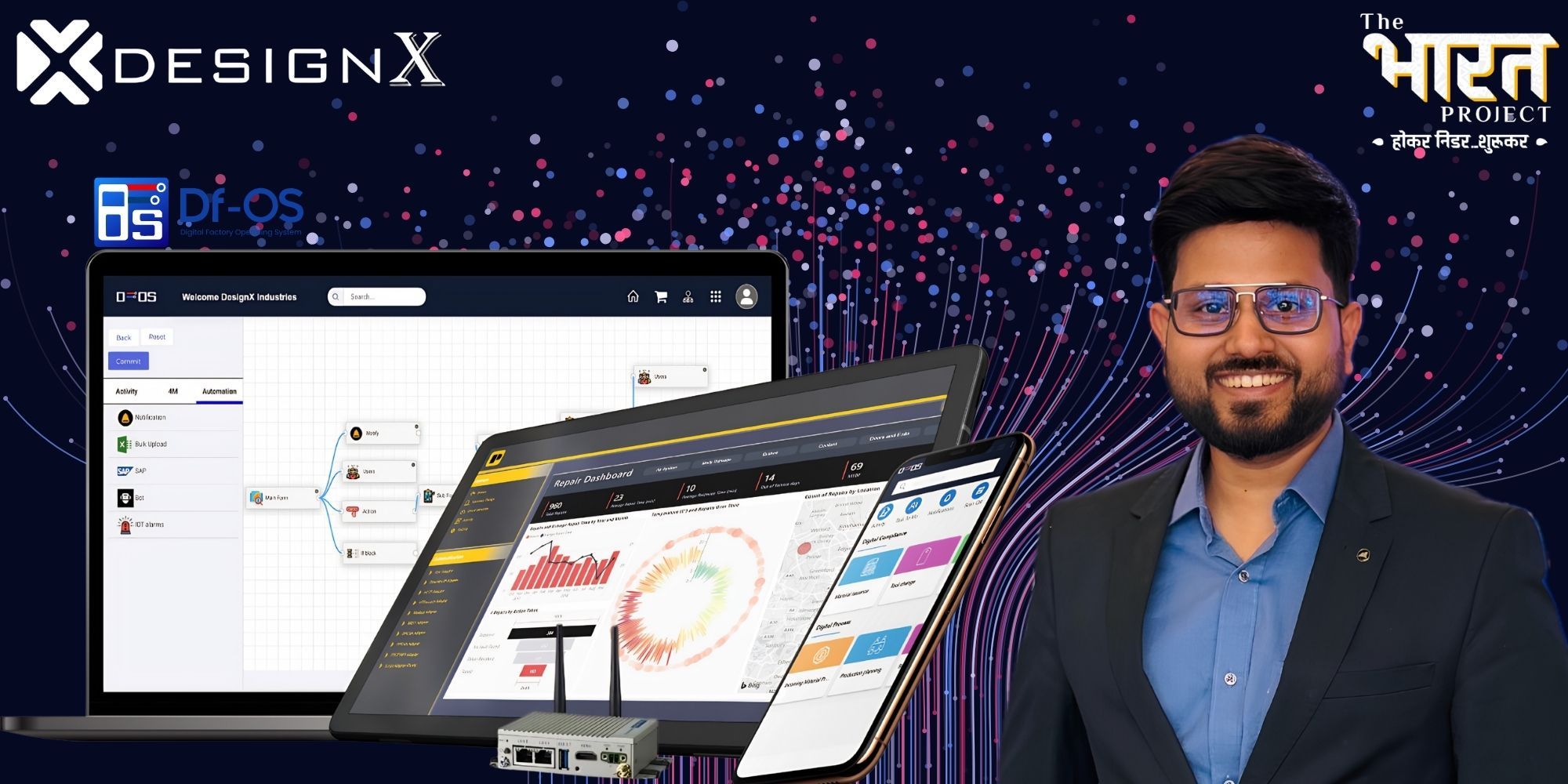
DesignX’s core platform is Df-OS, described as a Digital Factory Operating System. It focuses on digitising factory processes rather than only capturing machine data. The system uses a no-code approach, allowing teams to configure workflows without relying on extensive programming.
Df-OS serves as the data layer, structuring process information and enabling real-time visibility across operations. On top of this sits Vish.ai, an intelligence layer built for manufacturing environments.
It interprets structured data to surface constraints, inefficiencies, and risks, generating insights based on actual operations. The system brings together two functions that are usually separate. Data structuring and interpretation operate within a single stack.
Moving beyond dashboards
The shift the company is targeting is from data collection to decision systems. Df-OS creates a structured view of processes. Vish.ai applies reasoning on top of that structure. This creates a compounding loop. As more processes are digitised, more data becomes available.
As more data is structured, the intelligence layer becomes more effective. The output is intended to support decision-making rather than only provide visibility. This distinction is central.
Many systems stop at dashboards. They display data but leave interpretation to users. DesignX is trying to move the system closer to the decision itself.
Built through enterprise deployments
The company’s development has been shaped by enterprise use rather than incubation. DesignX has worked with companies including Unilever, Hero MotoCorp, Dabur, ITC, and Marico. These deployments have allowed the platform to be tested and refined in operational environments.
The system is now deployed across more than 30 global enterprises and is scaling across over 450 suppliers within the Hero ecosystem. The team has grown to around 50 people across product, delivery, and sales. Df-OS has achieved product-market fit. The current focus is on expanding Vish.ai across these deployments.
The goal is to move from dashboards to decision systems within existing enterprise workflows.
Sitting above existing systems
DesignX positions itself differently from traditional manufacturing software. It does not replace ERP, MES, or IoT systems. It sits above and between them. Df-OS structures data coming from multiple systems. Vish.ai operates on top of that structured data.
This layered approach allows integration without requiring replacement of existing infrastructure.
The business model follows this structure. Df-OS is offered as a SaaS product along with implementation for process digitisation. Vish.ai functions as a token-based intelligence layer applied to operational data.
As usage increases, the value compounds. More processes create more data. More data improves the quality of insights. Better insights increase adoption. The challenge lies in making intelligence usable in environments where variability is constant.
Towards decision systems
The near-term plan is to expand Vish.ai deployments across existing enterprise clients and deepen its use cases across both shop floor operations and leadership decision-making. Over the longer term, the company aims to establish Vish.ai as a standard intelligence layer for factories and move towards semi-autonomous and autonomous decision systems.
The direction reflects a broader shift. Factories are moving from monitoring systems to decision systems. The next step is systems that can act with limited human intervention. One example reflects this shift. A simple logbook digitisation once led to millions in savings for a customer.
With Vish.ai, that same data can be analysed automatically, root causes identified, and similar improvements applied across operations. The process remains the same. What changes is how it is used.
Original Article
(Disclaimer – This post is auto-fetched from publicly available RSS feeds. Original source: Yourstory. All rights belong to the respective publisher.)