There is a kind of inheritance that does not show up in a will. This Mother’s Day, we profile two founders who built their businesses from exactly that: skills their mothers had but never charged for, a standard of care their families kept but the market had stopped offering.
One grew up watching her mother knit sweaters for an entire village and never charge a rupee. The other spent her childhood in a home where mustard oil was pressed by hand from the family’s own seeds, and found herself unable to buy that same quality anywhere when her own daughter was born.
Neither set out to build a business. They set out to finish something. And when the time came to take that conviction to a wider market, they turned to Hostinger to build their website that made it findable. According to the Hostinger India Sentiment Survey (March 2026), 58% of people building their first website in India are from rural or Tier II areas, the same communities these two women come from. For businesses born in places like a Himalayan village or a Jharkhand family home, a website is not a marketing tool. It is the bridge between a deeply local conviction and a national market.
What the mothers gave
Praveen Verma’s mother was an army wife in a small village in Himachal Pradesh, raising the children largely alone while her husband was posted away. Through all of it, she knitted: sweaters for her children, for neighbours, for anyone who needed one. The craft was skilled and constant, and it never earned her a rupee.
Praveen left for Delhi and then to Bengaluru, built a career as a GIS engineer, married, and had a child. But the image of her mother’s hands never left her.
“She always knitted for other people without any money. There are many women like her. They give their work only as a gift,” Praveen recalls.
Across the country in Jharkhand, Nidhi Niharika grew up in a family from Serua village where cold-pressed mustard oil was not a product on a shelf but a practice passed through generations. Her great-grandmother pressed it herself, using organic seeds and a wooden ‘kolhu’ (oil mill). It went into the cooking, into hair, onto newborns after birth.
When Nidhi’s daughter Himika was born, she went looking for that same oil and could not find it. What her great-grandmother had made without a second thought had become impossible to buy honestly.
What the daughters built
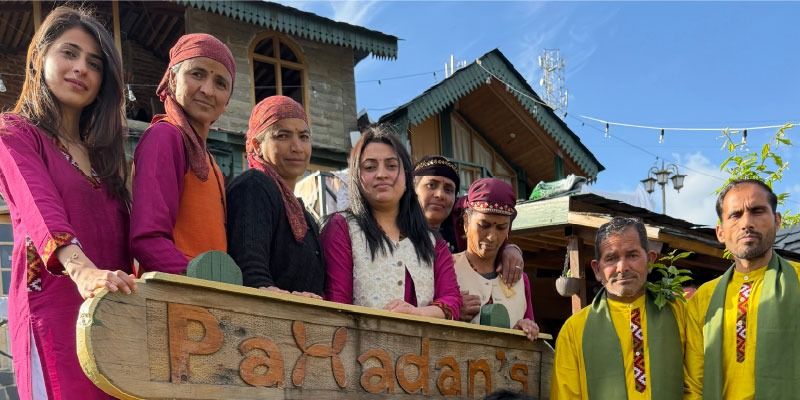
Praveen came back to Himachal Pradesh two years ago. “My heart was here only,” she says. “I wanted to do something for my village. Especially for women, because they are so hardworking, but there was nothing they could earn from.” She founded Pahadan’s, combining slow rural tourism with handmade artisan fashion. More than 250 women across 20 to 30 villages now collaborate with the brand, earning Rs 4,000 to Rs 7,000 a month through skills they always had but had never been paid for. Some live at 8,000 feet altitude, in communities where selling apples was the only income option.
Nidhi’s answer was to make it herself. She launched Himika Foods and named it after her daughter, then built a second brand, nidhi niharika.shop, offering digital resources for parents navigating homeschooling and conscious parenting, a space she had needed and never found.
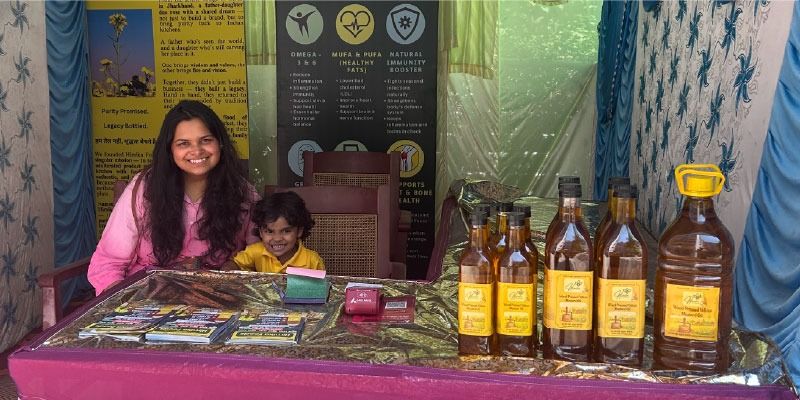
“Both my businesses came from lived experience. I was solving my own problems first. It was not a market gap on paper. It was something I felt deeply and personally,” Nidhi shares.
For both women, the business and the personal were never really separate.
What becoming a mother changed
For Praveen, becoming a mother sharpened the conviction rather than divided it. “I became stronger when I became a mother,” she says. “I can’t express it in words. I go everywhere with my little kids, for work, for vacation, for everything.” For her, motherhood and ambition were never in conflict.
Nidhi frames it differently. “Motherhood is not just a role in my life. It’s how I see everything now. I don’t create products just to sell. I create what I would genuinely use for my own child. Everything I’m building is something I want my child to be proud of one day.”
Where the website came in
Mountain craft sold in mountain villages stays in mountain villages. The conviction behind both brands was strong. The question was always reach.
Pahadan’s launched its website with Hostinger and received 700 orders within 15 days, with 15,000 applications from people wanting to stay at their village cottages, none of it driven by paid advertising. A buyer in Chennai could find hand-woven pieces from a woman at 8,000 feet in Himachal Pradesh because there was now a permanent, searchable address for the brand.
For Nidhi, the website shifted something else: it moved her from content creator to business owner in the eyes of the people finding her.
“Social media gives you reach, but the website gives you depth and ownership. On social media, you’re always at the mercy of algorithms. Your website is your space, where your brand lives fully without distractions. When someone comes to your website, they are already a step closer to trusting you,” she says.
She started with social media, sharing her journey as a mother before she had anything to sell. Once people asked for solutions, she built the products and then the website. Running both brands through Hostinger, she describes the website as the thing that made the business feel like a business.
Unfinished business
Praveen’s mother spent decades knitting for everyone and keeping nothing. Nidhi’s great-grandmother pressed oil by hand so her family would have something pure. Neither of them was building a business. They were doing what mothers do: making the best possible thing for the people around them, without counting the cost.
Their daughters knew exactly what they wanted to build, and they built it. On Hostinger, 57% of new Indian users go live within a day of signing up. For founders who already know exactly what they want to build, the barrier between conviction and a live website is now a matter of hours. Praveen and Nidhi had been carrying their conviction for years. This time, the world could find it.
Original Article
(Disclaimer – This post is auto-fetched from publicly available RSS feeds. Original source: Yourstory. All rights belong to the respective publisher.)