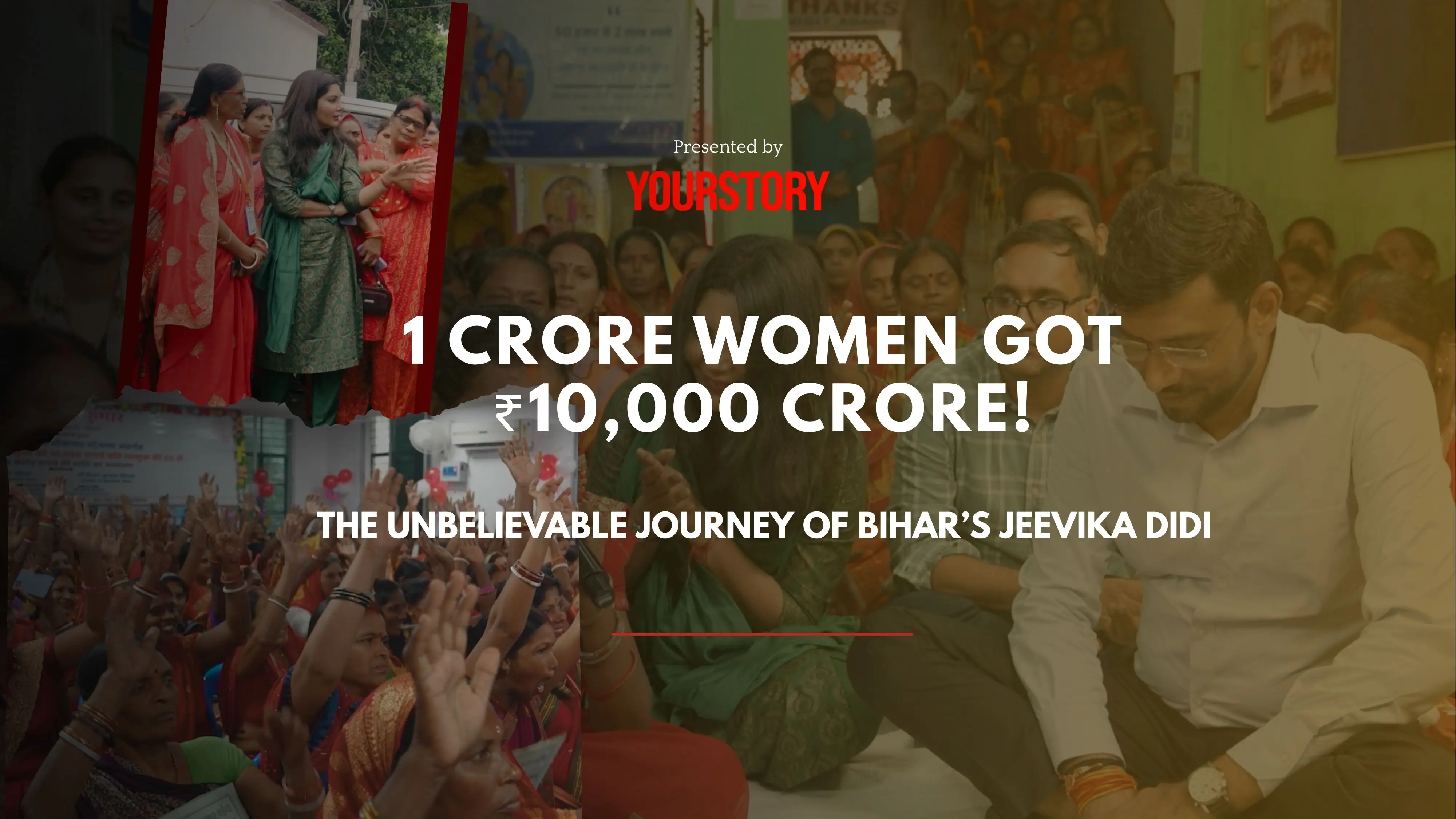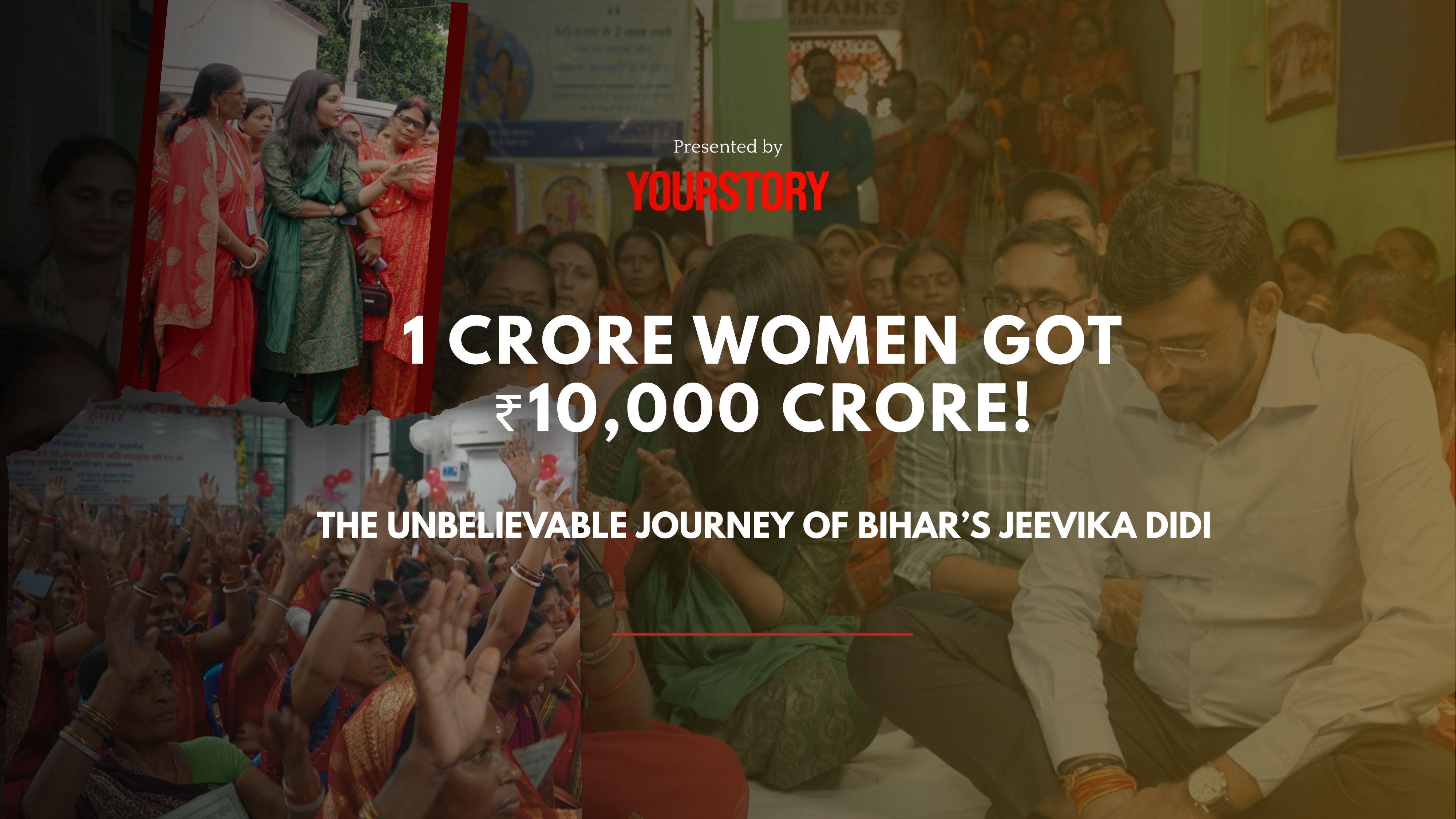
Bihar’s Mukhyamantri Mahila Rojgar Yojana (MMRY) launched with ₹10,000 each credited to 1 crore women, explicitly routed through the state’s JEEViKA self-help group (SHG) network. The programme was launched by Prime Minister Narendra Modi, with state implementation steered by Chief Minister Nitish Kumar.
At its core, MMRY plugs into the discipline and social capital of JEEViKA, Bihar’s State Rural Livelihoods Mission under Deendayal Antyodaya Yojana – National Rural Livelihoods Mission (DAY-NRLM). Over the past decade, JEEViKA’s women-led institutions have evolved from savings circles into a powerful last-mile economic engine. Federations manage credit with peer accountability, connect women to skills and inputs, and aggregate demand, enabling nano-businesses to access better prices. With MMRY, the ₹10,000 seed is not just cash; it is a catalyst released within an already functioning system, one that offers training, mentoring, and market linkages, enabling first-time entrepreneurs to convert a small start into a daily income.
How JEEViKA empowers (and at what scale)
JEEViKA today spans lakhs of SHGs across all 534 blocks, touching well over a crore women directly. Its ecosystem includes Training and Learning Centres in every district, Bank Sakhis for doorstep financial services, producer groups and cooperatives in dairy, livestock, and non-farm enterprises, and initiatives like Didi Ki Rasoi that convert SHG capacity into steady revenue streams. Members have moved around ₹1 lakh crore through their institutions with about 99.5 percent repayment discipline, showing how trust plus group design can scale without losing quality.
As Himanshu Sharma, IAS, CEO-cum-State Mission Director of JEEViKA, explains, “This is the journey from Ashrit (dependent) to Atmanirbhar (independent).” That journey is visible in everyday Bihar: a mother reopening a village kirana after years indoors; a stitching unit turning sporadic orders into steady work; a small dairy shifting from losses to planned feed, vaccinations, and bulk collection.
YourStory Founder and CEOShradha Sharma, who recently toured districts across Bihar and met multiple JEEViKA groups, reflected on how trust multiplies impact: “What can a woman really do with ₹10,000? When a woman feels trusted, she begins to trust herself. MMRY did not just give ₹10,000 to over one crore Jeevika Didis, it gave them belief, and belief changed everything. From that first ₹10,000 came dreams: a saree-matching centre in a quiet village, a local printing shop bringing colour to small-town streets, a woman starting her own phenyl business, another turning her kitchen into a growing food venture. Behind every number is a story; behind every Didi is a new Bihar.”
Beneficiary Sectors at a Glance
Out of the women benefiting from the scheme, 38 lakh Didis are engaged in agriculture, 8 lakh in animal husbandry, and 5 lakh in manufacturing and services. MMRY is designed to directly support these cohorts with quick working capital, handholding, and market access, so existing activities can formalise and scale faster.
Progress and near-term scale
- Credited so far: ₹10,000 has reached 1 crore women.
- Immediate pipeline: Another 21 lakh are scheduled next, taking disbursals to roughly ₹12,000 crore by the 7th, October, based on ₹10,000 per beneficiary.
- New applicants: 22 lakh additional women have applied; they will be added to SHGs and brought into the benefit stream in phases.
Estimated impact: what could change in a year
At a conservative 35 percent conversion, MMRY could add over ₹12,000 crore to women-led household incomes every month within a year, while seeding nearly five lakh ancillary jobs across supply chains and services. In practice, that means roughly 24 to 25 lakh active nano-enterprises operating by month 12, each generating around ₹5,000 in net monthly income. The spillovers are meaningful: local sourcing of raw materials rises, village-level services deepen, such as transport, packaging, and repairs, and bank-linked working-capital cycles create a credit flywheel that turns multiple times a year. Even on conservative survival rates, this translates into steadier household cash flows, higher reinvestment in education and health, and greater mobility and decision-making power for women.
Medium-term outlook and ROI
Over three years, the programme expects at least a 200 percent return, meaning every ₹1 of public spend catalyses ₹2 in cumulative women-led income and enterprise output as activities formalise and rotate working capital. Over five to six years, returns are projected in the range of 400 to 500 percent as producer groups, cooperatives, and market linkages deepen. On current planning, 2 to 2.5 crore women could ultimately be reached across phases. While Bihar has about 2.70 crore families and aims for one woman per family, the effective target universe for phased coverage is currently framed at around 2.25 crore women, accounting for eligibility and onboarding capacity.
Governance, tracking, and state leadership
A live MIS underpins the rollout and monitoring, with roughly one field mobiliser for every 100 beneficiaries to ensure hand-holding, verification, and timely course-correction. Nationally, DAY-NRLM under the Ministry of Rural Development anchors this collective-led model. In Bihar, the Rural Development Department, led by SecretaryLokesh Kumar Singh, IAS, provides the administrative backbone that lets JEEViKA scale with quality while ensuring strong bank linkages and last-mile delivery. The Mission’s core principle remains simple: inclusion first, then capacity, then finance and markets. Bihar’s results show how that principle translates into outcomes at scale.
Bihar’s experience shows scale need not dilute trust. JEEViKA’s SHGs have achieved massive transaction volumes with exceptional repayment discipline, suggesting that when women are given agency and a platform, they repay not only loans but society’s faith with growth. As Shradha Sharma put it, this is not charity; it is change. They did not just build businesses; they rebuilt identity, and in doing so, they built the future.
Bihar’s results show that when inclusion, capability, finance, and markets are implemented with discipline, they can drive real change at a global scale. In the days ahead, it will be inspiring to watch these women use this support to grow their businesses and power the transformation of Bihar. As Shradha Sharma reminds us, when a woman is trusted, she learns to trust herself, and behind every number there is a story, behind every Didi there is a new Bihar.
Original Article
(Disclaimer – This post is auto-fetched from publicly available RSS feeds. Original source: Yourstory. All rights belong to the respective publisher.)