Cost of Strip away the cheerleaders, the auctions, the last-over drama, and at its core, the IPL is a business experiment that has worked far better than anyone could have imagined. Back in 2008, no one really knew if franchise cricket in India would become a multi-billion-dollar ecosystem.
Today, it sits comfortably among the world’s most valuable sports leagues. And yet, what’s interesting is not just how much money flows into the IPL, but how it moves. Because running a team? That’s not cheap. Not even close. And still, people keep investing. So clearly, the math works. Just not in the way most people assume.
IPL Team Operations Cost
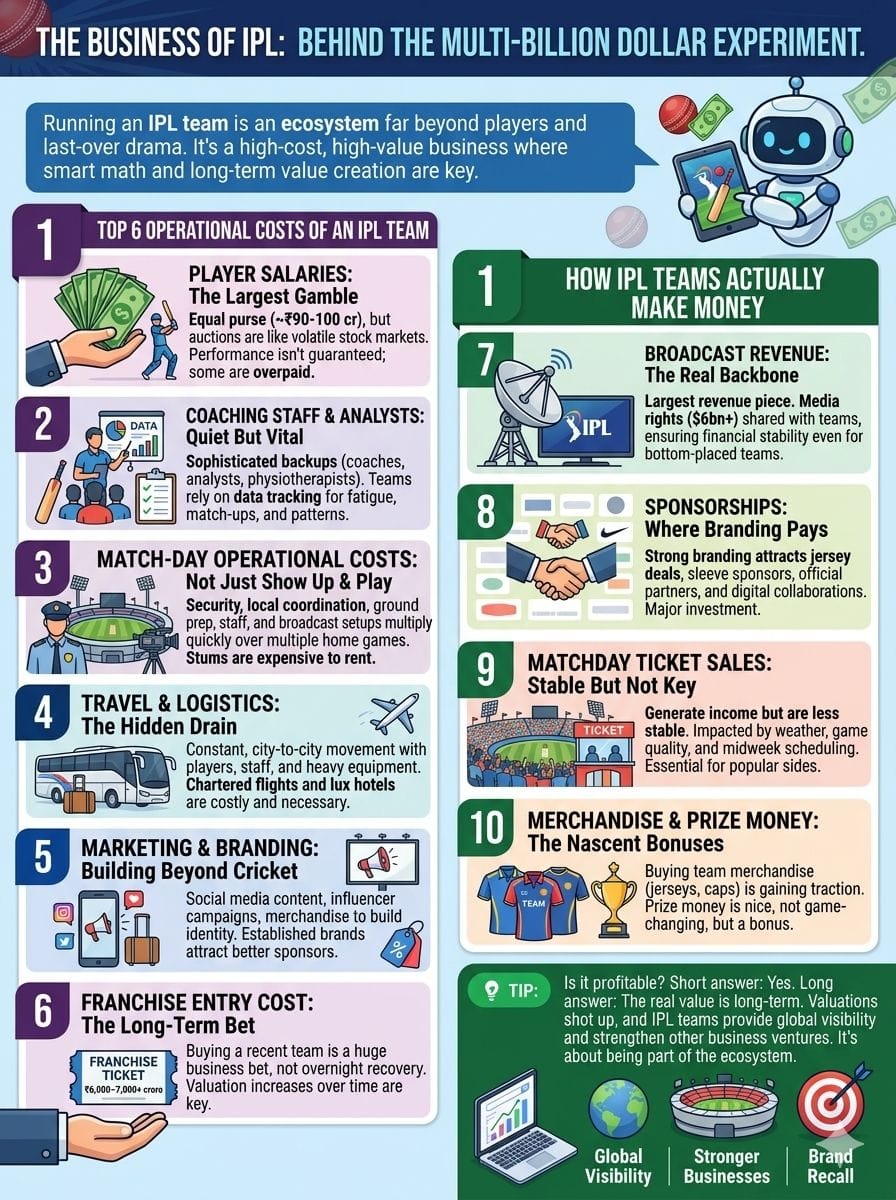
The first misconception that needs to be cleared is regarding player wages being the only expenses incurred by any IPL team. There is much more than just this when it comes to spending.
Player’s Salary: The Biggest Expense (And Sometimes Wastage)
In a way, all teams have an equal purse. Roughly INR 90-100 crores. It seems like a fair deal at first glance. But auctions can be fickle. One season, a player looks like a bargain. The next season, they go for double the price.
Sometimes teams panic-buy. Sometimes they overcorrect. And occasionally, they get it just right. Also, an INR 16 crore player doesn’t guarantee INR 16 crore worth of performance. That’s the gamble. If anything, IPL auctions behave more like stock markets than sports drafts. And like markets, not everyone makes smart calls.
Coaching Staff and Analysts: The Quiet Investment
You don’t really see this part unless you’re paying attention.
Every team has a complete backup ofcoaches, data analysts, physiotherapists, and even throw-down specialists, and this backup is becoming increasingly sophisticated over the years.
Teams now track:
- Player fatigue Match-ups Opposition patterns
- Some even rely heavily on data before making playing XI decisions.
It’s not cheap but it’s become necessary. Especially when margins between teams are so thin.
Match-Day Costs: The Part Nobody Talks About
Stadiums look like revenue machines, and they are, but they’re also expensive to operate. Teams don’t just show up and play.
There’s:
- Security
- Local coordination
- Ground prep
- Staff management
- Lighting and broadcast setups
That, multiplied by multiple home games, adds up quickly. And most teams don't own stadiums, so they're paying to have them.
 StartupTalky- Business News, Insights and StoriesPratiksha Bajikar
Marketing and Branding: This Is Where Teams Become “Brands.”
Here’s where things get interesting. Some IPL teams are bigger than the sport itself. Their identity goes beyond wins and losses. That doesn’t happen by accident.
It’s built through:
- Social media content
- Campaigns
- Influencer tie-ups
- Merchandise
Yes, and lots of money. The more established your brand is, the easier it will be to attract sponsors, and that’s where the real profits start rolling in.
Travel and Logistics: The Hidden Drain
This is one of those costs people underestimate. Teams are constantly moving, city to city, sometimes every few days. And they don’t travel light.
- Players
- Staff
- Equipment
- Support teams
IPL franchises tend to use chartered flights and luxurious hotels. It is costly, but there is no other option due to the rigorous itinerary. It became even more costly during the COVID years owing to bio-bubbles.
Franchise Cost: The Entry Ticket Isn’t Small
If you’re entering the IPL now, the highest cost isn’t running the team, it’s buying one. Recent franchises have gone for INR 6,000–7,000+ crore. That’s not a sports investment. That’s a long-term business bet. And you don’t recover that overnight.
StartupTalky- Business News, Insights and StoriesPV Vyshnavi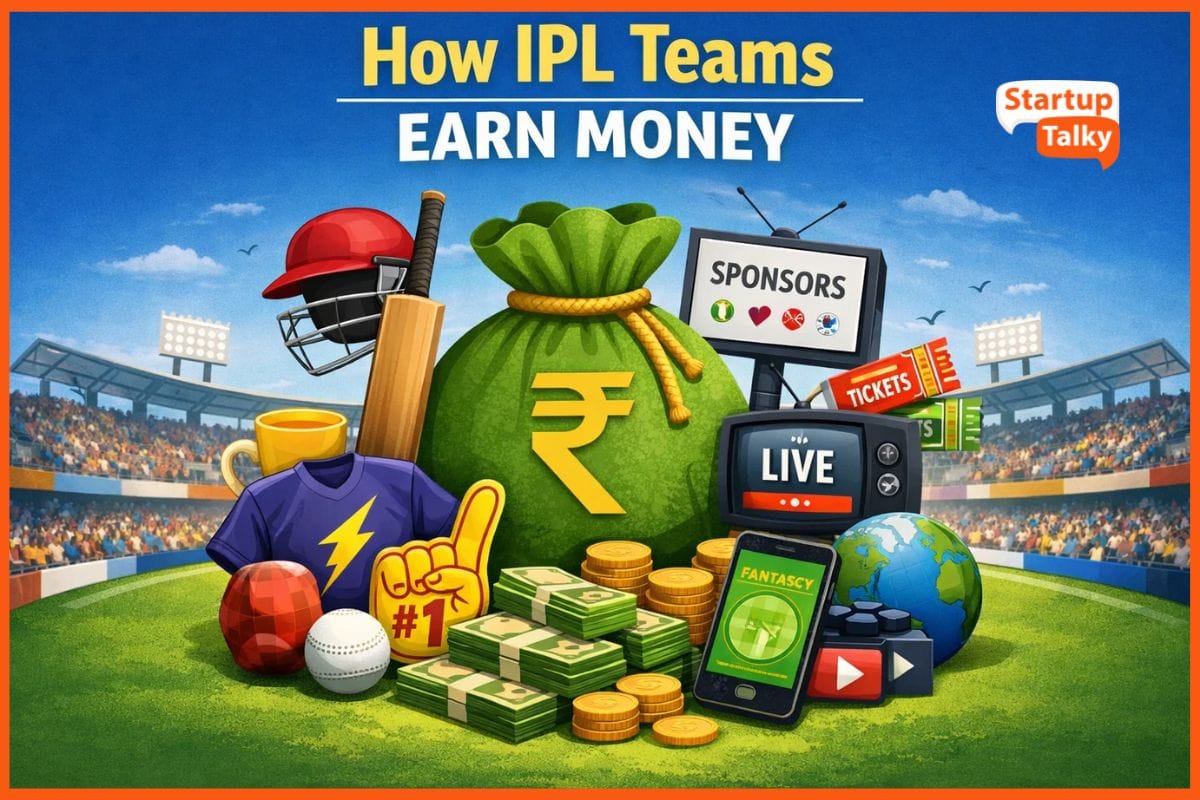
How IPL Teams Actually Make Money
Now comes the part that makes all of this viable. Because if teams were only spending, this model wouldn’t survive.
Broadcast Revenue: The Real Backbone
This is the biggest piece of the puzzle. IPL media rights have crossed $6 billion. That money doesn’t just go to the board, it gets shared with teams. Which means: Even if a team finishes last, they still earn. That’s what makes the IPL financially stable.
Sponsorships: Where Branding Pays Off
Once a team builds a strong identity, sponsors follow. Jersey deals alone can bring in huge money. Add to that:
- Sleeve sponsors
- Official partners
- Digital collaborations
And suddenly, marketing expenses start looking like investments.
Sales of Tickets: Important, but Not All
True, ticket sales generate income. However, they are smaller and less stable than broadcasting rights and sponsorship deals. Weather, game quality, midweek games – everything impacts attendance. Nonetheless, for popular sides, gate receipts can prove crucial.
Merchandise: Slowing Gaining Ground
This is a nascent industry in India. But it is gaining momentum. There has been an increase in consumers’ willingness to purchase team merchandise such as jerseys and caps. And for teams with loyal fanbases, this adds up.
Prize Money: Nice to Have, Not Game-Changing
Winning the IPL gets you prize money. So do playoff finishes. But in the larger financial picture, it’s not a major revenue stream. Think of it more as a bonus than a business driver.
StartupTalky- Business News, Insights and StoriesRishi Mundra
So… Is It Actually Profitable?
Short answer: Yes. Long answer: Not immediately. Most teams didn’t make a profit in the early years. But over time, something interesting happened, their valuations shot up. Teams bought for a few hundred crores are now worth thousands. That’s where the real money is. Not just in annual profits but in long-term value. Also, many owners don’t just look at direct returns. IPL teams help them:
- Build global visibility
- Strengthen other businesses
- Create brand recall
Which means the ROI isn’t always direct, but it’s very real.
Final Thoughts
If you look at IPL teams like regular businesses, the numbers might confuse you at first. High costs. Delayed profits. Unpredictable outcomes. But zoom out a bit, and it starts to make sense. This isn’t just about cricket. It’s about owning a piece of one of the fastest-growing sports ecosystems in the world.
And in that context, the question isn’t “Is it expensive?”
It’s “Can you afford to not be part of it?”
FAQs
How are IPL matches organised?
IPL matches are organised through detailed planning that starts weeks in advance. It involves coordination between teams, stadium authorities, broadcasters, security, and logistics teams to ensure everything runs smoothly on match day.
How long does it take to prepare for an IPL match?
Preparation for an IPL match usually takes several days or even weeks. This includes pitch preparation, stadium setup, team travel planning, and broadcast arrangements.
What is the most important part of IPL match preparation?
The pitch is one of the most critical elements because it cannot be changed at the last moment. Ground staff carefully manage factors like moisture, grass, and weather to ensure fair play.
Why is IPL scheduling so complex?
IPL scheduling is complex because it must balance team travel, venue availability, broadcast timings, player workload, and even weather conditions while ensuring matches happen on time.
Original Article
(Disclaimer – This post is auto-fetched from publicly available RSS feeds. Original source: Startuptalky. All rights belong to the respective publisher.)