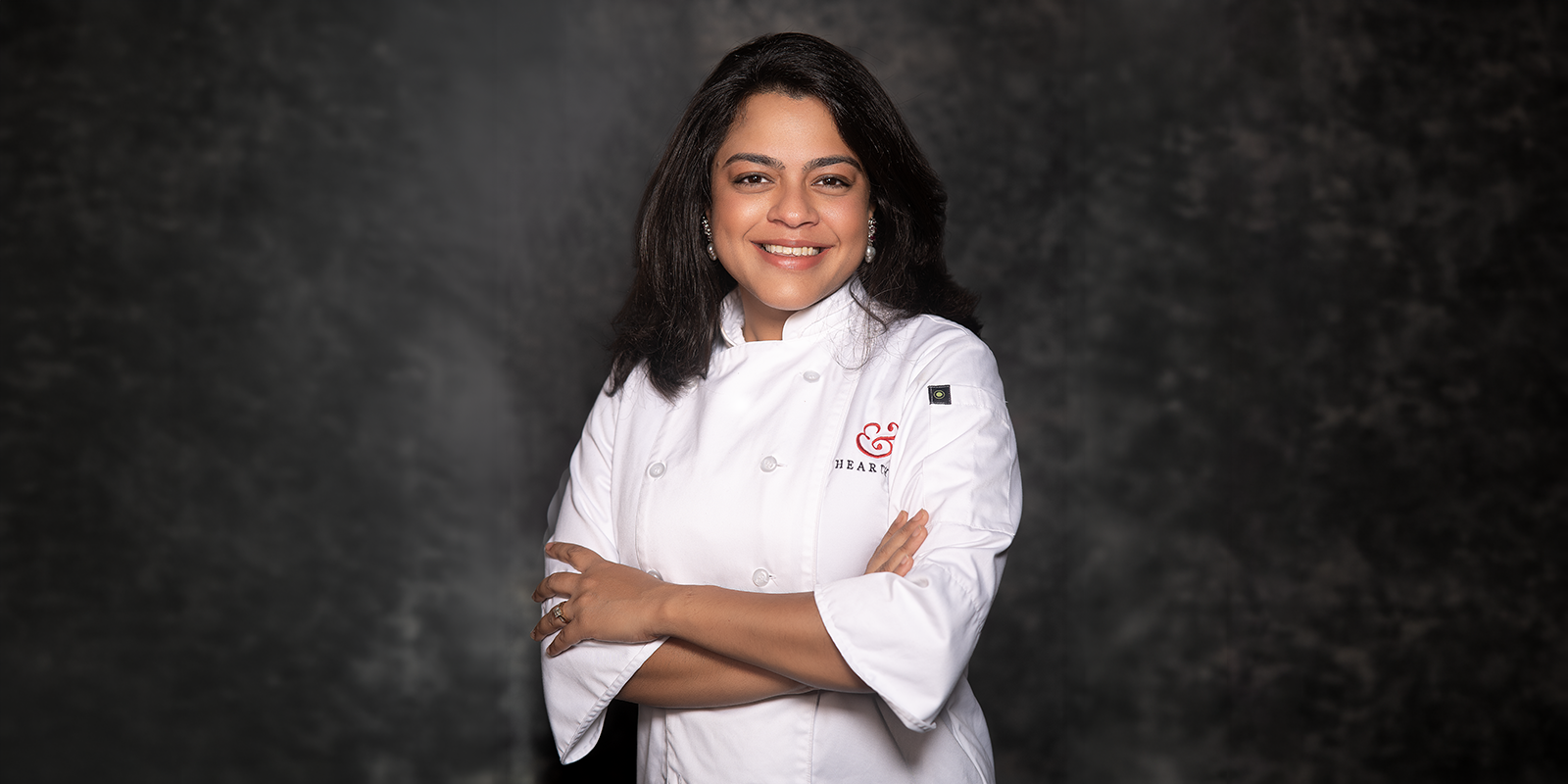
Chef Megha Jhunjhunwala’s relationship with food is rooted in trust, where body, mind, and memory come together to create something deeply personal. A finalist on MasterChef India Season 2 and trained at Le Cordon Bleu Paris, the Kolkata-born chef went on to found Hearth & I, a bespoke dining venture known for immersive, intentional culinary experiences.
According to the IMARC Group’s report, India Gourmet Foods Market Size, Share, Trends and Forecast by Type, Distribution Channel, and Region, 2026–2034, the market reached $5.4 billion in 2025 and is projected to grow to $24.5 billion by 2034, expanding at a CAGR of 17.78% over the forecast period.
Amid the rapid growth of India’s gourmet food sector, fuelled by increasing health consciousness, the rise of boutique bakeries and premium desserts, urbanisation, and a growing appetite for luxury, experience-driven dining, Hearth & I is well-positioned to deliver high-quality, health-forward, globally inspired culinary experiences.
For Megha, however, food goes far beyond ingredients. Her approach, rooted in ancestral flavours, traditional techniques, and emotional awareness, treats food as a vessel for memory, healing, and connection.
In a conversation with YourStory, she reflects on how personal healing, emotional awareness, and a commitment to food integrity have shaped her approach to cooking, food design, and meaningful dining experiences.
Edited excerpts from the interview:
YourStory (YS): You’ve said, ‘Food is one of the most intimate relationships we have, yet we engage with it unconsciously.’ When did you begin exploring this relationship consciously, and how does it shape your food today?
Megha Jhunjhunwala (MJ): Food is intimate. It’s something we put into our bodies. I’ve always been aware of this, but it became particularly clear in 2023 when I developed a skin-related autoimmune disease.
Doctors told me the only treatment was steroid medication, both oral and topical. Around that time, I met someone who suggested I could reset my gut by eating differently, including incorporating natural herbs into my diet. I followed that approach for three months, and the disease completely vanished.
I remember eating a fried gluten dish and suddenly feeling emotionally low. Nothing had changed in my external environment except the food I had eaten. That made me realise how deeply food can affect the mind as well.
Think about Gut and Psychology Syndrome (GAPS), where the gut and mind are closely connected. It makes me wonder: what came first, the mind or the gut? That’s why I say food is such an intimate relationship.
YS: You’ve spoken about periods of emotional distress and how they influenced your cooking and food design. Could you tell us more about that?
MJ: Cooking has always been a way of bringing myself back to shunya, to zero. It’s almost like meditation. When I cook, especially during stressful times, I’m able to lose myself in the process.
Even for the team in the kitchen, emotional balance matters. If someone is angry while cooking, we pause, take a break, do breathing exercises, and then return to the food.
When it comes to food design, I often think about how IKEA packs its products: everything is precise and thoughtfully arranged. There’s a sense of joy and symmetry in that. Food design doesn’t always have to be symmetrical, but the idea helps us think about how we build a plate.
We add small touchpoints, subtle aromas, gentle sensory cues, tangible and intangible details, to celebrate people, emotions, or occasions. Sometimes it’s about creating something special; other times, it’s about finding ways to celebrate the everyday.
Also Read History on a plate: How Chef Bridget White-Kumar is bringing back forgotten Anglo-Indian flavours
YS: Your work has evolved from cooking to designing experiences. How does that shift influence the way you plan a meal?
MJ: A sit-down dinner is the ideal format for this. We typically plan seven to 14-course menus, apart from luxury catering.
One experience that stands out was a dinner organised for a 90-year-old grandmother. Her grandson had booked us for a 12-course family dinner. We usually ask a series of questions to understand the person being celebrated. We learned that she had grown up in Japan, loved violet and pastel shades, and preferred that people focus on their food rather than conversation.
So we designed a Japanese box with thin numbered drawers, each containing a message from a family member. During the dinner, she would choose a number and receive a message from someone in the family. We also incorporated touches of violet and pastel shades into the plating for all 12 courses.
It was just a little bit of theatrics and flair, but it helped create a more meaningful dining experience.
YS: Your cooking often draws from ancestral flavours and traditional techniques. Why do these elements matter to you?
MJ: I love innovation in food, but as a chef, I’m also a bit of a purist. Food can sometimes become overly pretentious. Many of the ancestral dishes I’ve experienced around the world are served home-style. They’re humble and comforting; they don’t expect anything from you. You can eat them in your pyjamas or in bed.
I’ve been fortunate to learn from families across the world: old recipes from India, Italy, and the Middle East. These recipes are treasures, and each one carries a story. Being able to recreate them is where the magic lies.
For example, I once learned to make pasta from a close friend’s grandmother. She told me she wanted a daughter-in-law who could dance well. When I asked why, she said women who dance well can make pasta dough properly because the movement is physically demanding.
That rhythm—the dance of making pasta—was something I experienced with her, and today that movement continues in our kitchen in India.
Also Read California Burrito’s Mueller on growth, being an ‘American Marwadi’, and overcharging by food delivery platforms
YS: How do you approach teaching and sharing knowledge with younger cooks?
MJ: Some chefs are hesitant to share their recipes, but I’m very happy to do so because I want to empower people to cook at home. I also believe that every person carries a unique energy. Even if two people use the same ingredients and flavours, the food will still taste slightly different.
Teaching matters to me because sharing recipes and stories helps ensure they don’t disappear. Carrying them forward is important.
YS: How did your experiences and philosophies around food lead to the creation of Hearth & I?
MJ: In our kitchen, even with interns, I always say that the food we serve should be something I could proudly place before my grandfather. For me, that means cooking with integrity: never reusing oil, never cutting corners with cheap ingredients, and never treating food carelessly.
Food is intimate, and with that intimacy comes trust. Our clients are not standing over us while we cook; they trust us to make the right choices for their health.
At Hearth & I, profit margins are secondary to ingredient quality. I grew up in a family where Ayurveda was often discussed at the dining table, and those values stayed with me. We’ve had investors suggest increasing margins by using cheaper ingredients, but we’ve chosen to stay true to our philosophy.
Edited by Teja Lele
Original Article
(Disclaimer – This post is auto-fetched from publicly available RSS feeds. Original source: Yourstory. All rights belong to the respective publisher.)