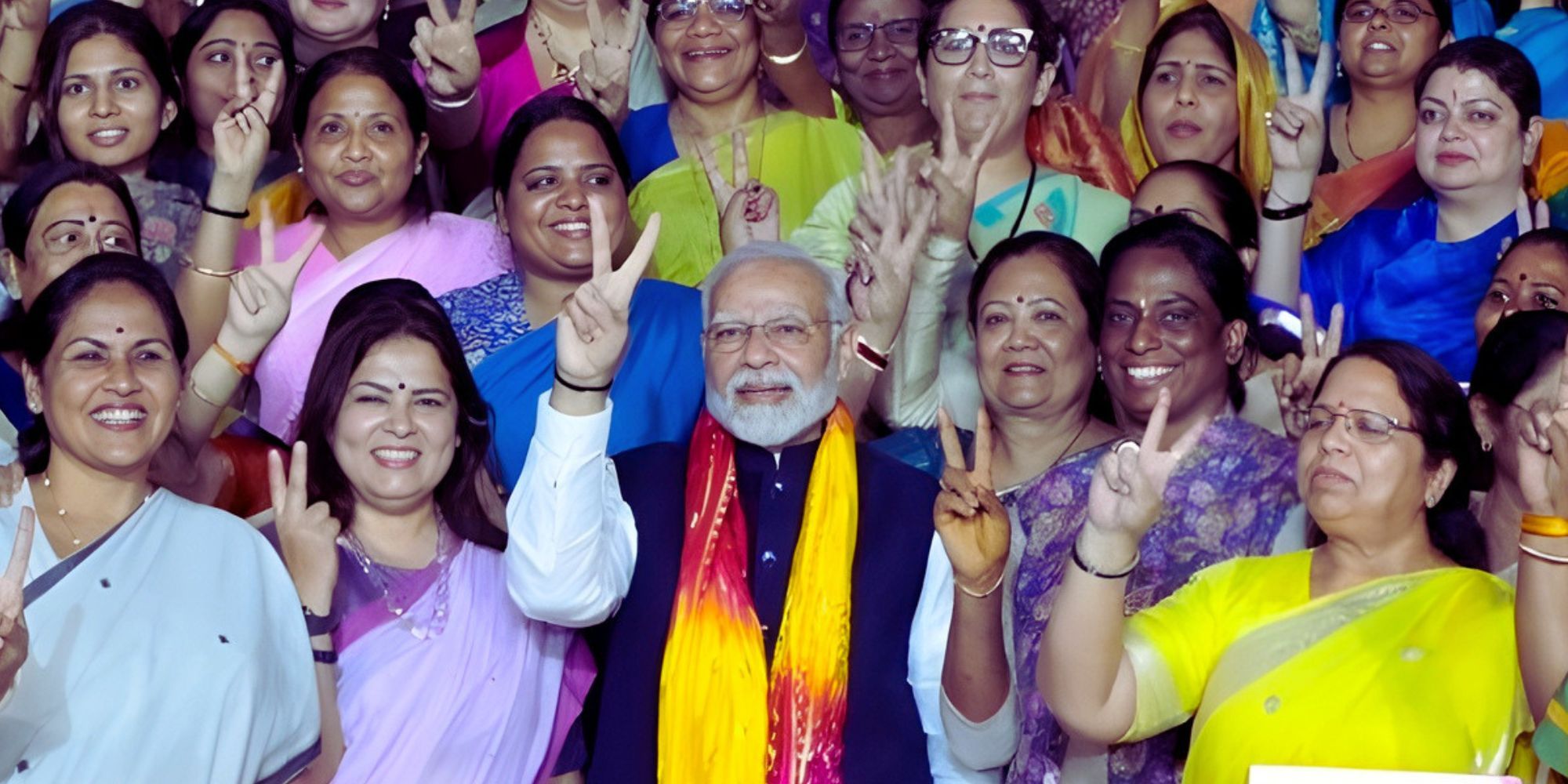
As India approaches 2047, the year marking 100 years of independence, the idea of becoming a developed nation is increasingly tied to participation. Not just economic growth, but who gets to shape that growth. In recent remarks, the Prime Minister framed this clearly: India cannot achieve developed nation status without fully integrating its “Nari Shakti,” or women power, into the country’s development journey. The argument goes beyond social inclusion, it positions women’s participation as a structural requirement for national progress.
Women today are visible across sectors, from science and entrepreneurship to sports and governance. Yet, this presence has not translated proportionally into legislative representation.
The demand for women’s reservation in Parliament is not new. It dates back to the early 1990s, when the idea first entered mainstream policy discussions. In 1993, the 73rd and 74th Constitutional Amendments mandated 33% reservation for women in Panchayati Raj Institutions and urban local bodies, leading to a significant shift at the grassroots level, with millions of women entering local governance over the past three decades. However, similar progress at the state and national levels remained stalled.
The Women’s Reservation Bill was first introduced in 1996 and was subsequently tabled multiple times in 1998, 1999, and 2008. In 2010, the Rajya Sabha passed the bill, but it lapsed without approval in the Lok Sabha. As a result, women’s representation in Parliament has remained limited. In the 17th Lok Sabha (2019–2024), women account for 78 out of 543 members, around 14.3%, while in most state assemblies, representation typically ranges between 8% and 12%.
The passage of the Nari Shakti Vandan Act in 2023 marked a renewed push, proposing 33% reservation in the Lok Sabha and state assemblies, aligning national representation with what has already been implemented at the local level. The current focus is on implementation, with the government indicating that by the 2029 general elections, this reservation should translate into actual representation. Recent discussions with political parties suggest that a broader consensus may be emerging.
The push for women’s reservation is being framed as more than symbolic inclusion; it is about improving the quality of governance. Experiences from local governance offer some evidence, with studies showing that women-led panchayats often prioritise issues such as drinking water, education, and healthcare more strongly, bringing grounded perspectives into policymaking. This aligns with the constitutional vision of equality, not just as a principle, but as something that must be realised in institutions.
India’s development ambition is no longer just about growth rates or infrastructure; it is about building institutions that reflect the diversity of its population. Women constitute nearly half of India’s population, yet their presence in legislative decision-making remains far from proportional. If 2047 is the milestone, then the path to it requires correcting this imbalance.
For decades, the need for greater representation has been acknowledged but delayed, but the current moment signals a shift from intent to action. The upcoming parliamentary discussions offer an opportunity to align India’s democratic structures with its development ambitions, and if this momentum holds, it could mark a decisive step toward a more representative and inclusive future—one where India’s growth is shaped not just for its people, but equally by them.
Original Article
(Disclaimer – This post is auto-fetched from publicly available RSS feeds. Original source: Yourstory. All rights belong to the respective publisher.)