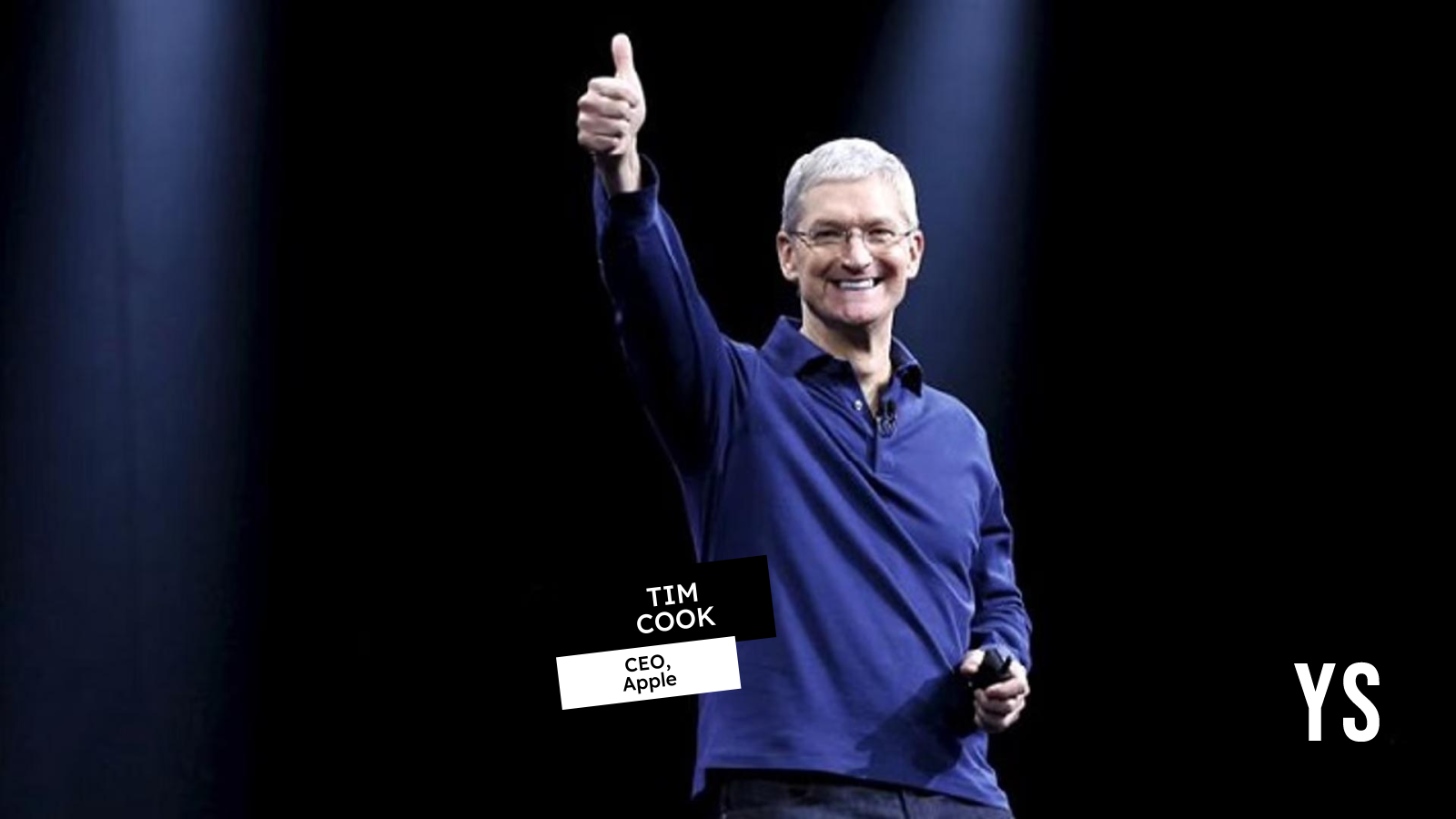
Apple CEO Tim Cook said he is “over the moon” about India, as the tech giant enjoyed robust double-digit growth across nearly all its product categories in the country during the quarter ending in March.
“It is a huge opportunity for us. We have been focused on this for a while… Despite doing extremely well there for quite some time, we still have a modest share, which speaks to the opportunity we have,” Cook remarked during Apple’s second-quarter earnings call.
Apple has been steadily deepening its presence in India. Its push has been reinforced by the opening of flagship retail stores, alongside an expanding manufacturing footprint and greater localisation. Apple continues to see significant headroom for growth as it broadens its reach and strengthens its ecosystem in the country.
“There are a lot of people moving into the middle class, and we have some great products for them, both currently and coming. In the majority of our categories… over half of customers are new to that product there,” he noted, adding that it speaks very well to growing the installed base.
Apple’s global installed base has soared to more than 2.5 billion active devices as of the March quarter. This shows the company’s ever-expanding footprint and enduring appeal among customers worldwide.
Strong quarterly surge
The iPhone maker’s momentum was evident in the figures as it clocked $111.2 billion in revenue, up 17% from a year ago, which according to Cook, surpassed the upper end of Apple’s guidance range, in spite of ongoing constraints.
“We set March revenue records and grew double digits in every geographic segment,” Cook said.
Apple’s bottom line grew 19.4% to $29.6 billion in the quarter.
Approaching its twentieth anniversary next year, the iPhone remains the beating heart of Apple’s revenue engine. iPhone sales hit an “excellent quarter,” generating $57 billion in revenue, growing 21.7% year-on-year, fuelled by strong demand for the iPhone 17 family.
In March, Apple added another device to this lineup, iPhone 17e, the most affordable member of the iPhone 17 family.
“The iPhone 17 family is now the most popular lineup in our history when looking at the launch through March,” noted Cook, who also spoke about iPhone sales growing, despite supply constraints.
“We were constrained during March. This was primarily on iPhone and, to a lesser extent, on Mac. The constraints were primarily driven by the availability of the advanced nodes our SoCs are produced on,” the Apple chief explained.
“If you look forward to June, the majority of our supply constraints will be on several Mac models, given the continued high levels of demand that we are seeing, and we have less flexibility in the supply chain than we normally would,” he added.
During the quarter, Apple unveiled the MacBook Neo, the most affordable laptop it has ever produced. Cook, however, said the company is supply constrained on the device.
“The customer response to MacBook Neo has just been off the charts, with higher-than-expected demand. And we set a March record for customers new to the Mac, partly due to the Neo,” he remarked.
Mac revenue was up 6% year-over-year to $8.4 billion. In India, SaaS company Freshworks deployed over 5,000 MacBook Pro and MacBook Air devices, according to Apple CFO Kevan Parekh.
Meanwhile, iPad revenue rose 8% year-over-year to $6.9 billion, with more than half of iPad buyers being new customers, especially in emerging markets like India. Wearables, home, and accessories revenue grew 5% to $7.9 billion, with over half of Apple Watch buyers new to the product.
While hardware remains the core, Services has evolved into a powerhouse of its own, now contributing more than a quarter of Apple’s total revenue. To put its scale in perspective, the Services segment has grown to nearly 40% the size of the entire product lineup. Services revenue surged 16% to $31 billion, hitting an all-time record.
Within Services, Apple also recorded year-on-year growth in its advertising business, buoyed by the expansion of ads on the App Store. The company plans to extend this momentum later in the year by introducing advertising on Apple Maps across the United States and Canada, opening up a fresh avenue for revenue.
Measured AI push
Apple’s approach to AI, branded as Apple Intelligence, centres on weaving AI into its existing ecosystem while upholding a firmly privacy-first philosophy. Yet the company faces headwinds, including a growing perception that it is lagging behind its rivals, as well as technical delays that have weighed on some of its flagship products.
“From the start we have believed AI is a really important investment area for Apple Inc., and we are going to be doing that incrementally on top of what we normally invest in our product roadmap,” Parekh said.
Earlier this year, Apple entered into a multi-year partnership with Google to use the latter’s Gemini models for its revamped Siri, which is expected to roll out later in 2026.
“We are investing more—you can see that in the OpEx numbers. R&D in particular has scaled rather significantly year-over-year. The collaboration with Google is going well. We are happy with where things are, and we are happy with the work we are doing independently as well,” Cook noted, talking about Apple’s approach towards AI models.
Apple’s research and development (R&D) spending was up 33% YoY to $11.4 billion in the quarter.
In contrast to peers such as Microsoft, Alphabet, Meta and Amazon—all of which are pouring tens of billions into AI-focused servers and vast data centre expansion—Apple has kept its capital spending firmly trained on manufacturing capacity, retail growth and day-to-day operations, making only more measured, selective bets on AI.
On the horizon
“We expect our June total company revenue to grow by 14% to 17% year-over-year, which comprehends our best view of constrained supply,” the CFO said.
He added that Services revenue is expected to grow at a year-over-year rate similar to what Apple reported in March, after removing the favourable year-over-year impact from foreign exchange tailwinds.
“We expect operating expenses to be between $18.8 billion and $19.1 billion,” Parekh noted.
Apple is set to host its Worldwide Developers Conference 2026 in June, where it is expected to unveil a range of developments, spanning advances in AI, new software, and enhanced tools for developers.
The 50-year-old Apple is set for a significant leadership shift later this year, with Cook stepping into the role of executive chairman and John Ternus named as the incoming chief executive officer. After 15 years at the helm and nearly three decades with the company, Cook’s transition marks the end of a defining era and the beginning of a new chapter for the tech giant.
Edited by Megha Reddy
Original Article
(Disclaimer – This post is auto-fetched from publicly available RSS feeds. Original source: Yourstory. All rights belong to the respective publisher.)