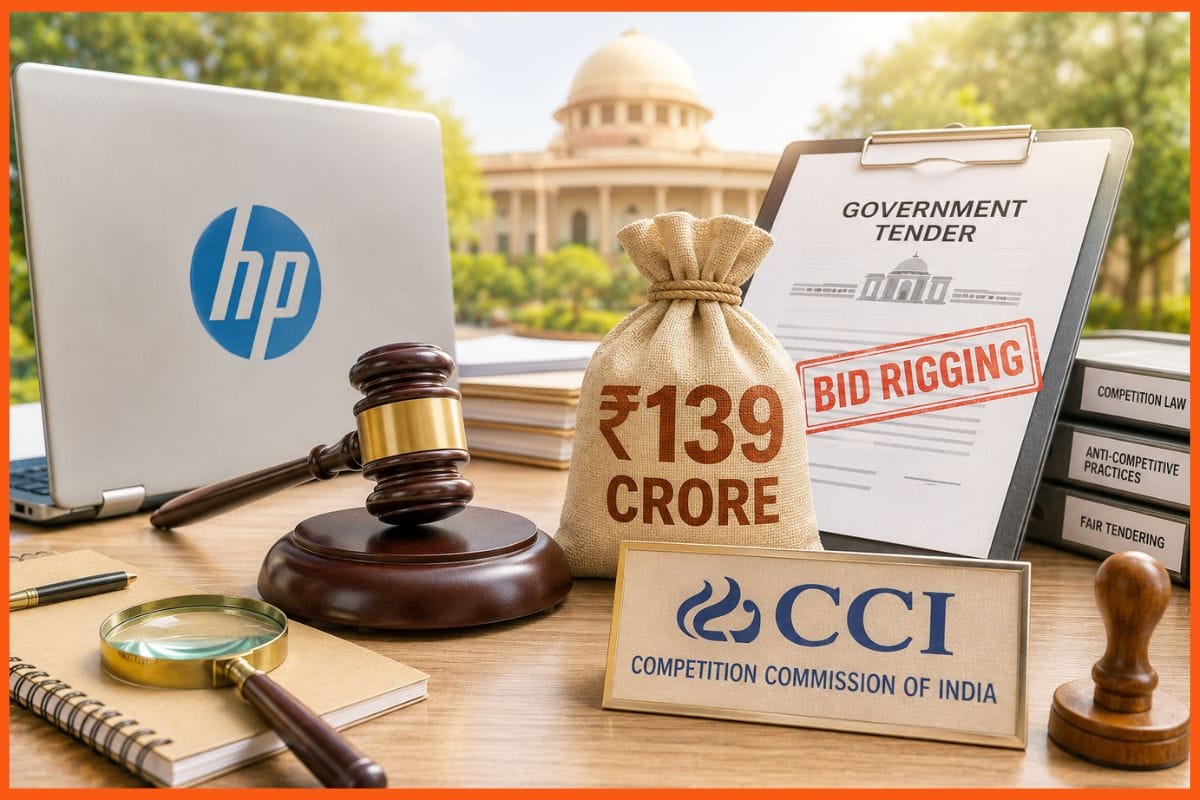
In response to anti-competitive behaviour in the Government e-Marketplace (GeM) bids, the Competition Commission of India (CCI) fined HP India INR 138.85 crore and 21 of its resellers a total of INR 3.52 crore. The fines were handed out by two distinct orders issued on July 13.
First, the CCI fined HP India INR 126.87 crore and five resellers a total of about INR 1.22 crore for their roles in the distribution and sale of personal system products. In the second instance, which concerned the distribution and sale of print consumables like toner and cartridges, the Commission fined HP India INR 11.98 crore and 16 resellers a total of almost INR 2.30 crore.
Why CCI Penalised HP?
The CCI issued a restraining order against HP India and the resellers for engaging in anti-competitive behaviour, which it determined to be in breach of the Competition Act, 2002, Section 3(3)(d) read with Section 3(1). Collusive bidding and bid rigging are both forbidden by the act since they hinder competition. Both actions were initiated by HP India in response to leniency requests made under Section 46 of the Competition Act, as stated by the CCI.
Companies can seek lesser fines under the statute if they willingly disclose cartel conduct and cooperate with the investigation. According to the Commission's findings, HP India influenced resellers' participation in GeM tenders and imposed bid pricing on them. By refusing to give its approval to influence the results of bids in its favour, HP violated this rule. Additionally, it was discovered that HP India was involved in collusion with Delphi Infosolutions, Digitech Computers, Orbit Techsol, Hind Technocare, and Krishna Computers.
More Findings From CCI
The CCI discovered in a separate decision that HP India was instrumental in a cartel arrangement involving 16 Tier-2 resellers. These resellers filed "cover bids"—bids meant to provide the impression of competition while assuring a pre-determined bidder wins. In both instances, the CCI levied fines and held HP India officials and resellers accountable under the Competition Act's Section 48.
Allegations of cartelisation and coordinated market activity have led the regulator to levy penalties on corporations across a variety of sectors, including cement, beer, and other consumer and industrial goods. This most recent ruling demonstrates the CCI's unwavering commitment to maintaining open and competitive public procurement procedures. By going after corporations and people for alleged wrongdoing, the regulator is sending a message that coordinated bidding arrangements trying to influence government bids would be subject to stricter scrutiny and heavy financial fines.
Original Article
(Disclaimer – This post is auto-fetched from publicly available RSS feeds. Original source: Startuptalky. All rights belong to the respective publisher.)