How many garments do you think humans throw away each year? The number will shock you!
According to the United Nations Environment Programme (UNEP), 92 million tonnes of textile waste are generated globally every year. Of this, India produces 3.9 million tonnes of clothing waste annually, yet recycles just 4%, according to IIT Delhi.
Here are some more global statistics by UNEP: While garment production doubled from 2000 to 2015, the duration of their use decreased by 36%. Nearly 11% of plastic waste comes from clothing and textiles, with only 8% textile fibres in 2023 made from recycled sources.
Coming back to India, while traditional garments like kurtas and saris easily move through donation networks, quality denim is thrown away, turned into cleaning rags, or dumped in landfills, wasting its material value.
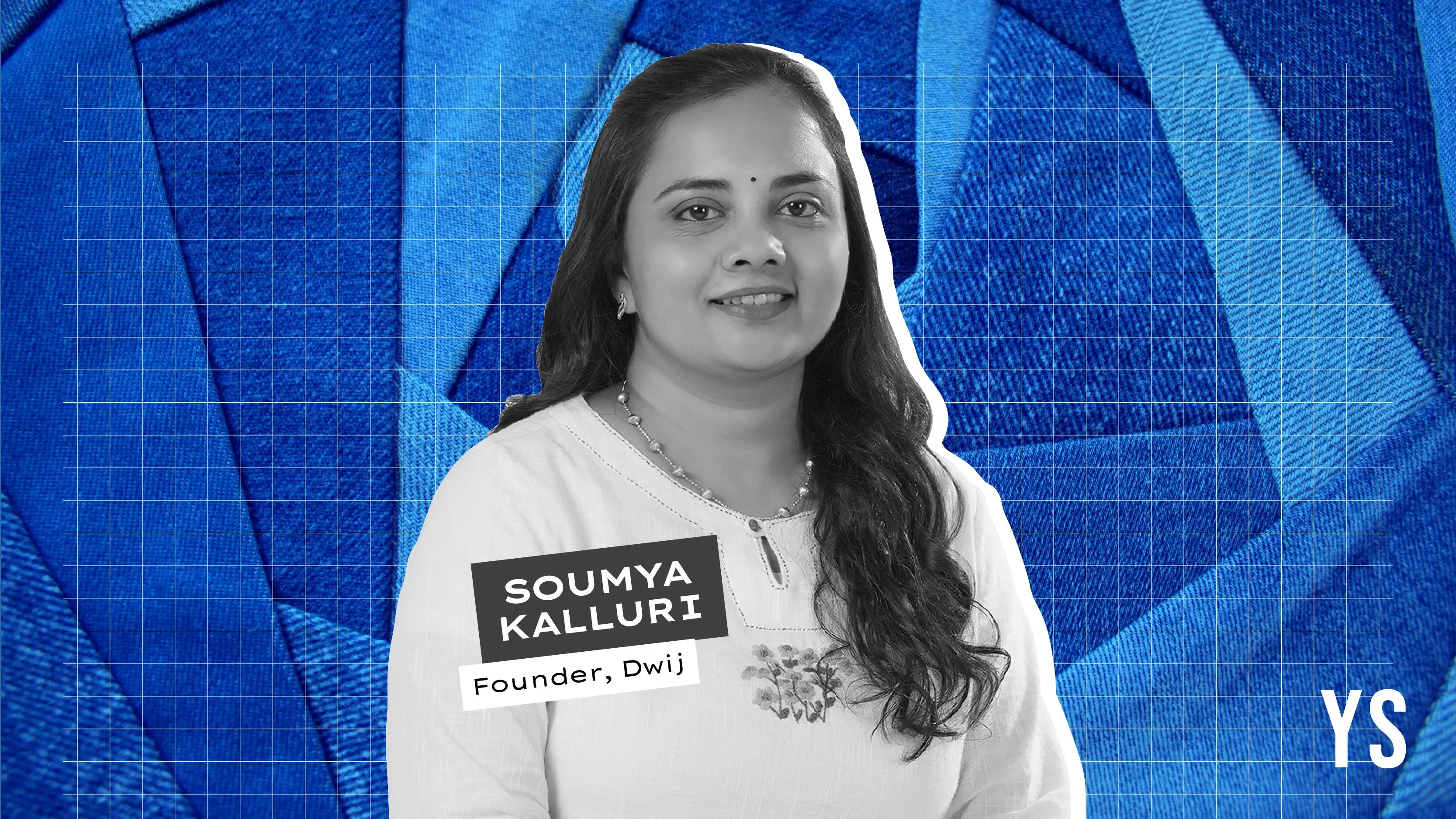
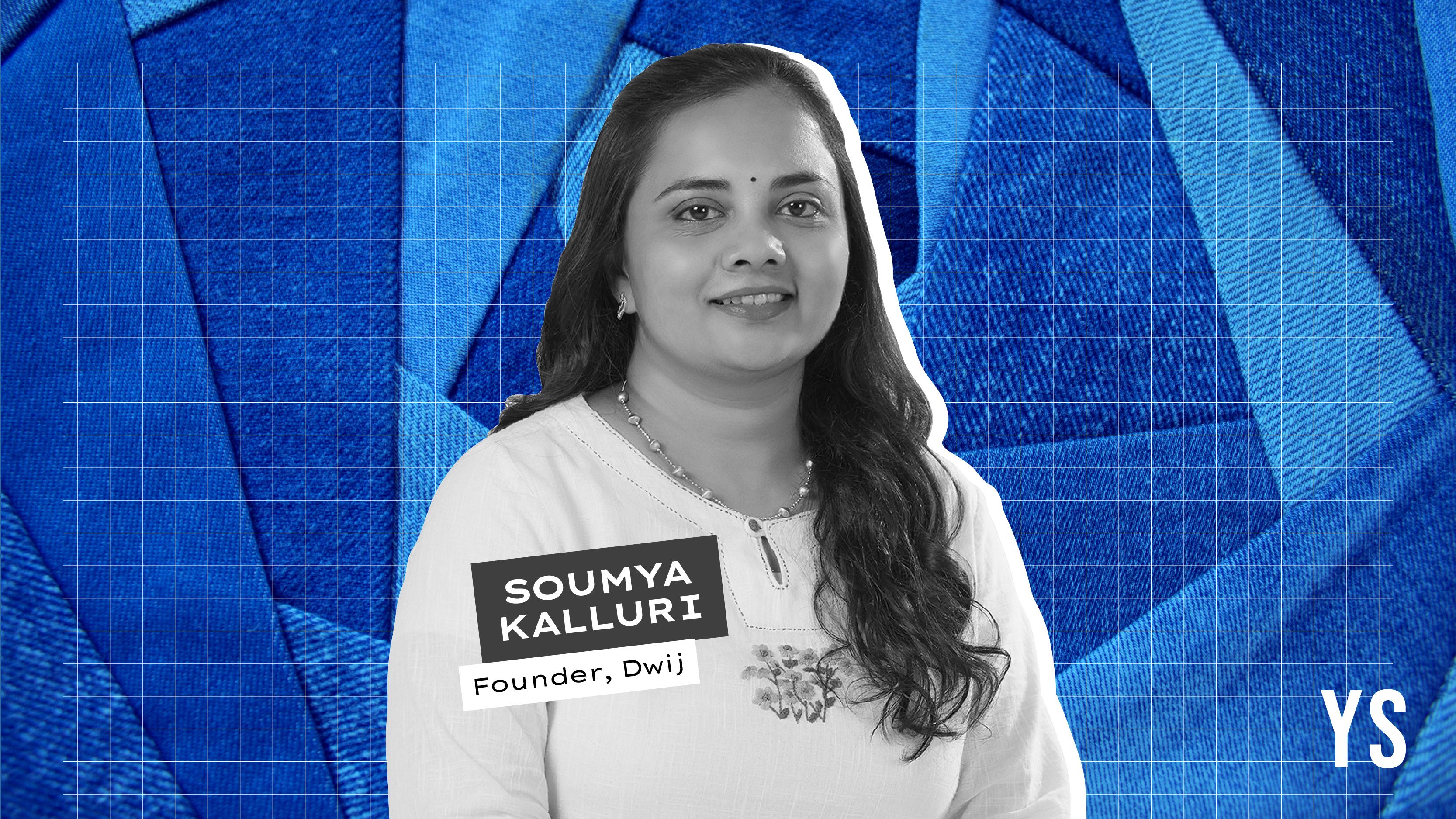
Soumya Kalluri, a mechanical engineer who previously worked at John Deere and Godrej & Boyce, encountered this issue while working on sustainability. “Everyone deserves a second chance, so why not denim?”
In 2018, Kalluri launched Dwij, meaning ‘second life’ in Sanskrit, to rescue textile waste and transform it into functional, ethical, and aesthetically pleasing products. Today, the Mumbai-based brand has created a circular ecosystem, where discarded fabrics find meaningful second lives and are designed for disassembly.
Dwij offers a range of everyday bags and accessories made out of discarded denim, including totes, backpacks, slings, and pouches.
Pivoting to a premium, functional model
Dwij launched with one product: a basic tote bag for everyday use. However, the team soon realised that their mission would not have enough impact if people didn’t use their products regularly.
During the pandemic, the startup pivoted to functional lifestyle products—bags for office, school, and travel and a home décor range, where it found stronger demand. Premium elements, such as sturdy zippers and contemporary designs, followed, repositioning it as an affordable, quality lifestyle label.
“We were rescuing materials from landfills, getting them washed, and going through so many processes. If the zipper broke or the tote just sat on a shelf, there was no point,” Kalluri says.
Today, Dwij’s SKUs have risen to 162 from about 66 in FY20. Since FY22, Dwij’s revenue has grown sixfold, while the quantity of products sold has increased 3.5X. “COVID dampened growth from FY20 to FY22, but since then, the last three years have marked a period of rapid expansion for us,” she tells YourStory.
Also Read Next-gen jewellery: True Diamond bets on lab-grown diamonds, custom design to woo young customers
The process and production
The denim brand sources fabrics every two to three months from two channels: post-consumer denim, bought in bulk from informal markets, and pre-consumer rejects from mills with minor defects. “We ask for the lowest grades in the supply chain because good-quality fabrics will get used anyway; they’re not the ones that would end up in landfills,” Kalluri explains.
All materials are industrially washed and sanitised before manufacturing begins at Dwij’s unit in Vikhroli, Mumbai. The brand repurposes denim of all sizes, shades, and thicknesses, with artisans ensuring material compatibility.
As the brand depends on waste materials, product designs are inspired by what’s available. “Procurement is different each time. There might be more dark blue shades in one batch, more light blues in the next. It comes down to whether we can create new trending products from the materials we have,” she adds.
The edge of the handmade
Dwij’s team now includes 15 tailors, cutters, and embroidery artisans, supported by three self-help groups of 30–35 women. They are trained to meet quality and inventory standards and contribute part-time skills in embroidery, toy making, and other crafts.
“We could have invested in machinery, but as empathy-driven artists, we see more value in hand-done work. Machines are faster, but maintaining high-quality handcrafted products is far more challenging. This approach is truly sustainable, saving energy while delivering real value,” Kalluri explains.
On the B2B front, Dwij offers corporate gifting and customer freebies to clients, including the Reserve Bank of India, Marico, Alkem, Novo Nordisk, IIM Bombay, Godrej, Bajaj, and Marsh McLennan. It also works with interior designers on textile waste solutions and runs awareness workshops with corporates and schools.
Starting with just one bulk order in FY20, Dwij completed over 20 bulk orders in FY25 alone. Beyond domestic B2B clients, the brand is currently listed on two international retail platforms, Etsy and Good Market Global, and aims to expand through resellers soon.
To date, Dwij—a certified textile upcycler by the Ministry of Textiles and incubated at NSRCEL, IIM Bangalore—has upcycled over 10,000 post-consumer jeans, 2,000 metres of pre- and post-industrial denim, 2,000 metres of shirting and kurta lining, and 750 metres of recycled felt.
Also Read From Dumka to Delhi: Mithila Foods is bringing Bihar’s flavours to India’s metros
D2C focus and offline reach
With denim’s durability and Dwij’s emphasis on quality construction, the founder says its products are built to last for years. Its prices remain competitive with mainstream brands like H&M, ranging from Rs 200 to Rs 4,500. “Our pricing is based on cost per use, encouraging customers to see purchases as long-term investments.”
Dwij also designs products for disassembly, making it easier to separate and recycle components, like cotton, metal, and belts, at the end of life. To maximise scrap use, the startup has expanded into jewellery, patchwork, toys, and home décor, often combining fabrics with Kantha embroidery.
The Mumbai startup sells primarily through its website, which sees around half of its online sales. The rest comes via online marketplaces—Myntra, FirstCry, and Zwende—offline exhibitions, and flea markets, including the Kala Ghoda Arts Festival, Dastkar Haat Samiti, Little Flea, Sunday Soul Sante, Craft Roots, and the Goa Collective.
Dwij began with an initial investment of Rs 6 lakh and secured an additional Rs 20 lakh post the pandemic. For now, it focuses on denim, aiming to master one material before expanding to others.
Kalluri says, “Our approach is truly sustainable; we are not aiming for drastic numbers, as our model is artisanal and hand-done.” However, she opposes how often and loosely the word “sustainability” is used in the fashion industry.
She says, “In the name of sustainability, people are bringing anything and everything, but it’s not even making an impact. True upcycling is about giving discarded fabrics a real second life, not creating new waste in the process.”
Edited by Suman Singh
Original Article
(Disclaimer – This post is auto-fetched from publicly available RSS feeds. Original source: Yourstory. All rights belong to the respective publisher.)