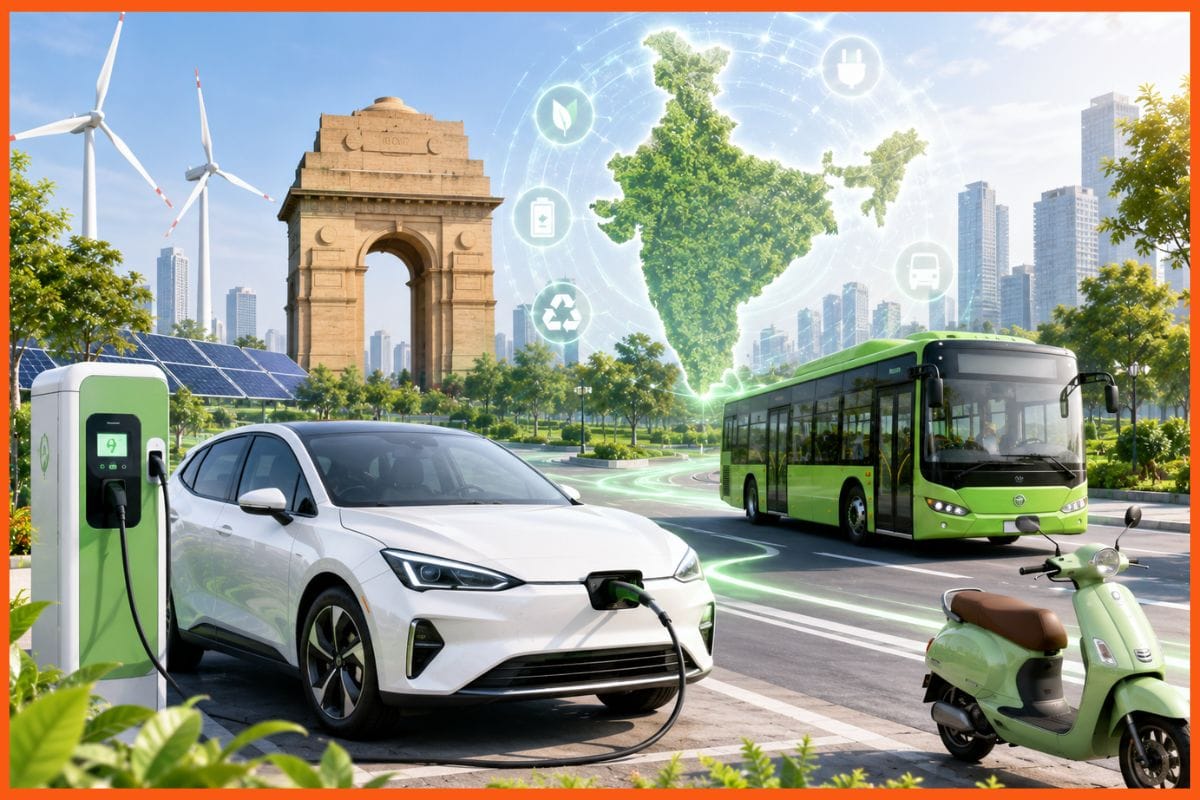
On June 29, 2026, the new electric vehicle policy was approved by the Delhi government with a budget of INR 15,000 crore. Rekha Gupta, chief minister of Delhi, announced that the new policy will most likely be in place from July 1, 2030, till March 31, 2030. Electric mobility will be promoted in the city with the investment of INR 1,500,000,000.00 during the next four years.
Commercial goods vehicles account for 33% of pollution, while two- and three-wheelers account for 46%. This information was provided by Transport Commissioner Niharika. The policy, she clarified, is targeting these vehicles in particular. Additionally, she shared that the Delhi government is actively attempting to switch all of these vehicles over to electric ones.
How New EV Policy will Work?
Vehicles with two wheels will be eligible for a purchase bonus during the first three years, with amounts of INR 30,000, INR 20,000, and INR 10,000, respectively. A total of INR 50,000, INR 40,000, and INR 30,000 are available as incentives for three-wheelers. In the first year, N1 commercial trucks will receive a subsidy of INR 1 lakh. For two-wheelers, the scrapping incentive will be roughly 10,000 Indian Rupees (INR), for three-wheelers, around 25,000 Rupees, and for N1 trucks, about 50,000 Rupees.
As scrapping incentives, Gramin Seva Units would additionally receive INR15,000. Starting on January 1, 2027, the registration of all vehicles in Delhi will be limited to electric three-wheelers and N1 trucks. All two-wheelers must be submitted no later than April 1, 2028. Additionally, within two years of policy notification, school buses must convert 10% of their fleet to electric vehicles. With funding from PM e-Drive projects and the Delhi government budget, the infrastructure for 32,000 charging outlets is set to be installed within the next four years.
Additionally, the officials stated that hybrid vehicles will not be eligible for any subsidies. Individuals interested in the policy's electric vehicle (EV) incentives would be able to submit their applications through a specialised online site.
Mix Reactions from Experts
Some argued that two years wasn't long enough to give them enough time to find alternatives to new gas scooters and rickshaws. Many others voiced their opinion that the policy needs to cover more ground than merely private automobiles. Prominent environmentalist Bhavreen Kandhari recently told a news outlet that the city's administration should promise to increase funding for environmentally friendly public transport.
Although Delhi has a substantial metro system, it is frequently criticised for its lack of connectivity throughout the vast metropolis. Because of this problem, residents still have to rely on riding scooters or hailing rickshaws to get them from their homes to the metro and bus stops. According to Kandhari, adding more vehicles to the route will not help. The government should prioritise green solutions to enhance public transportation and last-mile connectivity in order to alleviate metropolitan traffic and air pollution, she continued. That is where this EV policy fails.
Original Article
(Disclaimer – This post is auto-fetched from publicly available RSS feeds. Original source: Startuptalky. All rights belong to the respective publisher.)