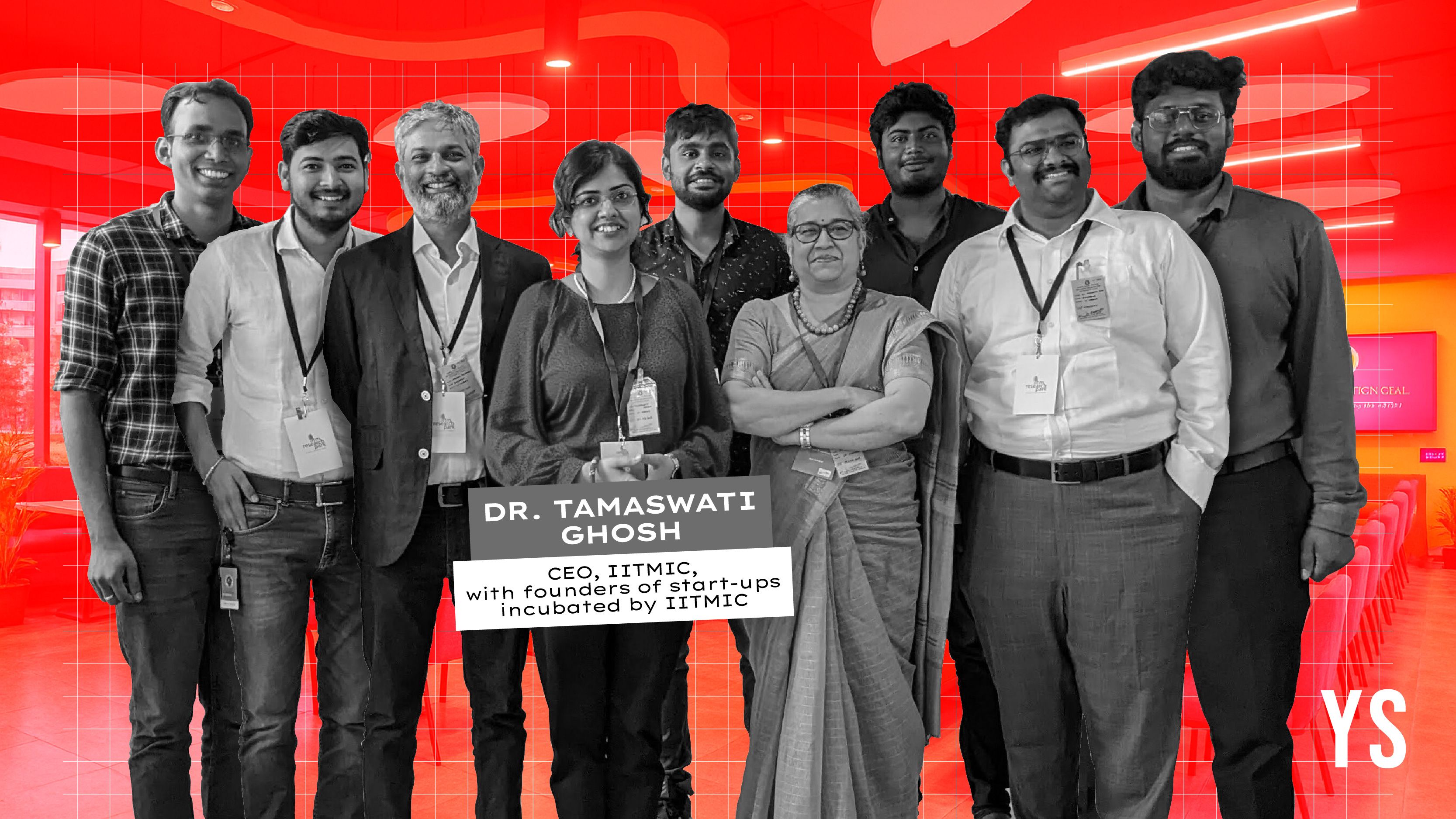
At IIT Madras Research Park in Chennai, Agnikul Cosmos is gearing up for its first commercial flight next year. After a successful maiden launch from its own launchpad, the team at the spacetech startup is excited about its upcoming launch.
So is Tamaswati Ghosh, CEO of IIT Madras Incubation Cell. “We are all excited about what Agnikul is about to do,” she says, with pride.
Understandably so. The Incubation Cell is where it all began—way back in 2018 when Agnikul, a fledgling venture then, was incubated.
Today, Agnikul is a name to reckon with in the spacetech industry, but it continues to be associated with the IITM ecosystem that fostered its early growth. It works out of IIT Madras Research Park and IITM’s satellite campus in Thaiyur, on the outskirts of Chennai, which houses its rocket factory and a high-energy testing facility.
That is how closely knit the IITM incubation ecosystem is: the bonds are strong and the institutional backing is long-term.
“Startups (incubated at the incubation cell) stay with us for a very long time… and the backing continues… Some of our founders come back as mentors to our younger ones,” says Ghosh in an interview withYourStory.
She cites a couple of examples to reiterate the point. "Uniphore (an enterprise AI firm), which is now headquartered in the US, has large operations at the IITM Research Park. EV company Ather continues to stay connected with the IIT ecosystem on various fronts. Its founders are investors in some of our companies.”
Established in 2013 at the IITM Research Park, the IIT Madras Incubation Cell was set up to bring together ideas and ventures scatted across the campus.
While the focus initially was on IIT Madras, soon the incubation cell began attracting interest from ventures and entrepreneurs outside the campus. Today, 61% of the founders are from outside the IIT ecosystem, with no association with any of the IITs in the country.
Over the years, the IITM Incubation Cell has emerged as a hotbed for deeptech innovation, fostering startups engaged in cutting-edge R&D across robotics, AI, quantum, fintech, sustainability, e-mobility, spacetech, and defence.
If you are looking for numbers, the incubator has an impressive scorecard too: 511 startups incubated, Rs 53,000 crore in combined valuation (based on latest investment raised by startups from venture funds), over Rs 17,300 crore in investor funding, and over 700 patents. Many of the companies are in market, generating a combined revenue of Rs 4,000 crore (FY23-24) and creating 11,000+ direct jobs.
But what’s the real story behind these numbers? Ghosh, who has been associated with the incubation cell from its inception, takes us behind the scenes.

Tamaswati Ghosh, CEO of the IIT Madras Incubation Cell
Edited excerpts from the interview:
YourStory (YS): Can you trace IIT Madras Incubation Cell’s journey over the years?
Tamaswati Ghosh (TG): When we started out in 2013, there was a lot of random activity happening within the campus, but there was no structured way of taking the IPs developed in the labs to market.
The idea of an incubation cell was led by a few faculty members who were deeply engaged with the industry at that point, including Professor Ashok Jhunjhunwala and former IIT Madras director Bhaskar Ramamurthi. When we started out, the incubator was focused on IIT Madras to help students, faculty, and recent graduates to take their innovations and projects, and create ventures out of them.
But, in a few years, it became an incubator for anybody and everybody in the country. We saw a large number of entrepreneurs from outside the IIT Madras ecosystem. The whole IIT brand was attracting external entrepreneurs and people from the industry who had ideas and wanted to work with the faculty here.
Our only criterion is deeptech has to be the foundation of the venture, because we are anchored to the IIT institution, leveraging its technology expertise, innovation labs, and centres of excellence.
Meanwhile, the pipeline from IIT has also grown. More students are continuing as founders in many of the ventures we incubate. We have seen a sharp rise in students not taking up jobs and becoming job creators in the last 10 years. Many of our alumni, after a few years of experience in the industry, are also coming back to start ventures.
This is a great story for India. The brain drain has reduced quite a bit; we are not losing the talent.
Today, a lot more of our faculty are also founders. Some professors in IIT Madras, who have the business acumen, have created successful companies with their students.
Close to 18% of our faculty population in IITM today have companies—117 faculty members are founders or minority shareholders, the largest among institutions in the country.
YS: Is this something you’ve consciously encouraged?
TG: IIT Madras has always had the lead in this, among the older IITs which started incubators in the early days. When we started, the idea of professors going out of the class and working with startups was a big taboo. But we took the risk, changed policy, and brought in the culture of faculty becoming founders.
Professors are involved not just as advisors or mentors but they also have a stake in the company. Their deep involvement makes a huge difference in the early days of the startup.
YS: How do you identify and evaluate startups that are viable for incubation?
TG: We are not very strict in terms of business model, business viability, etc. Of course, these are important, but we have kept the entry open. What we really look for is the founder’s commitment: are they here for the long run, do they understand what they are getting into?
The application for incubation is simple. People can write in or walk in. But evaluation happens at multiple levels, because we are trying to understand the founders and their ability to take inputs from the ecosystem, work with us, and build a business.
We also look at the innovation and see if our ecosystem can add value to it.
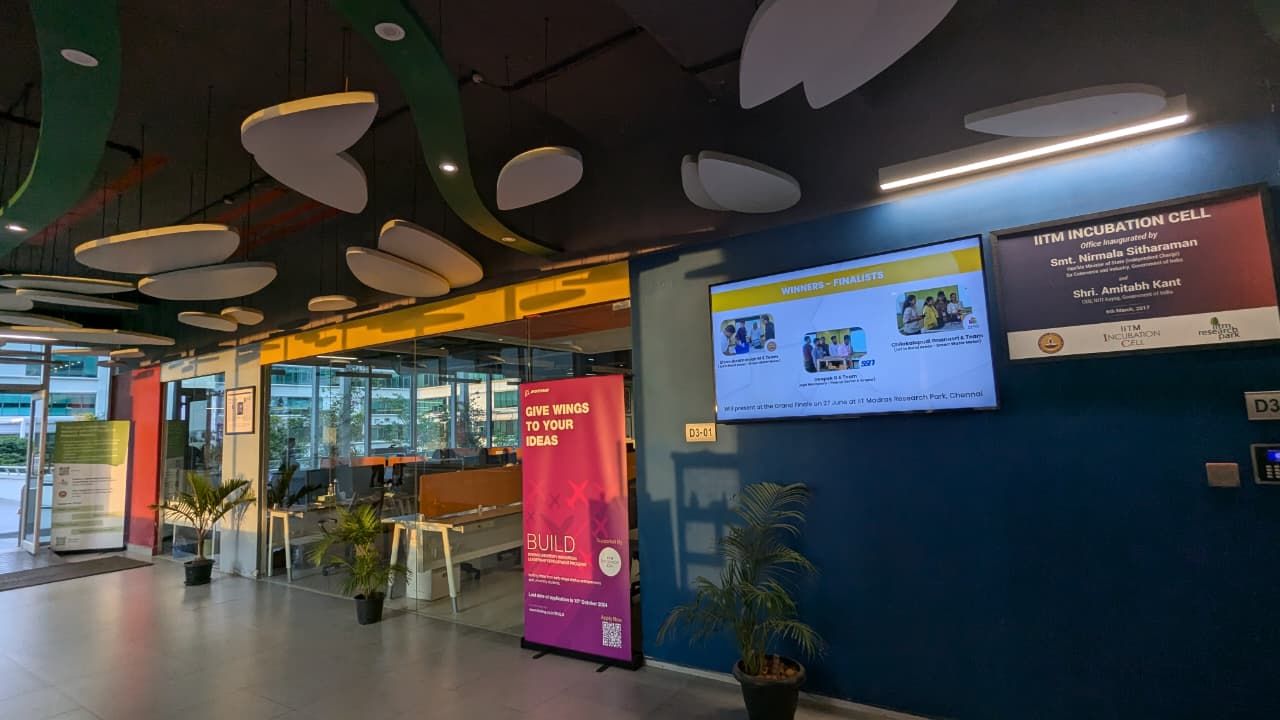
Major startups incubated at IITM Incubation Cell include Ather Energy, the first IPO from the portfolio; Uniphore, the first unicorn from the portfolio; MediBuddy, India’s largest digital healthcare platform; ePlane, which is developing India’s first flying electric taxi; Planys, which specialises in underwater robotics; fabless semiconductor company Mindgrove; Hyperverge, which specialises in computer vision and digital identity verification solutions.
YS: What kind of support does the incubation cell offer?
TG: Tech and R&D support is always there, regardless of which stage the company is at.
Mentorship is on the commercialisation side. We have incredible mentors who brainstorm, get involved, and solve roadblocks.
And roadblocks are plenty: when founders run out of money or ideas, when product-market-fit is not happening, when founders start fighting or are not able to build a team, or when they hit a roadblock with investors.
We are dealing with first-time entrepreneurs in their twenties and thirties, so having mentors they can trust is very important. This is where professors help sometimes.
The ecosystem is built in such a way that the founder’s first choice is not to give up without giving it a shot a few times. This is why we have had fewer number of startup closures.
YS: What about funding support?
TG: We focus on access to early capital. We have an active community of investors who are involved through structured meetings and mentoring.
Our VCs, micro-VCs, corporate venture funds, and family offices engage with our startups even in the pre-venture stages. They are not investing at this stage, they are watching and guiding. This makes it faster for the startup to access the right kind of capital at the right stage.
The incubation cell and IITM together have created funds for grant support. Through alumni, endowments, donations, and industry CSR, we are able to fund a large number of startups very early on. We are also managing a few funds through industry partners like SIDBI Capital. So we are able to channel up to Rs 1 crore-2 crore early investments for our startups.
YS: How long do startups stay with the IIT ecosystem and what’s your exit strategy?
TG: The entry-level gestation period can last from 18 to 36 months, depending on the sector. For companies in biotech and medtech, the gestation period can be long. After that, the focus is on scale-up: market expansion, going global, or Series A and beyond investments.
We are incubating companies at different stages of business. We are also focusing on growth-stage startups. The backing continues for startups in the growth stage, those that have raised Series B and C funding.
We can’t just talk about incubating young companies, and the moment they raise their first investment, we say bye to them. Startups stay with us for a very long time.
We continue to hold equity is most companies. We have not exited Ather. We have had a combination of full and partial exits in the past. And those are triggered by the startups themselves. We don’t have an exit strategy, unless there is an acquisition or a merger.
We continue to be part of the cap table. We are shareholders in the company, and that gives founders a reason to be connected to the ecosystem.
YS: What areas are startups working on at the incubation cell today?
TG: Earlier, manufacturing and pure hardware were strong areas. Hardware slowly shifted to hardware-software combination and services.
Now newer areas have come in, and this is reflected in the kind of work that’s being taken up here: AI, quantum, fintech, sustainability (particularly renewables, clean energy), and spacetech. Old manufacturing is still strong, but it has branched into robotics.

Agnikul’s story exemplifies how academic incubation at IITM/IITMIC, combined with deeptech innovation and private investment, is enabling India’s emerging capability in spactech. Design: Nihar Apte
YS: How important is industry engagement for startups today? How do you facilitate that?
TG: We are always pushing startups to market as soon as possible, even if it’s not with a full-fledged product, but parts of it.
We encourage them to understand feedback from potential customers and see if they can get pilots from the industry early on. When they start working with a potential customer, then capital infusion from venture funds becomes much easier.
We focus on startups getting POC (proof of concept) from the industry. Most of the startups are in the B2B space. They need to work early on with the industry to validate their product and be taken seriously in the market.
Right now, our focus is revenue generation for our startups as fast and early as possible. Capital comes naturally then.
In industries such as defence, oil & gas, and automotive, we create partnerships with corporates, MNCs, and public sector majors, so that startups work with leadership at these places and get inputs from them. We work with the government, Ministry of Defence on the iDEX (Innovations for Defence Excellence) programme, DRDO, ISRO, the navy and army too.
YS: What are some of the challenges you face?
TG: Dealing with entrepreneurs is an everyday thing. We deal with multiple founders with different backgrounds; IITan versus non-IITan; someone from Chennai versus someone from Bengaluru or Delhi. We also have companies from states like UP, Bihar, and Assam, and companies that are not even physically present on campus.
Challenges also range from compliance for startups, talking to mentors and acting upon their feedback, to pitching to investors.
Things like who is handling accounts, do they have a sense of how much money is left in the company, are they hiring people with the right contracts, are they aware of professional tax, etc. A lot of our time actually goes into these basics and training the mindset of our founders.
At the macro level, one of the biggest challenges is the sheer numbers coming in. Earlier, we used to incubate 40-60 companies every year. Last year, it was 100. This financial year, we are receiving 100-150 applications every month. Even if we convert 10% of that, we are going to breach the 100-mark easily.

The incubator has an impressive scorecard: 511 startups, Rs 53,000 crore in combined valuation, and over Rs 17,300 crore in investor funding.
YS: Is there a significant number of women-led startups in your portfolio?
TG: Today, 28% of the total portfolio startups have women co-founders. When we started, we could count in our fingertips. The number of women in STEM is growing, but it can be better.
Certain sectors have seen an increase. There are women founders in biotech, life sciences, agritech, energy, and waste-to-value. We are also seeing more women joining the workforce in our core engineering companies and more women being hired in prominent roles.
More socially impactful companies and those with rural or environment focus have women founders. Maybe this has to do with their temperament or educational background.
There are more women engineers in civil, chemical, and material sciences. But there are fewer in core engineering—mechanical, electrical, electronics, and robotics.
We have consciously looked at mentorship from women industry leaders to push this forward. Some of the women professors at IIT have led the way in areas like assistive technology and waste management.
We have done programmes inviting women founders and have done some initial investment. At the entry level, initiatives are going on, but this can be done at a more organised and scaled level. For more women to enter the deeptech ecosystem, startups must grow and be led by women.
YS: What about representation from Tier II and III cities?
TG: Tier II cities in the south like Coimbatore, Madurai, and Tiruchi has good representation. Beyond Tier II, not so much. We need to do more outreach so that they are aware and can approach us, and don’t feel the incubator is limited to IITans.
YS: Your thoughts on the deeptech ecosystem in the country?
YS: It’s not that India does not have the appetite for creating deeptech, but the startups need to scale. They need strong support from funds, and not just the pre-Series funding.
There are plenty of funds up to a few crores, but what about Rs 100 crore and Rs 200 crore at valuations where the founders can retain control? If we need to build impactful companies, the ones who build them still need to be there.
But to raise funding, the startups need to show traction. Where is the support in terms of market access and market scale? This is where the industry needs to come forward. It also needs to participate a lot more in venture funding.
Feature image design: Nihar Apte
Edited by Megha Reddy
Original Article
(Disclaimer – This post is auto-fetched from publicly available RSS feeds. Original source: Yourstory. All rights belong to the respective publisher.)