Yulu Business Model of Electric Bike Rentals for Delivery Riders
Yulu rents electric two-wheelers to delivery riders on weekly plans.

Key Takeaways
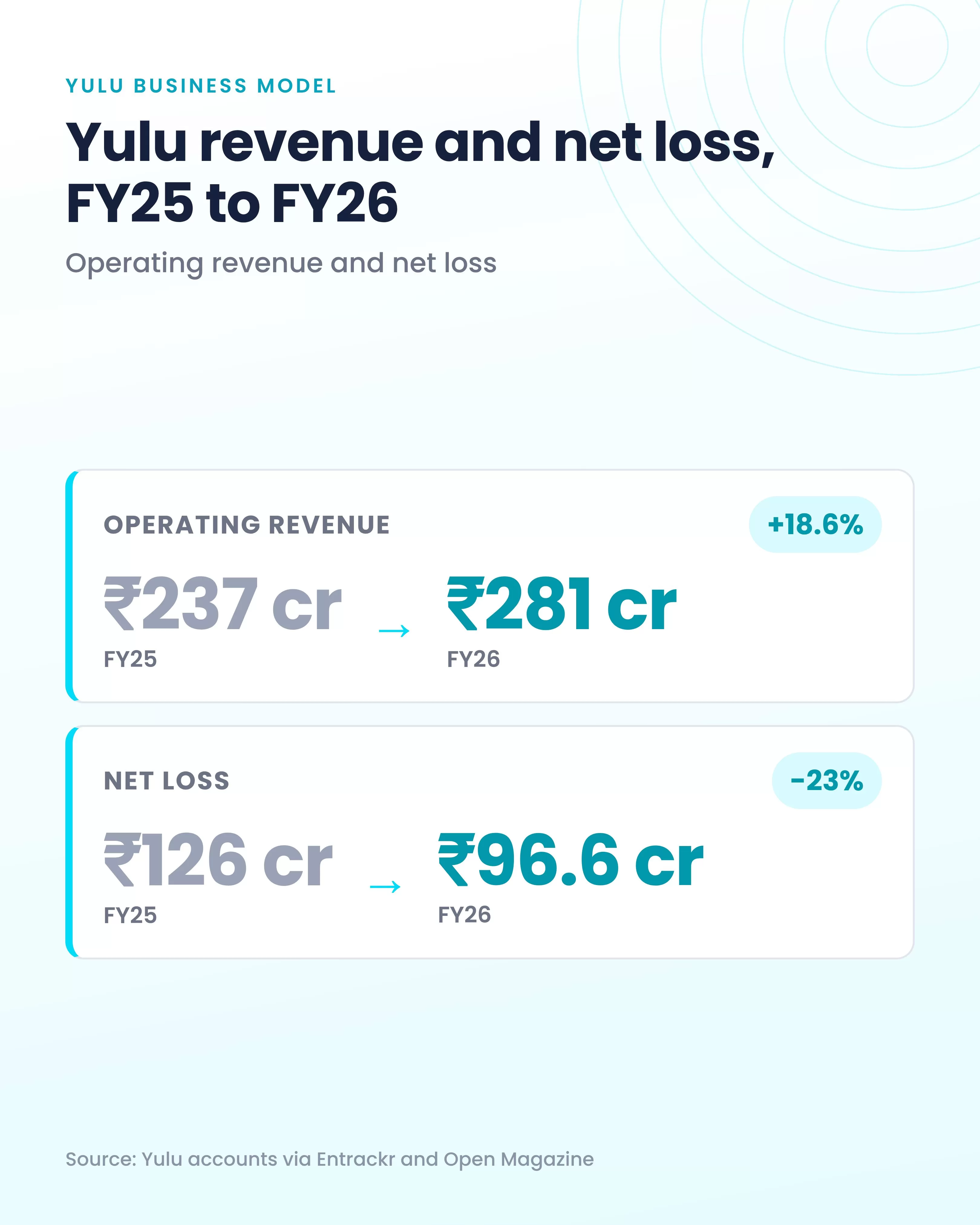
- FY26 operating revenue rose 18.6% to ₹281 crore from ₹237 crore.
- EV rentals brought in ₹262 crore, over 93% of FY26 operating revenue.
- The FY26 net loss narrowed 23% to ₹96.6 crore from ₹126 crore.
- Yulu announced a $93 million Series C led by GEF Capital in August 2026.
Table of Contents 11 sections
- Yulu at a glance
- What Yulu does
- How the Yulu business model makes money
- Yulu's Business Model Canvas
- Is Yulu profitable? Revenue and net loss from FY23 to FY26
- Fleet, cities and deliveries
- Yulu Series C funding and the journey so far
- Who Yulu competes with
- Challenges Yulu faces
- Conclusion on the Yulu business model
- FAQs
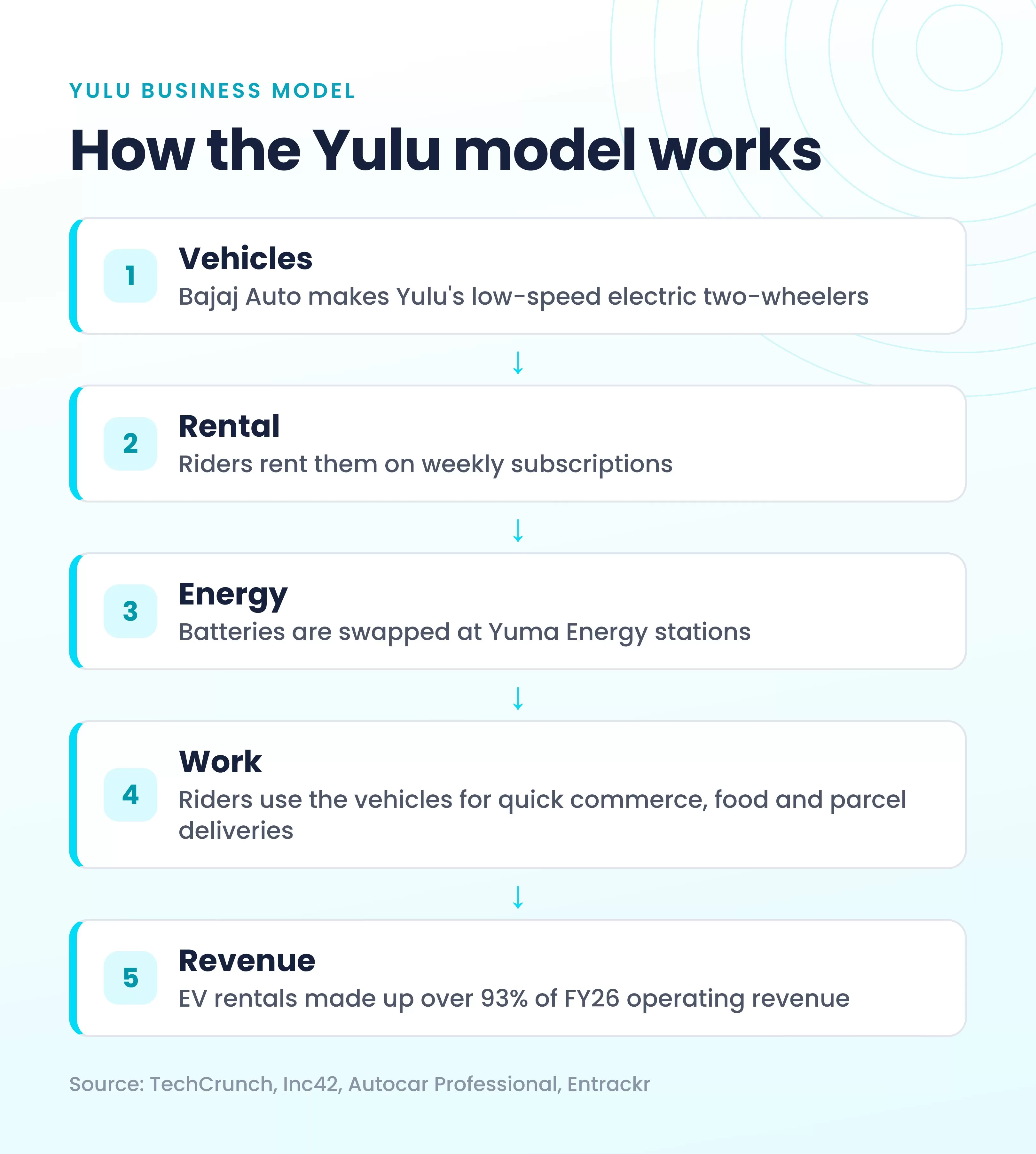
The Yulu business model is built on renting electric two-wheelers, mostly to delivery riders who pay a weekly subscription and use the vehicles to carry orders for quick commerce, food delivery and e-commerce platforms. Yulu runs the fleet, Bajaj Auto makes its low-speed vehicles, and batteries are swapped at stations run by Yuma Energy, a venture Yulu set up with Magna.
In FY26 (the year to March 2026), Yulu's operating revenue rose 18.6% to ₹281 crore from ₹237 crore, and its net loss narrowed to ₹96.6 crore from ₹126 crore. EV rentals brought in ₹262 crore of that revenue. In August 2026, Yulu announced a $93 million Series C round led by GEF Capital Partners.
Yulu at a glance
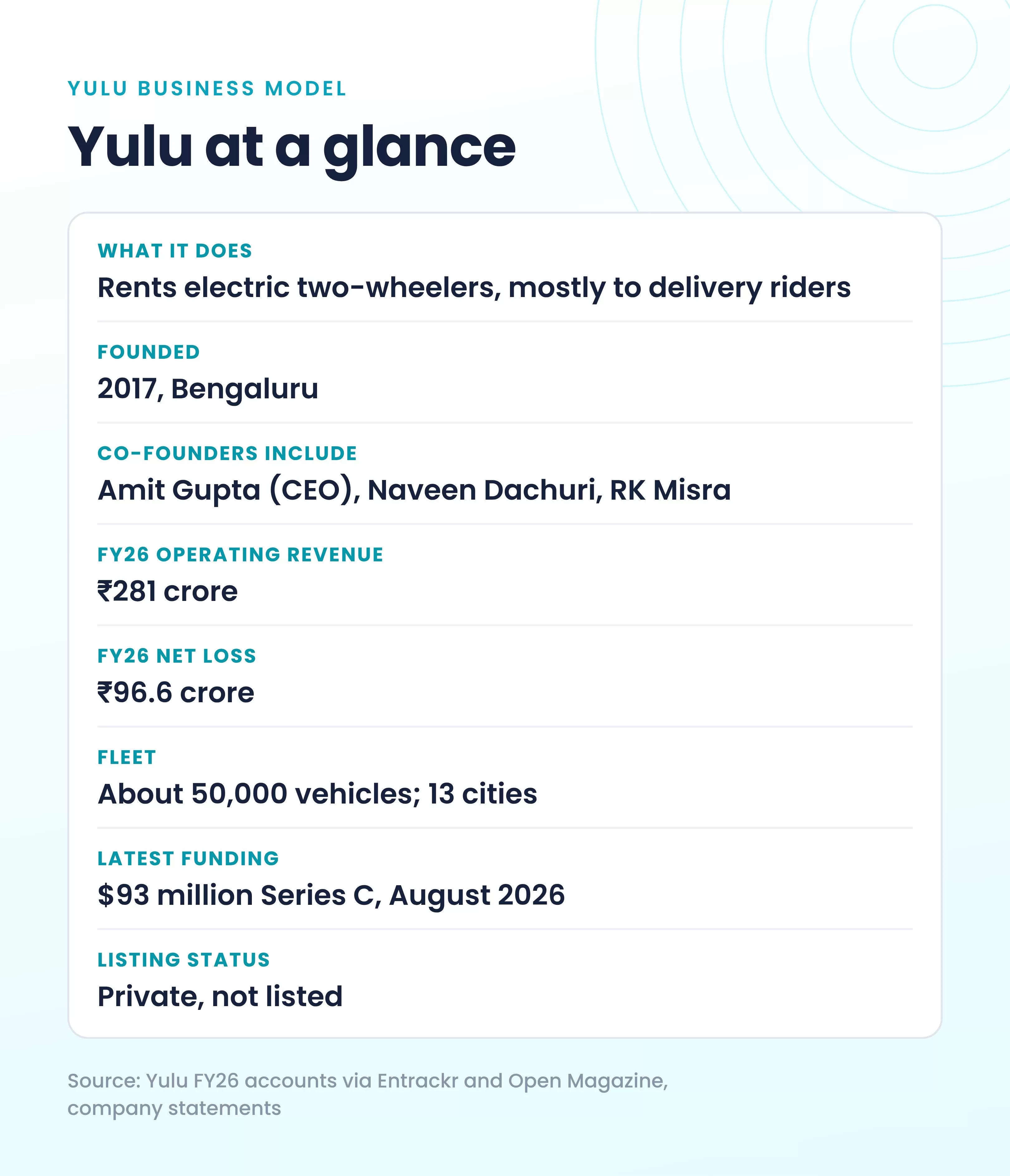
| Item | Details |
|---|---|
| What it does | Rents electric two-wheelers, mostly to delivery riders |
| Founded | 2017, Bengaluru |
| Co-founders include | Amit Gupta (CEO), Naveen Dachuri, RK Misra |
| Operating revenue (FY26) | ₹281 crore |
| Net loss (FY26) | ₹96.6 crore |
| Fleet and cities | About 50,000 vehicles (August 2026); 13 cities (October 2026) |
| Latest funding | $93 million Series C ($63 million equity, $30 million debt), August 2026 |
| Valuation | Not disclosed by the company |
| Listing status | Private company, not listed |
What Yulu does
Yulu started in 2017 as a bike-sharing service for city commuters. Today most of its vehicles are rented to gig workers on weekly subscriptions. When a battery runs low, it is swapped for a charged one at a Yuma Energy station. Yuma Energy is a battery swapping company that Yulu set up with Magna, and Magna invested a further $35 million in it in 2026.
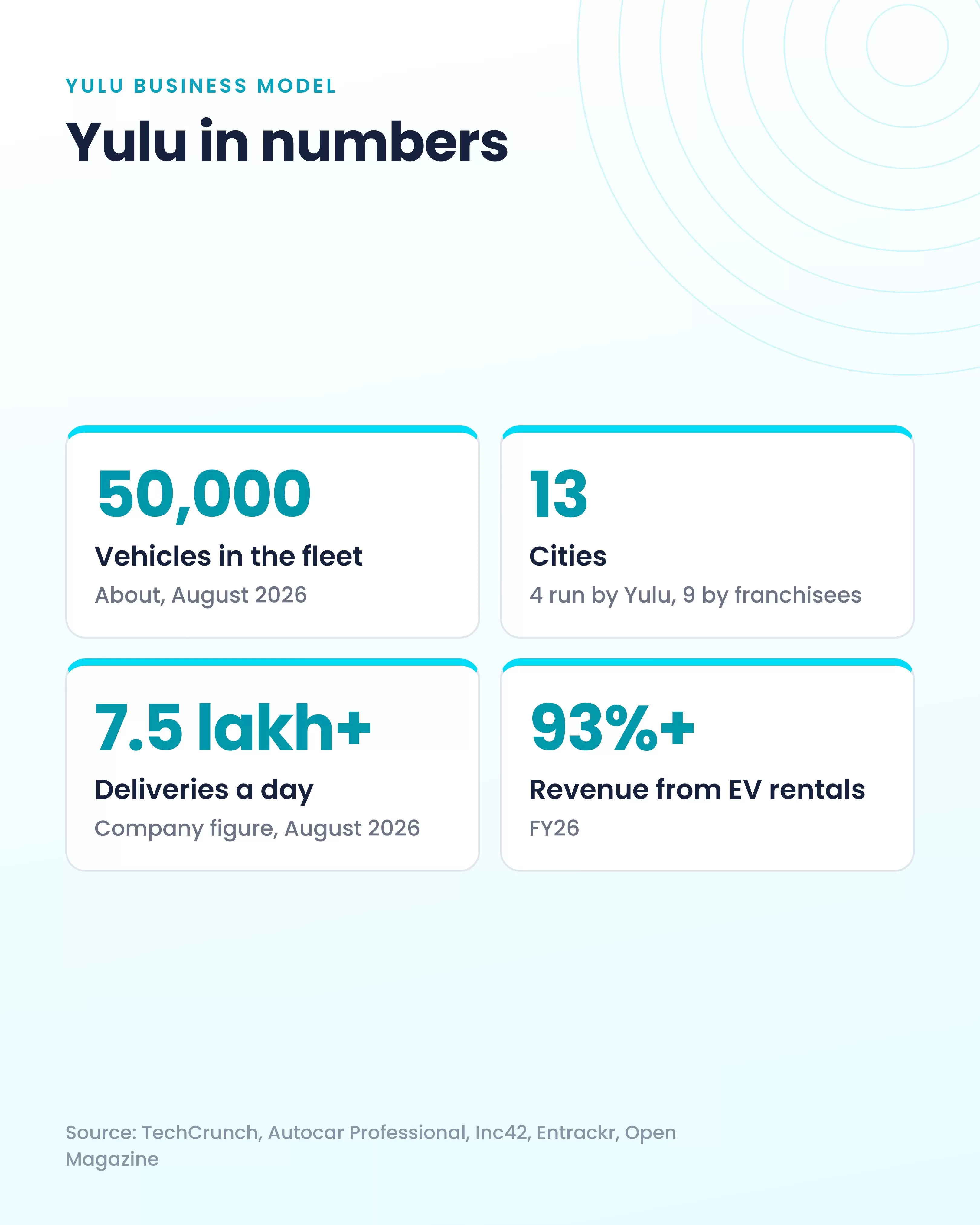
Yulu runs its own operations in Bengaluru, Mumbai, Delhi-NCR and Hyderabad and works with franchisees in nine other cities, 13 in all, after it started in Nashik in October 2026. Its fleet is about 50,000 vehicles, and the company says they power more than 7.5 lakh deliveries a day.

How the Yulu business model makes money
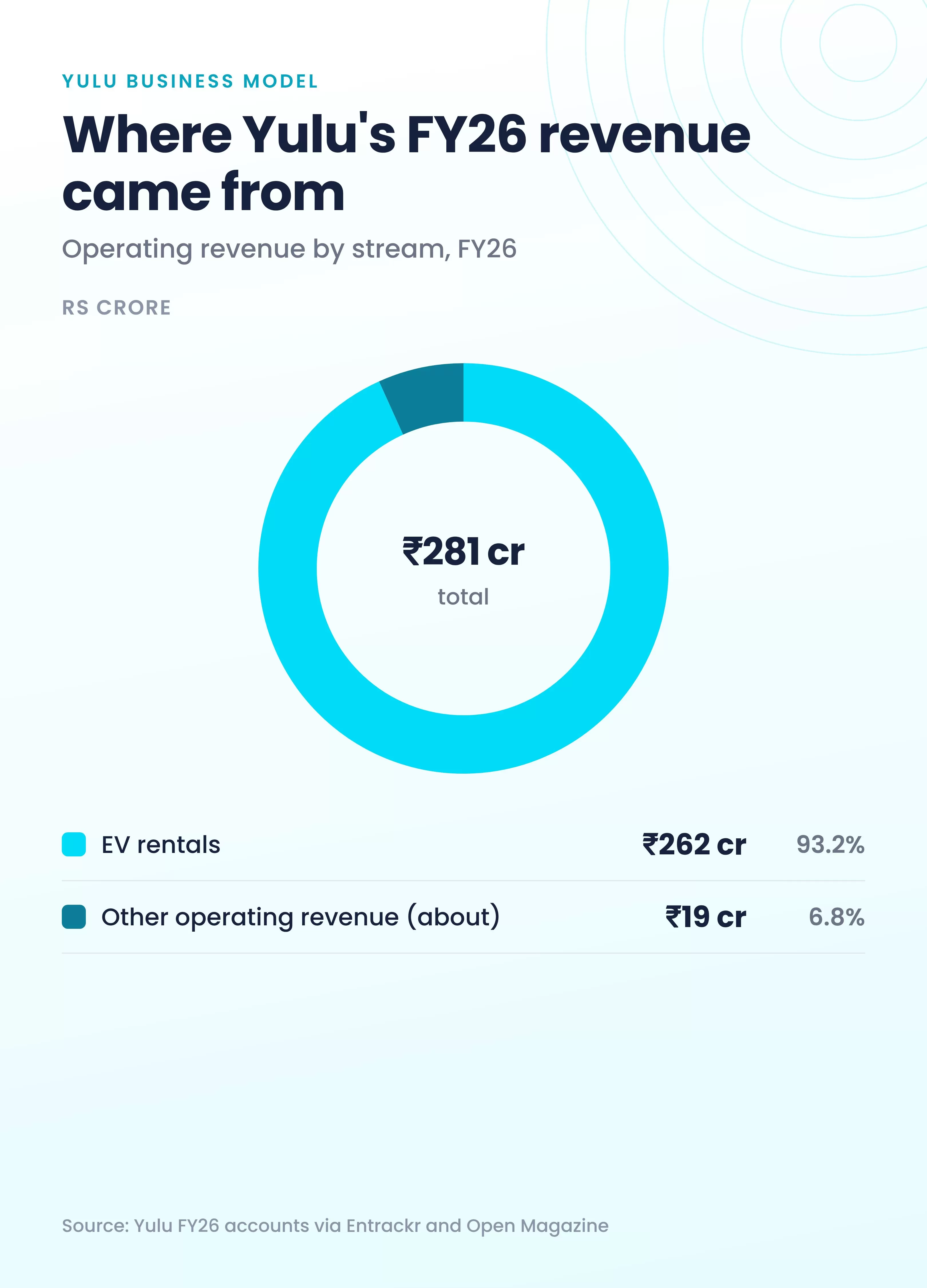
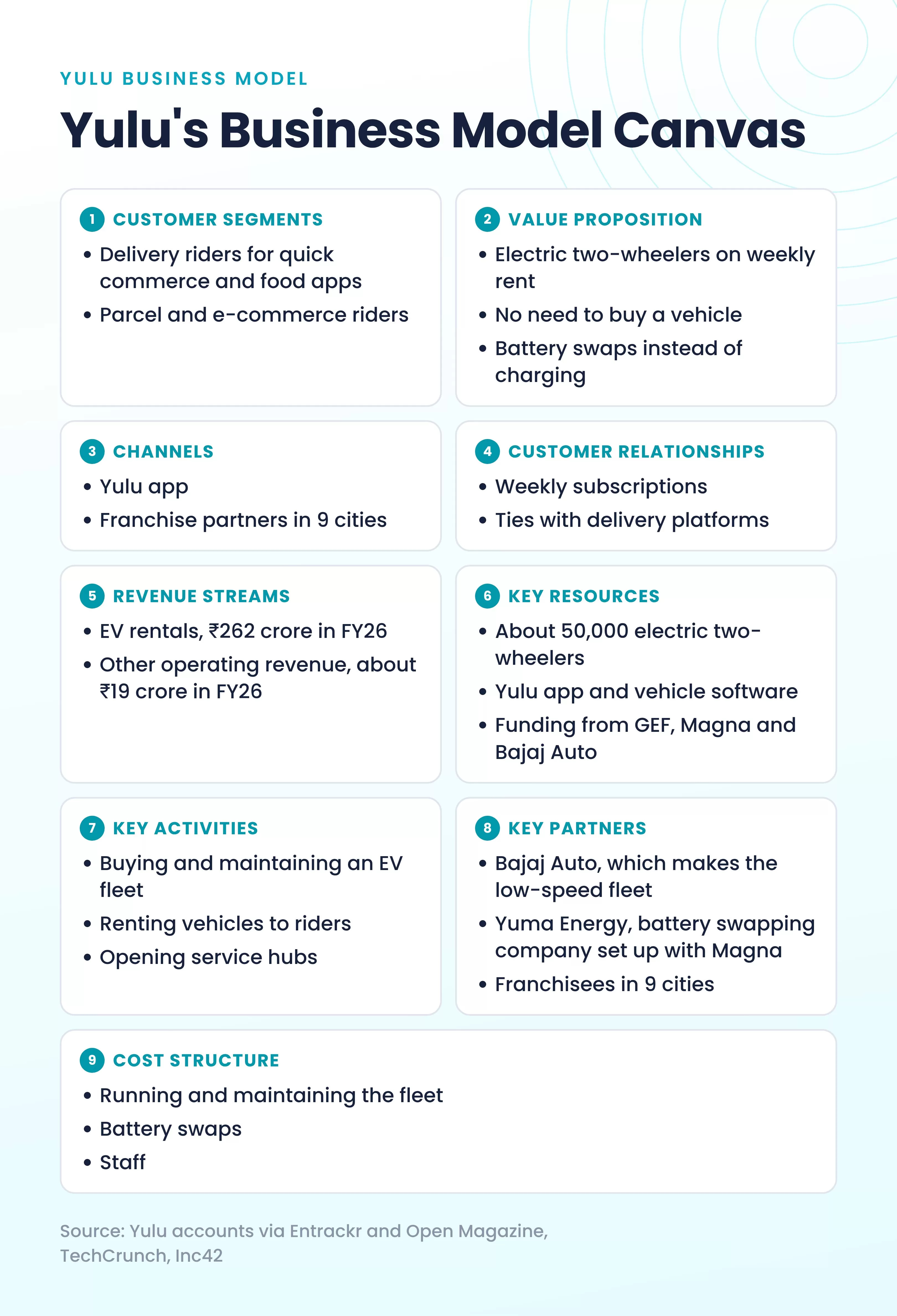
Yulu's main source of money is the rent riders pay for its vehicles. In FY26, EV rental income was ₹262 crore out of operating revenue of ₹281 crore, which is more than 93%. The remaining, about ₹19 crore, came from Yulu's other, smaller streams of operating revenue.
EV rentals in the Yulu revenue model
EV rental income rose 30.3% to ₹262 crore in FY26, while total operating revenue rose 18.6% to ₹281 crore from ₹237 crore.
Yulu's Business Model Canvas
The canvas below sets out the nine building blocks of the business: who Yulu serves, what it offers, how it reaches riders and where its revenue and costs come from.
Is Yulu profitable? Revenue and net loss from FY23 to FY26
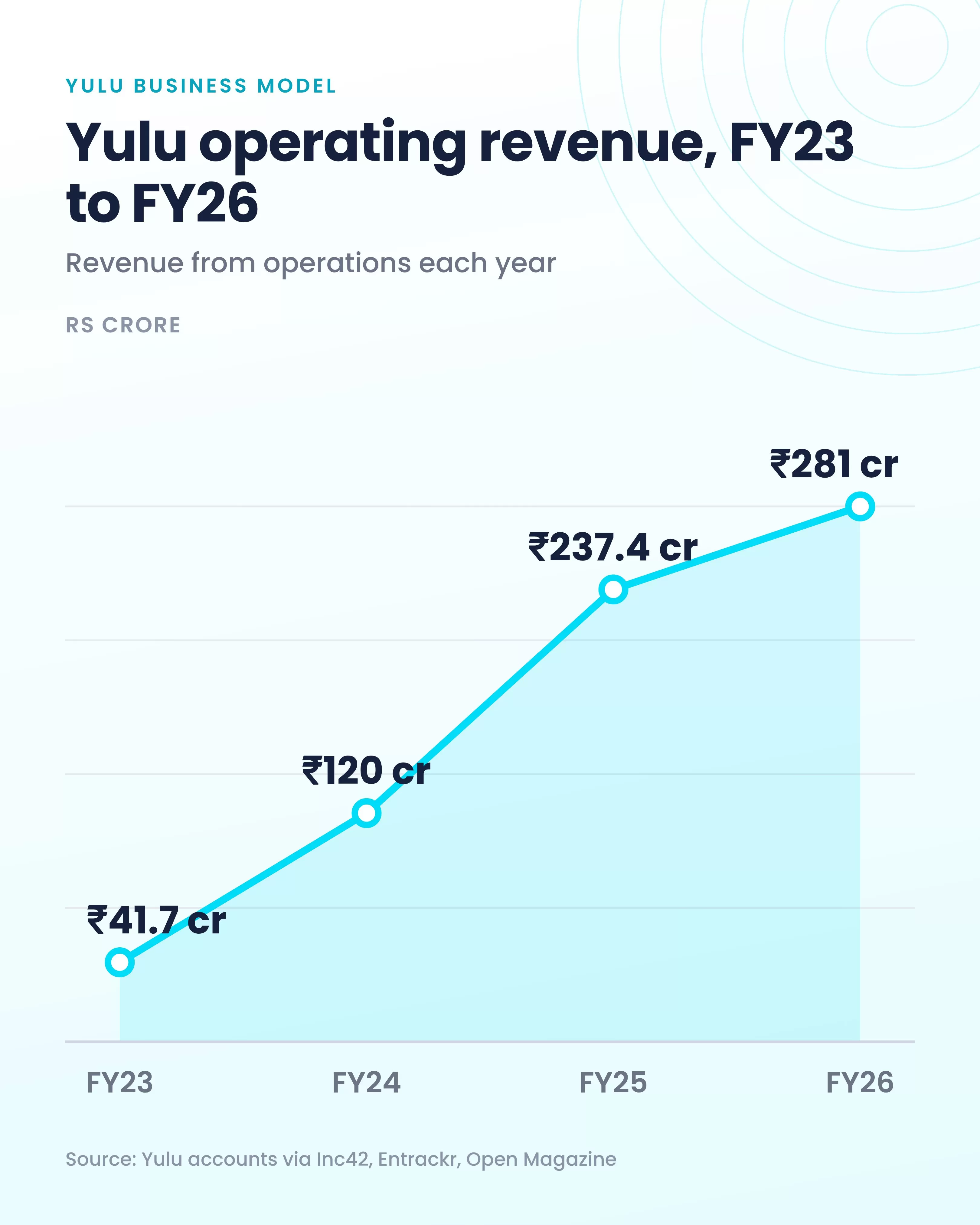
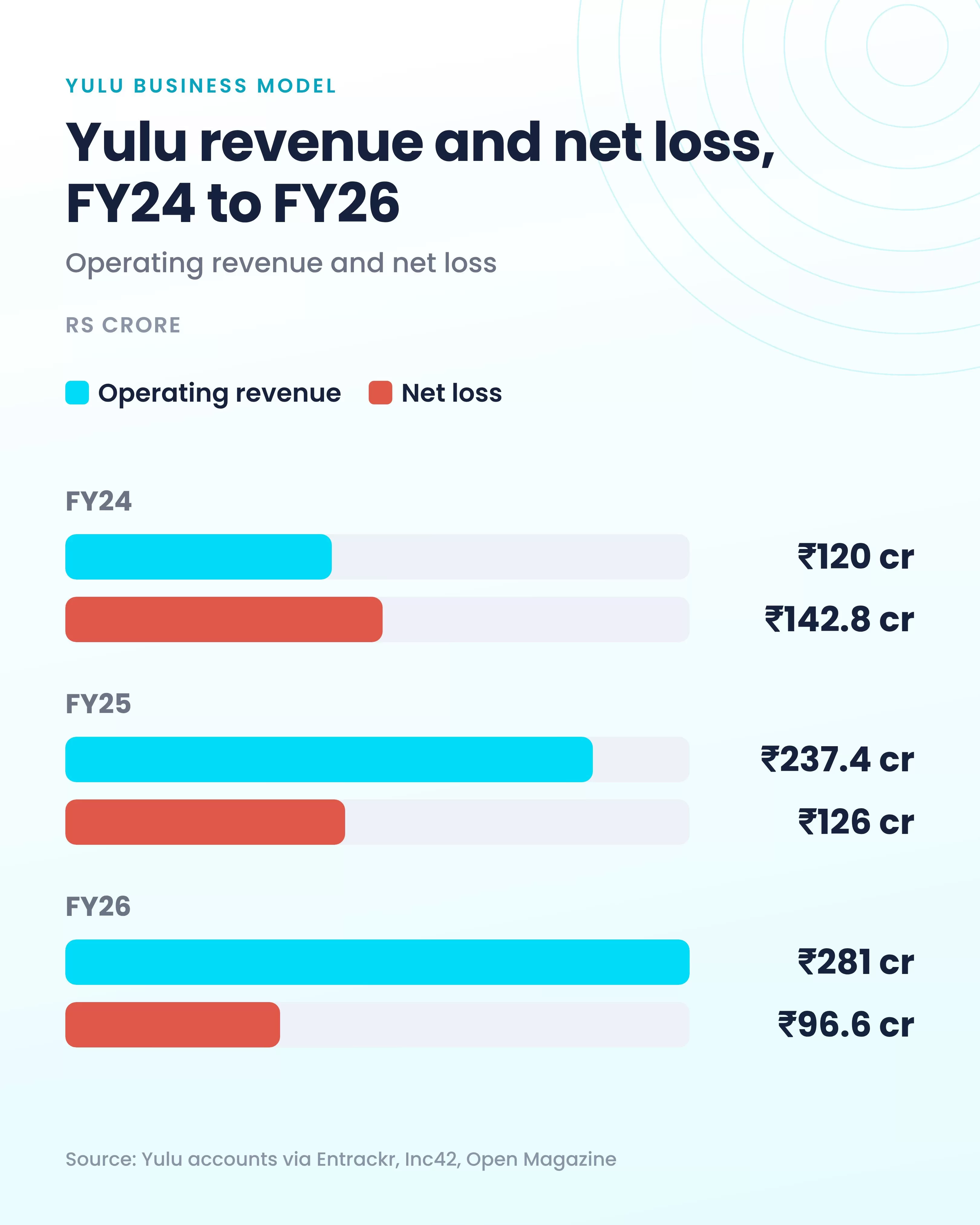
Yulu is not profitable on a net basis. Its operating revenue was ₹41.7 crore in FY23 and about ₹120 crore in FY24. It rose 98% to ₹237.4 crore in FY25 and then to ₹281 crore in FY26. The net loss went from ₹142.8 crore in FY24 to ₹126 crore in FY25 and ₹96.6 crore in FY26.
In FY26, Yulu spent about ₹1.34 for every rupee of operating revenue.
Fleet, cities and deliveries
Yulu had about 50,000 vehicles in August 2026 and has said it plans to grow the active fleet to 2 lakh EVs over two years. It is also adding Yulu Express, a full-size, higher-payload electric scooter, to its range.
Yulu Series C funding and the journey so far
| When | What happened |
|---|---|
| 2017 | Yulu is founded in Bengaluru |
| September 2022 | $82 million Series B led by Magna International, with Bajaj Auto |
| February 2023 | Yuma Energy battery swapping brand unveiled, and Bajaj-made Miracle GR and DeX GR launched |
| February 2024 | $19.25 million (₹160 crore) raised from Magna and Bajaj Auto |
| August 2026 | $93 million Series C, with $63 million equity led by GEF Capital Partners and $30 million debt |
| October 2026 | Nashik becomes Yulu's 13th city, its ninth franchise-led market |
| Late 2026 | FY26 accounts show operating revenue of ₹281 crore and a net loss of ₹96.6 crore |

Who Yulu competes with
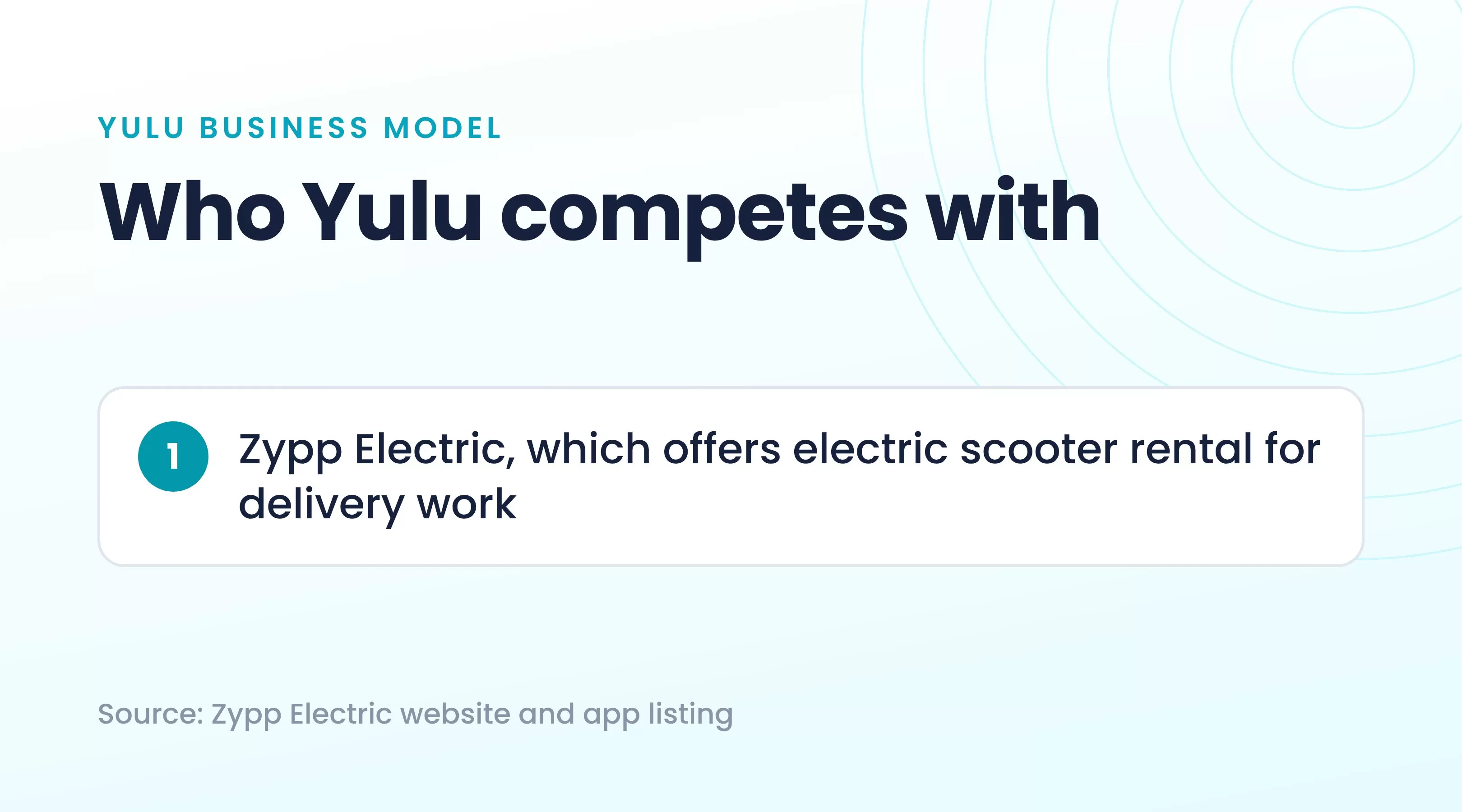
Zypp Electric also offers electric scooter rental for delivery work, the same kind of service that brings in most of Yulu's revenue.
Challenges Yulu faces
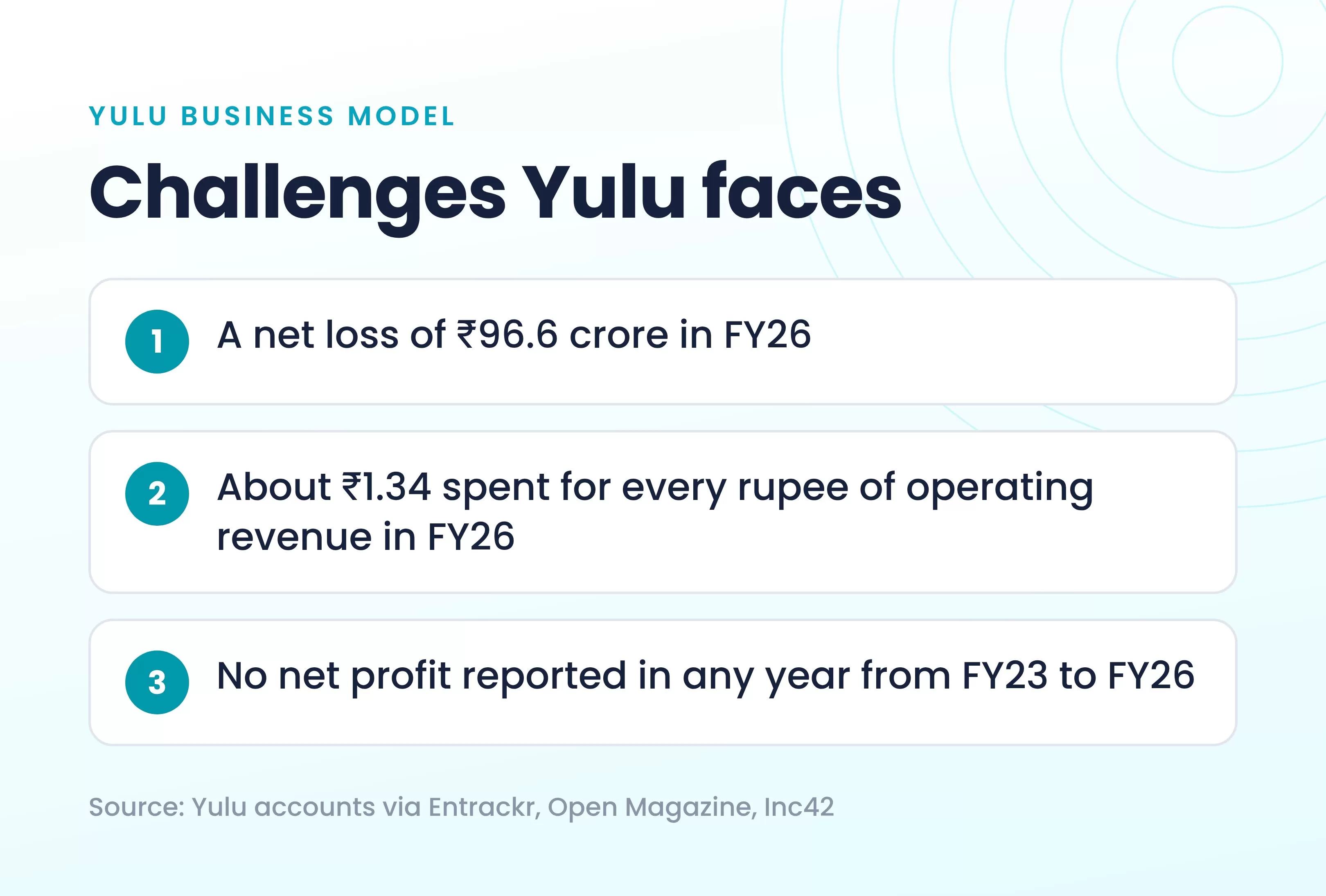
- Yulu reported a net loss of ₹96.6 crore in FY26 and has not reported a net profit in any year from FY23 to FY26.
- It spent about ₹1.34 for every rupee of operating revenue in FY26.
- The company has not disclosed the valuation of its $93 million Series C.
Conclusion on the Yulu business model
Yulu rents electric two-wheelers, mostly to delivery riders on weekly subscriptions, in 13 cities. EV rentals made up more than 93% of its ₹281 crore operating revenue in FY26, and the rest came from smaller streams.
Bajaj Auto makes its low-speed fleet and Yuma Energy swaps the batteries. Yulu's net loss was ₹96.6 crore in FY26, and it raised $93 million in a Series C round in August 2026.