
How the PharmEasy Business Model Links an App, Labs and Chemists
PharmEasy's parent earns from medicines, lab tests and supply to chemists.

Key Takeaways
- FY26 revenue from operations rose 12.7% to ₹6,618.5 crore.
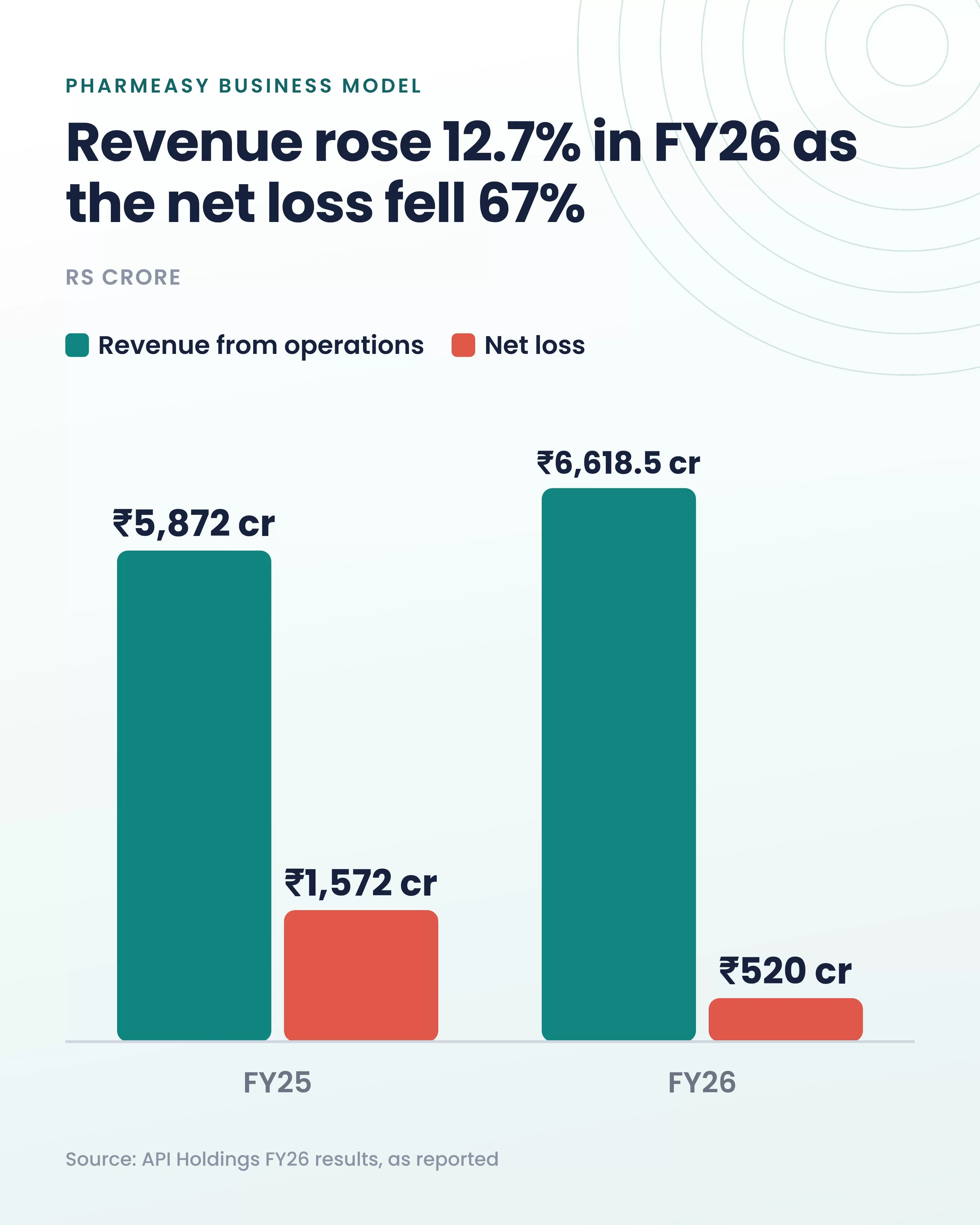
- The FY26 net loss narrowed to ₹520 crore from ₹1,572 crore in FY25.
- Product sales brought in ₹5,670 crore, or 85.7% of FY26 revenue.
- Thyrocare's FY26 revenue rose 21% to ₹829.04 crore.
Table of Contents 12 sections
The PharmEasy business model rests on three businesses run by its parent, API Holdings: the PharmEasy app that sells medicines and health products to households, a B2B arm that supplies medicines to chemists and hospitals, and Thyrocare, a listed diagnostics company that runs lab tests. Most of the money comes from selling products, and a smaller share comes from services such as diagnostics.
In FY26 (the year to March 2026), API Holdings earned ₹6,618.5 crore in revenue from operations, up 12.7%. Its net loss was ₹520 crore, against ₹1,572 crore in FY25.
PharmEasy at a glance
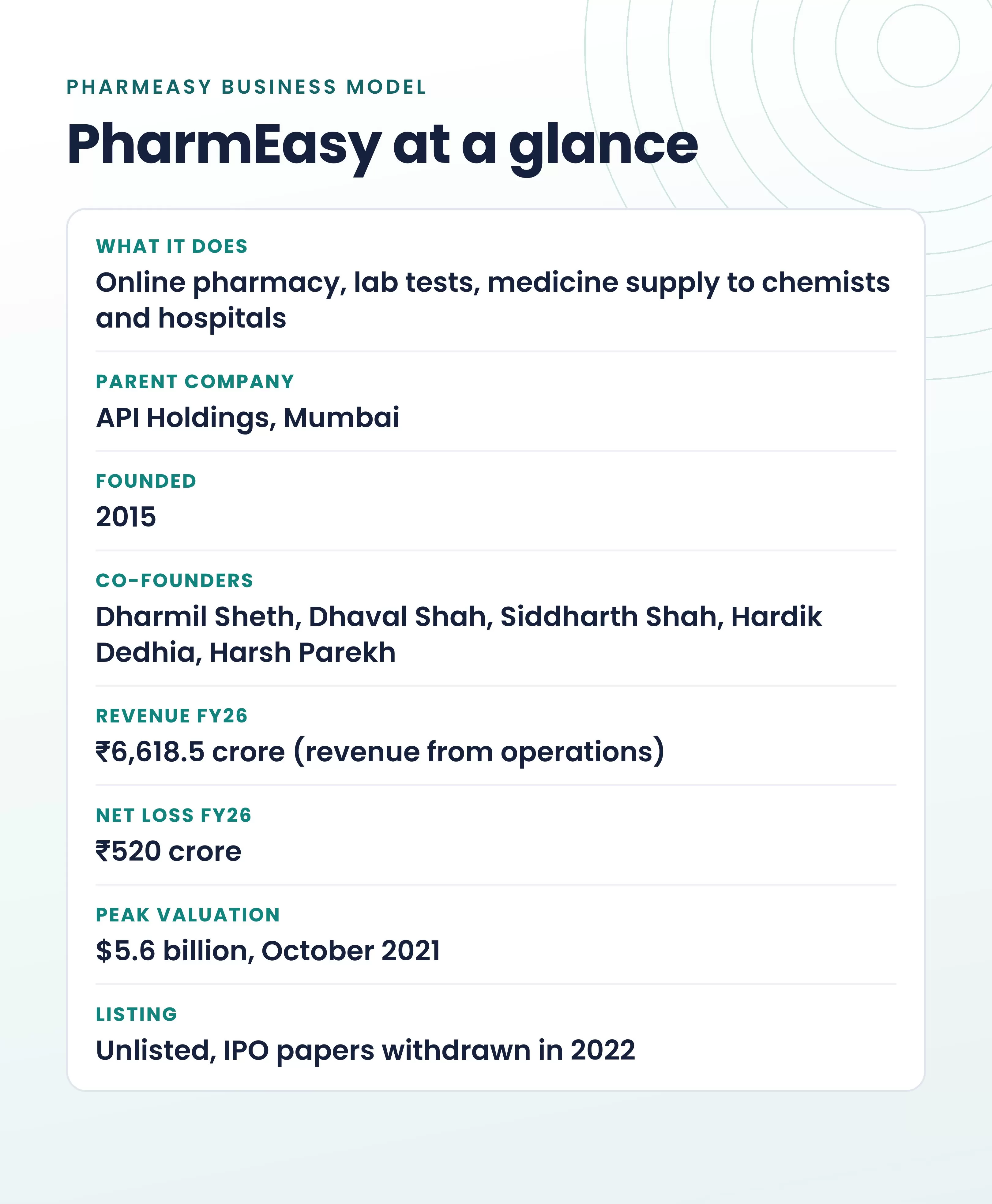
| Detail | PharmEasy |
|---|---|
| What it does | Online pharmacy, lab tests through Thyrocare, and medicine supply to chemists and hospitals |
| Parent company | API Holdings, Mumbai |
| Founded | 2015 |
| Co-founders | Siddharth Shah, Dharmil Sheth, Dhaval Shah, Hardik Dedhia and Harsh Parekh |
| Revenue (FY26) | ₹6,618.5 crore revenue from operations, up 12.7% |
| Net loss (FY26) | ₹520 crore, down from ₹1,572 crore in FY25 |
| Diagnostics arm | Thyrocare, 51.02% held by the group after an August 2026 sale |
| Valuation | Peak of $5.6 billion in October 2021; a 2023 rights issue was priced about 90% lower |
| Listing status | Unlisted; IPO papers filed in 2021 were withdrawn in 2022 |
What PharmEasy does
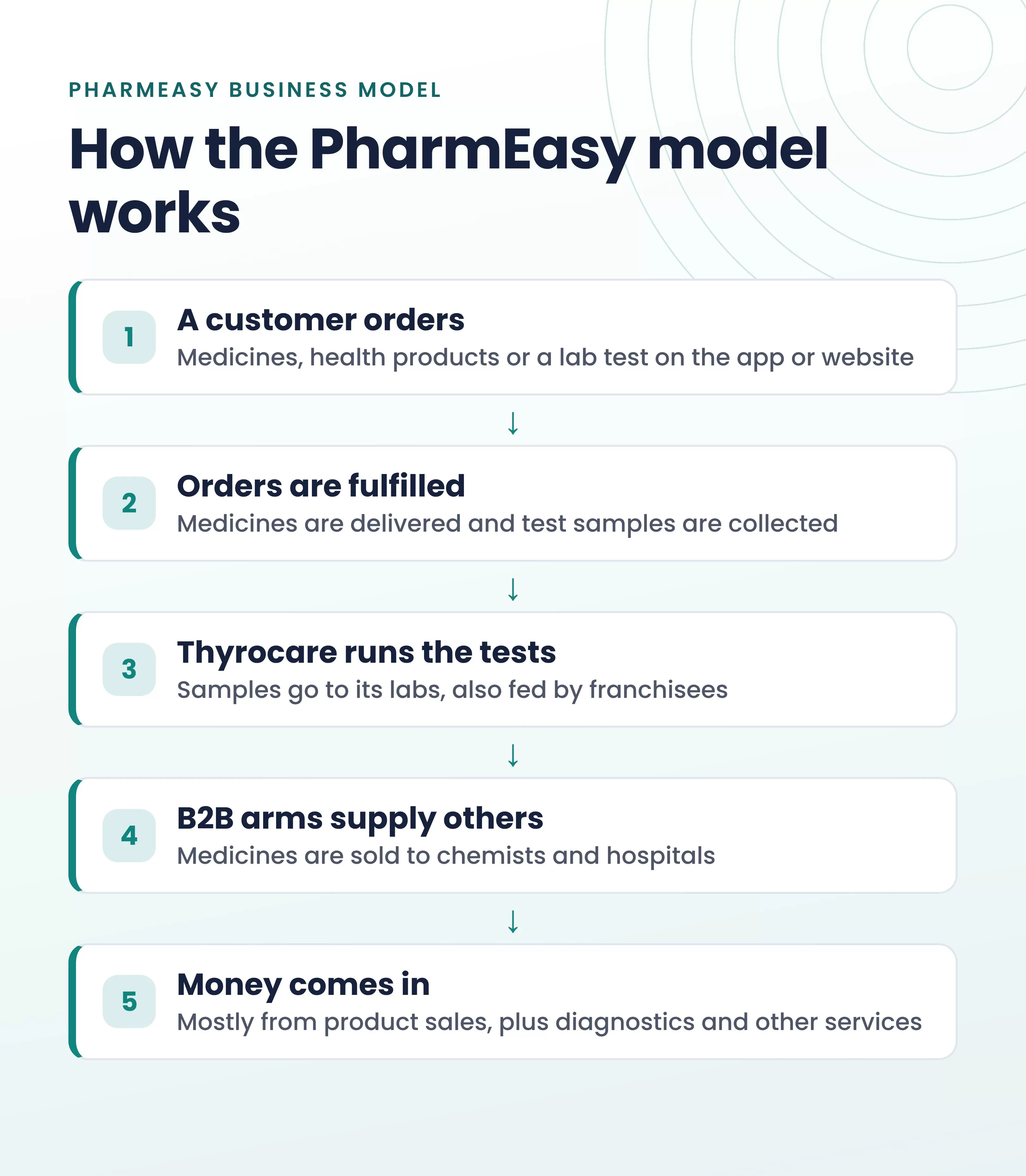
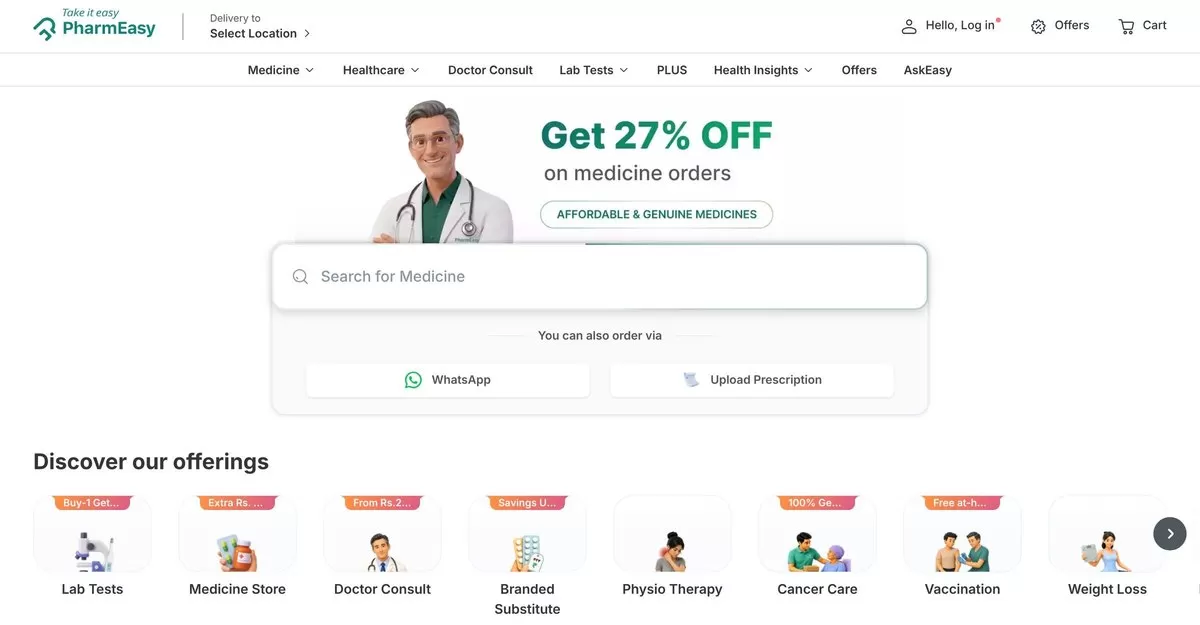
On the PharmEasy app and website, customers order prescription medicines, over-the-counter and wellness products, and book diagnostic tests. Medicines are delivered to the home, and lab test samples are collected and processed.
Behind the app sit two other businesses. The B2B arm, made up of Ascent and Aknamed, sells medicines to chemists and hospitals. Thyrocare runs a network of diagnostic labs that receive samples from its franchisees, partners and the PharmEasy app.
How PharmEasy makes money
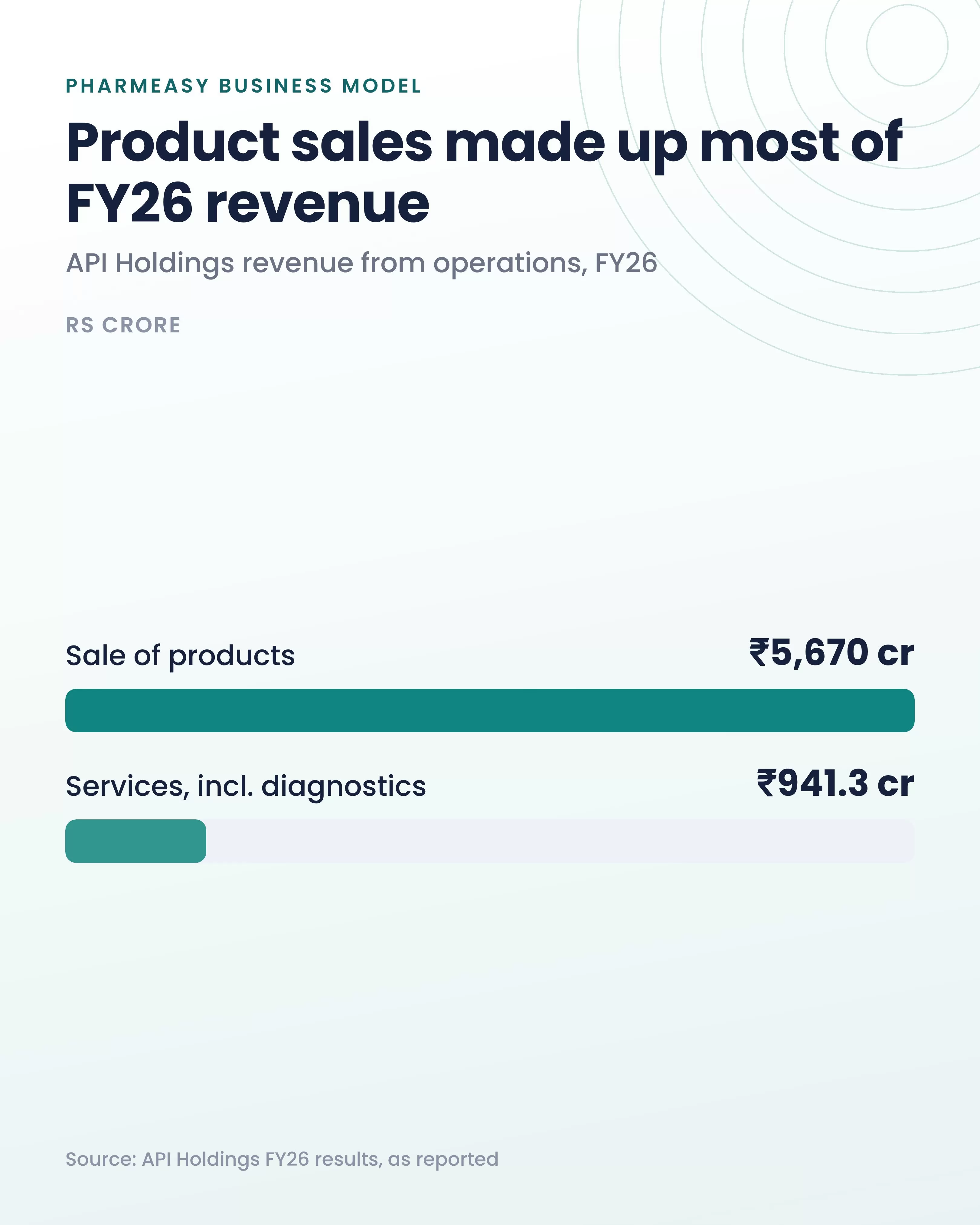
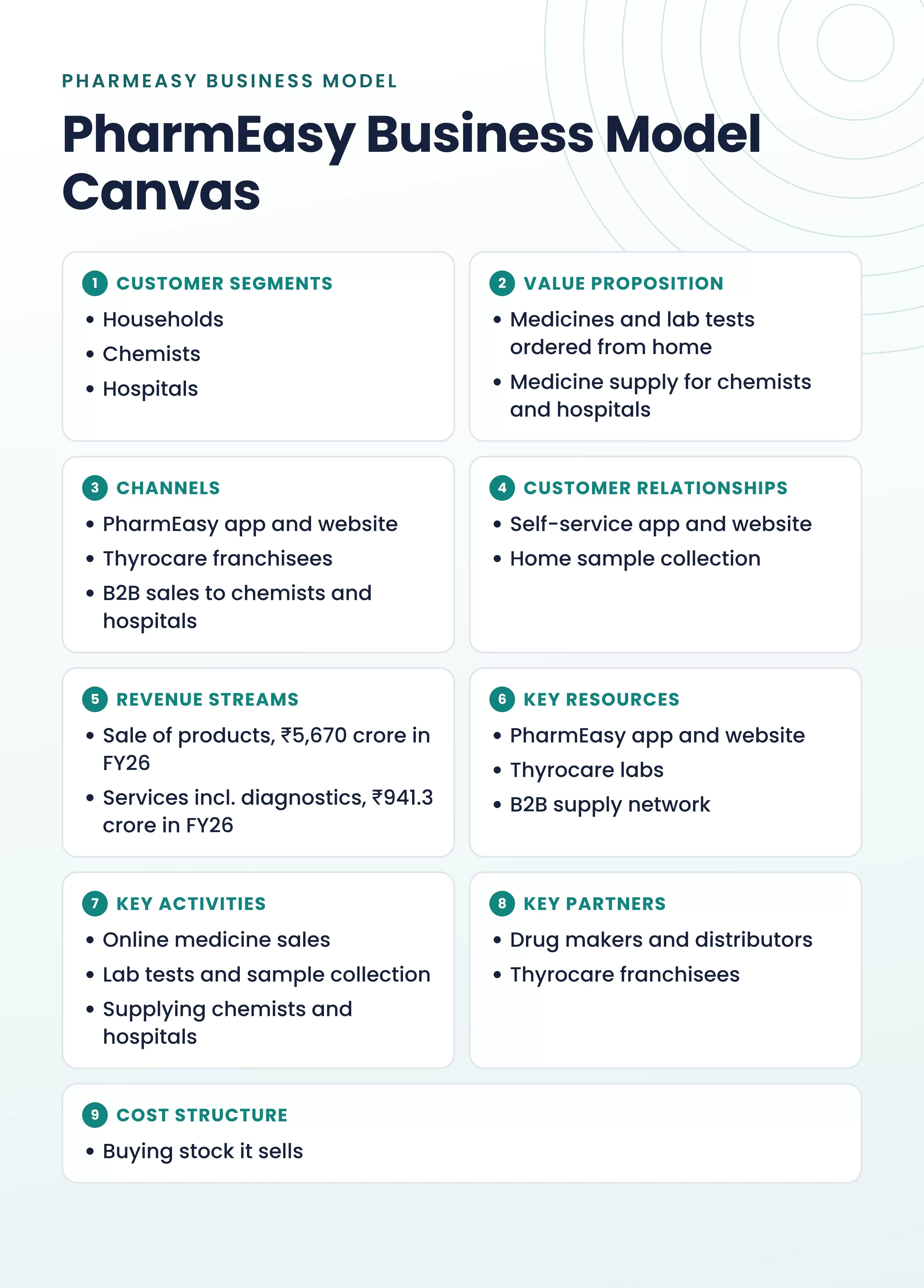
The PharmEasy revenue model has two main parts. In FY26, the sale of products brought in ₹5,670 crore, or 85.7% of revenue from operations. These are medicines and health products sold through the app and to chemists and hospitals. Services brought in ₹941.3 crore, or 14.2%, and include diagnostics and other services.
The group sells medicines and health products to households through the app and to chemists and hospitals through the B2B arm.
The app also lets customers book lab tests alongside a medicine order, which links the consumer business to Thyrocare's labs.
Seen by business, the B2B supply arm is the largest. The PharmEasy consumer app earned ₹1,334.5 crore in FY26, and Thyrocare earned ₹829.04 crore.
Thyrocare, the diagnostics arm
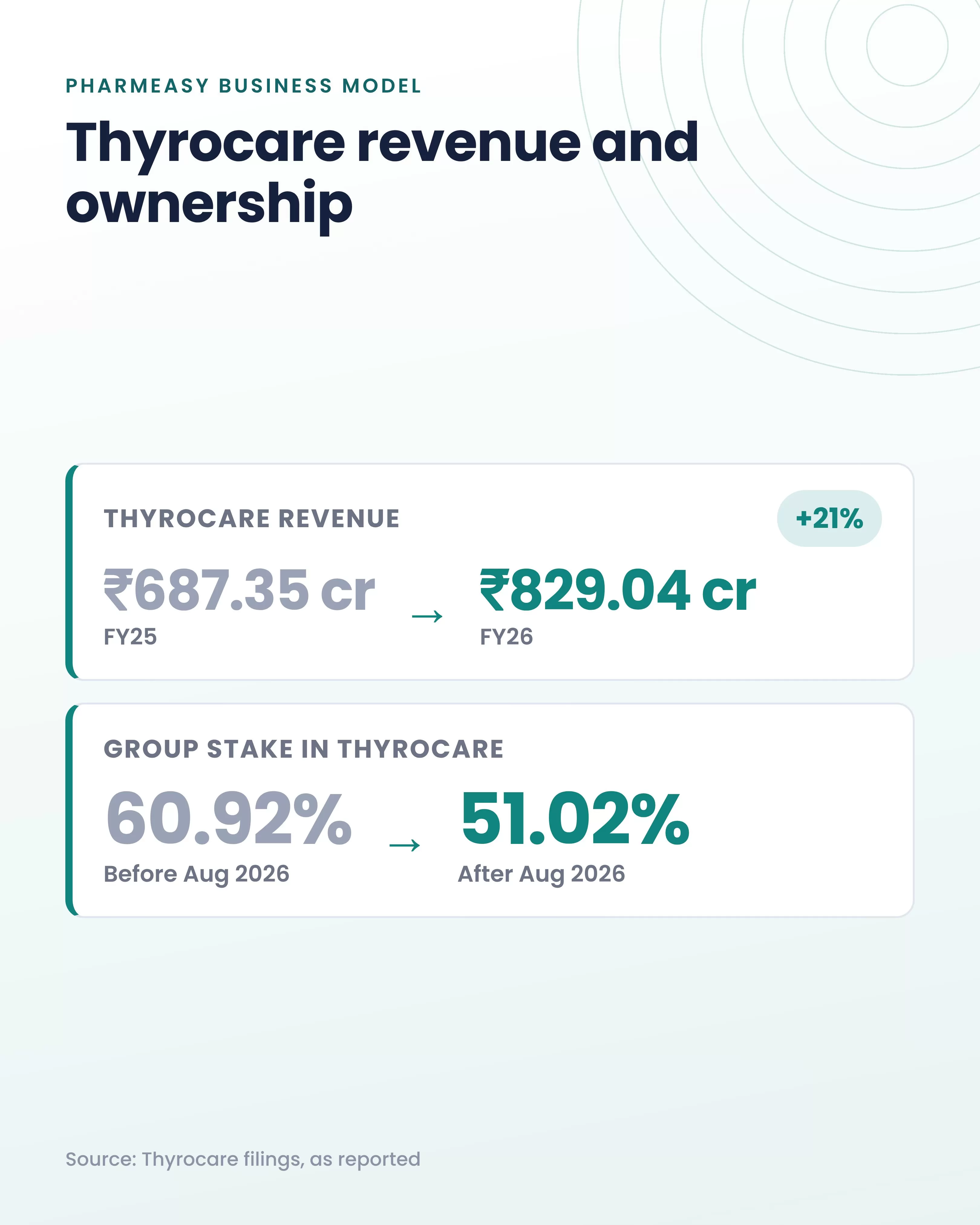
API Holdings agreed to buy 66.1% of Thyrocare for ₹4,546 crore in June 2021. Thyrocare earns from blood and other tests, much of it through franchisees who collect samples. Its FY26 revenue rose 21% to ₹829.04 crore from ₹687.35 crore. In April to June 2026, it earned ₹240 crore and ran 55.2 million tests.
In August 2026, the group sold 9.90% of Thyrocare in market trades. Its stake went from 60.92% to 51.02%, so Thyrocare is still a subsidiary. API Holdings used the money from the sale, along with internal accruals, to repay ₹1,050 crore of term debt.
Thyrocare works largely through franchisees, who collect blood samples and send them to its labs for testing. The PharmEasy app adds another channel: a lab test booked on the app is collected at home and processed by the same network.
PharmEasy's Business Model Canvas
Is PharmEasy profitable?
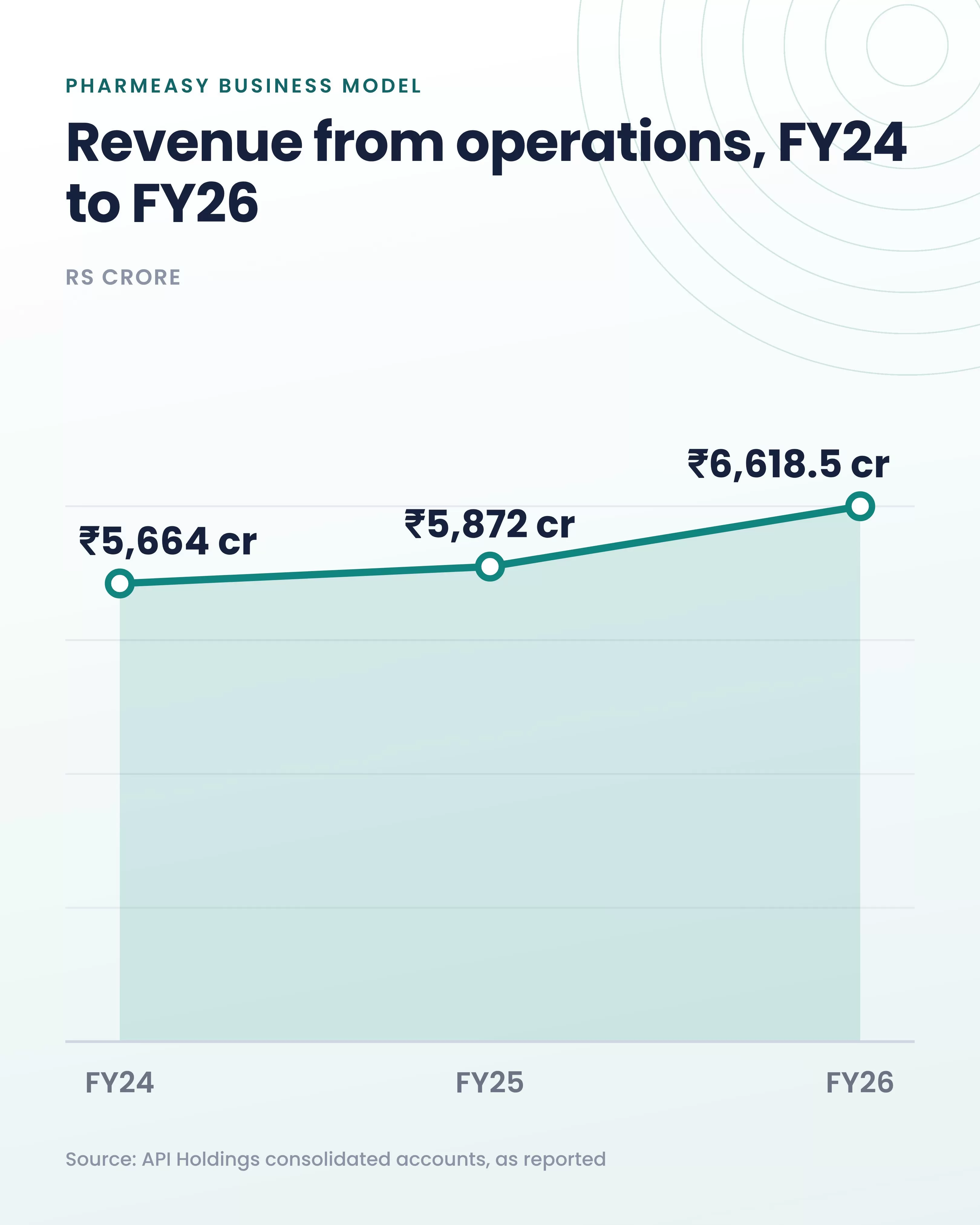
No. API Holdings made a net loss of ₹520 crore in FY26, down 67% from ₹1,572 crore in FY25, while revenue from operations rose from ₹5,872 crore to ₹6,618.5 crore. Revenue was ₹5,664 crore in FY24.
Within the group, the PharmEasy consumer app still ran at an EBITDA loss in FY26.
The latest quarter
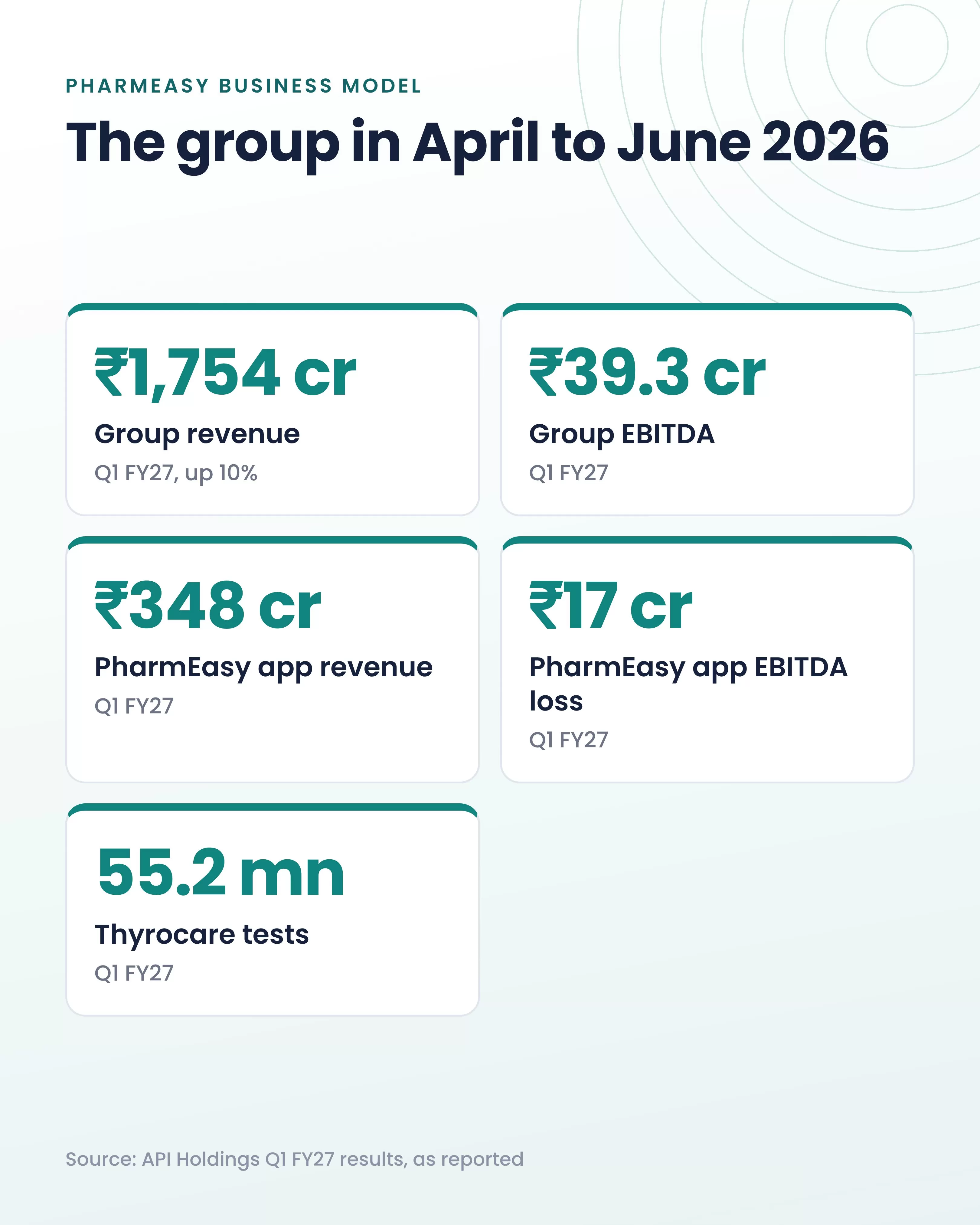
In April to June 2026 (Q1 FY27), group revenue rose 10% to ₹1,754 crore, with EBITDA of ₹39.3 crore. The B2B business earned ₹1,005.6 crore. The PharmEasy app earned ₹348 crore, with an EBITDA loss of ₹17 crore.
PharmEasy's journey so far
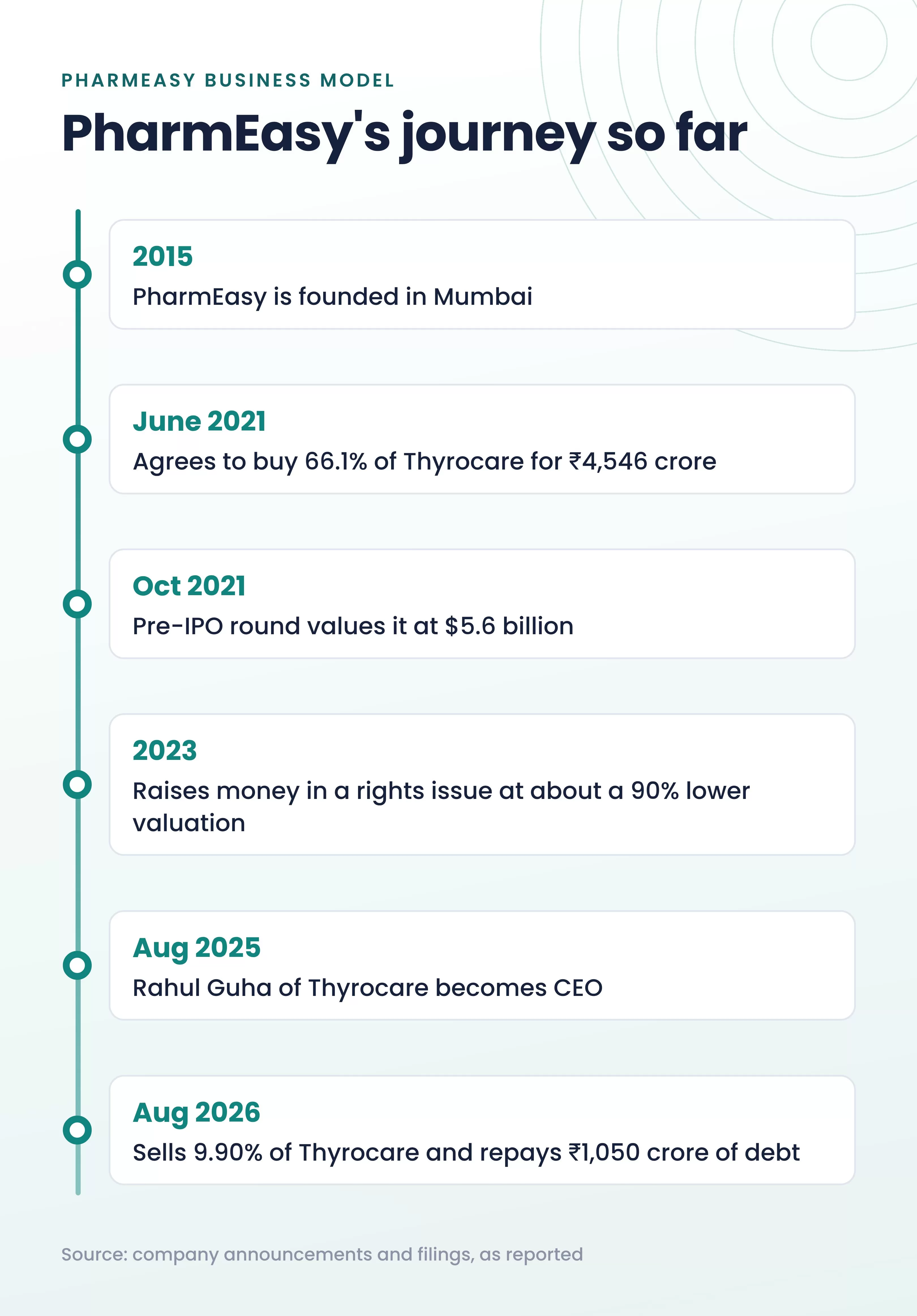
| When | What happened |
|---|---|
| 2015 | PharmEasy is founded in Mumbai |
| June 2021 | API Holdings agrees to buy 66.1% of Thyrocare for ₹4,546 crore |
| October 2021 | A pre-IPO round of about $350 million values it at $5.6 billion |
| November 2021 | Files IPO papers for a ₹6,250 crore issue, later withdrawn in 2022 |
| 2023 | Raises money in a rights issue at about a 90% lower valuation; the round was led by Ranjan Pai's family office |
| August 2025 | Siddharth Shah steps down as CEO and Thyrocare's Rahul Guha takes over |
| September 2025 | Raises ₹1,700 crore through debentures, pledging about 61% of Thyrocare |
| August 2026 | Sells 9.90% of Thyrocare and repays ₹1,050 crore of term debt |
Who PharmEasy competes with
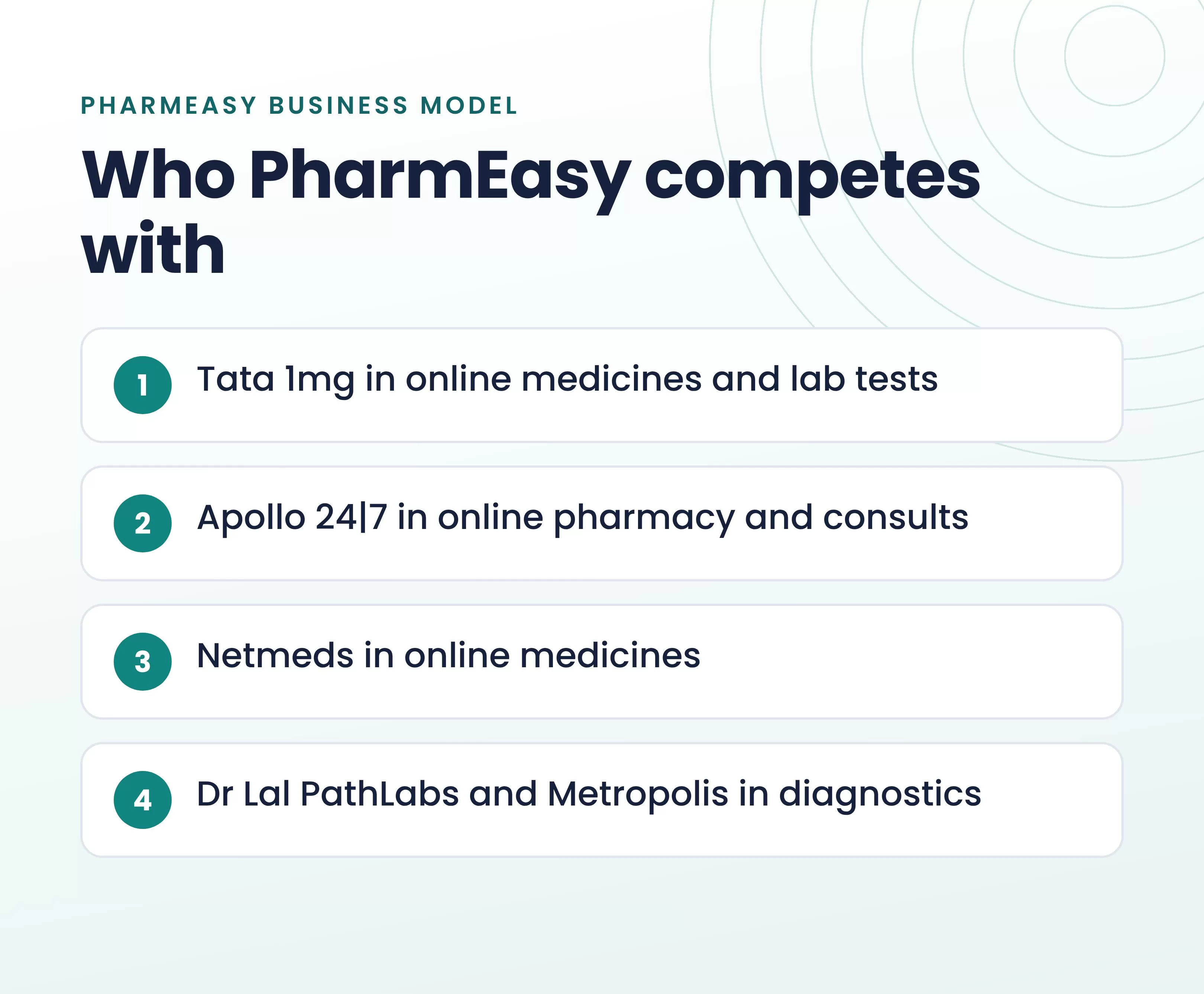
In online medicines, PharmEasy competes with Tata 1mg, Apollo 24|7 and Netmeds. In diagnostics, Thyrocare competes with lab chains such as Dr Lal PathLabs and Metropolis.
Challenges PharmEasy faces
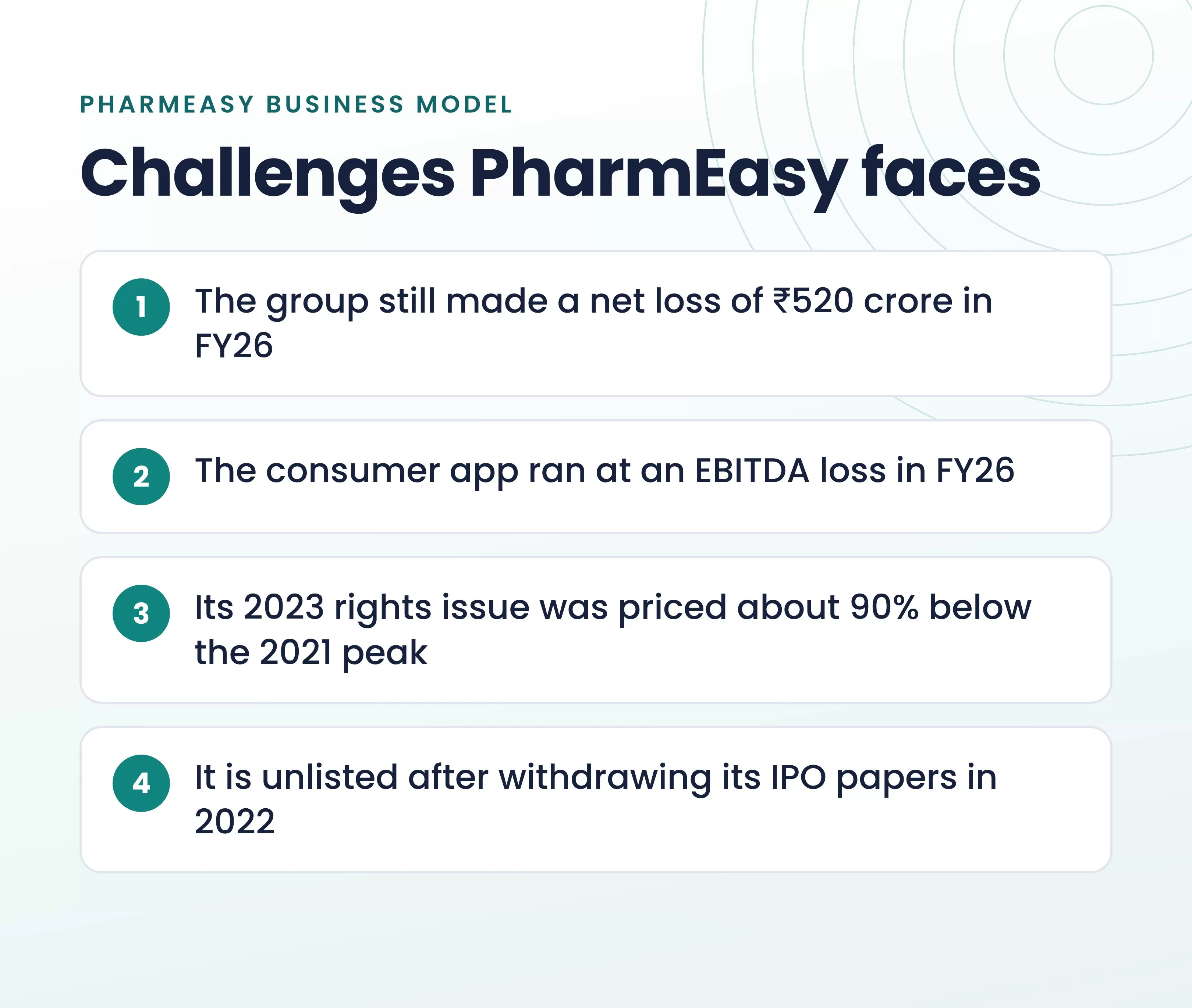
The group was still loss-making in FY26, and the consumer app ran at an EBITDA loss. Its 2023 rights issue was priced about 90% below the 2021 peak valuation of $5.6 billion. API Holdings remains unlisted after withdrawing its IPO papers in 2022.
Conclusion on the PharmEasy business model
The PharmEasy business model combines an online pharmacy, a B2B medicine supply arm and the Thyrocare diagnostics chain under API Holdings. Customers order through the app or website, chemists and hospitals buy through the B2B arm, and Thyrocare's labs process tests from franchisees and the app. Most revenue comes from product sales, with diagnostics and other services making up the rest.
In FY26 the group earned ₹6,618.5 crore in revenue from operations and made a net loss of ₹520 crore.


