
The Udaan Business Model of Bulk Supplies for Small Shops
How Udaan buys goods in bulk and resells them to small shops on its app.

Key Takeaways
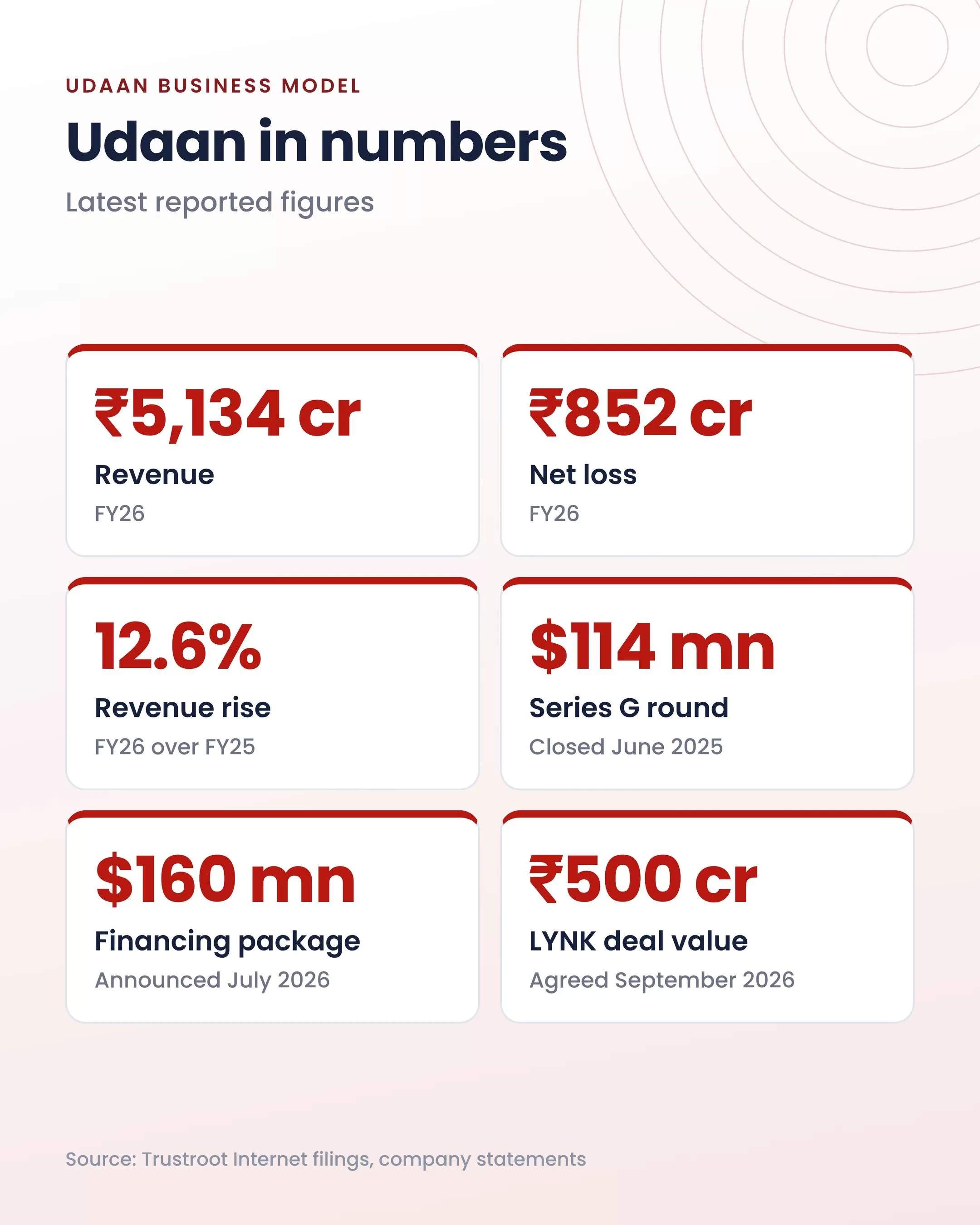
- FY26 revenue rose 12.6% to ₹5,134 crore from ₹4,561 crore in FY25.
- Udaan's net loss narrowed to ₹852 crore in FY26 from ₹1,055 crore.
- Revenue was ₹4,561 crore in FY25, after ₹5,706.6 crore gross revenue in FY24.
- In September 2026 Udaan agreed to buy Swiggy's LYNK for ₹500 crore.
Table of Contents 12 sections
- Udaan at a glance
- What Udaan does
- How the Udaan B2B business model works
- How the Udaan business model makes money
- Udaan's Business Model Canvas
- Udaan revenue and net loss over three years
- Udaan's key numbers from FY25 to FY26
- Udaan's journey so far
- Who Udaan competes with
- Challenges Udaan faces
- Conclusion on the Udaan business model
- FAQs
The Udaan business model rests on a B2B app. Udaan runs a B2B app on which kiranas, chemists, hotels and offices order goods in bulk, and Udaan buys those goods from brands and suppliers, resells them and delivers them to the shop. It also offers business credit through udaanCapital.
In FY26 (the year to March 2026), Udaan's group revenue rose 12.6% to ₹5,134 crore from ₹4,561 crore in FY25. Its net loss narrowed to ₹852 crore from ₹1,055 crore. The group files its accounts through Trustroot Internet, its holding company in Singapore.
Udaan at a glance
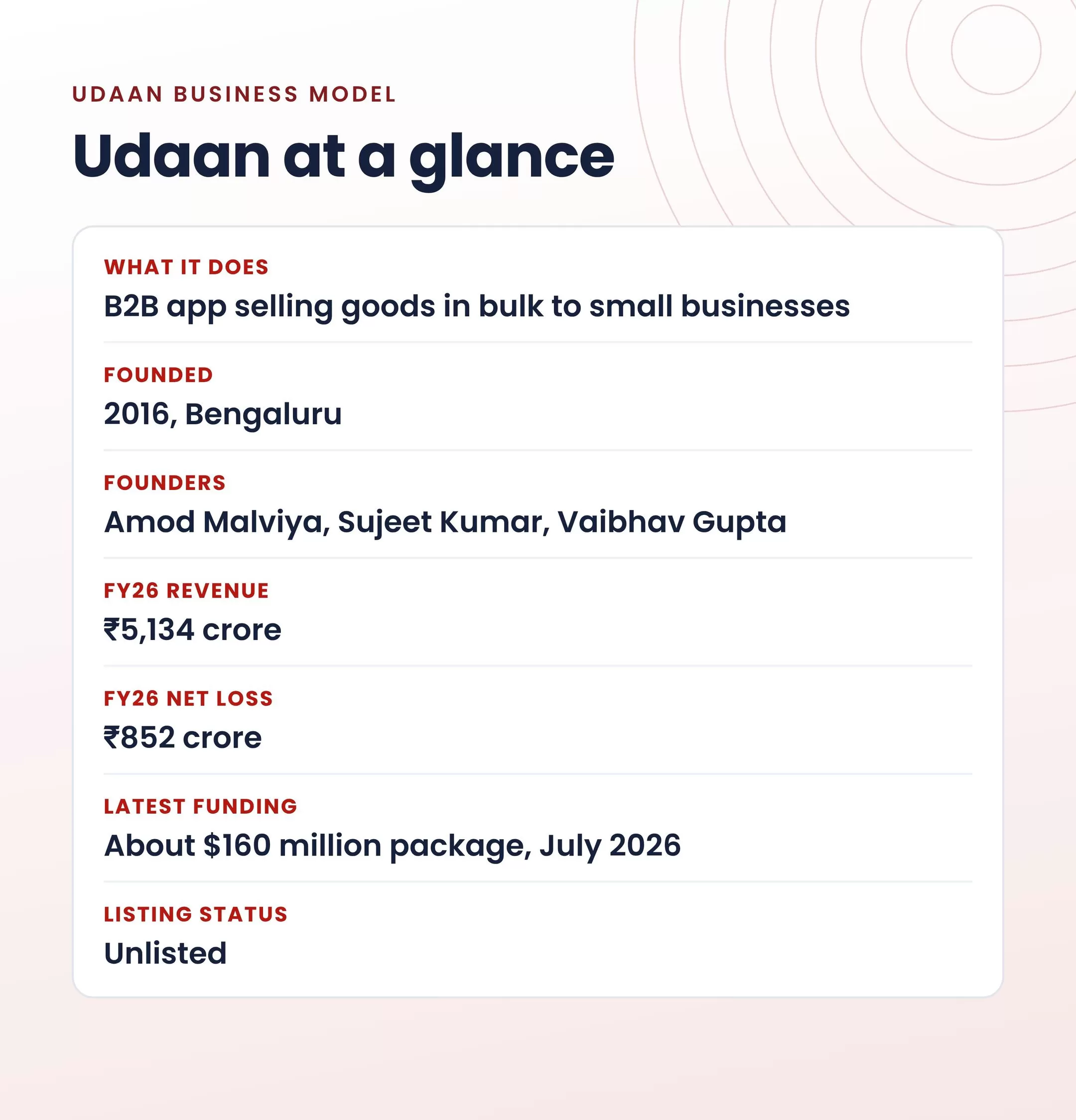
| Item | Detail |
|---|---|
| What it does | B2B app that sells goods in bulk to small businesses |
| Founded | 2016, Bengaluru |
| Founders | Amod Malviya, Sujeet Kumar and Vaibhav Gupta |
| CEO | Vaibhav Gupta |
| Revenue (FY26) | ₹5,134 crore |
| Net loss (FY26) | ₹852 crore |
| Categories | FMCG, staples and pharma |
| Latest funding | About $160 million financing package announced in July 2026 |
| Listing status | Unlisted |
What Udaan does
Udaan calls itself an eB2B platform. A shop owner registers on the app and can then order FMCG goods, staples and medicines in bulk, and pay at once or use business credit.
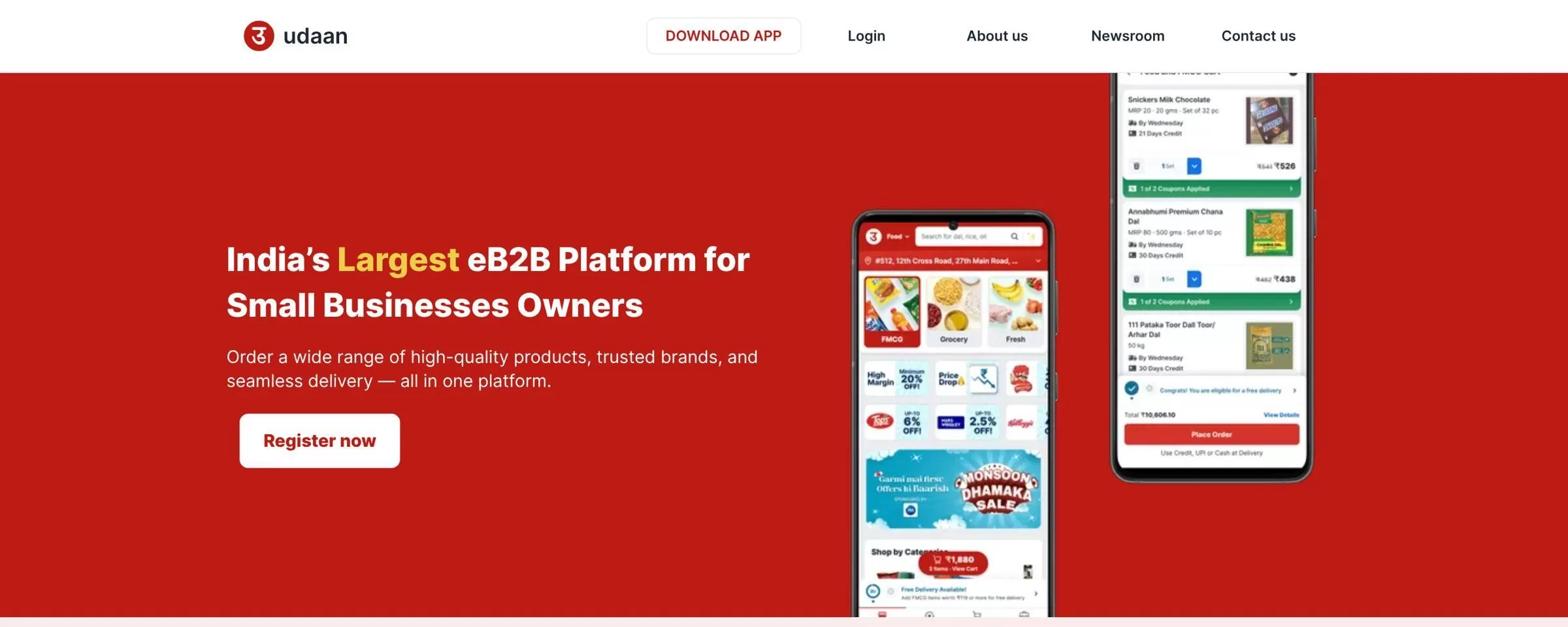
The buyers are small businesses, not households. Its customers include kiranas, chemists, hotels and offices.
How the Udaan B2B business model works
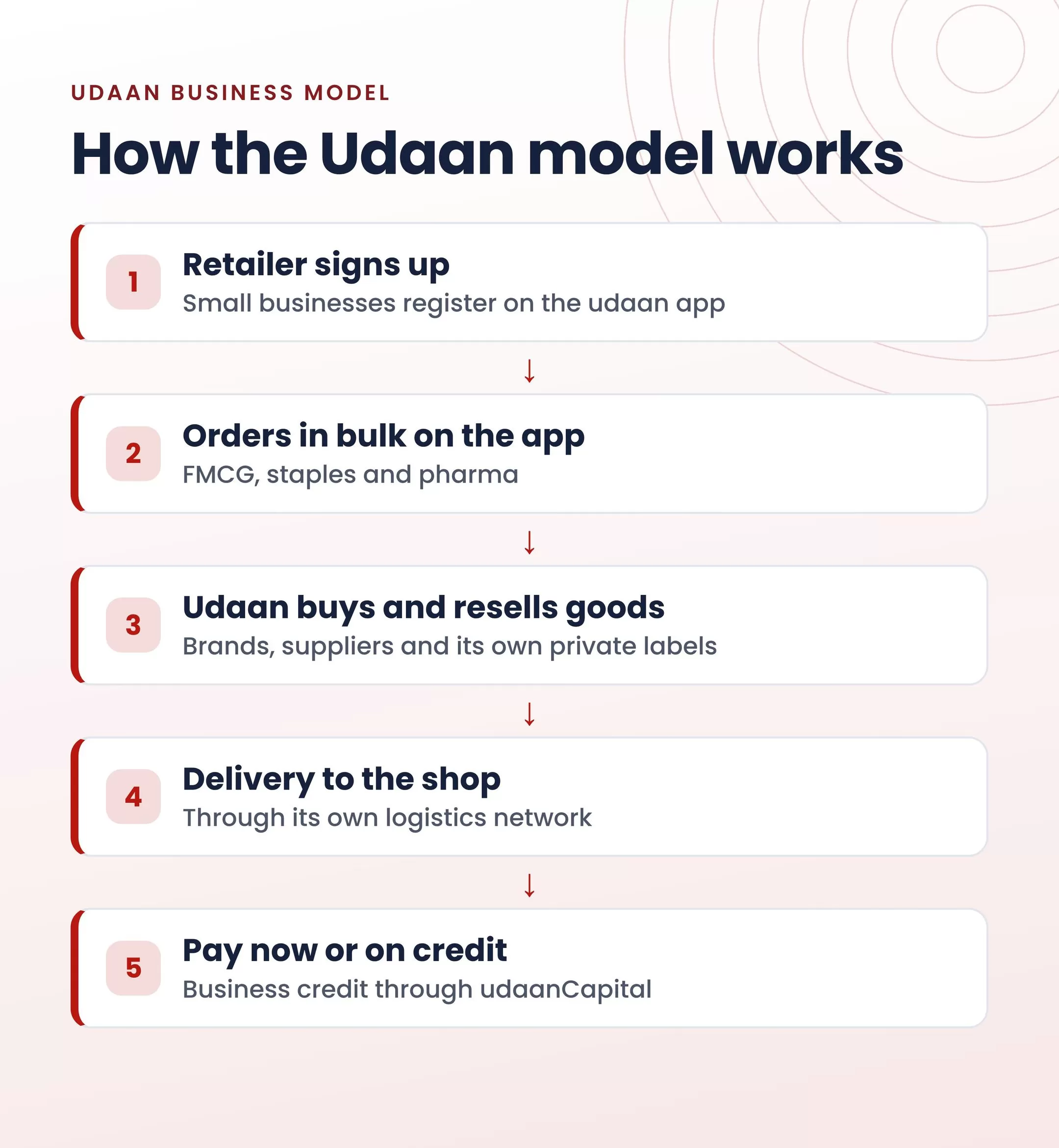
Udaan works like a wholesaler that takes orders on an app. It buys stock from brands, manufacturers and suppliers, holds it in its supply chain, and sells it to retailers at wholesale prices. Its own delivery network takes the order to the shop.
Udaan also sells its own private label products alongside branded goods.
How the Udaan business model makes money
Udaan revenue model by stream
Selling goods is the main source of revenue. When a retailer buys a carton of biscuits or a sack of rice on the app, the full sale price is booked as Udaan's revenue, and the cost of buying that stock is booked as an expense.
- Sale of goods. Bulk sales of FMCG, staples and pharma products to small businesses.
- Platform fees. Fees charged for use of the platform.
- Logistics. Delivery and logistics services.
- Credit. Interest and fees linked to business credit through udaanCapital.
- Advertising. Brands pay to promote products in the app.
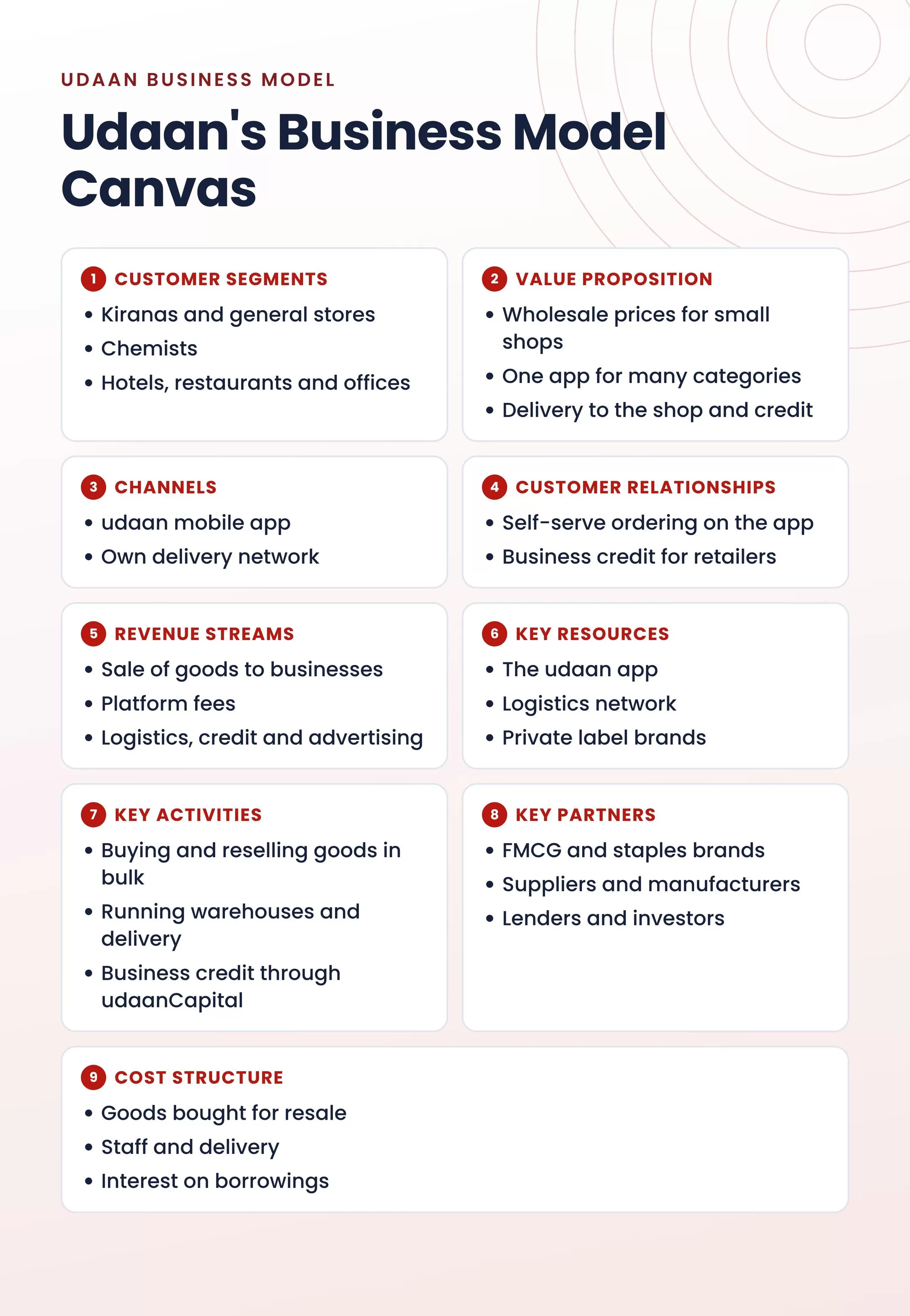
Udaan's Business Model Canvas
The canvas sets out who Udaan serves, what it offers, and where its revenue and costs come from.
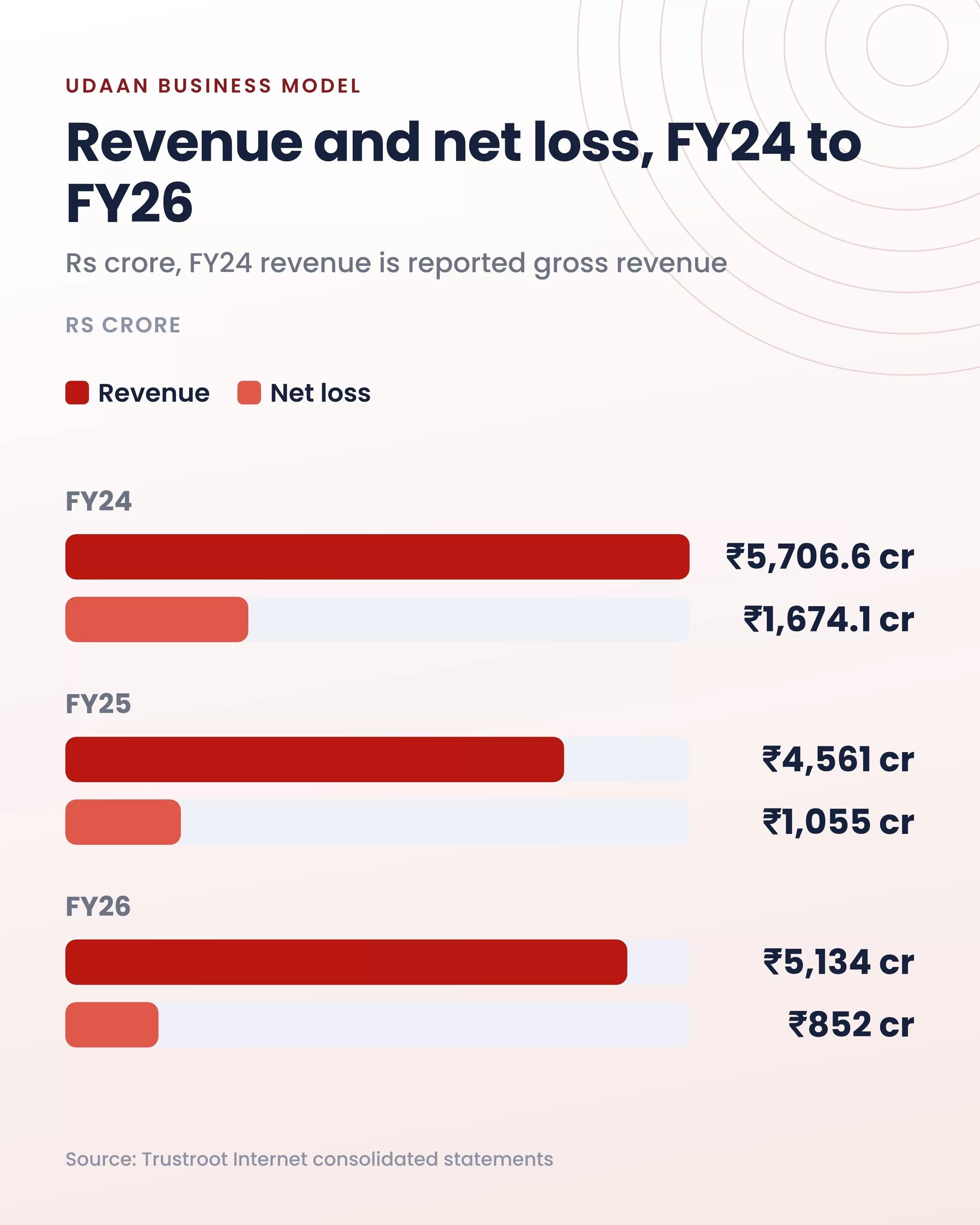
Udaan revenue and net loss over three years
Revenue was ₹4,561 crore in FY25, against gross revenue of ₹5,706.6 crore reported for FY24, and rose to ₹5,134 crore in FY26. The net loss went down each year, from ₹1,674.1 crore in FY24 to ₹1,055 crore in FY25 and ₹852 crore in FY26.
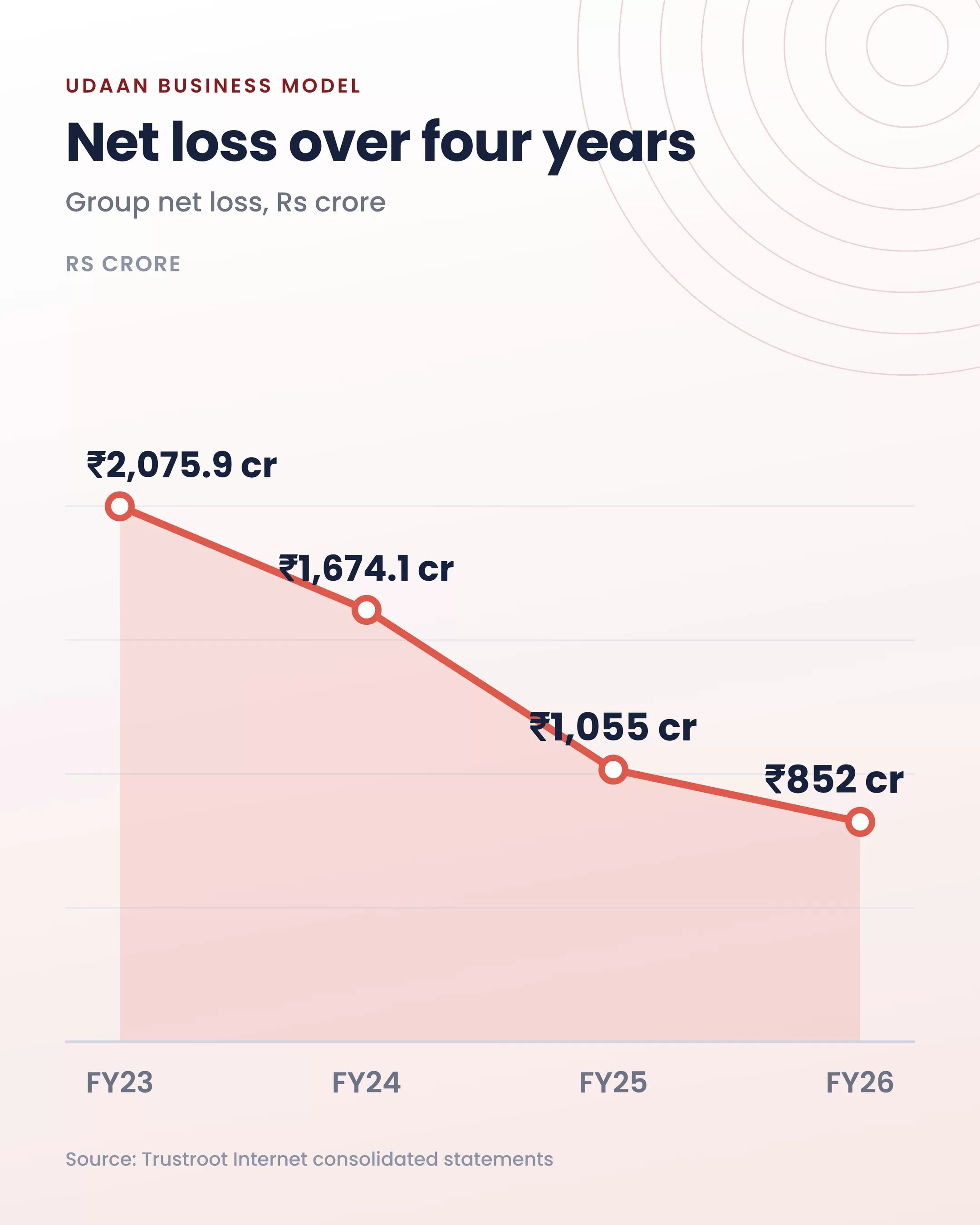
Going back one more year, the net loss was ₹2,075.9 crore in FY23. Over three years it came down to ₹852 crore in FY26.
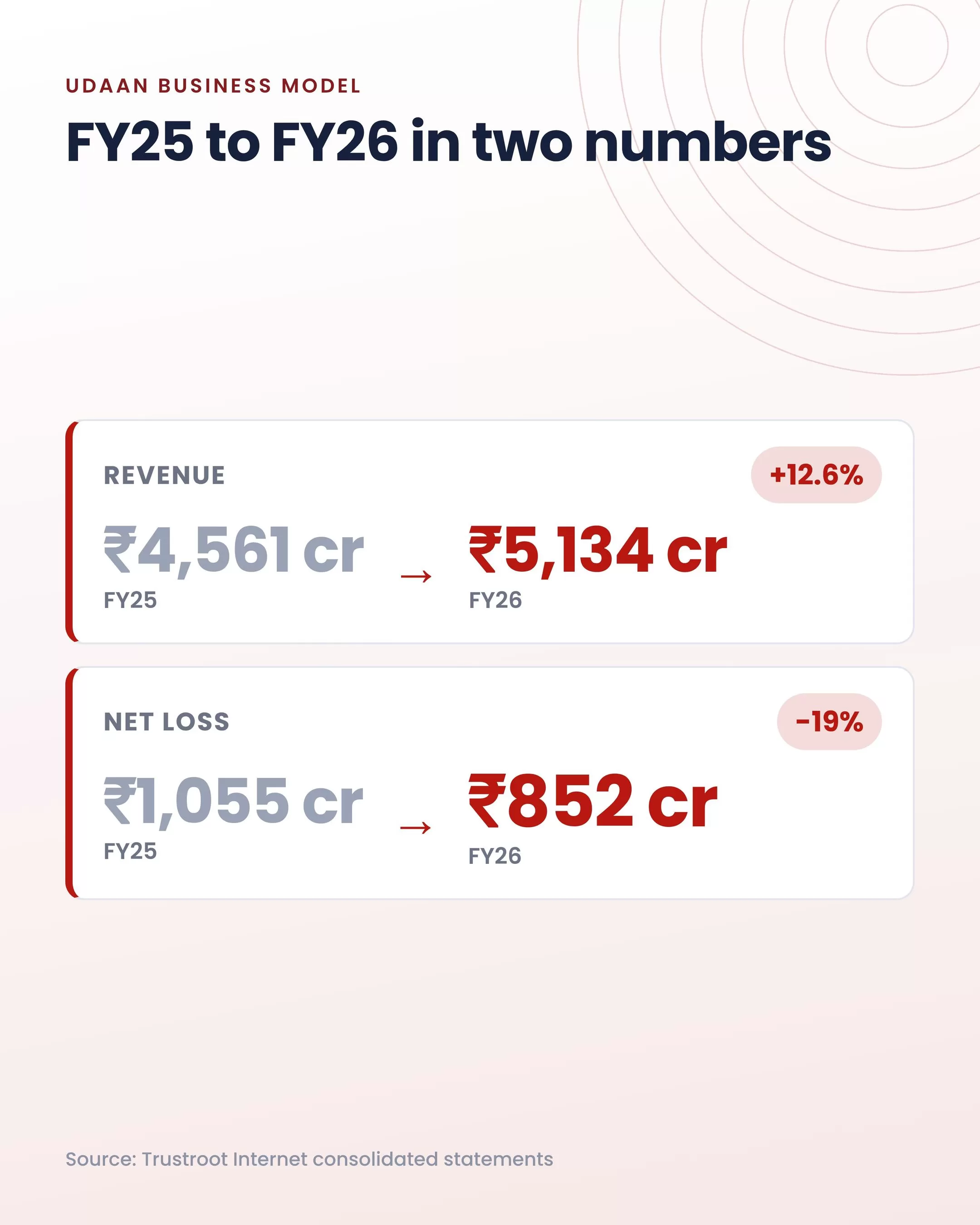
Udaan's key numbers from FY25 to FY26
In FY26, revenue grew 12.6% and the net loss fell about 19%.
Udaan's journey so far
| When | What happened |
|---|---|
| 2016 | Founded in Bengaluru by Amod Malviya, Sujeet Kumar and Vaibhav Gupta |
| June 2025 | Closed its Series G round at $114 million |
| March 2026 | Parent Trustroot agreed to buy Info Edge's 26.14% stake in ShopKirana |
| July 2026 | Announced a financing package of about $160 million in fresh equity, new debt and conversion of some debt into equity |
| September 2026 | Agreed to buy Swiggy's LYNK distribution business in an all-share deal valued at ₹500 crore |
| October 2026 | FY26 results showed revenue of ₹5,134 crore |
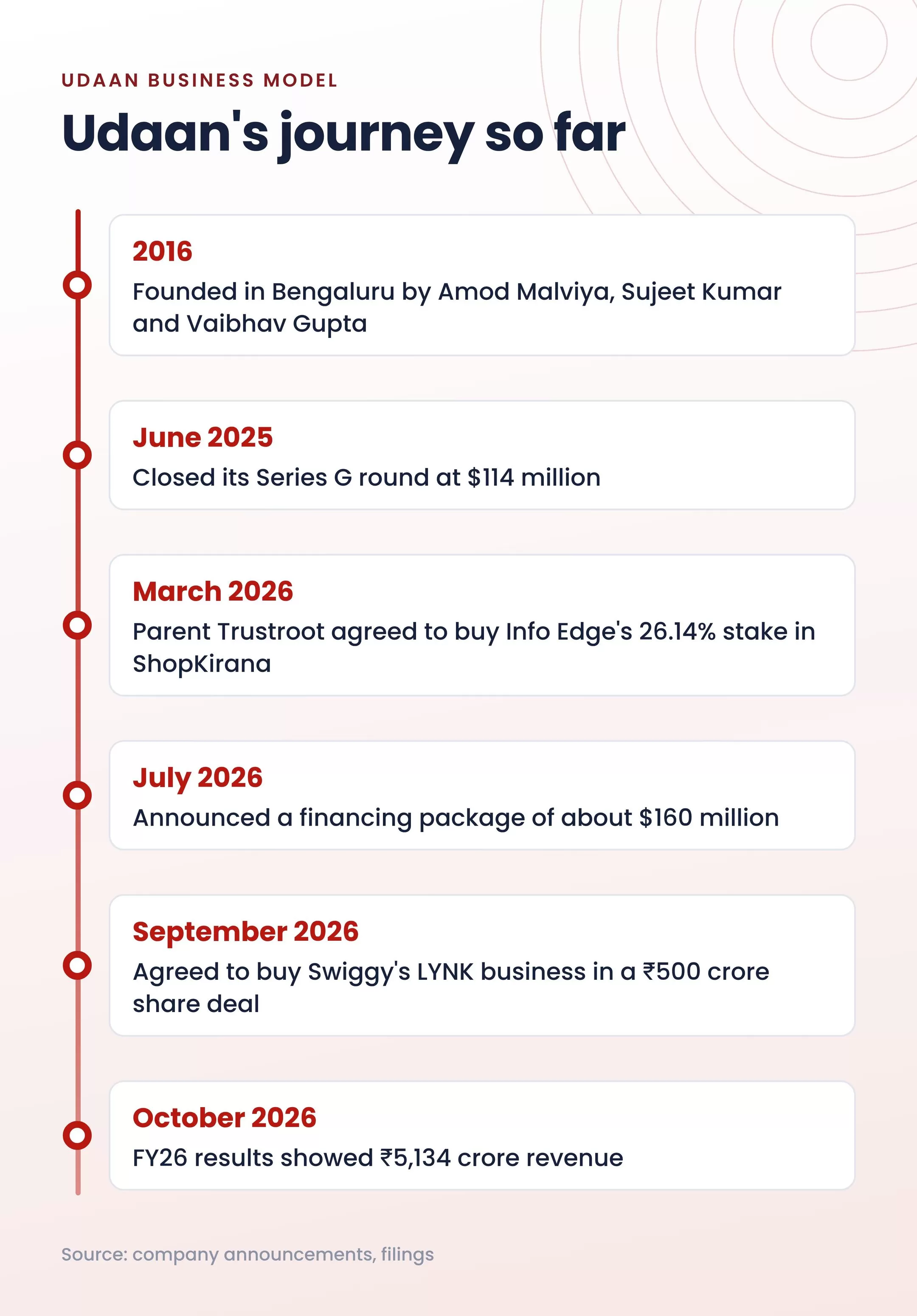
Under the LYNK deal, Swiggy receives preference shares that give it about 2.8% of Udaan, and it also invests ₹75 crore for about 0.4% more. Swiggy completed the sale of LYNK in October 2026.
Who Udaan competes with
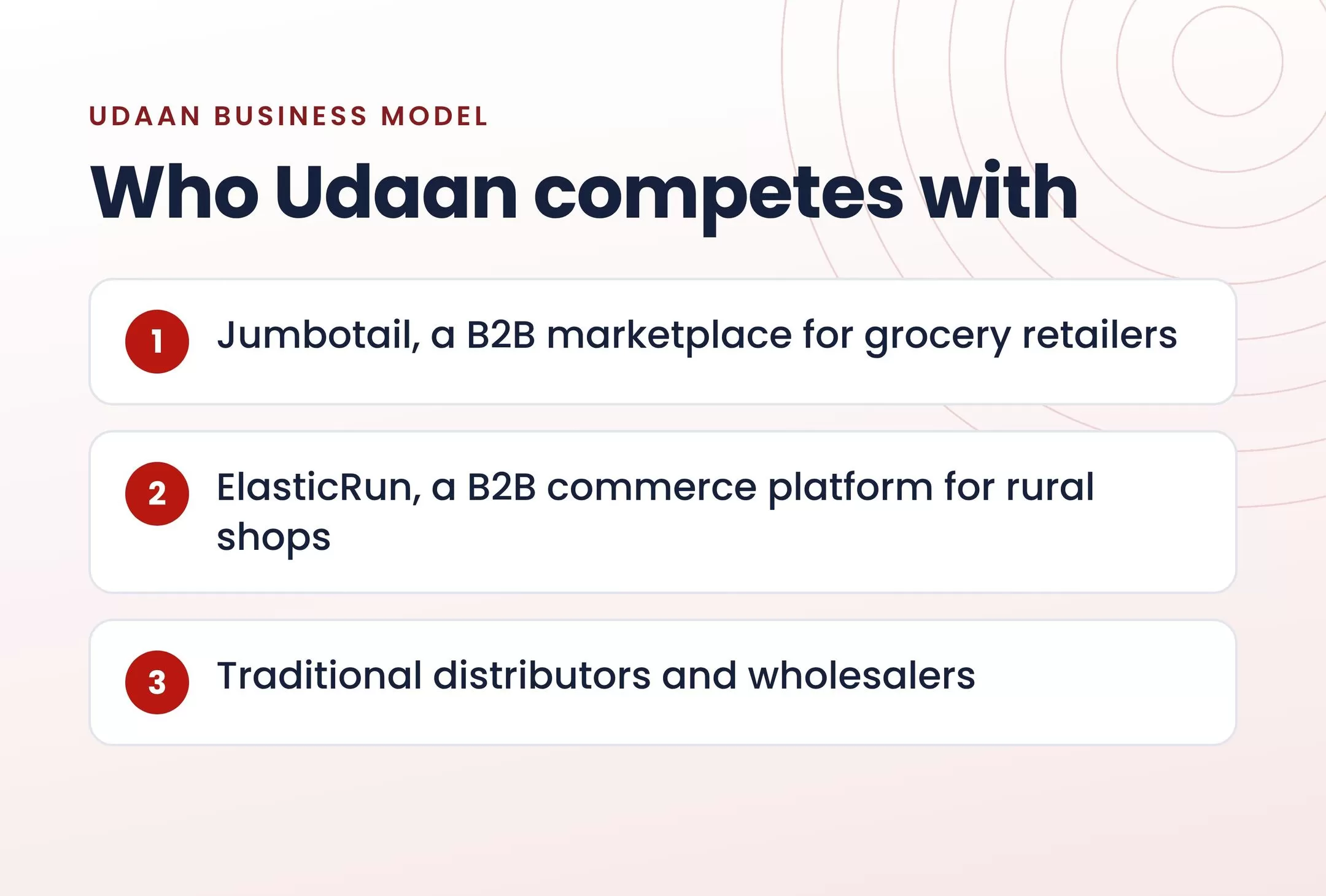
Udaan competes with other B2B commerce platforms such as Jumbotail and ElasticRun, and with traditional distributors and wholesalers.
Challenges Udaan faces
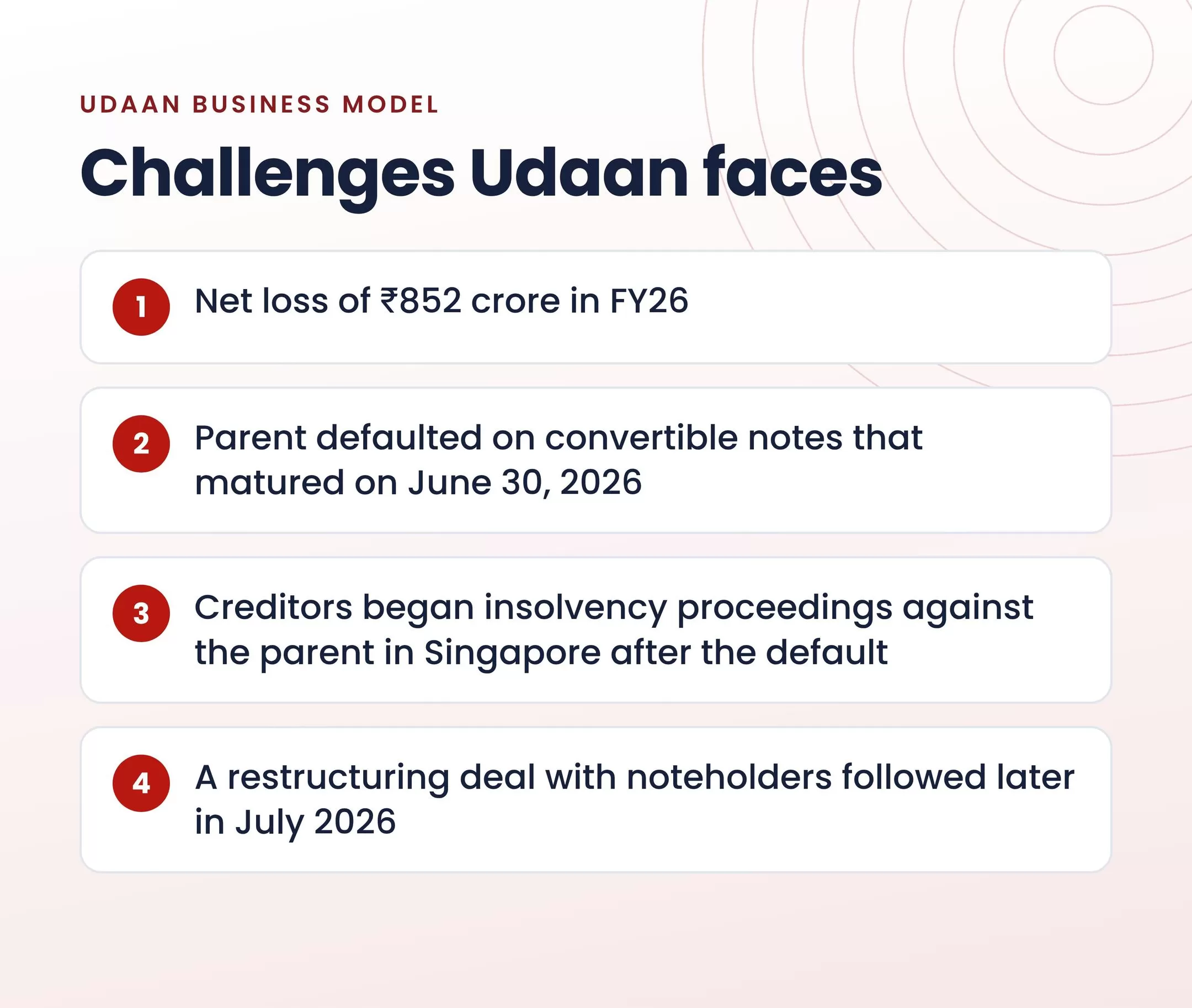
Udaan reported a net loss in each year from FY23 to FY26, ₹852 crore in FY26. Trustroot, its Singapore parent, defaulted on compulsorily convertible notes that matured on June 30, 2026, and creditors then began insolvency proceedings against it in Singapore. Udaan said the proceedings concerned only the offshore holding company and not its India operations.
Later in July 2026 Udaan reached a restructuring deal with the noteholders. Under its financing package of about $160 million, some bondholders are to convert part of their debt into equity and the remaining bonds are to be extended on revised terms.
Conclusion on the Udaan business model
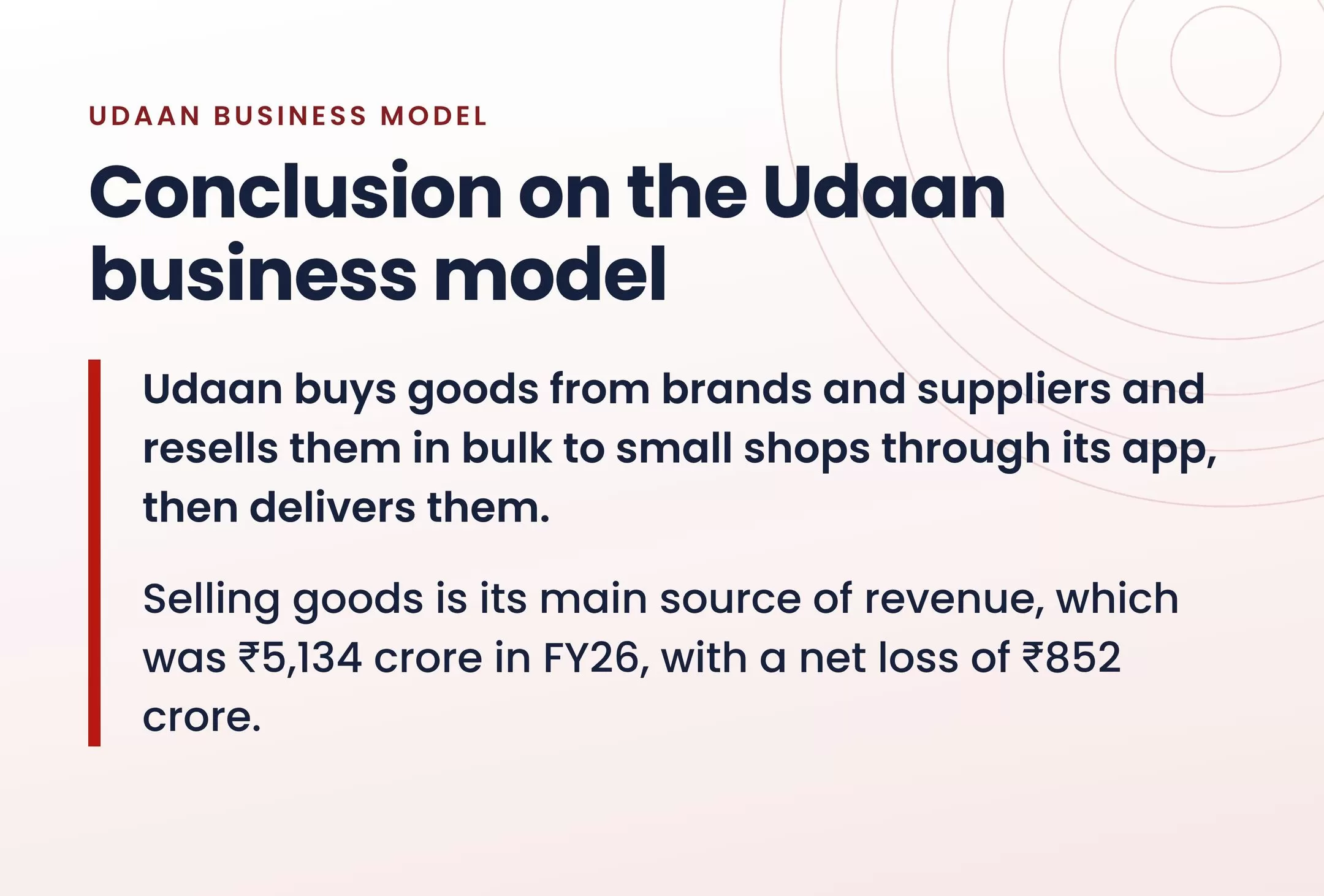
Udaan buys goods from brands, manufacturers and suppliers and resells them in bulk to kiranas, chemists, hotels and offices through its app, then delivers them with its own logistics network. Retailers can pay at once or use business credit from udaanCapital.
Selling goods is its main source of revenue, alongside platform fees, logistics, credit and advertising. In FY26 the group reported revenue of ₹5,134 crore and a net loss of ₹852 crore.


