
The Flipkart Business Model of Selling, Shipping and Ads
How product sales, logistics, advertising and marketplace fees fit together at Flipkart
Key Takeaways
- Flipkart's FY26 revenue from operations rose 18.2% to Rs 1,45,880 crore; the net loss narrowed 2.1% to Rs 8,468 crore.
- About 72% of revenue, Rs 1,04,850 crore, came from the sale of traded goods.
- Logistics, warehousing and shipping revenue rose about 2.4 times to Rs 23,059 crore, the second-largest stream.
- Advertisement revenue rose 30.7% to Rs 9,597 crore, while marketplace and collection revenue fell 43.9% to Rs 6,719 crore.
- Total expenses were Rs 1,54,781 crore, about Rs 106 for every Rs 100 of operating revenue.
The Flipkart business model is an online marketplace that sells goods to shoppers, delivers them through its own logistics arm and earns from advertising. In FY26 the Flipkart group reported revenue from operations of Rs 1,45,880 crore and a net loss of Rs 8,468 crore.
This is how Flipkart makes money, where the money goes and how its revenue streams changed in FY26.
Flipkart at a glance
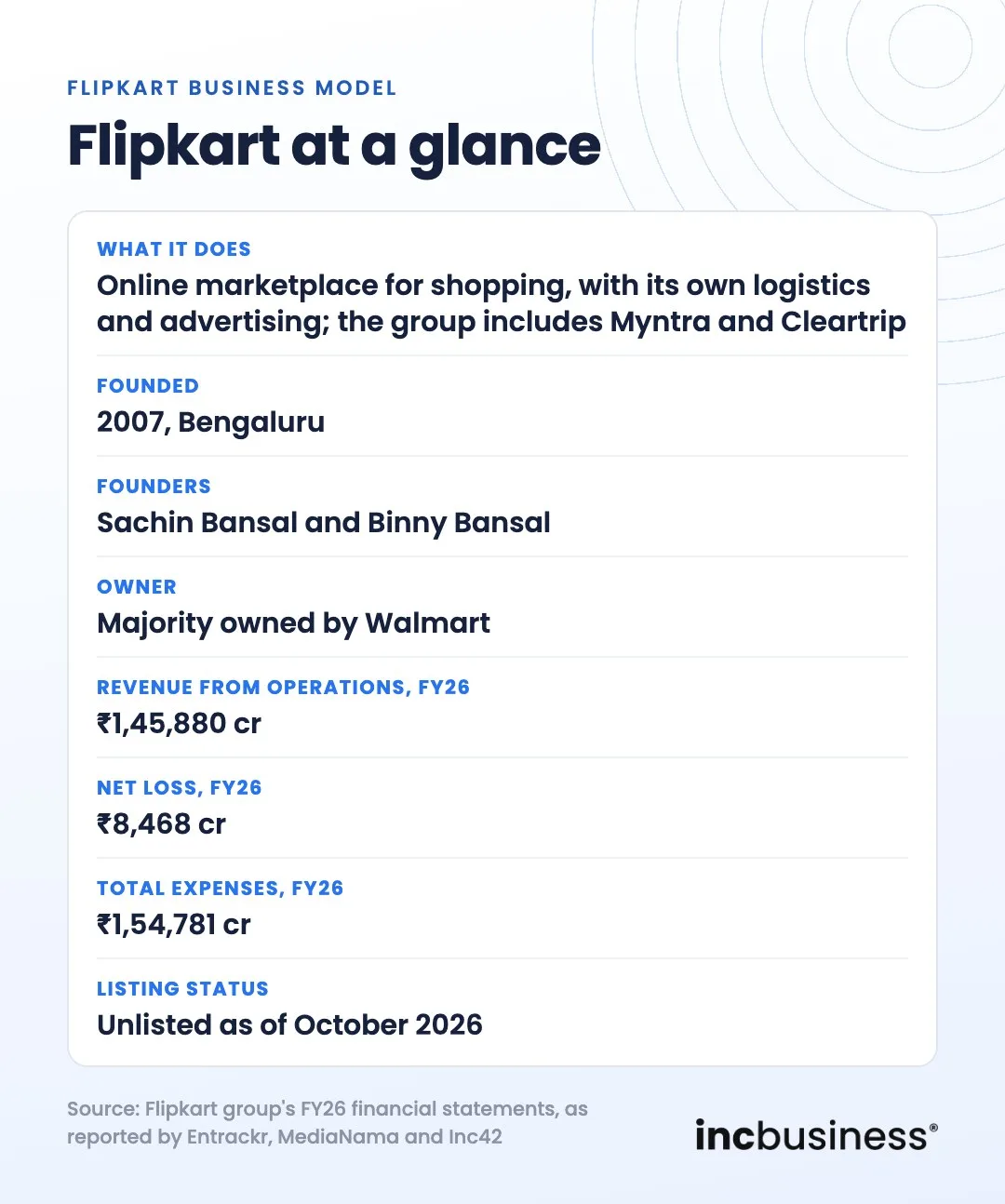
| Detail | Flipkart |
|---|---|
| What it does | Online marketplace for shopping, with its own logistics and advertising; the group includes Myntra and Cleartrip |
| Founded | 2007, Bengaluru |
| Founders | Sachin Bansal and Binny Bansal |
| Owner | Majority owned by Walmart |
| Revenue from operations (FY26) | Rs 1,45,880 crore |
| Net loss (FY26) | Rs 8,468 crore |
| Total expenses (FY26) | Rs 1,54,781 crore |
| Listing status | Unlisted as of October 2026 |
What Flipkart does
Flipkart runs an app and website where people in India buy products across many product categories. The Flipkart group includes Myntra, which started as a separate fashion retailer, Cleartrip for travel, and Ekart, its logistics arm. It also runs Flipkart Minutes, its quick commerce service.

The group's FY26 accounts are consolidated under Flipkart Internet. This follows Flipkart's move of its parent company from Singapore to India, completed in March 2026.
How Flipkart makes money from five revenue streams
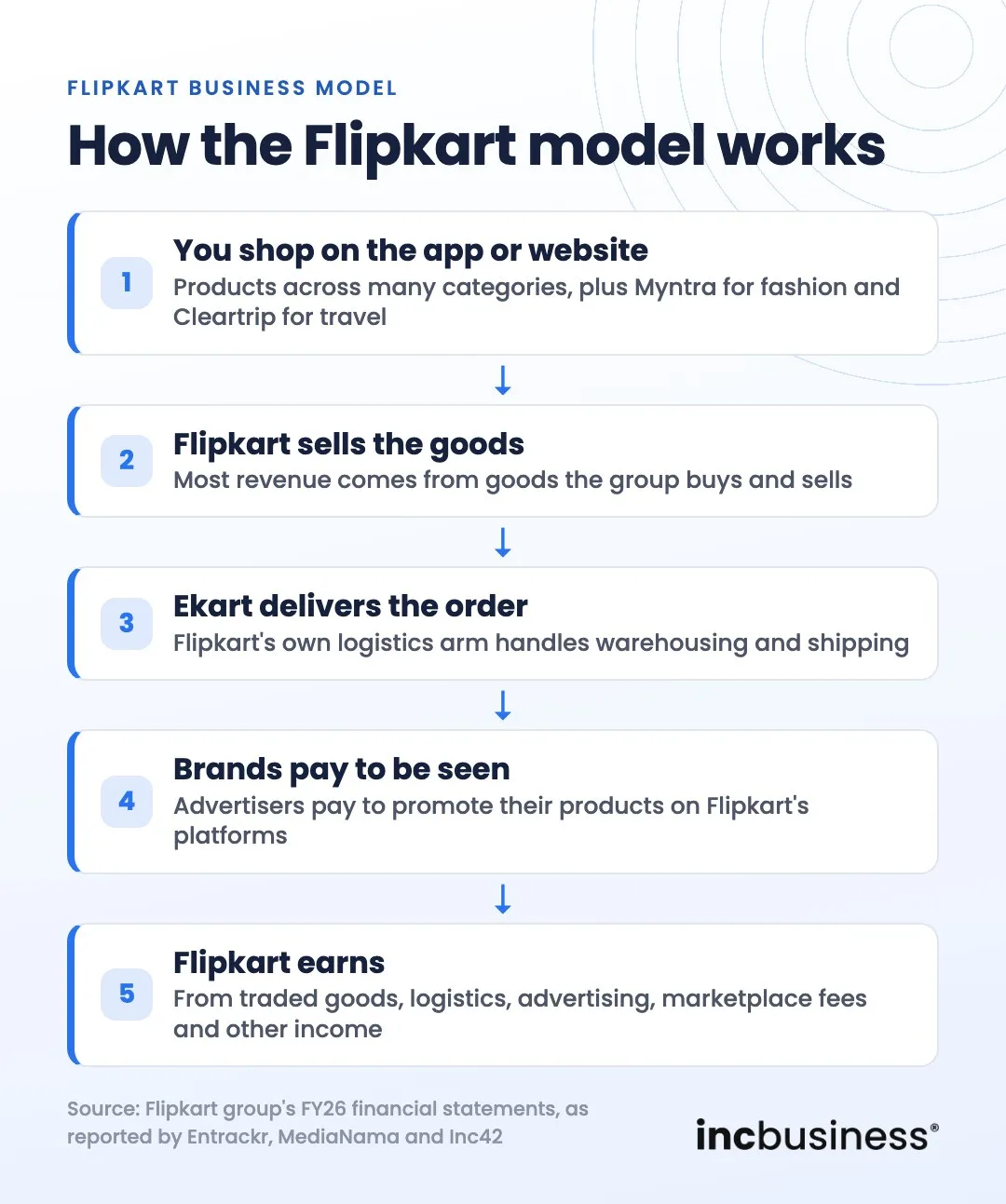
Flipkart's FY26 revenue from operations of Rs 1,45,880 crore came from five places. Most of it is the sale of traded goods, which are goods the group buys and sells. The rest comes from logistics, advertising, marketplace fees and other income.
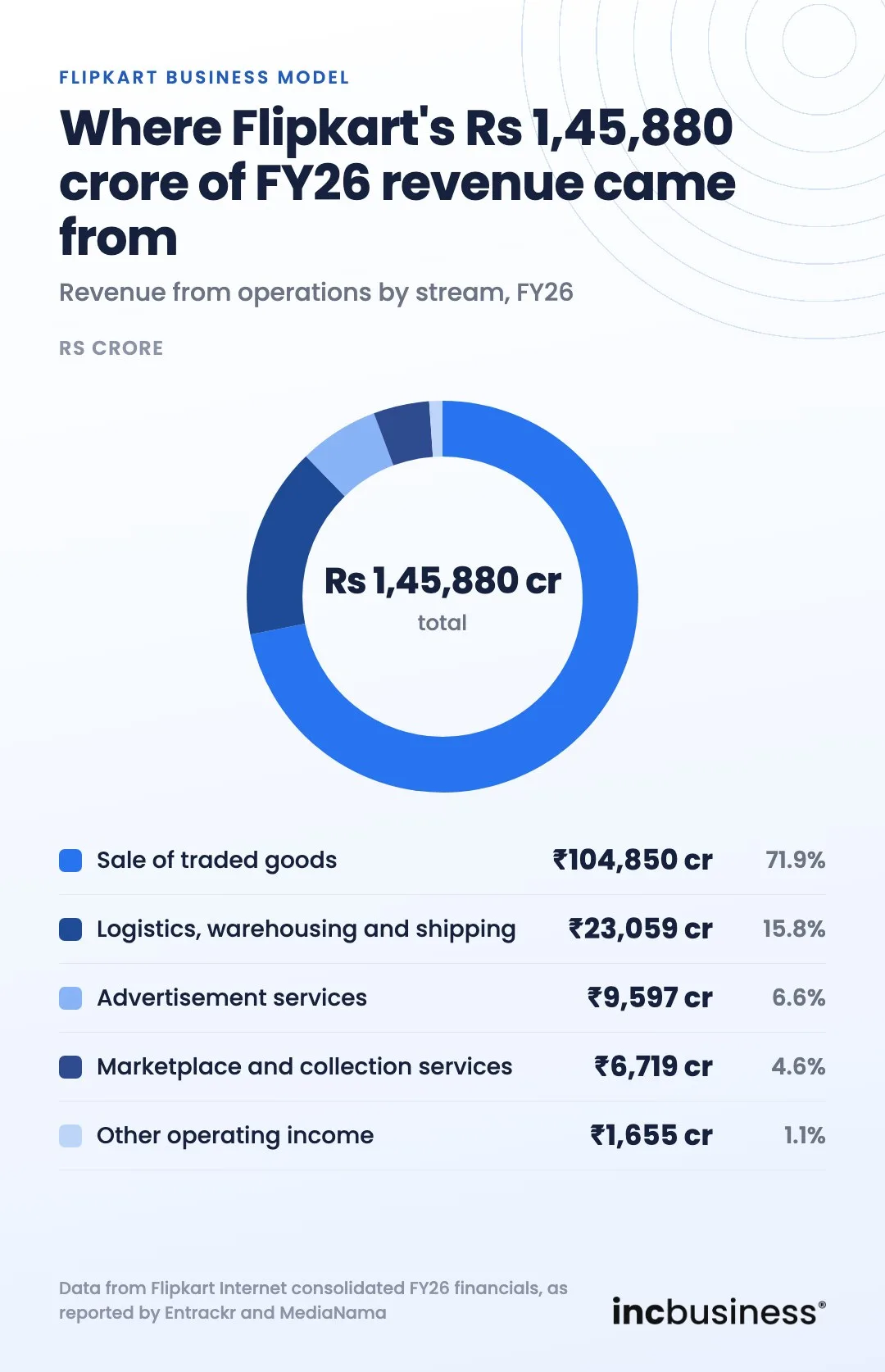
- Sale of traded goods (Rs 1,04,850 crore): about 71.9% of revenue, up 12.8% from Rs 92,957 crore in FY25.
- Logistics, warehousing and shipping services (Rs 23,059 crore): about 15.8% of revenue, the second-largest stream.
- Advertisement services (Rs 9,597 crore): about 6.6% of revenue. This is what advertisers pay to promote their products on Flipkart's platforms.
- Marketplace and collection services (Rs 6,719 crore): about 4.6% of revenue.
- Other operating income (Rs 1,655 crore): about 1.1% of revenue.
How the Flipkart revenue model changed in FY26
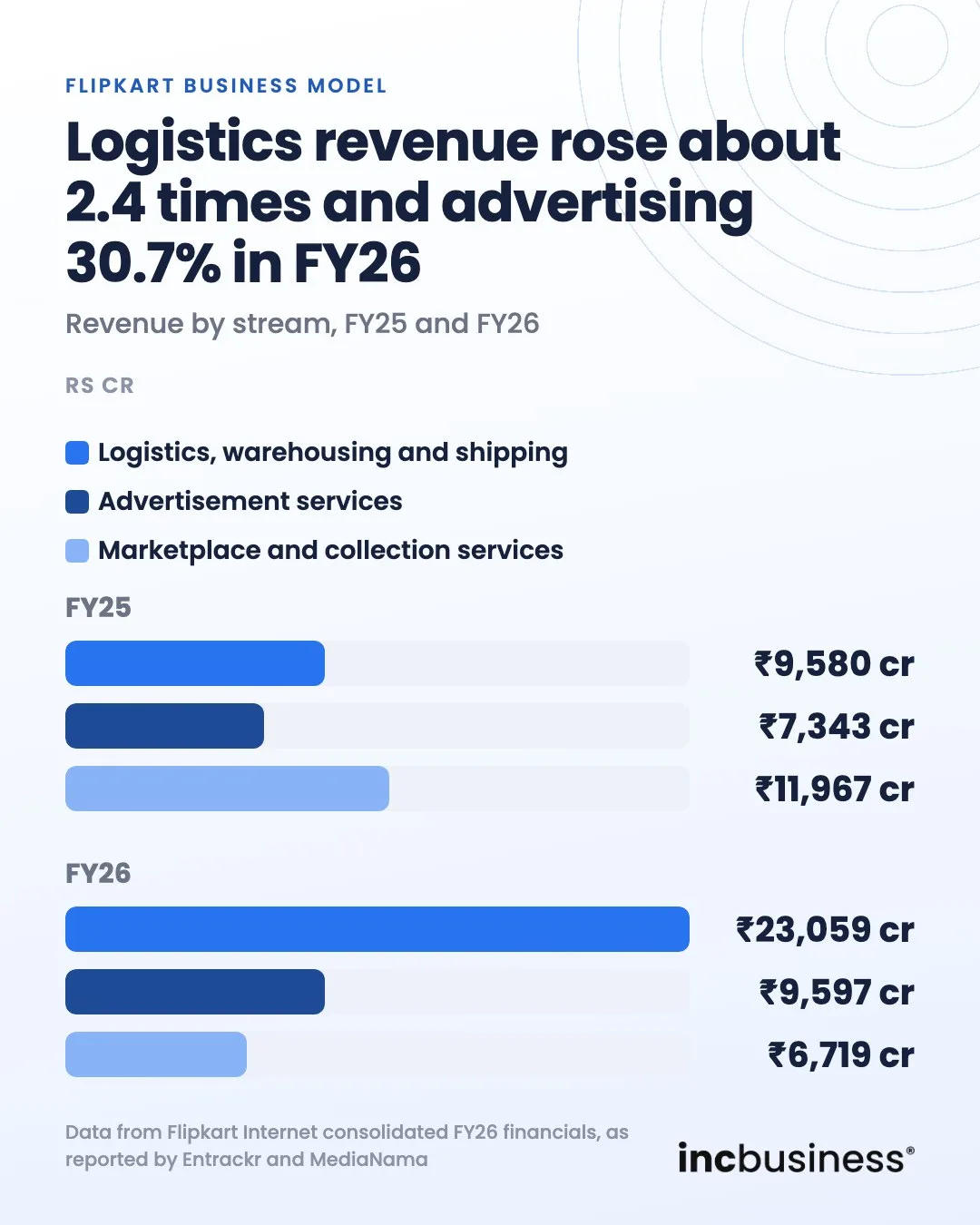
Logistics, warehousing and shipping revenue rose about 2.4 times, from Rs 9,580 crore in FY25 to Rs 23,059 crore in FY26. Advertisement revenue rose 30.7%, from Rs 7,343 crore to Rs 9,597 crore. Marketplace and collection services revenue fell 43.9%, from Rs 11,967 crore to Rs 6,719 crore.
Flipkart's Business Model Canvas
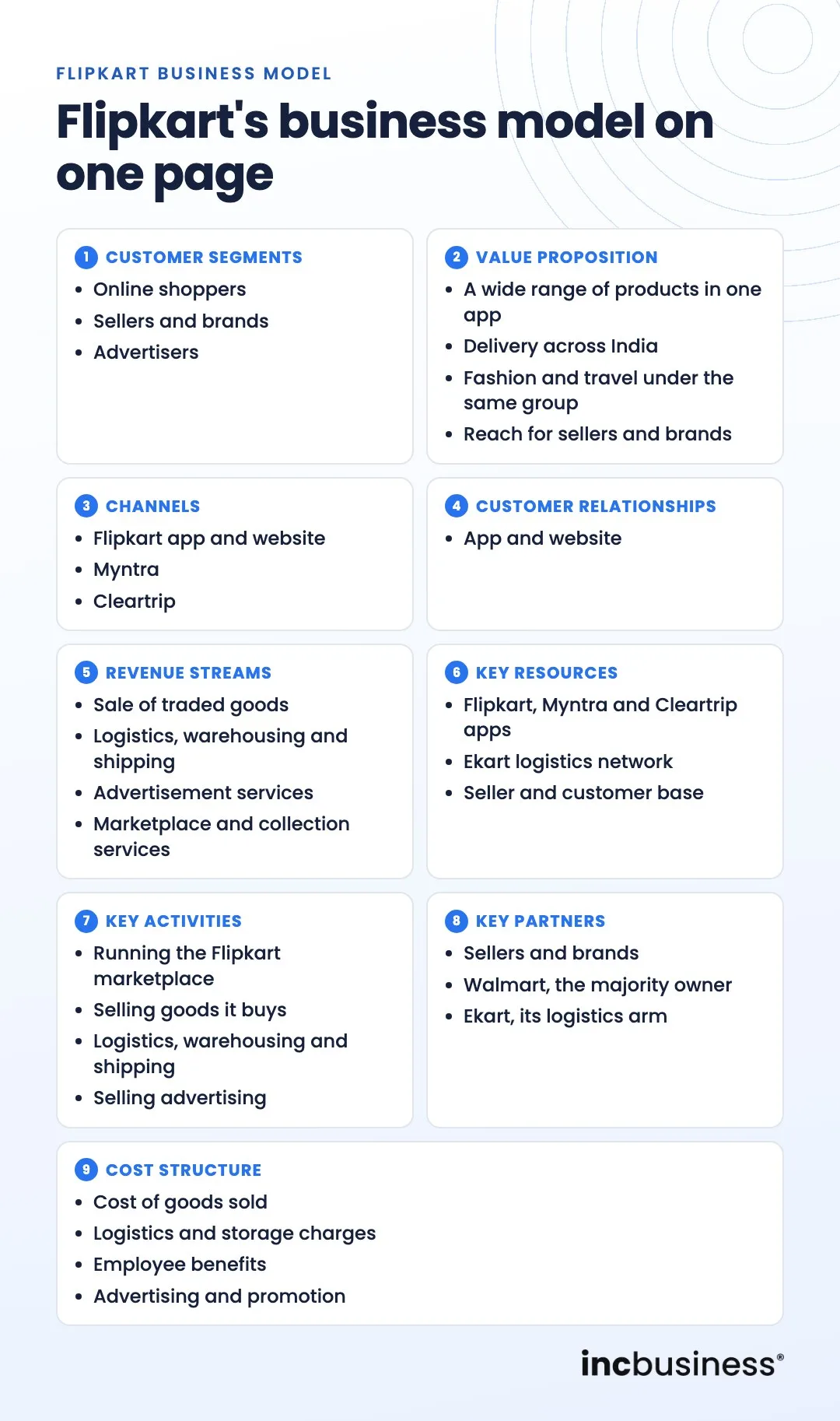
The Business Model Canvas puts the whole model on one page: who Flipkart serves, what it offers them, how it reaches them, what it needs to run, and how money comes in and goes out.
Where Flipkart's money goes
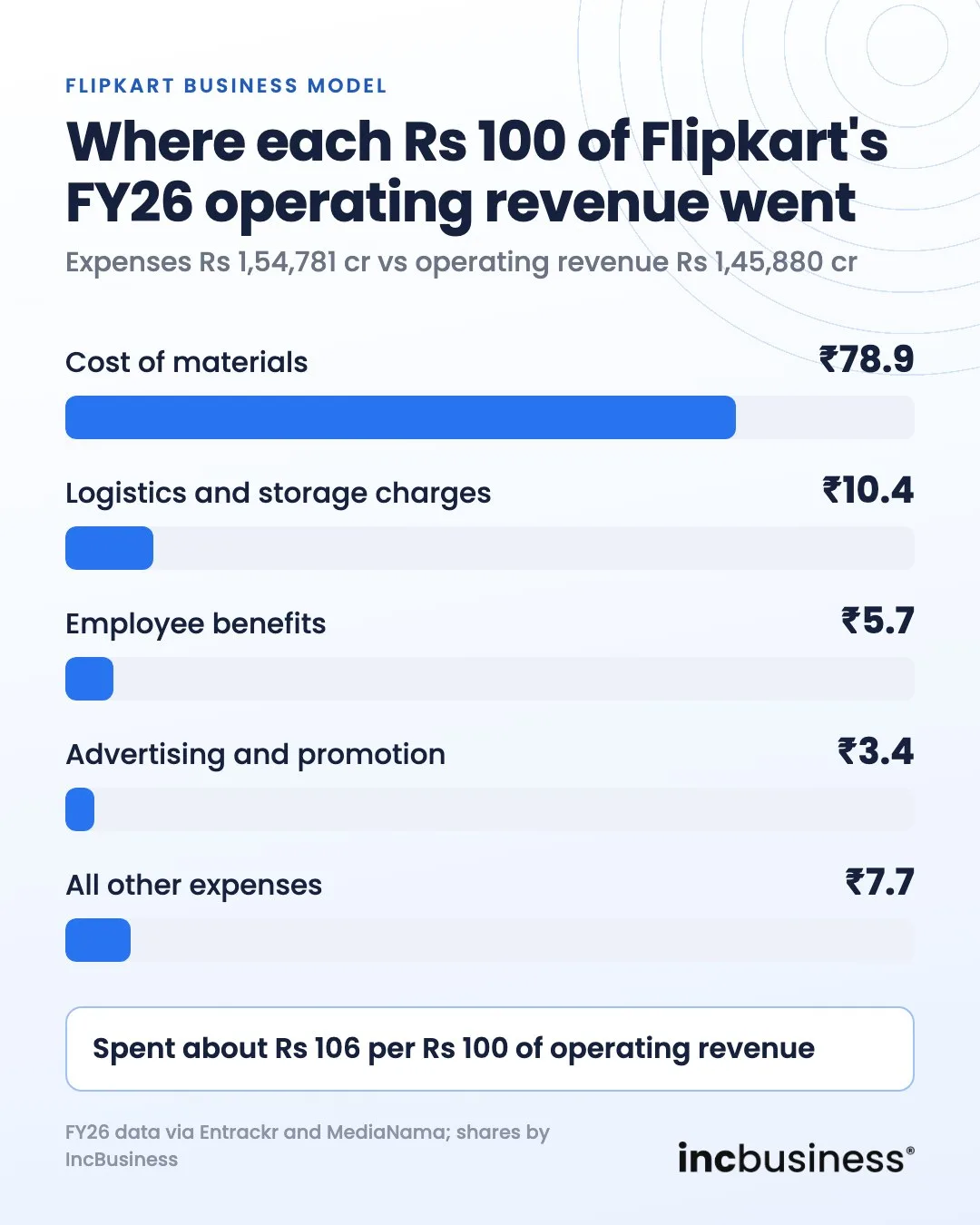
In FY26 Flipkart's total expenses were Rs 1,54,781 crore, up 16% from Rs 1,33,400 crore a year earlier, against Rs 1,45,880 crore of revenue from operations. Put simply, for every Rs 100 of operating revenue it spent about Rs 106.
| Cost (FY26) | Rs crore |
|---|---|
| Cost of materials | 1,15,118 |
| Logistics and storage service charges | 15,154 |
| Employee benefits (including Rs 2,922 crore of ESOP cost) | 8,376 |
| Advertisement and business promotion | 4,941 |
| Total expenses | 1,54,781 |
The biggest cost is the cost of materials, which rose 17% in FY26. Logistics and storage charges rose about 29%, advertising and promotion about 5%.
Is Flipkart profitable? Revenue rose 18% while the net loss narrowed 2%
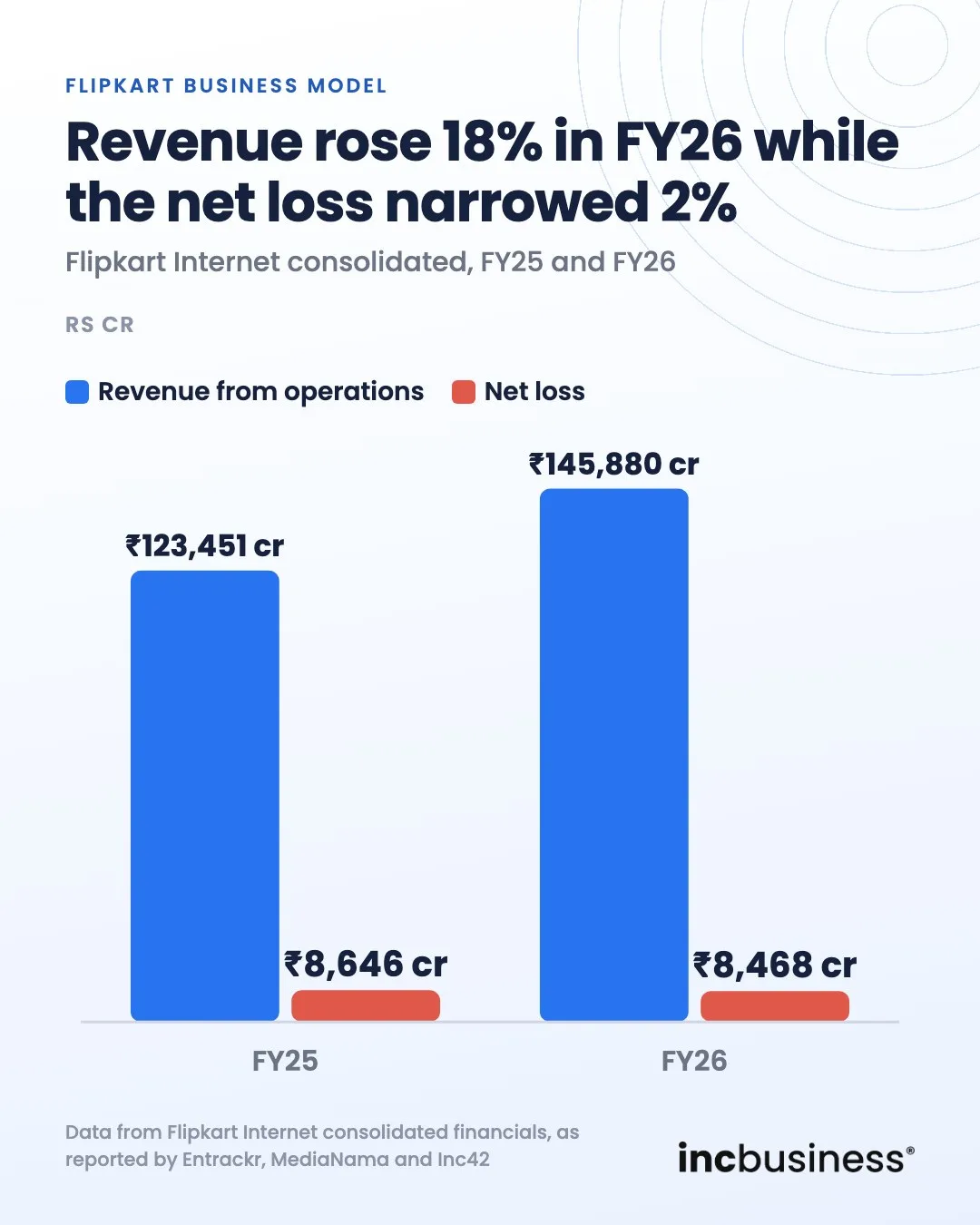
Flipkart's revenue from operations rose 18.2% to Rs 1,45,880 crore in FY26. The net loss narrowed 2.1% to Rs 8,468 crore from Rs 8,646 crore in FY25.
| Year | Revenue from operations (Rs crore) | Net loss (Rs crore) |
|---|---|---|
| FY25 | 1,23,451 | 8,646 |
| FY26 | 1,45,880 | 8,468 |
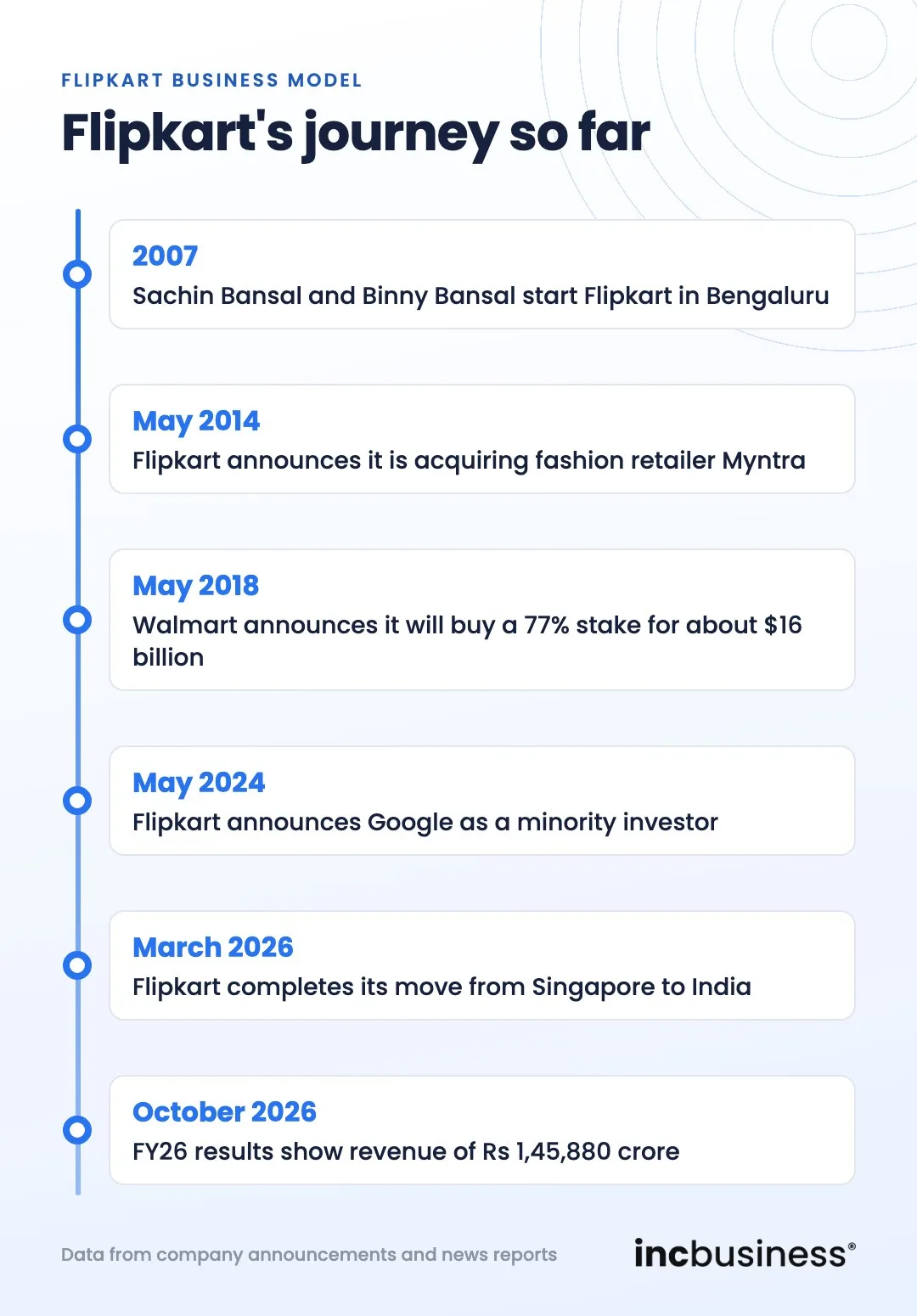
Flipkart's journey so far
| When | What happened |
|---|---|
| 2007 | Sachin Bansal and Binny Bansal start Flipkart in Bengaluru |
| May 2014 | Flipkart announces it is acquiring fashion retailer Myntra |
| May 2018 | Walmart announces it will buy a 77% stake for about $16 billion |
| May 2024 | Flipkart announces Google as a minority investor |
| March 2026 | Flipkart completes its move from Singapore to India |
| October 2026 | FY26 results show revenue from operations of Rs 1,45,880 crore |
Challenges Flipkart faces
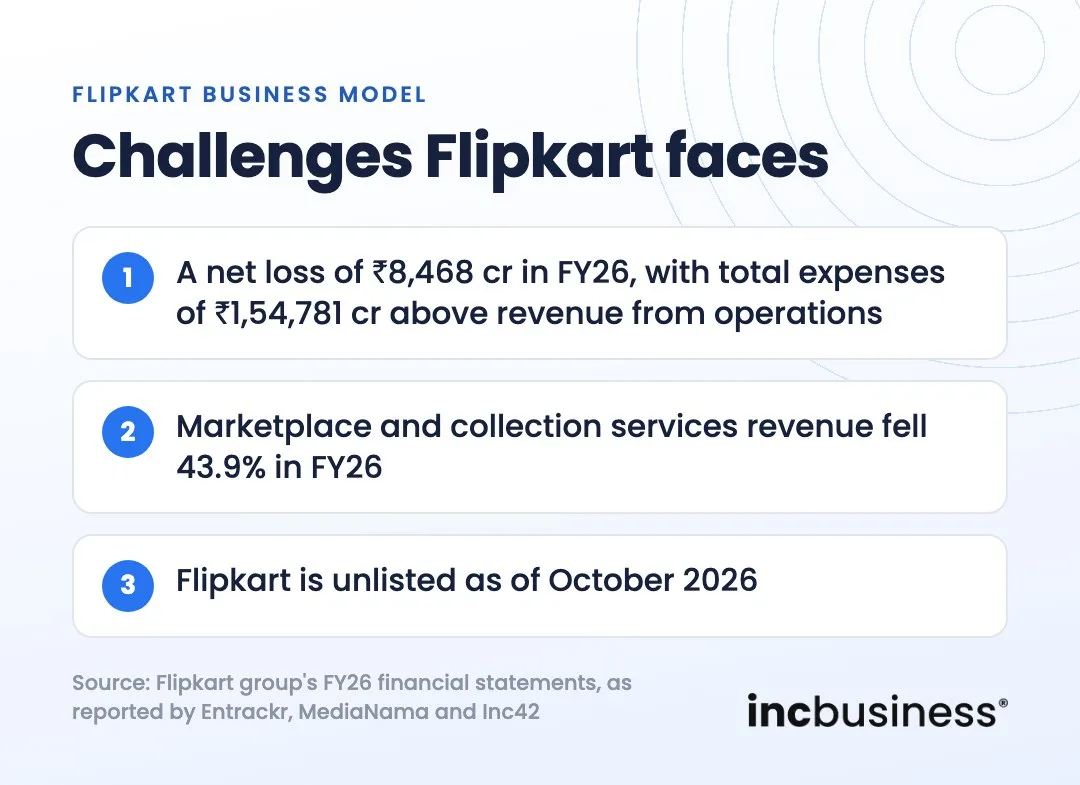
- Net loss: Flipkart reported a net loss of Rs 8,468 crore in FY26, and total expenses of Rs 1,54,781 crore were above its revenue from operations.
- Falling marketplace revenue: marketplace and collection services revenue fell 43.9% in FY26.
- Listing: Flipkart is unlisted as of October 2026.
Conclusion on the Flipkart business model
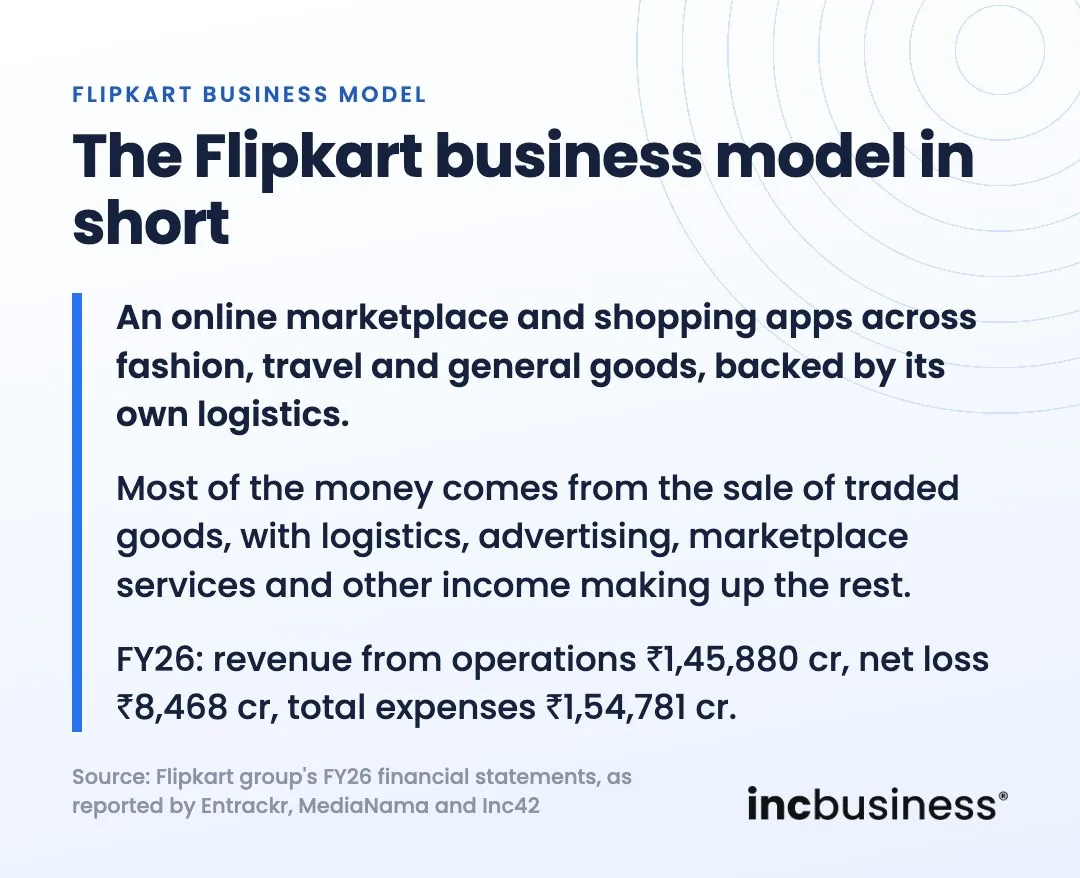
The Flipkart business model rests on an online marketplace and shopping apps across fashion, travel and general goods, backed by its own logistics. Most of its money comes from the sale of traded goods, with logistics, advertising, marketplace services and other income making up the rest.
In FY26 Flipkart reported revenue from operations of Rs 1,45,880 crore and a net loss of Rs 8,468 crore, with total expenses of Rs 1,54,781 crore. Its parent company moved from Singapore to India in March 2026, and Flipkart remains unlisted.


