“Downtime isn’t just an infra problem; it’s lost revenue and lost trust.” That sharp remark from a participant set the tone for a closed-door discussion that went far beyond cloud bills and licensing fees. In today’s digital economy, the true cost of data platforms often hides in plain sight, whether it’s systems that can’t scale to meet festive demand, or complex architectures that slow down decision-making.
These real-world challenges, and the strategies to overcome them, were at the heart of a roundtable on ‘Minimising TCO, Maximising Performance in a Cloud-Native, AI-Driven World’, hosted by Couchbase in collaboration with YourStory. Technology leaders across fintech, ecommerce, logistics, and SaaS came together to unpack what Total Cost of Ownership (TCO) really means in 2025, and why it increasingly looks more like “Total Cost of Opportunity”.
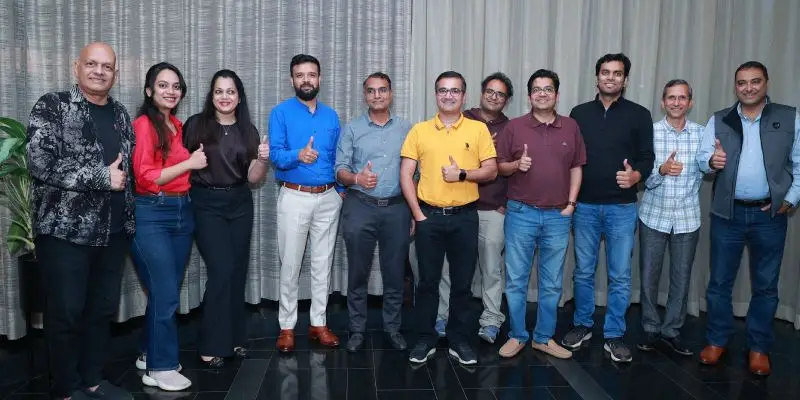
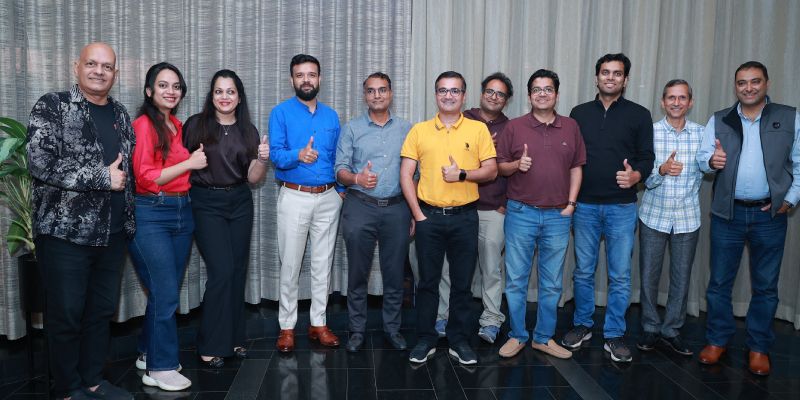
The panelists featured Krishna Thirtha, Regional Business Head, Couchbase; Ashish Dhagat, CTO, Hector Beverages; Vijaya Sagar Vinnakota, Senior Director of Engineering, Amagi; Prakhar Verma, Chief Technology Architect, Capillary Technologies; Gopal Krishna Kedia, Principal Architect/Director (Tech), Angel One; Ravi Kiran Perumalla, Principal Technology Architect, Infosys; Amit Kulkarni, Vice President of Engineering, WeRize; and Niraj Kumar, Director of Engineering, Shadowfax.
From ownership to opportunity
A recurring idea throughout the conversation was the shift from measuring TCO purely in rupees to recognising the hidden costs of missed opportunities. When systems fail to scale at peak demand or when architecture limits agility, the price isn’t just infra but also lost growth.
For instance, when festive ecommerce sales can generate over 30% of annual revenue in just a few weeks or when fintech platforms process billions of UPI transactions monthly, an hour of downtime isn’t just a technical glitch for enterprises but also lakhs of customers lost, cart abandonments spiking, and irreversible damage to brand trust.
To illustrate how severe the cost of downtime can be, a recent report, published by Splunk and Oxford Economics, found that the Global 2000 are collectively losing $400 billion annually due to unexpected failure of their digital environments, equivalent to 9% of profits.
For startups, where every rupee counts, the discussion underscored the importance of being decisive and sharp in cost-related choices: choosing between open source and licensed tools at the right stage of growth; avoiding architectural complexity that could slow down time-to-market; and building only what is critical, and buying or integrating the rest for speed.
As one participant framed it, “Profit & Loss discipline is the core survival factor. We can’t afford to sit in-between; our choices must be crisp and future-focused.”
Cloud, data sprawl, and standardization
Many enterprises shared their struggles with cloud-native adoption and the sprawl of multiple data technologies:
- Banks and financial institutions find themselves locked into partial cloud adoptions, juggling native and non-native tech stacks.
- Developer liberty, while fostering innovation, often creates fragmented ecosystems with multiple databases, duplicative infrastructure, and higher maintenance overheads.
The growing consensus is that standardization at the right stage is critical to long-term cost efficiency and data consistency.
Across ecommerce and logistics, managing seasonal spikes in demand emerged as a central challenge. Participants spoke about overprovisioning infrastructure to manage peak months, leaving it underutilised during lean seasons. They also discussed exploring elastic or hybrid models where infra can expand and contract dynamically as well as introducing cost cadences – regular architecture reviews that align infra consumption with business cycles.
Several participants also highlighted non-traditional cost drivers that often go unnoticed:
- Decision latency: when engineers or analysts must navigate complex access workflows to get the data they need.
- Onboarding costs: the time and effort required for new developers to get productive in fragmented environments.
- Talent equity: over-templated, SaaS-heavy environments risk de-skilling engineers, making it harder to retain and motivate technical talent – an issue in India’s hyper-competitive market where attrition among tech talent hovers at 15–20% in large IT firms.
The role of intelligence in cost management
The group agreed that cost optimization is no longer just about negotiation or infra resizing. It requires intelligence involving observability, forecasting, and proactive architecture decisions: weekly cost cadences to monitor patterns and prevent spirals, architectures that reduce redundancy across clusters and data centres, and evaluating vector databases, AI-driven workloads, and embeddings with a hybrid mindset, thereby balancing accuracy with scalability.
This becomes even more urgent in India’s AI economy, which NASSCOM projects to add $300-$500 billion to GDP by 2025. Enterprises cannot afford architectures that eat into agility or delay decision-making, because the opportunity cost is simply too high.
One of the key takeaways from the roundtable is that TCO is evolving from a static financial measure to a dynamic, strategic capability. Enterprises that view cost through the lens of opportunity, agility, and business outcomes are better positioned to compete in today’s digital economy.
Couchbase, with its flexible data platform, continues to support enterprises in striking this balance, ensuring that performance at scale does not come at the expense of spiralling costs.
Original Article
(Disclaimer – This post is auto-fetched from publicly available RSS feeds. Original source: Yourstory. All rights belong to the respective publisher.)