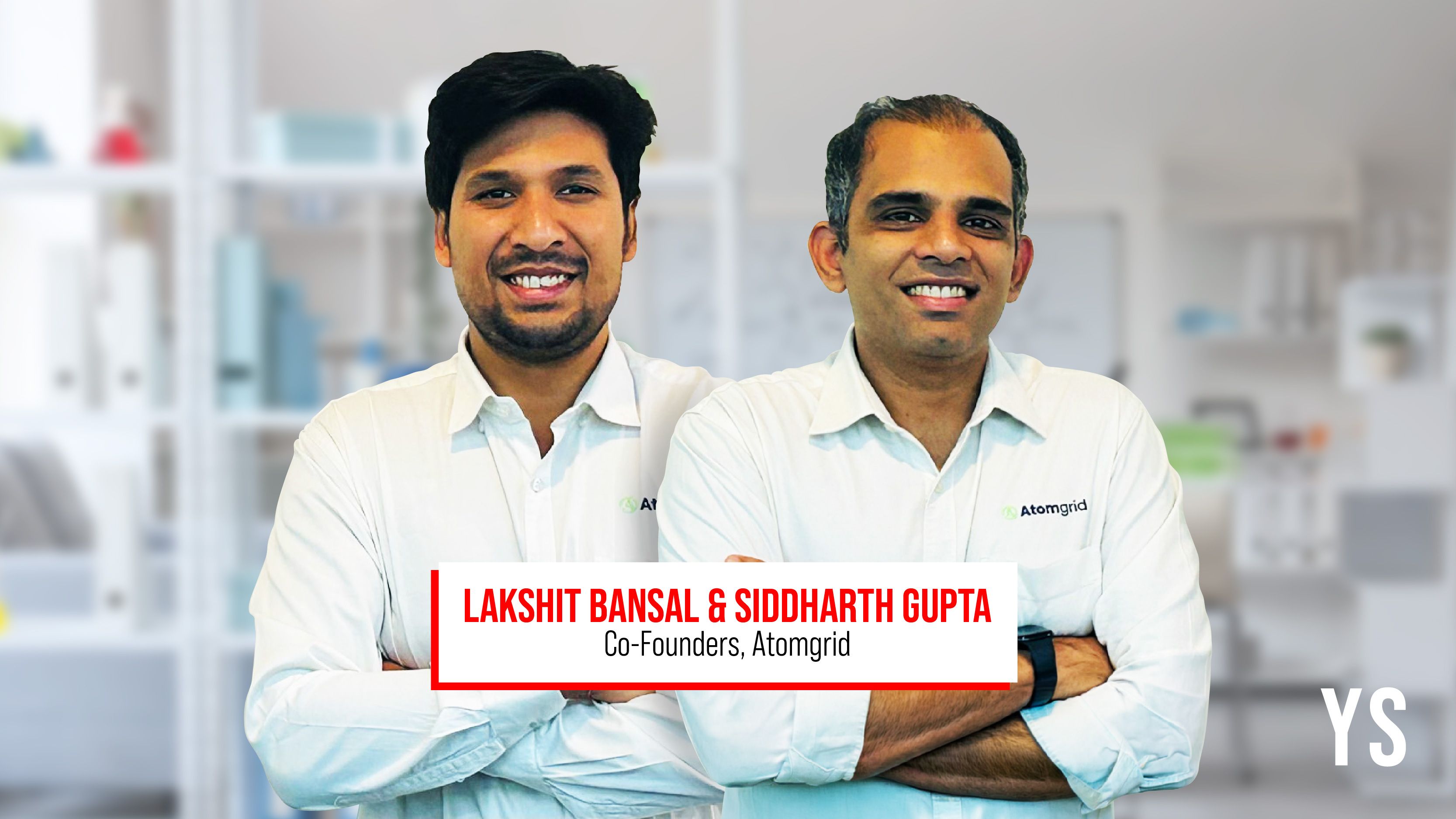
In 2020, Siddharth Gupta and Lakshit Bansal were working in banking and closely tracking public markets. The COVID-19 period exposed them to attractive valuations in listed speciality chemical companies, but what really caught their attention was the structural China+1 tailwind—companies with manufacturing bases in China alongside their home country.
“In agrochemicals alone, more than 20 Indian companies had crossed Rs 1,000 crore in turnover. That told us the market was fundamentally strong and scalable,” Gupta recalls.
Rather than rushing in, the duo spent over a year meeting manufacturers and customers across India before launching AtomgridAtomgrid in 2023. The Bengaluru-based company is an R&D-focused chemical manufacturing platform dedicated to speciality chemicals.
“We met hundreds of stakeholders, and two things were immediately obvious. The global speciality chemicals market was around a trillion dollars in scale. And there was clear potential for profits in export markets if you could consistently deliver,” he says.
The business of speciality chemicals
Speciality chemicals are built for specific applications. An agrochemical, for instance, is designed to tackle a particular pest on a particular crop. Unlike commodity chemicals, they are tightly tied to end use.
For example, consider the speciality agrochemical glufosinate-ammonium, commonly referred to as only glufosinate. It is used as a broad-spectrum herbicide used to kill a wide range of weeds and grasses.
Let’s say a farmer wants to grow mustard but his field is infested with weeds. So, the farmer decides to genetically tweak the mustard to survive glufosinate and seeds it in his field. Once it starts growing, he sprays glufosinate all over the field. All weeds die but the mustard, since it was genetically engineered earlier, remains unscathed.
“We’re building Atomgrid as a global speciality chemicals platform, with a clear focus on agrochemicals right now. India is our home market, but we already sell into Southeast Asia, Africa, and Latin America,” Gupta says. “Over the next couple of years, we want to go deeper in these regions and then move into developed markets like Australia and Europe.”
The company runs a 10,000-sq-ft R&D centre in Bengaluru where 20 scientists work on active ingredients and formulations. On the manufacturing side, Atomgrid partners with about 30 chosen manufacturers and is setting up a team in China to strengthen supply chains and ensure steady inputs.
“Today, we operate mainly in the B2B space, manufacturing and selling raw materials or finished products in bulk. Over time, the idea is to use this base to launch our own branded products directly to customers,” Gupta says.
Also Read Impacts of agrochemicals on the environment
Market, growth, and expansion
Exports already account for a large share of revenue. “So far, international relations haven’t been a big barrier because most of the countries we work with have good bilateral ties with India. The real shocks usually come from larger geopolitical events, like the Strait of Hormuz crisis, which hit raw material prices and the overall market,” the founder says.
Gupta believes the agrochemicals market has significant room to grow. In India, most companies have traditionally focused on building brands and selling finished products locally, while also acting as contract manufacturers for global multinationals.
“I feel there’s still a big gap when it comes to Indian companies building their own global brands and going all the way to the end customer in export markets. That’s the gap we want to fill,” he says.
Atomgrid has already worked with “more than 150 clients, and now we’re investing heavily in building our global presence”.
The startup’s first operating year was FY25. From FY25 to FY26, revenue grew 3X, and FY27 is on track for similar compound growth.
“To sustain this pace, we’re doubling down on distribution and presence in key regions. We’re hiring international marketing teams, setting up subsidiaries, and opening offices in multiple countries,” Gupta says.
Also Read Speciality chemicals startup Distil bags $7.7M in Series A funding
Plans for the future
Atomgrid competes with startups like Scimplify and Elchemy, but Gupta believes its edge lies in building the full value chain in one category.
“Instead of spreading ourselves thin, we’ve gone deep into agrochemicals, building across R&D, manufacturing, and global distribution. We’re working towards launching our own agrochemical brands globally,” he explains.
Looking ahead, the vision is to first unlock agrochemicals fully, then move into adjacent categories, and eventually into areas like pharma.
“Our idea is to build three core strengths in the company. We want to stay asset-light on manufacturing, have strong in-house R&D, and build the capability to sell to customers across the world,” Gupta says.
Edited by Affirunisa Kankudti
Original Article
(Disclaimer – This post is auto-fetched from publicly available RSS feeds. Original source: Yourstory. All rights belong to the respective publisher.)