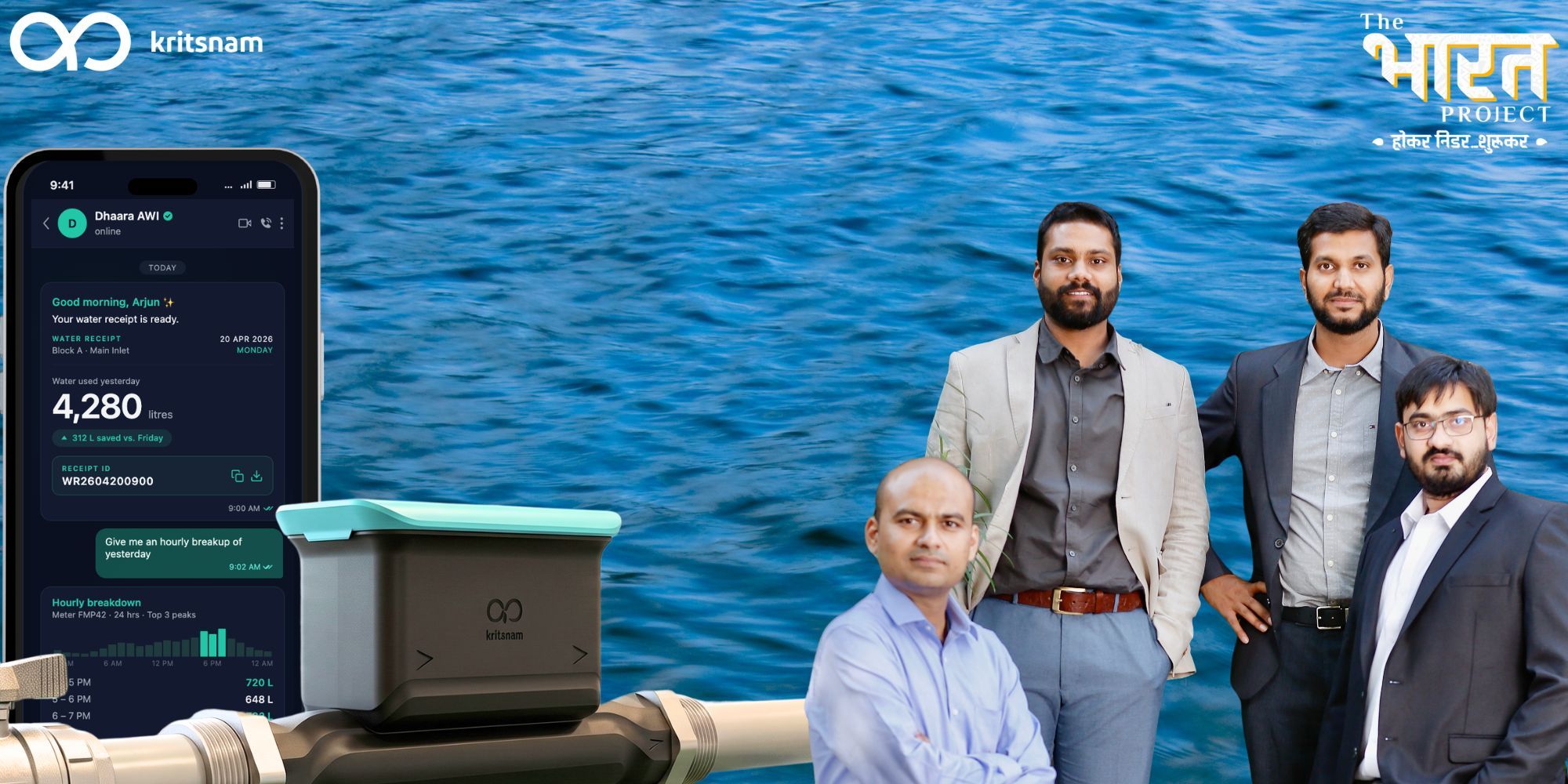
In India, water flows through industries, cities, and farms every day, yet much of it is still not properly measured. It is often estimated, approximated, and sometimes misreported. In 2019, K Sri Harsha, founder of Kritsnam Technologies, stepped away from day-to-day work to understand this problem more deeply and walked 930 kilometres along the river Ganga.
Over three months, he spoke to farmers, officials, and communities who depend on river water every day. What he realised was simple but powerful: technology alone cannot solve India’s water crisis. Without first establishing accountability, even the best solutions will remain underused.
That insight reshaped Kritsnam into a company attempting something far more fundamental: building the trusted accounting system for water.
From measuring water to making it trustworthy
Founded in 2015 by three IIT Kanpur alumni, Kritsnam began by addressing a gap that very few others were focused on. Water measurement in India remains highly inconsistent, and even today, most small and large enterprises still rely on rough estimates to track and report usage.
At the same time, regulatory frameworks such as BRSR increasingly require companies to disclose water consumption with board-level accountability. This creates a serious mismatch between what is reported and what is actually measured and defensible.
Kritsnam’s answer is the Defensible Water Accounting System, or DWAS. Simply put, DWAS treats water more like financial data than a utility estimate. Every water transaction event between entities is measured, recorded, verified, and made traceable, much like money entries in a ledger. Each measured event is converted into a structured digital water record, much like a receipt, creating the building blocks of a traceable water ledger.
How the system works
Kritsnam has built its solution across four connected layers, ensuring that water data can be trusted end to end.
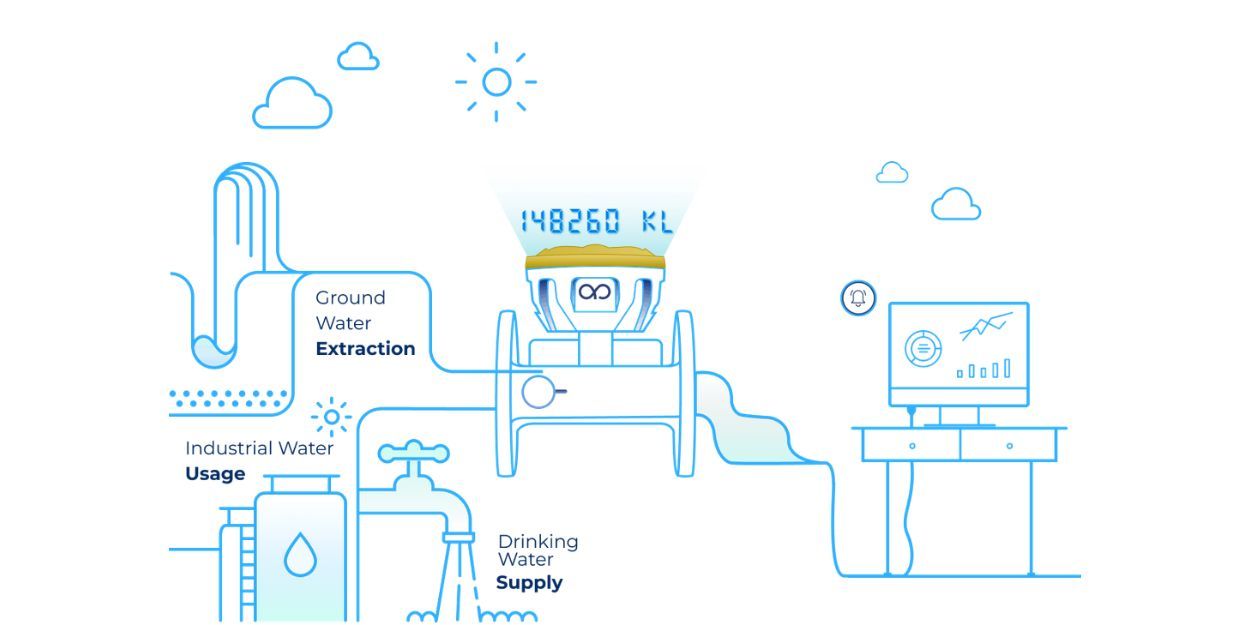
- Smart meters measure water flow with high accuracy using advanced ultrasonic sensing
- A cloud layer collects, timestamps, and validates the data in near real time
- A digital accounting layer converts measurements into structured, traceable records
- Compliance workflows prepare audit-ready outputs aligned with regulations and other reporting requirements
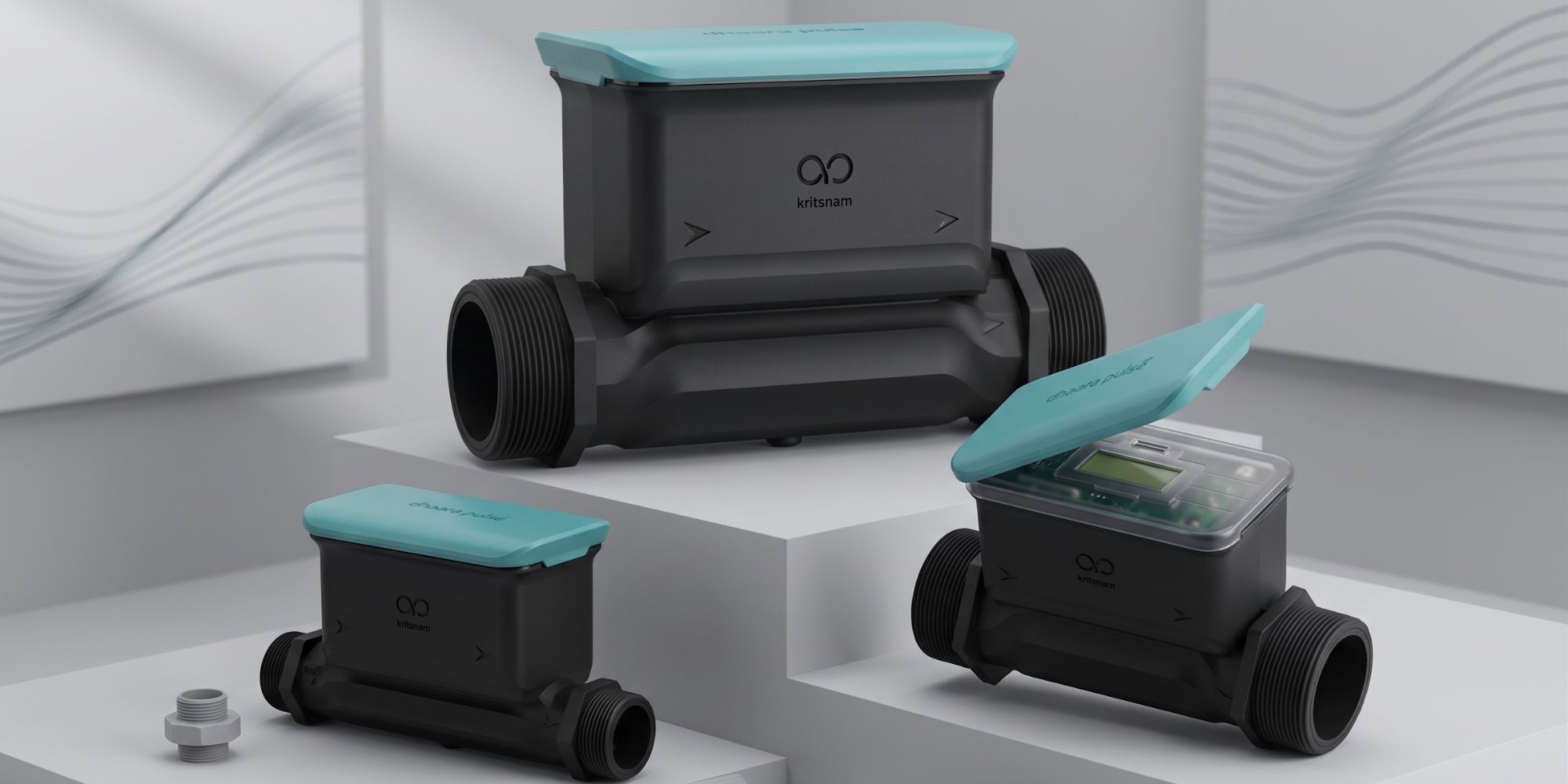
This approach ensures that water usage is not just measured, but also made more defensible. In practical terms, it creates records that are better structured for audits, reporting, and regulatory review, with far less dependence on manual reconciliation. The goal is not just visibility, but measurement integrity, traceability, and records that are better suited for compliance and assurance workflows.
Why does water need an accounting system?
Water remains one of the few critical resources without a formal accounting structure. There are no standard receipts, no ledgers, and no audit trails. As a result, actual consumption can be significantly higher (4 to 5 times) than what is internally estimated or reported.
This is increasingly becoming a regulatory and governance issue. Organisations like the Central Ground Water Authority are tightening rules around groundwater usage, monitoring and reporting, while global ESG frameworks are pushing companies toward more accurate environmental disclosures.
Without a reliable system of record, compliance becomes difficult, inconsistent, and hard to defend. Kritsnam’s thesis is clear: what cannot be measured cannot be managed and what cannot be verified cannot be trusted.
Building in a market that moves slowly
For several years, Kritsnam faced a challenge that many deep-tech startups encounter. The problem was real, but the market was still early. Despite recognition from global institutions such as NASA and the World Bank, commercial adoption remained gradual in the early years.
The turning point came in 2020, when groundwater regulations and reporting requirements in India created a clearer need for measurement and traceability. What had once been seen as optional technology became essential infrastructure. Today, Kritsnam has deployed over 15,000 smart water meters and tracks more than 2 billion litres of water every day across India.
A business model shaped by demand
Kritsnam now operates on a subscription-based model, where enterprises pay annually for continuous water accounting services. This includes calibration, data tracking, and reporting support. Typical enterprise contracts range between Rs 12–15 lakh per site per year.
The model is designed for long-term use. Once a company begins maintaining structured water records, switching systems becomes difficult without disrupting historical continuity and reporting consistency. This creates strong retention and predictable revenue.
The advantage of full-stack control
Most players in the water space focus on a single layer. Some build hardware, others offer software dashboards or compliance tools. Kritsnam’s approach is different. It has built tech-stacks across the full chain, from the smart meter that tracks water to the platform that structures and reports the data.
This integrated model is supported by multiple patents, in-house calibration capabilities, and a measurement-first approach to traceability. In a domain where trust depends on how data is generated and maintained, tighter control over the full system becomes a meaningful advantage.
What lies ahead
In the next 18 months, Kritsnam plans to expand its subscription base by converting existing compliance customers into long-term users of DWAS. It is also introducing lower-cost solutions to serve smaller industrial users.
Over the long term, the ambition is larger. Kritsnam aims to become the default standard for water accounting in India. The opportunity extends beyond the country. Many emerging economies face similar water stress, weak measurement systems, and rising regulatory pressures, making this model globally relevant.
Why trustworthy water accounting may matter more than ever
Kritsnam’s work goes beyond technology. It is about transforming how water transactions are measured, recorded, and trusted.
Financial accounting made businesses transparent and accountable. Water accounting could do the same for sustainability.
As enterprises across the globe face increasing pressure to use water responsibly, the question will no longer be how much water is used, but whether that data can be trusted. Kritsnam is building that foundation.
Original Article
(Disclaimer – This post is auto-fetched from publicly available RSS feeds. Original source: Yourstory. All rights belong to the respective publisher.)