Building wealth is not about timing the market; it’s about time in the market. For most investors, especially beginners, mutual fund investments through a Systematic Investment Plan (SIP) have emerged as one of the most reliable ways to create long-term financial stability. However, planning your investments without proper estimation can lead to unrealistic expectations. This is where a SIP calculator becomes a game-changing tool.
In this guide, we’ll explore how SIP works, why mutual funds are ideal for long-term investing, and how a SIP calculator can help you achieve your financial goals with clarity and confidence.
What is a mutual fund?
A mutual fund is an investment vehicle that is managed by professionals and collects funds of various investors and invests them in a diversified portfolio of stocks, bonds, or any other security.
You do not have to choose your own stocks but rather trust fund managers who make your investments. Mutual funds would be a perfect choice for:
- Beginners with little share market knowledge
- Diversification to attract investors
- People interested in long-term wealth generation
What is a Systematic Investment Plan?
A SIP is a technique of investing in a mutual fund; one invests a set amount on a regular basis- usually monthly.
For example: Rs 5,000 invested every month, over a period of 10–20 years.
It is a disciplined strategy that will enable you to become wealthy over time as you minimize the effects of market fluctuations.
How SIP helps in long-term wealth creation
1. Power of compounding
The greatest benefit of SIP is compounding, earning returns on your returns. This eventually gives rise to exponential returns on your investments.
2. Rupee cost averaging
SIP enables you to purchase a high number of units at low prices and a low number of units at high prices averaging the cost.
3. Financial discipline
Unless the investments are made on a regular basis, it creates a culture of saving and investing.
What is a SIP calculator?
A SIP calculator is a web-based tool that helps you determine the future value of your investments. It offers a clear understanding of how much wealth you can gather in the course of time.
You simply input:
- Monthly investment amount
- Expected rate of return
- Investment duration
Depending on these inputs, the calculator provides:
- Total investment
- Estimated returns
- Final maturity value
Why you should use a SIP calculator
Numerous traders begin SIPs without any goal or projection. But a SIP calculator takes guesswork out of the equation.
1. Goal-based planning
You can plan accurately. Whether you are saving towards retirement, a house or education of your child, a SIP calculator helps you.
2. Realistic expectations
It sets expectations and ensures that you do not overvalue profits.
3. Improved decision making in investments
You are free to tailor your monthly investments or term to your financial objective.
Example of SIP planning
Suppose that you put Rs 5,000 in a mutual fund each month, over 20 years, more than likely to pay 12%.
Total investment: Rs 12,00,000
Estimated value: Rs 49,95,000 (approximately)
It is hard to imagine this growth without a SIP calculator. The calculator helps one to realize how small investments can be greatly increased with time.
Key factors that impact the returns of SIP
1. Investment duration
The more time you invest, the higher is the payoff of compounding.
2. Rate of return
Increased returns may greatly add to your ultimate corpus, but they must always be calculated on realistic lines.
3. Consistency
Not using SIPs may lower your total wealth building.
Types of mutual funds for SIP investment
Effective SIP planning depends on the correct selection of mutual fund.
1. Equity mutual funds
High returns; higher risk
Suitable for long-term goals
2. Debt mutual funds
Lower risk; Stable returns
Appropriate for short term objectives
3. Hybrid funds
Balanced approach
Mix of equity and debt
SIP planning tips
1. Start early
The sooner you start the more money you will have to grow.
2. Gradually increase the SIP amount.
The higher your income, the more you have to contribute to SIP.
3. Remain committed
Market volatility is normal. Remaining invested is a guarantee of long-term development.
4. Calculate SIP on a regular basis
It is important to periodically redo a calculation of your investments using a SIP calculator to keep in line with your objectives.
Common mistakes to avoid
1. Not realistic expectations of returns.
Having a very high expectation of returns may result in poor planning.
2. Cessation of SIPs when markets are down
It is at this point that you really save due to reduced prices.
3. Not reviewing portfolio
Periodic check-up of investments would ensure that you are on track.
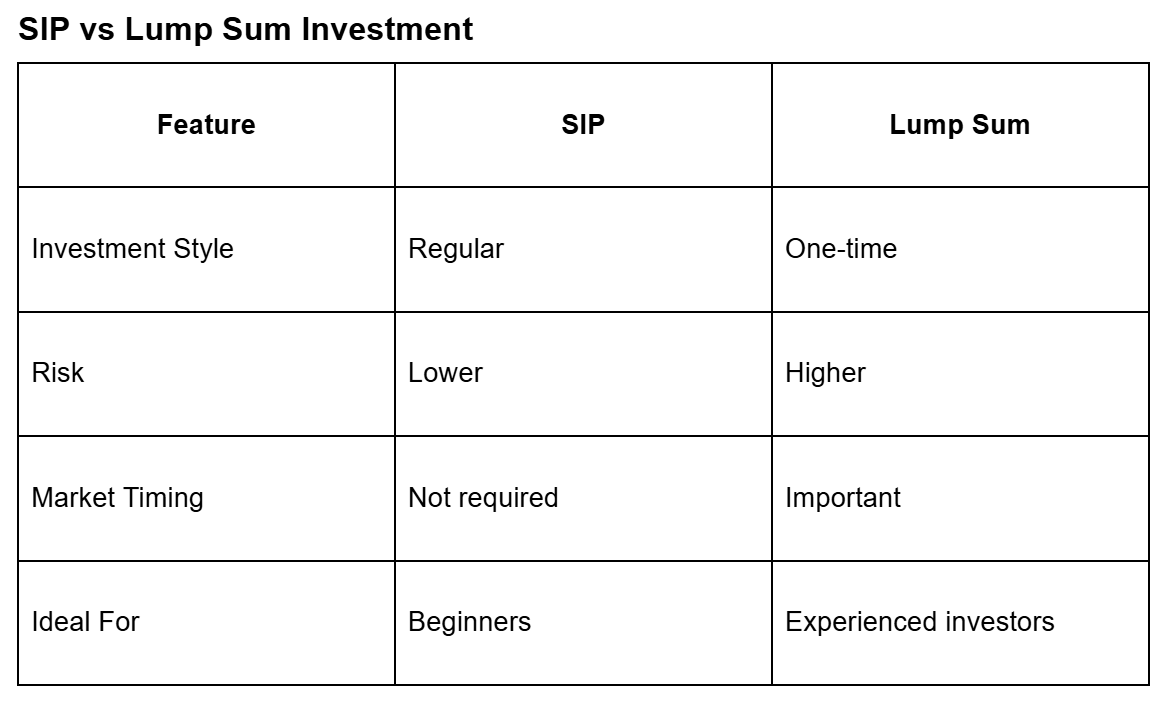
How to start a SIP in MF?
- Select a reputable investing site.
- Choose an appropriate mutual fund.
- Decide your SIP amount.
- Set investment duration.
- Estimate returns using a SIP calculator.
- Start investing.
To fully take advantage of SIP investments:
- Invest for at least 10–15 years.
- Spread out in various funds.
- Reinvest returns.
- Stay disciplined.
A properly planned SIP plan will enable you to be financially independent in the long term.
Conclusion
In today’s fast-paced world, building wealth requires smart planning and consistent effort. Investing in a mutual fund through SIP is one of the most effective ways to achieve long-term financial goals.
However, success doesn’t come from investing blindly. Using a SIP calculator allows you to plan your investments strategically, set realistic expectations, and stay committed to your goals.
Remember, wealth creation is a marathon, not a sprint. With disciplined SIP investing and the right tools, you can turn small monthly contributions into a substantial financial corpus over time.
Start early, stay consistent, and let the power of compounding work in your favor.
(Disclaimer: The views and opinions expressed in this article are those of the author and do not necessarily reflect the views of YourStory.)
Original Article
(Disclaimer – This post is auto-fetched from publicly available RSS feeds. Original source: Yourstory. All rights belong to the respective publisher.)