In Uttar Pradesh’s Bahraich district, wheat processing forms a critical part of the local food economy, where grain sourced from nearby mandis is transformed into everyday essentials such as atta, maida, suji, and bran. Unlike seasonal or occasion-based products, these staples are driven by continuous, consumption-led demand across households, bakeries, and food enterprises.
Within this segment, market preference is shaped less by branding and more by reliability — consistent quality, steady supply, and proximity to raw material sources remain the defining factors. Bahraich’s long-standing role as an active grain trading hub enables this ecosystem, where wheat from surrounding agricultural belts flows into mandis and seamlessly into processing units.
This integrated value chain — connecting farmers, traders, and millers — ensures efficient movement from harvest to finished products. Processing units located close to procurement centres are able to reduce logistical delays and maintain freshness and quality, making large-scale milling viable in the district.
Recognised under the One District One Product (ODOP) programme for Food Processing, with wheat and flour products as a key category, Bahraich’s milling units have benefited from institutional support, including improved access to credit and market linkages. Local entrepreneurs note that this support has contributed to operational stability and gradual capacity expansion.
Nikhil Tekliwal, who operates Mangalam Agro Private Limited, represents this evolution within the sector. While the flour mill has been operational since around 2006, the family’s association with grain trade spans nearly four decades, beginning with procurement and wholesale activities led by the previous generation. Moving into processing was a strategic progression — enabling greater value addition within an already familiar supply chain.
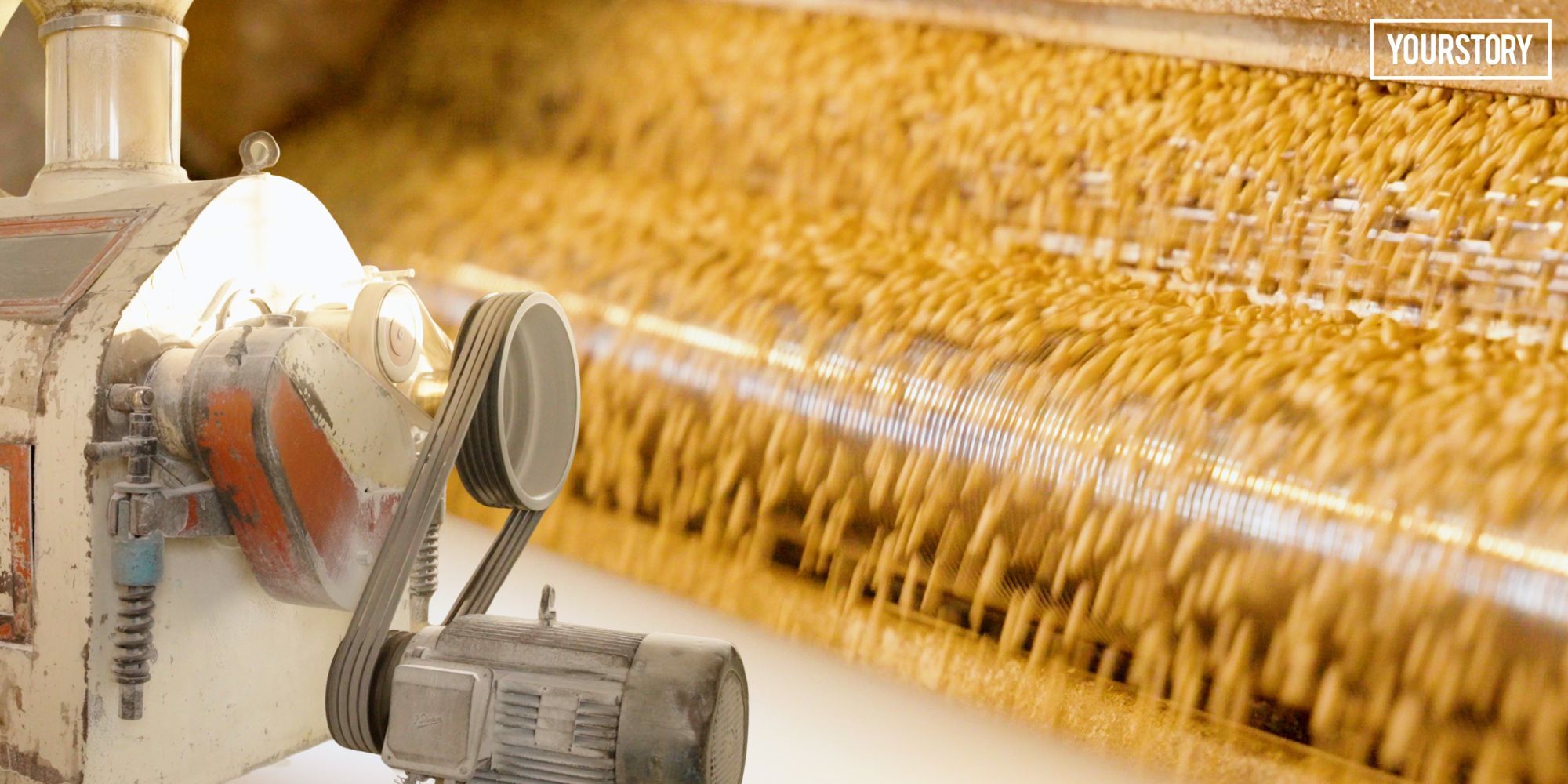
At the unit level, the production cycle begins with direct procurement of wheat from farmers. The grain undergoes cleaning and sorting to remove impurities, followed by washing and controlled drying. It is then processed through milling systems where separation techniques yield multiple outputs — whole wheat flour (atta), refined flour (maida), semolina (suji), and bran.
Currently, the unit processes approximately 600–700 quintals of wheat per day, supported by a workforce of 20–25 individuals managing machine operations, material handling, and quality control across stages.
In Bahraich, wheat processing reflects a system where efficiency depends on continuity — steady procurement, streamlined operations, and consistent output. As grain moves from farms to mandis and into milling units, it is transformed into daily-use staples that sustain both local consumption and broader market supply. Under ODOP, this traditional agro-based activity continues to strengthen its role within the district’s economic landscape.
Original Article
(Disclaimer – This post is auto-fetched from publicly available RSS feeds. Original source: Yourstory. All rights belong to the respective publisher.)