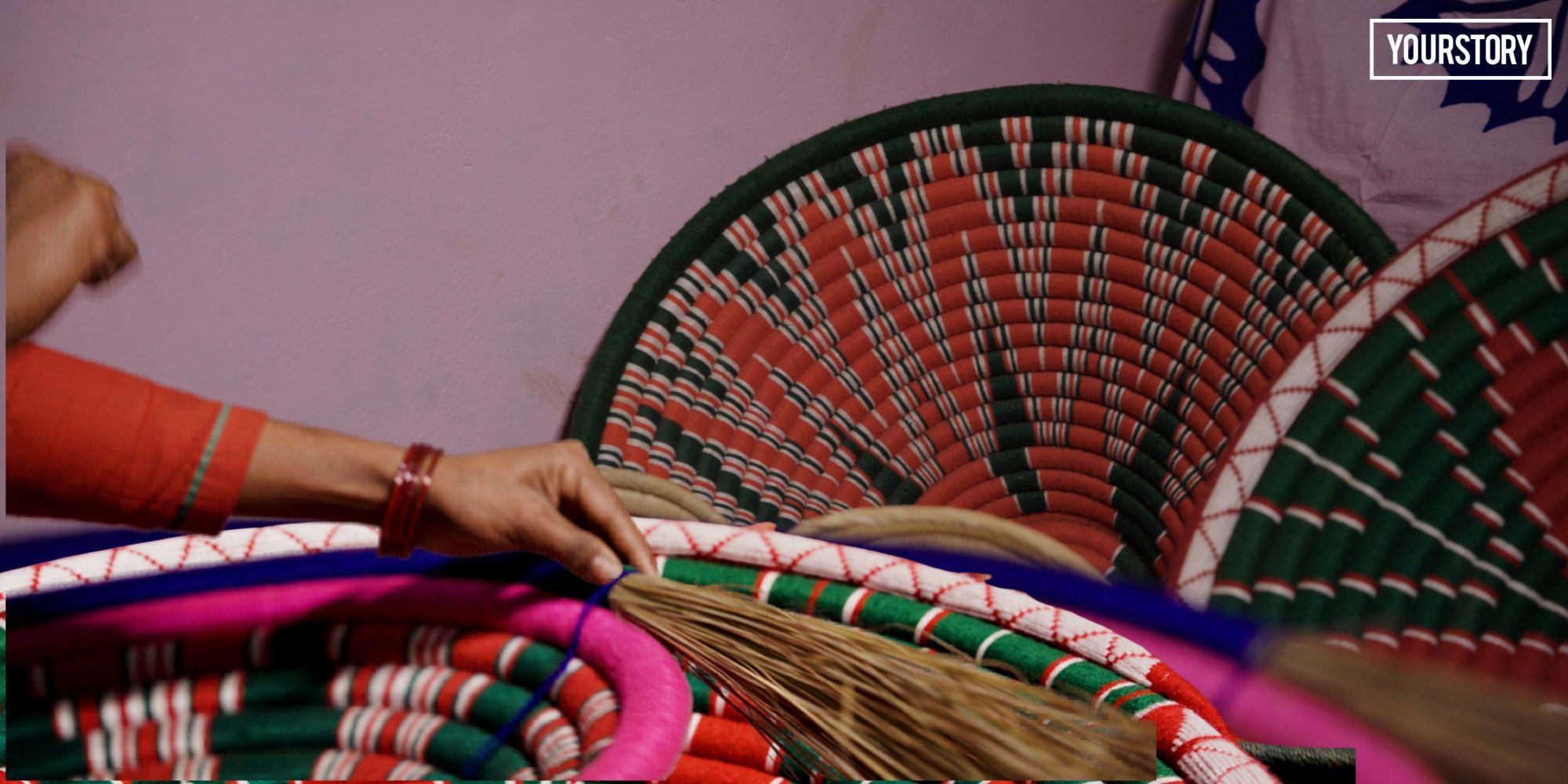
In Uttar Pradesh’s Shravasti district, Tharu embroidery and allied craft practices operate within a rhythm shaped by household needs, seasonal availability, and ceremonial use. Unlike continuous production systems, this craft follows a cyclical pattern, linked to daily utility as well as important occasions such as weddings.
Products such as delwa, mauni, daliya, birdari, and other decorated utility items serve both functional and cultural purposes. While these objects are used in everyday household activities, they also hold significance during marriage ceremonies, where presentation and decoration become equally important. In this segment, value is determined not just by use, but by the precision of colour application, patchwork, and finishing.
The production ecosystem is largely home-based and led by women. Skills are passed down through generations, embedded in community learning rather than formal training systems. Work typically intensifies during the winter months, when women gather in open spaces, often sitting in the sun, to prepare products. The craft also depends on locally available raw materials, including grass-like fibres and moonj, sourced from nearby forest and hilly regions.
Under the One District One Product (ODOP) programme, Tharu embroidery and related crafts in Shravasti have gained visibility through training initiatives, institutional support, and market linkages, helping bring wider recognition to this traditional practice.
Sitar Prasad Rana, a resident of Bhaskahi village in Bhinga tehsil, has observed this craft since childhood within the Tharu community. Primarily engaged in agriculture, he notes that embroidery and patchwork have long existed as a parallel activity, particularly among women. He refers to the technique locally as katoti, a form of appliqué work involving layered fabric, detailed stitching, and careful hand placement.
Among all products, the delwa stands out as the most prominent. This large decorative basket is used in wedding rituals to carry the groom’s clothing, footwear, and other items to the bride’s household. Women devote significant effort to its decoration, using colourful fabric patches and intricate stitching to create distinctive designs. Alongside this, everyday items such as mauni, daliya, birdari, and suppa continue to serve storage and grain-handling purposes in households.
The making process begins with the collection and preparation of raw materials. A grass-like fibre known locally as rada is gathered, dried, and stored, while moonj is sourced separately. Once the base structure is formed, coloured fabric pieces are arranged into patterns and attached through fine hand stitching. The final quality depends heavily on precision — the steadiness of hand and sharpness of vision required to ensure neat and balanced outcomes.
Production is often organised in small groups of 20 to 40 women, who dedicate a few hours each day to this work alongside their domestic responsibilities. This structure allows the craft to function as a supplementary income source while remaining integrated into everyday life.
In Shravasti, Tharu embroidery continues to exist at the intersection of tradition and livelihood — sustained by seasonal time, locally sourced materials, and community knowledge, with women at its core.
Original Article
(Disclaimer – This post is auto-fetched from publicly available RSS feeds. Original source: Yourstory. All rights belong to the respective publisher.)