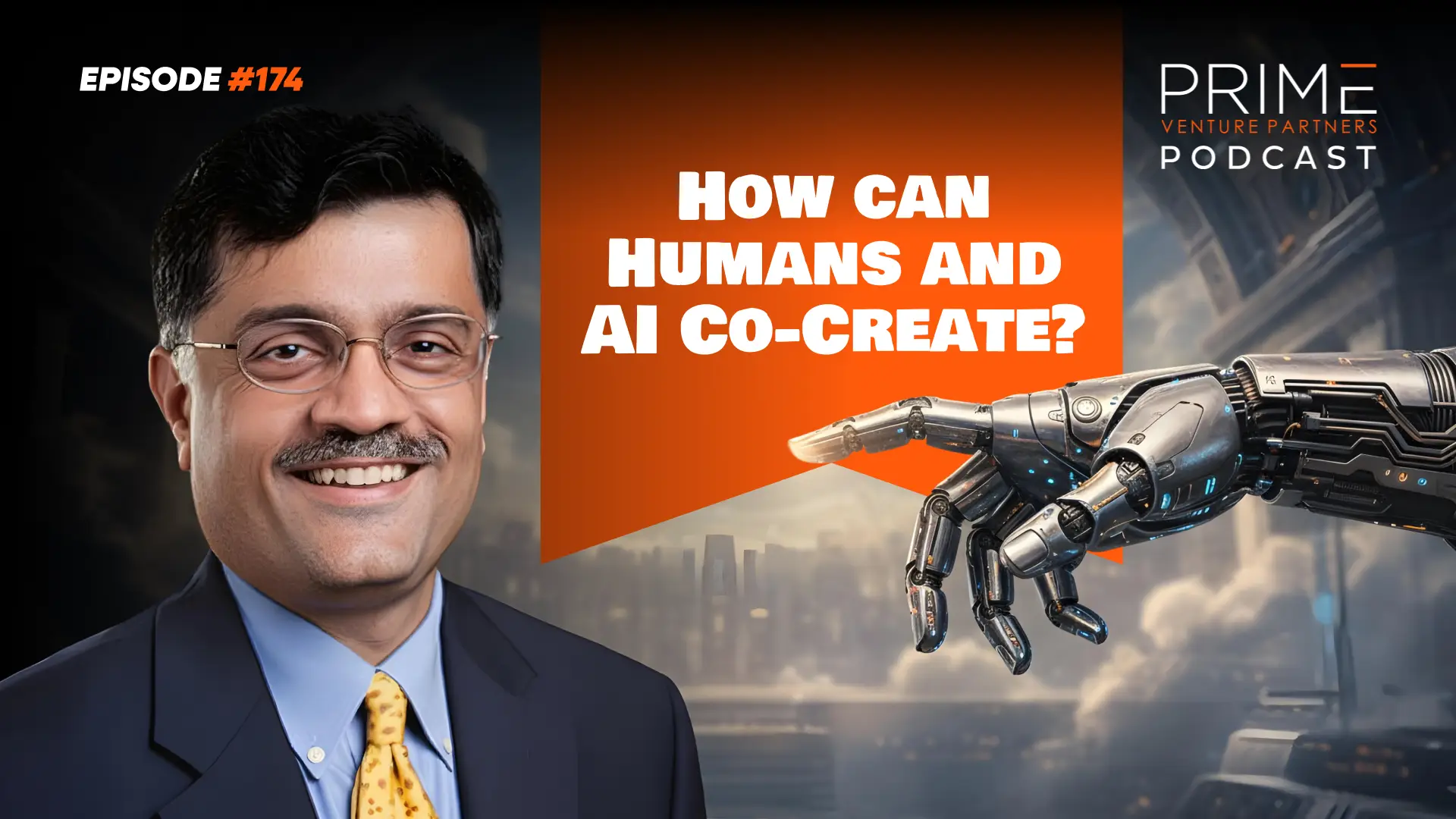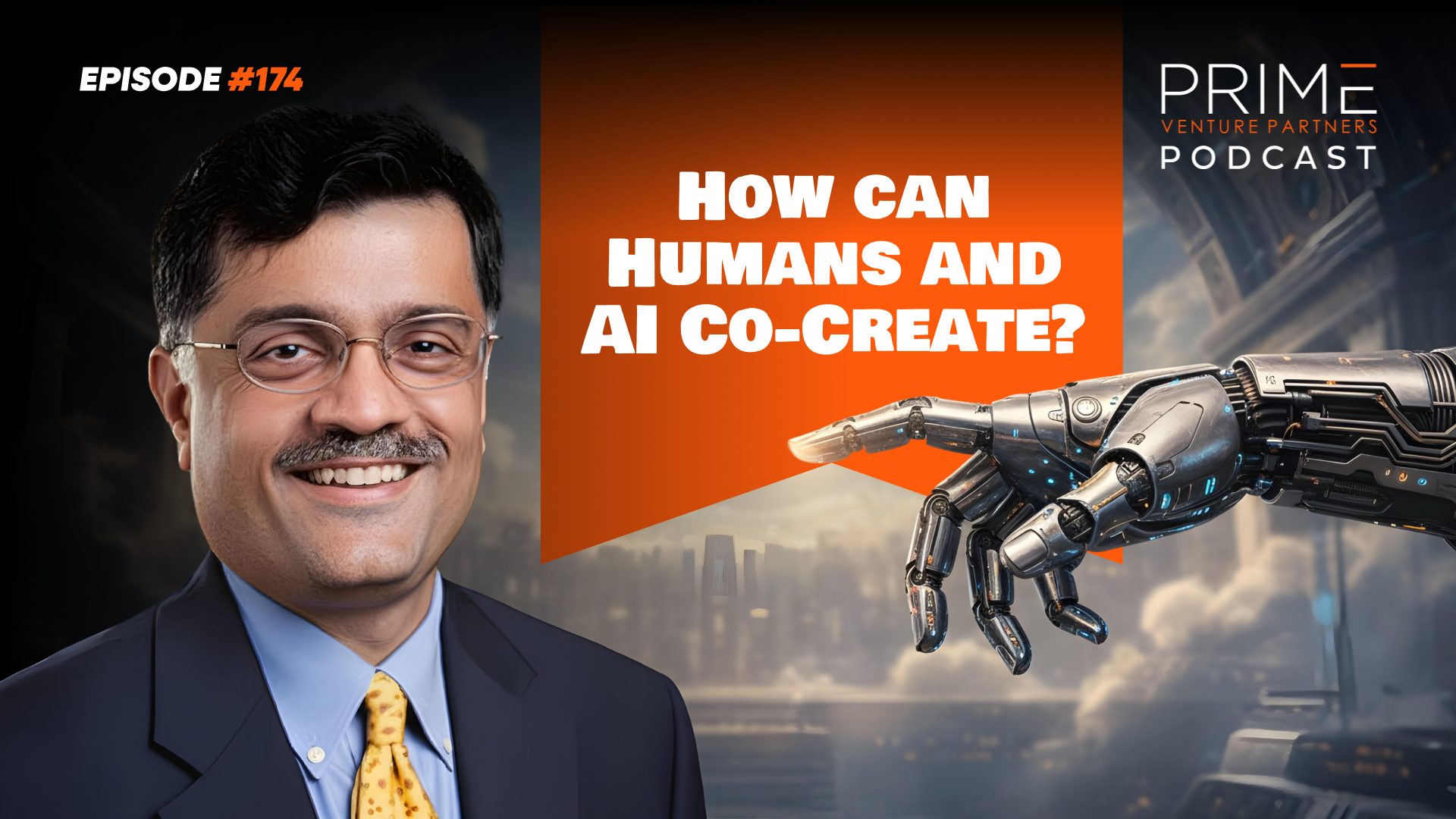
Professor Venkat Ramaswamy, Ross School of Business, University of Michigan, is co-author of The Co-Intelligence Revolution and the co-author of the seminal book The Future of Competition with C K Prahalad. He is a globally recognised thought leader on innovation and co-creation.
Two decades ago, Professor Ramaswamy introduced the idea of 'co-creation', a revolutionary concept that reshapes how businesses engage with customers. Today, his latest book The Co-Intelligence Revolution explores how humans and AI can co-create new value in ways previously unimaginable. In a conversation, he shares powerful insights that every entrepreneur and business leader can learn from.
From co-creation to co-intelligence
Reflecting on his journey, Ramaswamy points out how fast technology has shifted the boundaries of who can create and participate in innovation.
“Until now, to program computers you needed a programming language. I learned Fortran way back then, or you had to use Python. But today anyone can simply speak to a system in natural language and it responds. That’s completely transformative.”
This democratisation of technology is what Ramaswamy calls co-intelligence—a new paradigm where humans and AI work together to unlock value, not just efficiency. For entrepreneurs, this is a wake-up call: the barrier to creating solutions has never been lower, but the responsibility to design for real human value has never been higher.
Jugalbandi: A case study in value creation
To illustrate, Ramaswamy shares the story of Jugalbandi, a WhatsApp-based AI assistant built on OpenAI APIs and India’s government language service Bhashini.
“Volunteer developers from citizen groups, nonprofits, Microsoft Research, and IIT Madras came together to build an application where farmers could access government services by simply talking in their own language. It was co-intelligence at work.”
The impact is profound. Farmers no longer need technical know-how to interact with digital systems. They simply speak, and the system not only delivers services but also learns from their feedback.
“For the first time, we can get deep into the lives of people and unlock new forms of value. A farmer can say, ‘Here is my problem. Who can help me?’ That changes the very notion of a marketplace. It’s no longer just transactional; it’s about co-creating experiences.”
For founders, this is a powerful reminder: the next wave of products won’t just deliver functionality, they’ll create interactive ecosystems of experiences.
Scaling with ecosystems, not just products
Another key insight Ramaswamy emphasises is the importance of ecosystems in scaling value. He points to ITC’s e-Choupal and Mars marketplace, where startups plug into a platform that aggregates services for farmers.
“As the ecosystem grows, new pools of value get created. The question for entrepreneurs is: are you trying to become an orchestrator, or do you plug into an existing system? Either way, the mindset has to be about creating an ecosystem of interactive experiences.”
This perspective is crucial in an age where entrepreneurs often focus narrowly on product-market fit. Ramaswamy reminds us that real scale happens when you design for ecosystem-market fit.
L’Oréal: Personalisation meets co-intelligence
Ramaswamy highlights L’Oréal as an example of how AI is transforming consumer experiences in industries as personal as beauty.
“L’Oréal has always had hundreds of beauty products, but one of the biggest frustrations for consumers is finding the right one. With AI-powered tools like Beauty Genius, consumers can scan their face, get personalised recommendations, even create their own lipstick at home. And the system learns from them.”
This is not just personalisation; it is mass customisation powered by AI. By integrating startups like ModiFace and creating AI-driven beauty advisors, L’Oréal is turning what used to be a product-centric value chain into an experience-centric ecosystem.
“What used to take 10–12 months for an ad campaign now takes a month. That time compression means they can bring more voices into the process, creating better experiences for everyone involved.”
For entrepreneurs, the lesson is clear: AI is not only about automation but about creating richer, faster, and more participatory experiences across the value chain.
Siemens: Reinventing enterprise workflows
On the industrial side, Ramaswamy points to Siemens as a powerful case study of co-intelligence at scale.
“Companies like Siemens are already starting to build their own foundation models. The biggest area of opportunity is inside enterprises, where 80% of the data in the world is yet untapped.”
By embedding AI into its operations, Siemens is not only improving efficiency but also enabling entirely new forms of collaboration across stakeholders. From design to production to customer support, co-intelligence is redefining how work gets done.
For startups, this highlights a massive white space: building solutions that plug into the transformation of enterprise workflows.
The Future Outlook
Looking ahead, Ramaswamy is convinced that the real opportunity lies inside enterprises and ecosystems, where AI is used to transform workflows, unlock data, and create new flows of value. At the same time, societal applications—from agriculture to healthcare—offer pathways to inclusive growth.
“You have to ask yourself for whom am I creating value? How are you managing risk in that process? And most importantly, how are you accelerating the growth of the ecosystem so that everyone benefits?”
Listening to Prof Ramaswamy, one thing becomes clear: the future of entrepreneurship is not just about building smarter products, but about enabling smarter collaborations between humans, AI, and ecosystems.
Listen to the full podcast episode to gain more insights.
Timestamps:
00:00 – Introduction
01:03 – The origins of co-creation with C K Prahalad
02:37 – Humans vs AI: Subjective experiences
04:24 – Opportunities for entrepreneurs in co-intelligence
05:32 – Jugalbandi case: WhatsApp assistant for farmers using AI + government services
17:36 – L’Oréal’s AI in beauty
19:30 – Example: AI transforming consumer beauty experiences
25:31 – The Intelligent Enterprise: AI transforming how businesses operate
29:16 – Siemens case: Digital twins & industrial AI ecosystems
30:00 – Enterprises and ecosystems
39:00 – Risk-managed value: How enterprises evaluate startups
43:24 – Power of prototyping for startups
45:00 – AI’s role in startup speed & compressing time-to-value
Edited by Swetha Kannan
Original Article
(Disclaimer – This post is auto-fetched from publicly available RSS feeds. Original source: Yourstory. All rights belong to the respective publisher.)