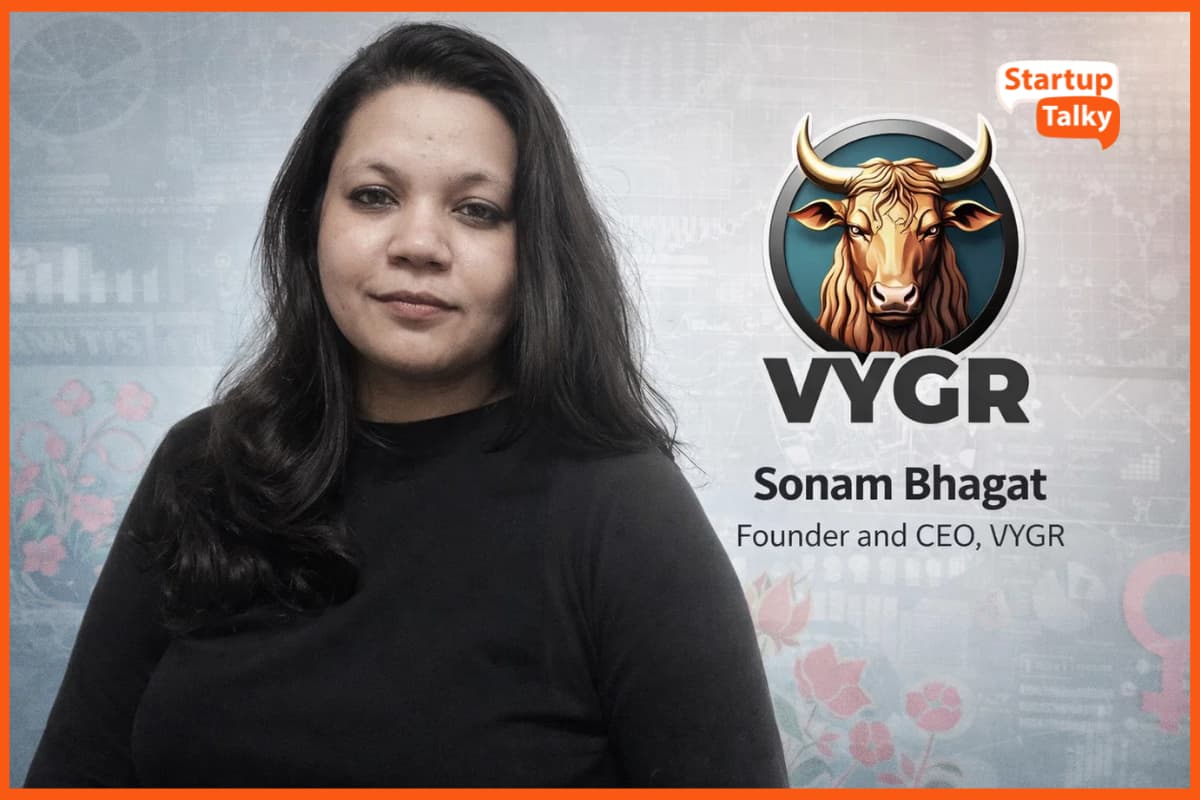
Vygr News is building a new kind of creator ecosystem, one that empowers women from Tier II–IV towns to produce credible, hyperlocal informational content. By combining training, editorial support, and stable income opportunities, the platform is helping regional women become trusted voices in their communities. In this conversation with StartupTalky, Sonam Bhagat, Founder and CEO of Vygr discusses the gap in India’s digital media landscape, how Vygr supports women creators beyond viral trends, and the vision for building a more inclusive creator economy.
StartupTalky: Vygr News focuses on training women content creators from Tier II–IV towns to produce credible, hyperlocal informational content. What gap in India’s digital media ecosystem inspired this focus, and how did you validate that this was the right direction?
Sonam Bhagat: The gap is clear. India’s digital media focuses mainly on entertainment and stories from major cities. Regional voices, particularly those of women, often lack training, verification, and stable income. The evidence is striking. India’s creator economy is large but not evenly spread. Creators currently influence about $350 billion and are expected to exceed $1 trillion by 2030. Meanwhile, internet growth relies on non-metro users who want regional content.
We confirmed this direction by launching early creator groups in Tier II to IV towns. Hyperlocal explainers from trained creators had higher watch time and repeat engagement compared to flashy viral clips. Once we introduced structured training and upfront payments, creators shifted to paid assignments with steady income.
StartupTalky: The recent Union Budget has emphasised digital entrepreneurship and regional inclusion. How does Vygr’s model align with these priorities, and how are you leveraging this policy momentum to expand your reach?
Sonam Bhagat: Budget 2026 supports the “Orange Economy” by backing AVGC, gaming, and animation. It also commits to skills development and institutional support, which creates a strong foundation for creative tech and regional training.
Vygr contributes by formalising creator training modules that align with government skilling initiatives, expanding multilingual content production for rural and Tier II–IV internet users, and developing pilot programs with IICT and other institutional partners. These initiatives help translate policy announcements into funded, measurable training programs and local implementation pilots. Through IICT’s ecosystem and the policy momentum reflected in the Union Budget, Vygr is actively engaging with government bodies and institutions to initiate pilot projects and long-term partnerships.
StartupTalky: Women creators from smaller towns face real barriers, limited connectivity, societal pressure, and lack of mentorship. How does Vygr help them navigate these challenges to build sustainable content careers?
Sonam Bhagat: Vygr addresses these barriers by creating an ecosystem that understands the challenges women from smaller towns face. We design mobile-first workflows and offer assisted editing, allowing creators to work even with limited connectivity and resources.
Instead of making them chase unpredictable virality, we provide upfront payments and structured assignments that offer stability and build confidence in their work. Through mentorship, training similar to certification, and editorial guidance, we help women learn research, scripting, and responsible storytelling, enabling them to become credible voices in their communities.
Importantly, Vygr also provides a supportive network and editorial oversight that protects creators. This helps change social perceptions, allowing women not only to create content but also to speak with authority on the issues that matter in their lives.
StartupTalky: There is a meaningful difference between creating viral entertainment content and building credible informational content. How does Vygr train women creators to develop the skills and credibility that make them trusted voices in their communities?
Sonam Bhagat: Our training begins with the basics of good storytelling and responsible journalism, how to verify information, speak to the right sources, write clearly, and explain issues in a way people in their communities can understand.
We also help creators learn how to present information on digital platforms while staying neutral and context-driven. AI tools help speed up tasks like transcription or translation, but every piece of content is carefully reviewed by humans before it goes out. In an era where AI can sometimes get things wrong, that human judgment is essential to protect trust.
We also run practical exercises, from role-plays to field reporting and real assignments from brands and institutions, so creators learn to focus not on chasing virality but on consistently delivering reliable, meaningful information.
StartupTalky: What does financial independence look like for women on the Vygr platform? What income pathways are available, and how are you ensuring these are sustainable and not dependent on one-off viral moments?
Sonam Bhagat: Financial independence on Vygr means giving creators stable and predictable income rather than leaving them dependent on unpredictable algorithms or one viral moment. Women creators on the platform earn through multiple structured pathways, paid explainers and informational briefs for government bodies, NGOs, and institutions; brand partnerships that focus on meaningful, theme-aligned storytelling rather than sensational advertising; creator retainers and training fellowships for certified contributors; and revenue sharing from long-form projects, documentaries, or institutional licensing.
This model is important in a country where the creator economy is projected to cross $1 trillion by 2030, yet less than 15% of venture funding goes to women founders and income opportunities for regional creators remain uneven. By prioritising upfront payments and multi-month assignments, Vygr aims to move creators, especially women from smaller towns, away from the volatility of platform algorithms and toward sustainable, skill-based digital careers.
StartupTalky: As the orange economy grows, how do you ensure women from India’s smaller cities and towns are not left behind, and are instead positioned as architects of this creator economy shift?
Sonam Bhagat: For us, inclusion means making sure women from smaller towns actually have the tools, training, and opportunities to participate in the creator economy. We run training cohorts specifically for creators from Tier II–IV regions, provide simple production toolkits that work even with limited internet connectivity, and work with institutions to create paid assignments for trained creators.
With policy support for the hub-and-spoke skilling approach, we now have a pathway to expand this training across districts. The goal is not just to bring more women into the digital economy as consumers of content, but to help them become creators and storytellers who shape the future of India’s creative industries.
StartupTalky: What is your vision for Vygr over the next three to five years, and how do you see the role of women in India’s hyperlocal digital media and information landscape evolving?
Sonam Bhagat: Over the next three to five years, our vision for Vygr is to build one of India’s largest networks of verified hyperlocal informational creators, publishing in multiple Indian languages and working closely with institutions to bring important public information to communities in ways people actually understand. Women will play a central role in this journey. We already see women from smaller towns stepping forward as explainers of issues that affect everyday life, education, healthcare, governance, and livelihoods.
As internet access grows rapidly in rural India and more skilling initiatives support the creative economy, we believe that with the right training and paid opportunities, these women will move from the margins of digital media to becoming trusted voices and information leaders in their own communities.
 StartupTalky- Business News, Insights and StoriesSakshi Jadhav
Original Article
(Disclaimer – This post is auto-fetched from publicly available RSS feeds. Original source: Startuptalky. All rights belong to the respective publisher.)