Table of Contents
If you are wondering how to start a D2C brand in India, this 2025 guide covers everything you need to know—steps, costs, licenses, marketing strategies, challenges, and growth potential.
The Direct-to-Consumer (D2C) business model is reshaping the Indian retail market. Instead of relying on traditional distributors and retail shops, D2C brands sell directly to customers via websites, apps, and social media.
From skincare and fashion to organic food and pet care, Indian consumers are increasingly drawn to niche brands that feel authentic, premium, and relatable. This shift has opened a huge opportunity for entrepreneurs.
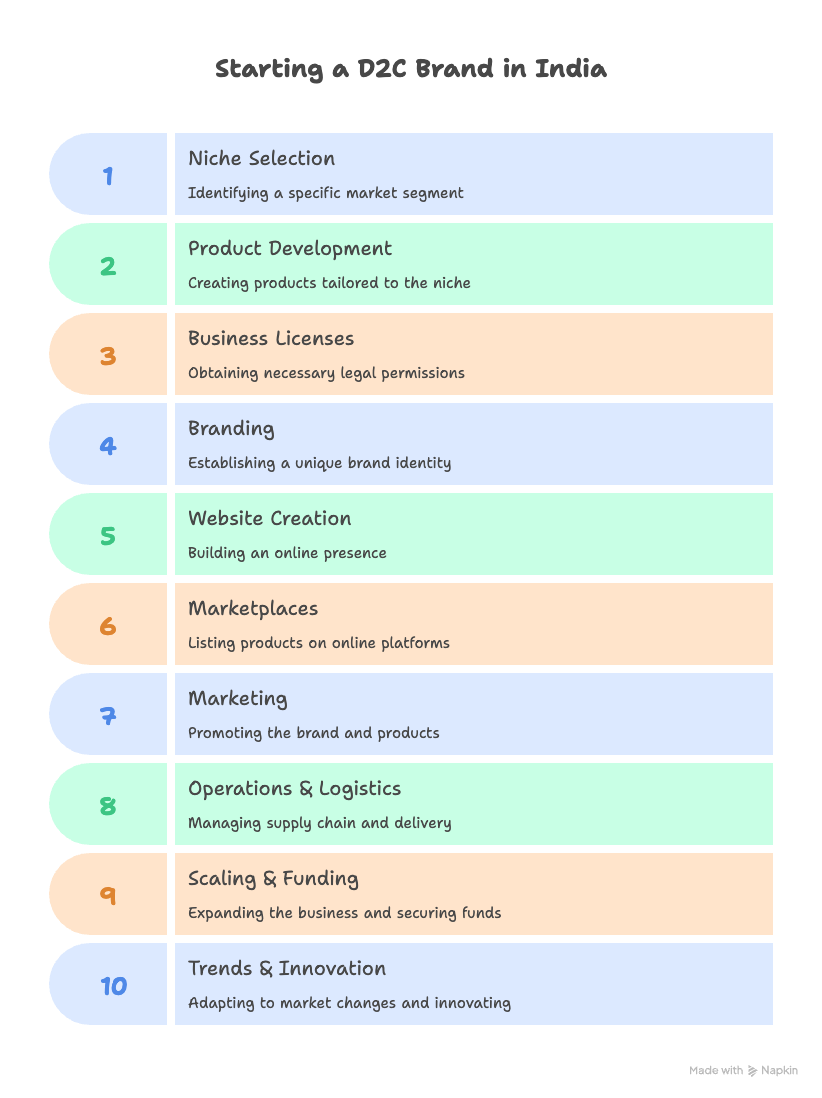
Step 1: Identify Your Niche & Audience
The first step is choosing the right niche and understanding who your target customers are.
High-potential D2C niches in India (2025):
- Skincare & Cosmetics: Ayurvedic, toxin-free, cruelty-free products.
- Health & Wellness: Plant-based protein, vitamins, organic snacks.
- Fashion & Lifestyle: Sustainable clothing, ethnic wear, accessories.
- Pet Care: Premium food, grooming, supplements.
- Regional & Cultural Products: Pickles, snacks, handicrafts, home décor.
💡 Pro Tip: Pick a narrow focus. It helps you position your brand clearly and keeps marketing efficient.
Step 2: Develop & Source Your Product
Once you finalize your niche, decide how to bring your product to market:
- In-house manufacturing → More control, but requires higher investment.
- White-labeling / contract manufacturing → Quick setup, less capital intensive.
- Dropshipping or local sourcing → Minimal cost, but lower margins.
Certifications to consider:
Ayush License → For herbal & supplements.
FSSAI → For food & beverages.
BIS / CDSCO → For cosmetics.
Step 3: Business Registration & Licenses
| License / Registration | Why It’s Needed |
|---|---|
| Business Registration (Private Limited / LLP / OPC) | Legal structure for compliance & fundraising |
| GST Registration | Mandatory for online sales and invoicing |
| Trademark | Protects brand name and logo |
| FSSAI License | Required for food & beverage businesses |
| Ayush / Cosmetic License | Needed for herbal, wellness, or skincare brands |
💡 Tip: Even if you start small, registering your business and trademark early avoids future disputes.
Step 4: Build Your Brand Identity
D2C success relies heavily on brand recall and positioning.
- Choose a strong name: Easy to spell, memorable, and domain-available (.in or .com).
- Design visual identity: Logo, colors, packaging that reflect your story.
- Craft your narrative: Why does your brand exist? Indian buyers love authentic stories.
- Packaging: Invest in eco-friendly or reusable packaging—it adds to brand value and customer loyalty.
Also check – How QuickShine Is Revolutionizing Vehicle Cleaning—One Doorstep at a Time
Step 5: Create Your D2C Website
Even if you sell on Amazon or Flipkart, your own website is a must. It builds trust, allows direct engagement, and gives you valuable customer data.
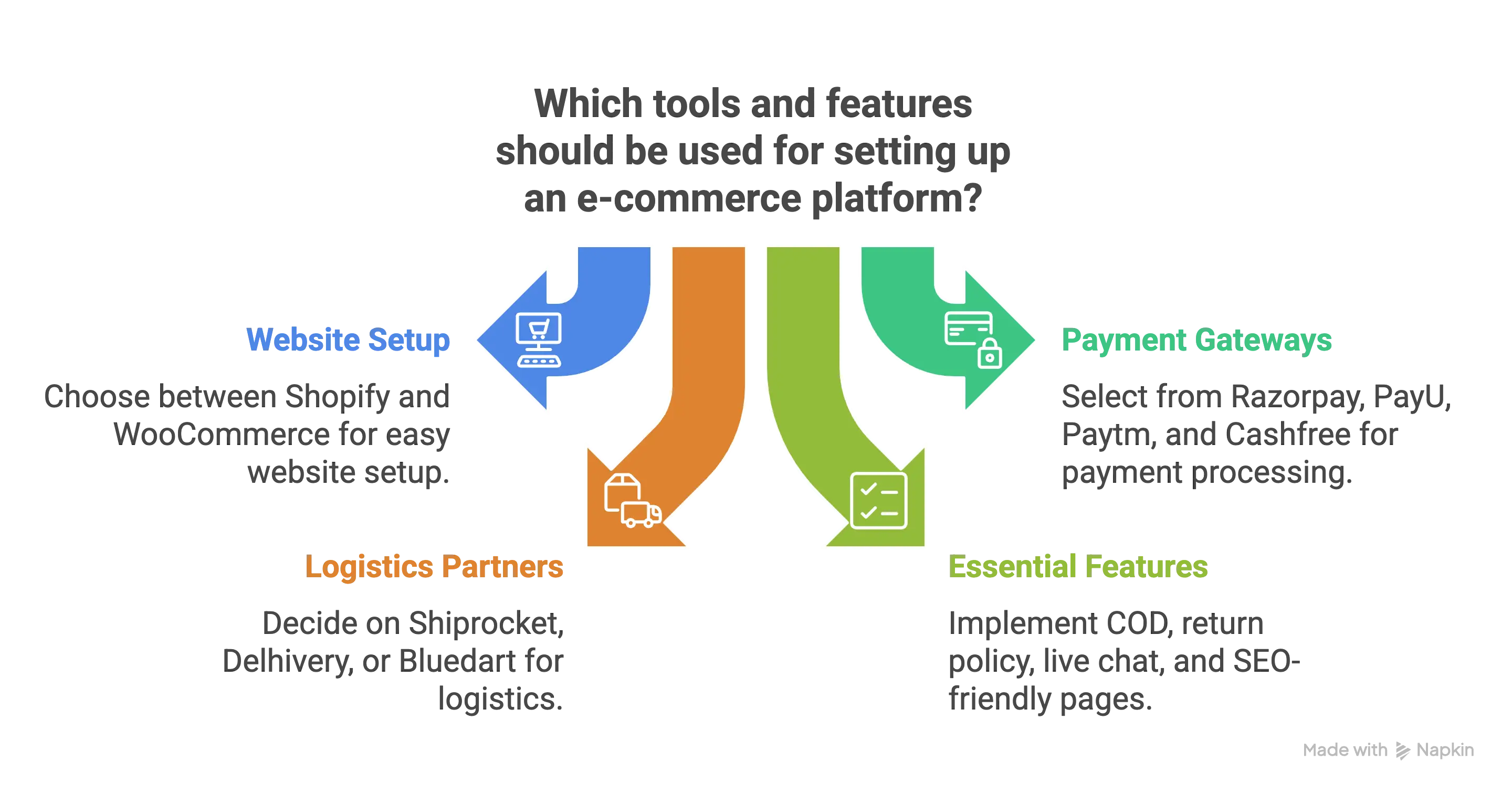
Tools & platforms to use:
- Shopify or WooCommerce → Easy website setup.
- Razorpay, PayU, Paytm, Cashfree → Payment gateways.
- Shiprocket, Delhivery, Bluedart → Logistics partners.
- Essential features: COD option, return policy, live chat support, SEO-friendly product pages.
Step 6: Sell on Marketplaces Too
Marketplaces provide instant exposure and help you reach new audiences.
- Amazon & Flipkart → Mass appeal, high competition.
- Nykaa → Beauty, skincare, wellness.
- Myntra → Fashion & lifestyle.
- Meesho → Tier-2 & Tier-3, price-sensitive customers.
Balance sales between your website and marketplaces. Use marketplaces for discovery, but encourage repeat orders on your site (higher margins, lower commission fees).
Step 7: Marketing Your D2C Brand
Key marketing strategies in India:
- Social Media First: Instagram Reels, YouTube Shorts, influencer collaborations.
- Paid Ads: Meta Ads (Facebook + Instagram) and Google Shopping Ads.
- Content Marketing: Product blogs, tutorials, customer reviews.
- Community Building: WhatsApp groups, Telegram channels, referral programs.
- Retention Marketing: Email + SMS campaigns to drive repeat orders.
💡 Keep track of CAC (Customer Acquisition Cost) vs LTV (Lifetime Value). Scaling only works if your customers buy again and again.
Step 8: Operations & Logistics
Efficient backend systems keep customers happy and reduce costs.
- Use inventory management software like Zoho, Unicommerce, EasyEcom.
- Partner with 3PL companies for storage and nationwide delivery.
- Offer COD + tracking updates (crucial for trust in tier-2 & tier-3).
- Build responsive customer support (WhatsApp, chatbots, or helplines).
Step 9: Scale & Secure Funding
Once your D2C brand gains traction:
- Expand product SKUs gradually (don’t over-diversify too soon).
- Track metrics → ROAS (Return on Ad Spend), CAC, repeat purchase rate.
- Funding options: Angel investors, VCs, SIDBI schemes, Startup India benefits.
- Scale marketing with influencer partnerships and user-generated content, not just paid ads.
Step 10: Stay Ahead of Trends
The D2C landscape evolves quickly. Brands that innovate stay ahead.
- AI-driven personalization → Product recommendations, chatbots.
- Vernacular content → Ads and websites in Hindi, Tamil, Bengali, etc.
- Eco-conscious products → Rising demand for sustainable and green alternatives.
- Regional & cultural branding → Customers love brands celebrating Indian identity.
Estimated Startup Costs for a D2C Brand in India
| Expense Category | Estimated Cost (₹) |
|---|---|
| Business & Legal Setup | 50,000 – 1,00,000 |
| Product Development (MVP) | 1,50,000 – 3,00,000 |
| Website & Tech Tools | 40,000 – 1,00,000 |
| Packaging & Branding | 50,000 – 2,00,000 |
| Marketing (First 3 Months) | 2,00,000 – 5,00,000 |
| Logistics & Inventory | 1,00,000 – 2,00,000 |
👉 Total Startup Budget: ₹5–10 lakh for a lean MVP launch.
Challenges to Expect
Starting a D2C brand in India is rewarding but not without hurdles:
- High advertising costs → Digital ads are becoming expensive.
- Logistics & returns → Managing COD and reverse logistics in smaller cities is tough.
- Crowded competition → Hundreds of brands launch every month.
- Trust building → Reviews, certifications, and great service are key.
Growth Opportunity Ahead
India’s D2C market is expected to exceed $100 billion by 2030. Rising internet penetration, government push for Digital India and Make in India, and changing consumer habits all support this growth.
The opportunity lies in building authentic, customer-centric brands that focus on quality, affordability, and strong storytelling.
Conclusion
If you are figuring out how to start a D2C brand in India, the key is to:
- Pick a niche and validate demand.
- Develop a compliant, high-quality product.
- Set up your brand legally with the right licenses.
- Invest in branding, website, and marketing.
- Start lean, test, learn, and then scale.
With the right balance of quality, branding, and customer experience, your D2C startup could become one of India’s next big success stories.
How much does it cost to start a D2C brand in India?
Starting a D2C brand in India typically costs between ₹5–10 lakh for a lean setup. This includes business registration, product development, packaging, website, marketing, and logistics.
What licenses are required to start a D2C brand in India?
The essential licenses for a D2C brand include:GST Registrationu (mandatory for online selling) Business Registration (Private Limited, LLP) Trademark (to protect your brand)FSSAI License (for food beverages)Ayush or Cosmetic License (for herbal, wellness, or skincare products)
Can I sell only through marketplaces like Amazon and Flipkart?
Yes, you can start by selling only on marketplaces like Amazon, Flipkart, Nykaa, or Meeshou. However, having your own D2C website gives you control over branding, customer data, and repeat sales, which is crucial for long-term growth.
How long does it take for a D2C brand to become profitable in India?
On average, a D2C brand in India can take 12–18 months to break even, depending on marketing costs, niche demand, and repeat purchase rate. Profitability comes faster if you focus on customer retention rather than just acquisition.
What are the biggest challenges for D2C startups in India?
Some of the biggest challenges include: Rising advertising costs (CAC) Managing logistics and returns in smaller cities Heavy competition across categories, Building loyalty