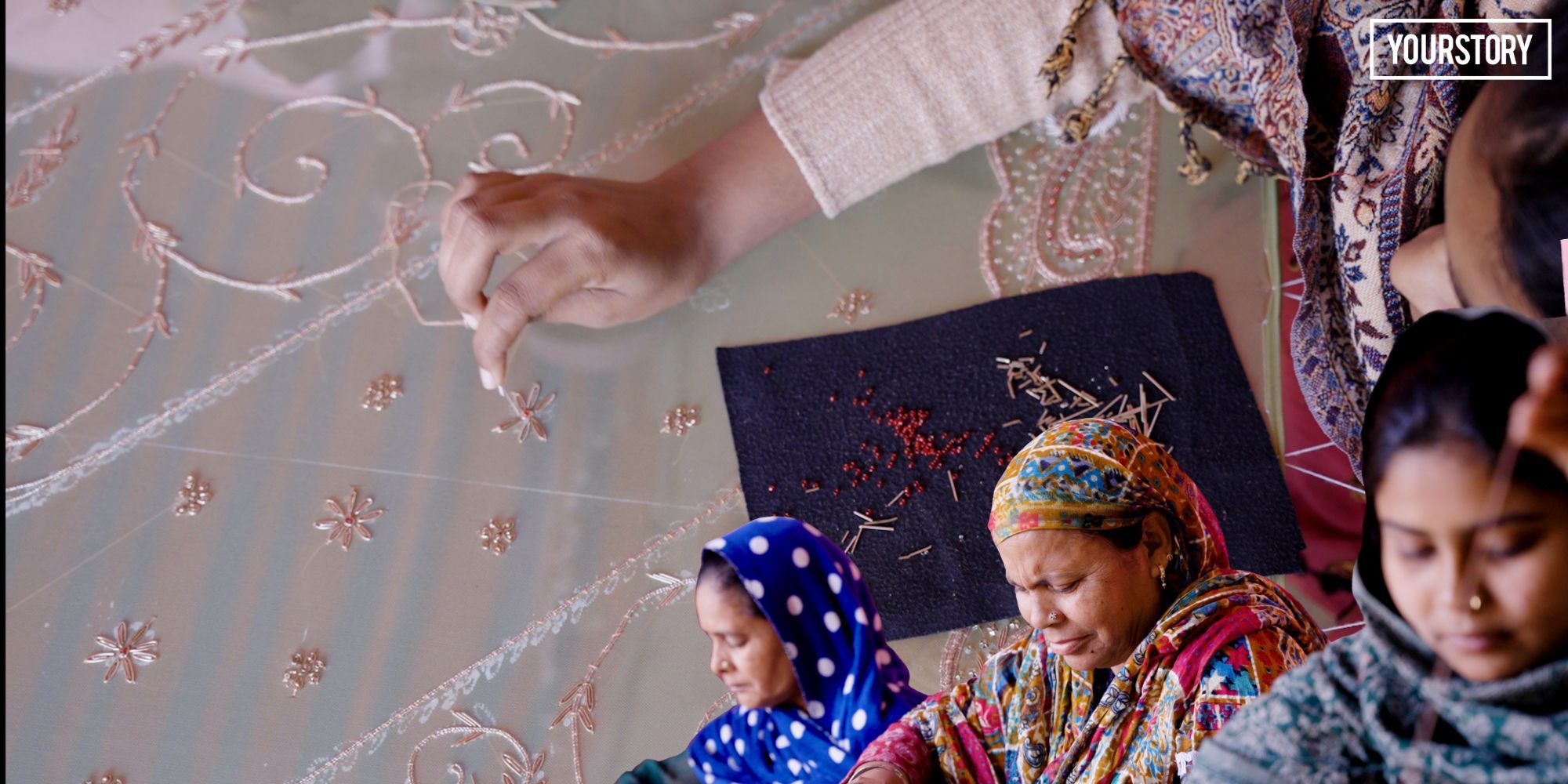
Zari-zardozi from Mainpuri is a home-grown craft built on women’s stitching networks, shared learning and small-batch production rather than factory assembly. The craft appears across dupattas, lehenga panels, kurtis and suit pieces: each item is finished by hands that edge, attach borders, stitch and reinforce so that decorative work reads as clean, durable finishing rather than just surface ornament.
Work happens inside homes or in small neighbourhood groups where learning is practical and peer-driven. One woman begins with a few tasks, neighbours sit beside her, observe and gradually take on more, and the skill spreads through repeated handling. This informal apprenticeship creates a resilient, low-cost training pipeline that aligns with household schedules and seasonal demand cycles.
Earnings and scale depend on two practical things: predictable order flow and consistent finishing standards across different hands. When orders arrive in a steady sequence, women can plan work around chores and hand over pieces through defined checkpoints. Because several women may touch a single piece, regular checking at handovers matters — a neatly secured corner or straight border can change whether a buyer returns.
Under the One District One Product (ODOP) programme framework, Mainpuri’s zari-zardozi makers have begun accessing exhibition opportunities, programme outreach and practical inputs such as sewing machines or loan-linked assistance. These inputs help some workers expand capacity and connect to buyers beyond nearby markets, while programme visibility opens pathways for collective participation at fairs and curated events.
Imrana — a craftswoman from Sikandarpur — sums up the system: she learned on a family home sewing machine, improved finishing through watching neighbours, and today works within a dispersed village network where small improvements in border work or edge finishing determine market reception. “People sit with us, learn by doing,” she says, emphasising the community nature of skill transmission.
For Mainpuri’s zari-zardozi to move from household resilience to sustainable livelihoods, two interventions matter most: better market linkages that smooth order flow, and simple quality checks at handover points so multi-hand batches read as a single, well-finished product. Together these strengthen incomes, preserve the craft’s character and let more women benefit from repeat work.
Original Article
(Disclaimer – This post is auto-fetched from publicly available RSS feeds. Original source: Yourstory. All rights belong to the respective publisher.)