Many ideas that later reshape industries begin by sounding unusual.
Many innovations that seem unusual at first eventually become mainstream. Online shopping, ride-hailing apps, and food delivery platforms were once viewed with skepticism before they reshaped everyday consumer behaviour.
Now, a new concept is beginning to draw attention: renting a mango tree online.
While the idea may initially seem unconventional, it reflects a broader shift in how technology is intersecting with agriculture.
From Family Orchard to Digital Subscription
For generations in India, mango trees were part of family life.
Your grandfather owned a tree in the village. Summers meant climbing branches, plucking fruit, and eating mangoes fresh from the farm. The fruit wasn’t a commodity; it was simply part of the land and the season.
Today, however, that relationship with agriculture is changing.
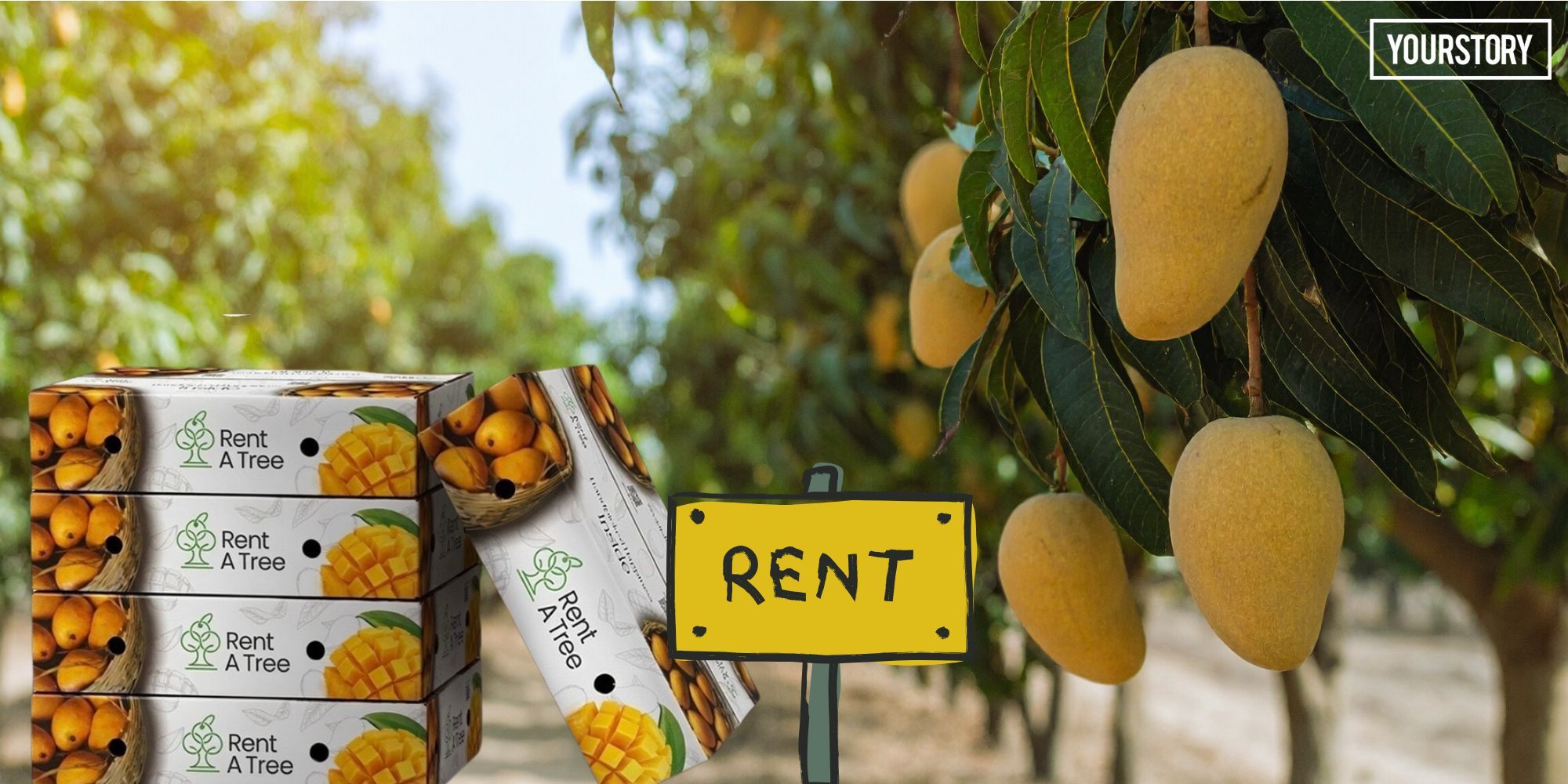
A startup called Rent A Tree, founded by Kochi-based entrepreneur Umesh Damodaran, allows urban consumers to lease a mango tree online and receive the fruit it produces during the season.
Damodaran’s journey into agriculture was not traditional. A mechanical engineer by training, he previously ran an edtech startup in Bengaluru between 2018 and 2023 before moving into the agri-tech space.
The idea for Rent A Tree reportedly came from a simple conversation. During his frequent travel between Bengaluru and South India, Damodaran often carried export-quality Alphonso mangoes for friends and neighbours. One neighbour liked the fruit so much that she asked if she could get all the mangoes from an entire tree instead of just a few boxes.
That question eventually sparked a business idea.
In 2023, Damodaran launched Rent A Tree, beginning with a small leased five-acre mango farm in Dindigul, Tamil Nadu. The first season proved successful, encouraging the startup to expand rapidly. Today, the company manages around 250 acres of mango orchards across Ratnagiri in Maharashtra, Dindigul in Tamil Nadu, and Palakkad in Kerala.
The process is simple:
- Customers choose a tree online.
- The company manages the farm and cultivation.
- When the fruit ripens, the mangoes are harvested and shipped directly to the customer’s home.
For around ₹10,300 per season, subscribers can receive between 60 and 90 kilograms of Alphonso mangoes from their leased tree.
Instead of buying mangoes from a market, customers effectively own the harvest of a specific tree for that season.
A New Direct-to-Farm Model
The idea is not just about novelty. It addresses several long-standing problems in India’s fruit supply chain.
Mangoes are often harvested early to survive long-distance transportation. Once they reach markets, they are sometimes ripened artificially using chemicals to accelerate the process.
By leasing trees directly to consumers, the startup allows fruit to remain on the tree until it naturally ripens. The mangoes are then harvested and shipped immediately, preserving taste and quality.
The company currently manages orchards spread across Ratnagiri in Maharashtra, Palakkad in Kerala, and Dindigul in Tamil Nadu, serving customers across India.
For farmers, the model also provides predictable income by reducing dependence on intermediaries and volatile wholesale markets.
Agriculture as a Platform
What looks like a quirky idea may actually represent a larger shift in how agriculture is valued.
In this model:
- Farmland becomes a digital product
- Trees become income-generating assets
- Villages become platforms connected to urban consumers
Instead of selling fruit through traditional mandis, farms can now connect directly with households through digital platforms.
It is a subtle but powerful shift—from commodity agriculture to experience-based agriculture.
Customers are not just buying fruit; they are buying the story of their tree, watching it grow through periodic video updates, and sharing its harvest with family and friends.
The Bigger Possibility: Tokenized Land and Rural Wealth
If such models scale further, they could fundamentally change how land and agricultural assets are valued.
Imagine a future where:
- Individual trees are leased digitally.
- Farmland is fractionalized into investment units.
- Rural producers connect directly with global buyers.
In that world, the economic value of agricultural land could rise dramatically.
The two acres of farmland sitting quietly in a village might hold more long-term value than a small apartment in a crowded city.
Rediscovering India’s Real Wealth
For decades, India’s economic narrative has been dominated by urban industries, technology, and real estate.
But the country’s deepest wealth has always been rooted in its soil.
Ideas like renting a mango tree may seem strange today. Yet they reflect a growing realization: agriculture is not just a sector—it is an asset class waiting to be reimagined.
The question is no longer whether such models will emerge.
The question is how quickly India will rediscover the value that was always growing quietly in its fields.
Original Article
(Disclaimer – This post is auto-fetched from publicly available RSS feeds. Original source: Yourstory. All rights belong to the respective publisher.)