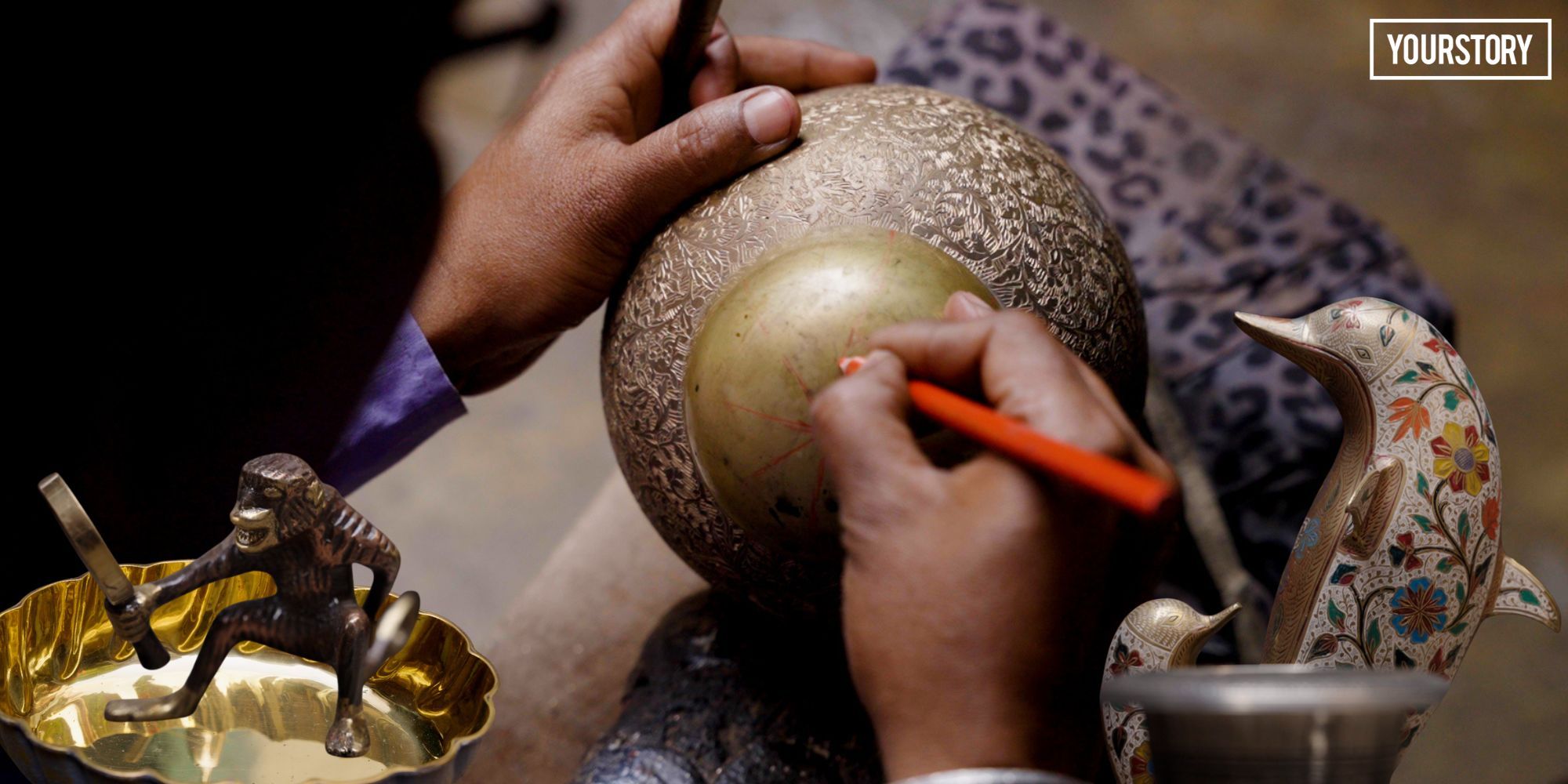
In Uttar Pradesh’s Moradabad district, brassware has long been part of everyday household and gifting culture. Known for its intricate metalwork, the district’s Metal Craft industry—recognised under the One District One Product (ODOP) programme—supplies a wide range of decorative and utility items such as plates, vases, bowls, and ornamental vessels.
Demand for brass products here often comes from repeat buyers rather than one-time purchases. Homes, hotels, and gift markets regularly look for familiar forms where the decision to buy depends on details such as surface finish, balance, and overall craftsmanship. What distinguishes one product from another is often not the shape itself, but the finishing that gives the piece its visual appeal.
The production ecosystem of Moradabad’s metal craft industry operates in multiple stages. Many workshops specialise in casting and moulding plain brass forms, which are then passed along to other artisans for engraving, polishing, and finishing. It is during these final stages that a standard moulded piece acquires its decorative identity and market value.
Through the Government of Uttar Pradesh’s ODOP programme, the Moradabad metal craft cluster has gained greater visibility and institutional support. Access to credit facilities, subsidies, and opportunities to participate in exhibitions has helped several artisans and small enterprises strengthen their operations and expand market reach.
Among the artisans continuing this craft tradition is Mahavir Singh, a brass-carving specialist from Moradabad who has been working in the trade since 1988. Over the decades, Singh has built a reputation for detailed engraving on decorative brass items. His work received national recognition when he was honoured with a National Award in 2017 for excellence in handicrafts.
For Singh, carving begins only after the brass object has already been moulded and given its basic finish. The first step is to carefully examine the surface and mark guidelines that determine where the design will sit. Floral motifs, birds, and ornamental patterns are then planned across different sections of the piece.
Once the layout is decided, the engraving process begins. Using hand tools, the artisan gradually cuts into the metal surface, shaping the design through a series of precise strokes. The process requires patience and concentration, as each cut contributes to the final pattern.
“When your mind is fully engaged in the work, the design comes out well,” Singh says, emphasising how focus and rhythm influence the outcome of intricate metal carving.
Carving remains one of the most time-intensive stages of brassware production. Since polishing, finishing, and packaging follow after engraving, the pace of carving often determines how quickly an order moves through the production chain. Compressing this stage can affect the final quality, making careful timing essential.
Market connections for artisans like Singh operate through a combination of established buyers and occasional participation in trade fairs. He notes that a recent visit to a trade exhibition in Kolkata helped him sell finished products and secure new orders, while regular buyers continue to provide steady work throughout the year.
Moradabad’s metal craft industry thrives on a balance between traditional forms and detailed finishing. While the shapes of brassware may remain familiar, it is the craftsmanship of carving, engraving, and polishing that transforms a simple moulded object into a distinctive decorative piece.
In this way, the district’s metal craft tradition continues to move forward—shaped by skilled hands, steady demand, and a craft process where the true value of brass emerges after the mould.
Original Article
(Disclaimer – This post is auto-fetched from publicly available RSS feeds. Original source: Yourstory. All rights belong to the respective publisher.)