In Uttar Pradesh’s Bareilly district, goldsmith work forms an important part of the local jewellery economy. Demand for gold and silver jewellery here is largely shaped by gifting traditions, family purchases, and repeat buying for familiar designs.
Customers frequently return for bangles, rings, necklaces, and earrings, where the buying decision is influenced less by experimentation and more by the final finish, durability, and whether the design details match what was requested. Jewellery is often purchased for a particular occasion—weddings, festivals, or family ceremonies—making delivery timelines as important as the quality of craftsmanship.
The production ecosystem behind this work operates through a structured, step-led manufacturing process rather than a single artisan stage. Raw metal must first be melted and shaped, followed by manual and machine-led work to refine the design before the final finishing stage prepares the piece for presentation.
Within manufacturing units, the workflow is usually divided across departments responsible for machinery operation, accounts, and maintenance. Production advances only when each stage—from shaping to detailing—is completed with enough precision to move into the next step.
Under the Government of Uttar Pradesh’s One District One Product (ODOP) programme, goldsmith work has been identified as the notified ODOP product of Bareilly. The initiative has supported units in strengthening their production capacity through financial assistance, training, and market linkages.
Priya Agarwal, who runs Bareilly Laser Work, explains that the unit received government approval in 2023 and has expanded its manufacturing capability through a loan facility of ₹1 crore, which included a subsidy component of ₹10 lakh under the ODOP framework. The financial support enabled the addition of machinery and improved production capacity.
Her unit manufactures jewellery in both gold and silver and also undertakes bandhel work, which forms part of the raw material preparation for jewellery pieces. Production in the unit is organized through departments, with around 10–15 people engaged in machinery operations along with staff managing accounts and maintenance.
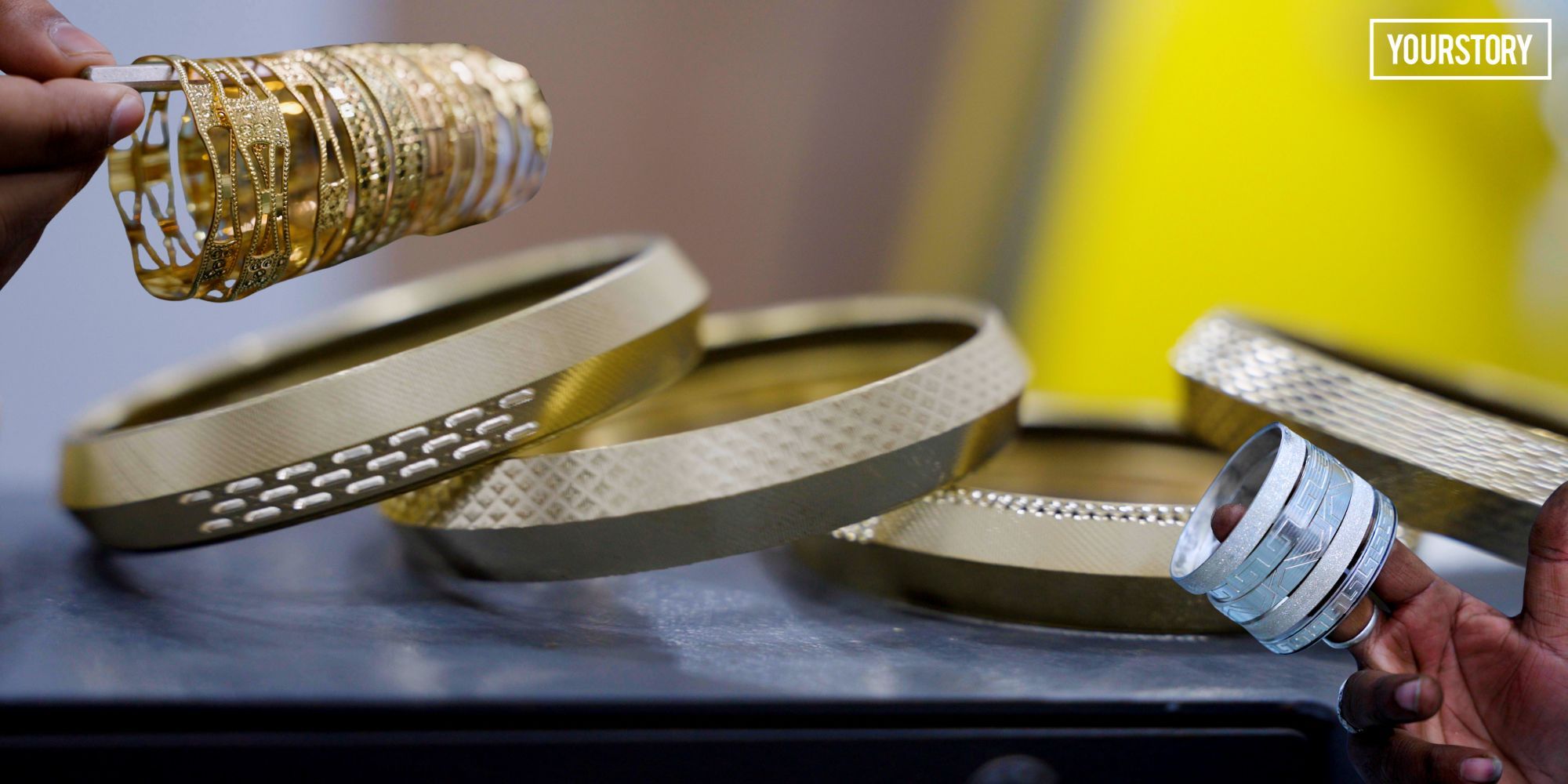
The workflow begins with the purchase of raw gold or silver, which is melted and shaped into basic forms such as kadas or bangles. Manual preparation follows, ensuring the piece is ready for machine-led detailing.
The jewellery then moves to CNC processes where intricate elements—such as engraved names, mantras, or decorative patterns—are added. After machine work, the piece returns to manual finishing stages for corrections and detailing.
Only once the design sits correctly does the product move into final polishing. This stage determines the surface finish and presentation quality before the jewellery is packed and dispatched.
The product range produced at the unit includes rings, chains, necklaces, earrings, bangles, bracelets, and children’s jewellery. Agarwal notes that certain varieties of kadas (thick bracelets or bangles)are currently witnessing steady demand across different markets.
Orders arrive not only from Bareilly but also from other cities, including Varanasi and Agra, reflecting a wider distribution network within India.
In Bareilly’s jewellery trade, output depends on maintaining stability across each stage—from melting and shaping to CNC detailing and final polishing. When the sequence works smoothly and packaging follows on schedule, familiar formats such as kadas, rings, and chains continue to see consistent repeat demand.
Original Article
(Disclaimer – This post is auto-fetched from publicly available RSS feeds. Original source: Yourstory. All rights belong to the respective publisher.)