Women’s health in India has long sat at the crossroads of silence, stigma, and systemic gaps. Even as the country makes progress in healthcare access, fundamental needs around menstrual hygiene, reproductive wellbeing, and nutrition remain under-addressed.
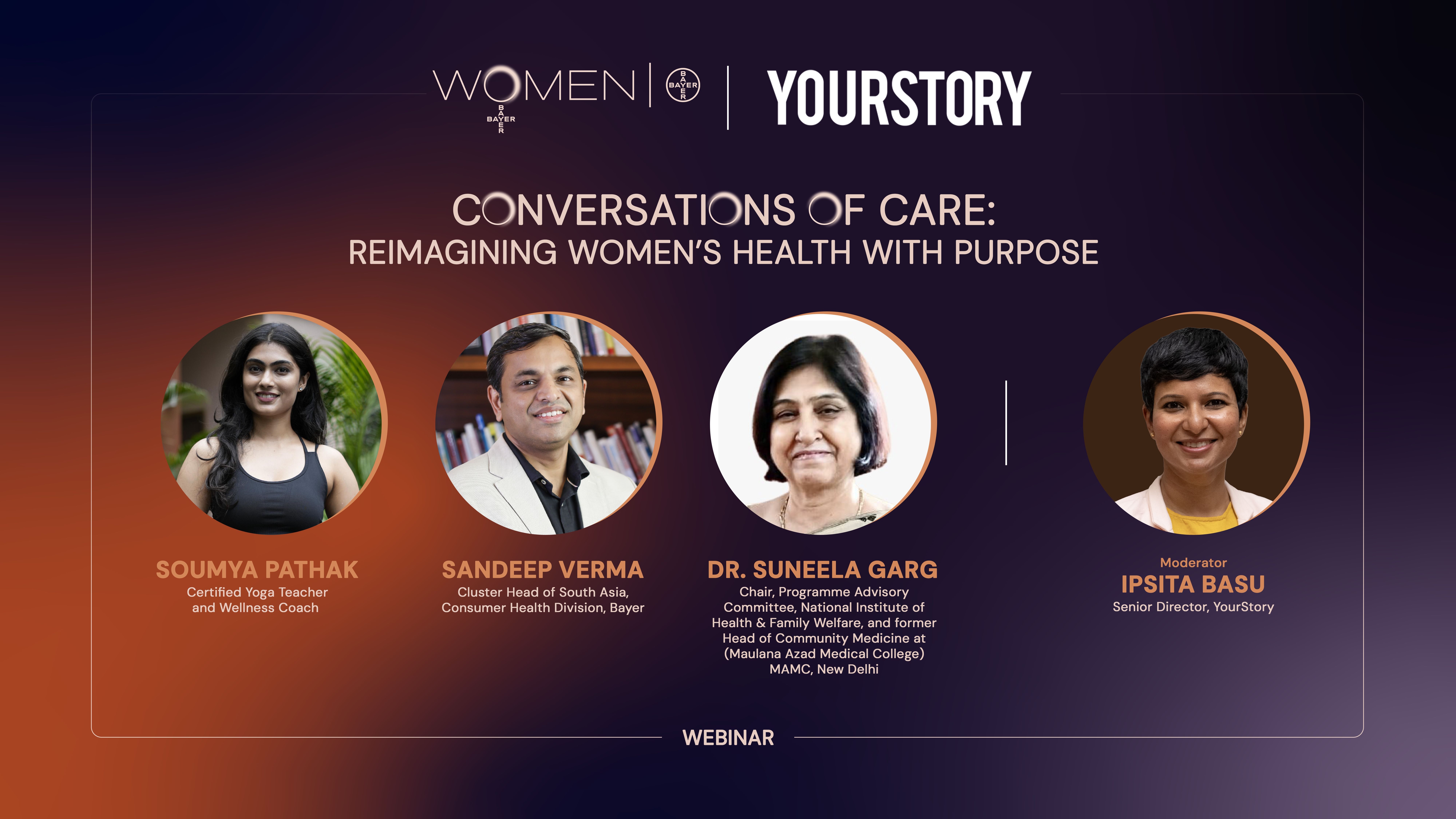
To unpack these challenges and explore what meaningful progress looks like, YourStory and Bayer convened a panel of public health leaders, wellness advocates, and industry experts for ‘Conversations of Care: Reimagining Women’s Health with Purpose’.
The discussion featured Sandeep Verma, Cluster Head – South Asia, Consumer Health Division, Bayer; Dr Suneela Garg, Chair, Programme Advisory Committee, National Institute of Health & Family Welfare and former HOD, Community Medicine at MAMC; and Soumya Pathak, certified yoga teacher and wellness coach. Moderated by Ipsita Basu, Senior Director, YourStory, the session spotlighted urgent realities, lived experiences, and a shared call to reimagine how India cares for its women.
The silent epidemic: Women deprioritizing their health
Verma highlighted a troubling pattern revealed through extensive consumer surveys conducted at Bayer. "While in general, health is a slightly ignored topic by most people in India, it's really women who deprioritize their own health even more than men, which makes them vulnerable to things like nutrient deficiencies, stress, headaches, fatigue, etc."
The data paints a stark picture. Bayer's headache survey showed that while 85-90% of people reported higher stress levels post-pandemic, women were more impacted. Similarly, their fatigue survey revealed that 85% of Indian youth often wake up fatigued, with women disproportionately affected.
Wellness coach Soumya Pathak echoed this concern from her community's perspective. "The biggest issue that they face is the self-guilt that they inflict on themselves," she explained, describing how women struggle to prioritize even an hour for their health without feeling they're taking time away from family responsibilities.
Breaking the silence around period pain
Bayer's #NoPainPeriod campaign challenged deeply entrenched mindsets about menstrual health. Verma shared the campaign's core insight: "Silence is the real enemy. The no pain period campaign was about breaking a silence that has existed for generations and still continues to exist."
The statistics are sobering. More than eight out of 10 women experience severe cramps during their menstrual cycle, and nearly two-thirds of young women withdraw socially because of period pain. Yet the response Bayer encountered most frequently was chilling: "It's the price of paying for being a woman."
"We wanted to spark two mindset shifts," Verma explained. "First, that pain should not be brushed aside as just a part of being a woman… Second, that women can and should take proactive steps to manage it."
The hidden hunger crisis
Dr Garg brought decades of research experience to the discussion. Her studies on menstrual hygiene among young girls, spanning from 1992 to 2021, revealed that despite progress, significant barriers remain.
"Almost 330 million to 350 million girls and women are the ones who are menstruating at one point of time," she noted, emphasizing the scale of the challenge across India's diverse geography. Key barriers include lack of affordable products, inadequate wash facilities in schools, poor waste management, and persistent social stigma.
On nutrition, Verma highlighted India's position as the "epicenter of pretty much every single micronutrient deficiency that there is in the world". Bayer's surveys revealed that doctors and nutritionists believe the average Indian balanced diet meets only up to 70% of daily nutritional needs, leaving a critical 30% nutrient gap.
"Even if you're eating what you would consider a reasonably balanced meal, you would still get up to 70% of your needs," he emphasized.
Dr Garg added context to this crisis, pointing to "almost 57% of women being anemic" despite government distribution of supplements for decades, which reveals the challenge of ensuring behavioral change alongside product access.
The critical first 1,000 days
The panel unanimously stressed the importance of maternal nutrition, with Verma calling it "the foundation of a lifetime for a child". This period, from conception through a child's second birthday, determines brain development, immunity, and future health outcomes.
"Globally, under-nutrition is estimated to cause nearly $3 trillion in productivity losses every single year," Verma shared. "In emerging economies, in developing markets, it has the potential to shave off up to 3-5% of your GDP."
He added, "Investing in maternal nutrition is not just a public health imperative, it is also one of the smartest growth choices that India can and should make."
Digital health and accessibility
Pathak highlighted how social media and online fitness communities are reshaping women's relationship with their health. "When they see that, okay, somebody who looks like me, who is of my same age, who has the same challenges as me, is able to do that. That means that I can also do that," she explained.
However, she emphasized a crucial shift in mindset needed: moving from "I have to work out" to "I get to take care of myself".
Sharing her personal journey, Pathak revealed how addressing her nutritional gaps transformed her menstrual health. She added that when she shared this on social media, many women responded that they had normalized severe pain without realizing alternatives existed.
Reaching Tier II and Tier III cities
When addressing the challenge of reaching women beyond metros, Verma emphasized that "awareness without access changes nothing". He stressed the importance of partnerships between government programs, private sector innovation, and grassroots organizations.
Local voices build trust, and trust drives adoption, he noted, highlighting the importance of communication in local languages by trusted community health workers.
Dr Garg emphasized the need for "gender segregated data" and workplace support for women in both formal and informal sectors. She also pointed to the ubiquity of mobile phones as a delivery mechanism for health information and support.
Pathak advocated for training "grassroot wellness champions" who can relate to local communities. "It'll be close to impossible for them to even accept what I am trying to teach," she said about the limitations of urban influencers reaching rural women.
Looking ahead: Priorities for the next five years
The panelists shared their vision for the future of women's health in India.
Verma said, “Maternal health is not just a health agenda. It is an economic priority; it is a growth priority for a country. Investing in maternal health is investing in the future workforce, in the economy and the next future generation of leaders. When mothers thrive, the nation thrives.”
Dr Garg emphasized strengthening reproductive and maternal health, addressing non-communicable diseases, tackling malnutrition in all its forms, and crucially, “the issues of mental health. A lot of women are suffering from depression and anxiety, but there’s nobody to talk to.”
Pathak advocated for cultural awareness from adolescence. “The women in general are usually taught to endure rather than inquire.” Sharing her personal loss of her mother to blood cancer that was diagnosed too late, she stressed the importance of teaching girls not to normalize pain and to ask questions about their health.
A call to action
The session concluded with a reminder that women's health is a societal priority that shapes the future of families, communities, and the nation. Through education, awareness, and sustained conversation, stakeholders across sectors can work together to reimagine women's health with purpose, ensuring that every woman has the knowledge, resources, and support to prioritize her wellbeing.
As Bayer continues its commitment through initiatives like the #NoPainPeriod campaign, the One Nation 100% Nutrition vision, and partnerships with grassroots organizations, the path forward requires collective action from policymakers, healthcare providers, private sector partners, and communities alike.
Original Article
(Disclaimer – This post is auto-fetched from publicly available RSS feeds. Original source: Yourstory. All rights belong to the respective publisher.)