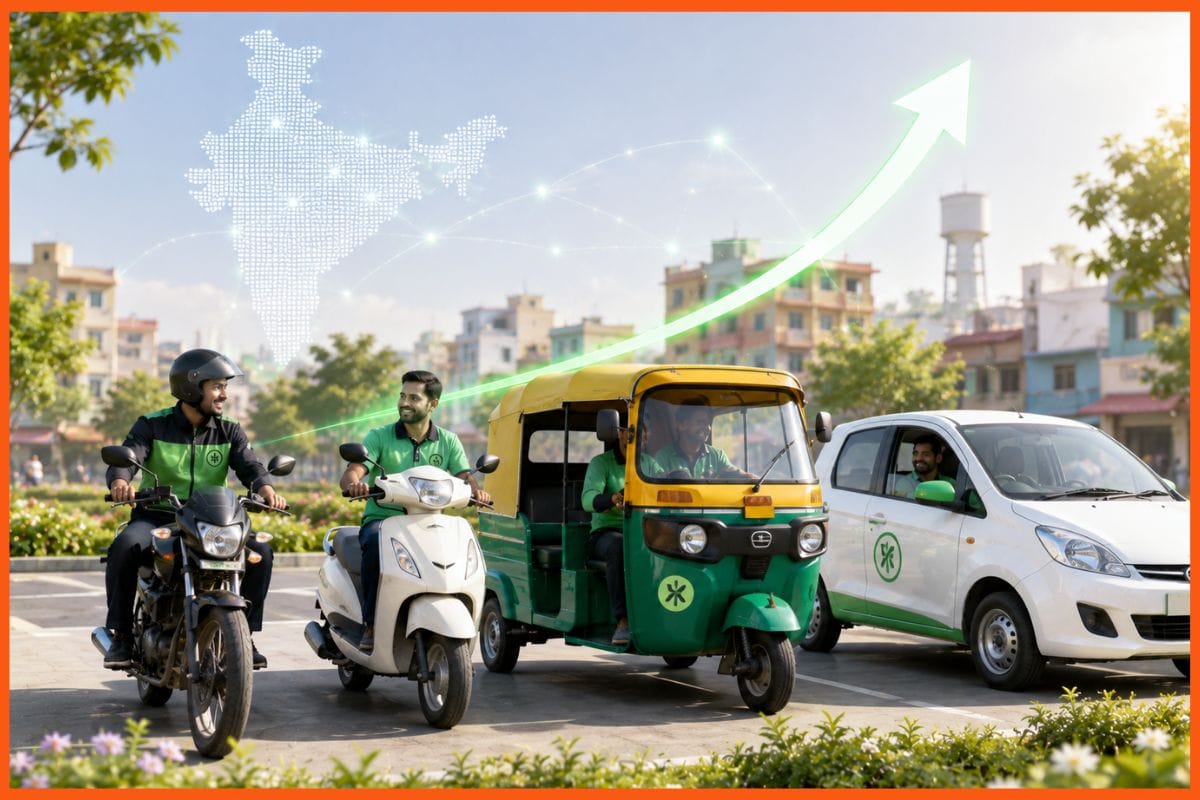
Launched in February, Bharat Taxi is a cooperative-led ride-hailing business with ambitions to grow to 55-60 smaller cities. Over the next three to six months, these cities would be covered, according to a top official. Cities include Kanpur and Gorakhpur in Uttar Pradesh, villages in Rajasthan, and satellite communities surrounding large urban centres. As part of its mission to democratise mobility in areas with limited transport options, the platform has stated that it will prioritise smaller cities.
Bharat Taxi maintains that their zero-commission strategy allows sustainable operations while providing customers with an alternative mobility solution. This strategy is in contrast to profit-driven ride-hailing companies that frequently skip such markets owing to reduced demand and commissions. Bharat Cab may be most known as a cab platform, but it also provides services via bike and auto-rickshaw. Smaller markets are anticipated to see uptake driven by these categories, according to the platform.
Bharat Taxi Following Rapido’s Footsteps
Around 50% of the approximately 650,000 drivers listed on the platform operate taxis, while another 30% ride motorcycles and the remaining 10% drive personal vehicles. Just like ride-hailing app Rapido, Bharat Taxi is planning to expand into tier-II and tier-III cities. According to Bharat Taxi CEO Vivek Pandey, customers in smaller cities require more options, and the company intends to give them just that. Several rivals have shifted towards cheaper subscription fees and commissions since Bharat Taxi joined the market.
Drivers are reaping the benefits of lower commission loads in various ways. With a foothold in parts of Gujarat and Maharashtra, the platform is currently functioning in cities like Delhi, Lucknow, Chandigarh, Jaipur, and Mumbai. In the coming year, it aspires to establish operations in over 500 cities, towns, and smaller places across India, with an expansion target of 120 cities.
While Uber and Rapido reign supreme in India's ride-hailing sector, Bharat Taxi is making waves with its expansion. Prosus led a $240 million main investment round for Rapido in May; Accel, WestBridge Capital, and other investors also participated. As market rivalry heated up earlier this year, Uber poured about INR 3,000 crore (approximately $330 million) into its Indian unit, Uber India Systems Pvt Ltd.
|
Some Interesting Facts of the Story |
|
1.Competitors have started lowering commissions and 2.Rapido recently raised $240 million, while Uber 3.Bharat Taxi ultimately plans to establish a |
Bharat Taxi Infusing AI in its Ecosystem
To further simplify bookings and customer service, the platform is also investing in AI. Pandey mentioned that WhatsApp allows users to book rides and ask detailed enquiries through voice interactions. Agents powered by artificial intelligence oversee the whole operation. Instead of charging commissions, Bharat Taxi uses a per-ride fee model for monetisation.
No matter how much users pay, cab and auto drivers get a set fee of INR 8 to 9 per ride. A cooperative society registered under the Multi-State Cooperative Societies Act, 2002, Sahakar Taxi Cooperative Ltd. runs the platform. Although the cooperative was founded in June 2025, it wasn't until February 2026 that commercial activities were officially launched in Delhi by Union cooperation minister Amit Shah.
|
Quick Shots |
|
•Bharat Taxi plans to expand into 55-60 smaller •Target markets include Kanpur, Gorakhpur, Rajasthan •The platform follows a zero-commission model, •Bikes and auto-rickshaws are expected to drive |
Original Article
(Disclaimer – This post is auto-fetched from publicly available RSS feeds. Original source: Startuptalky. All rights belong to the respective publisher.)