Overthinking rarely announces itself loudly. It starts quietly, a thought you replay, a conversation you analyse too much, a mistake you can’t stop revisiting, or a fear about something that hasn’t even happened yet. Before you realise it, your mind feels crowded. You are physically present, but mentally stuck in loops of worry, doubt, and “what ifs.”
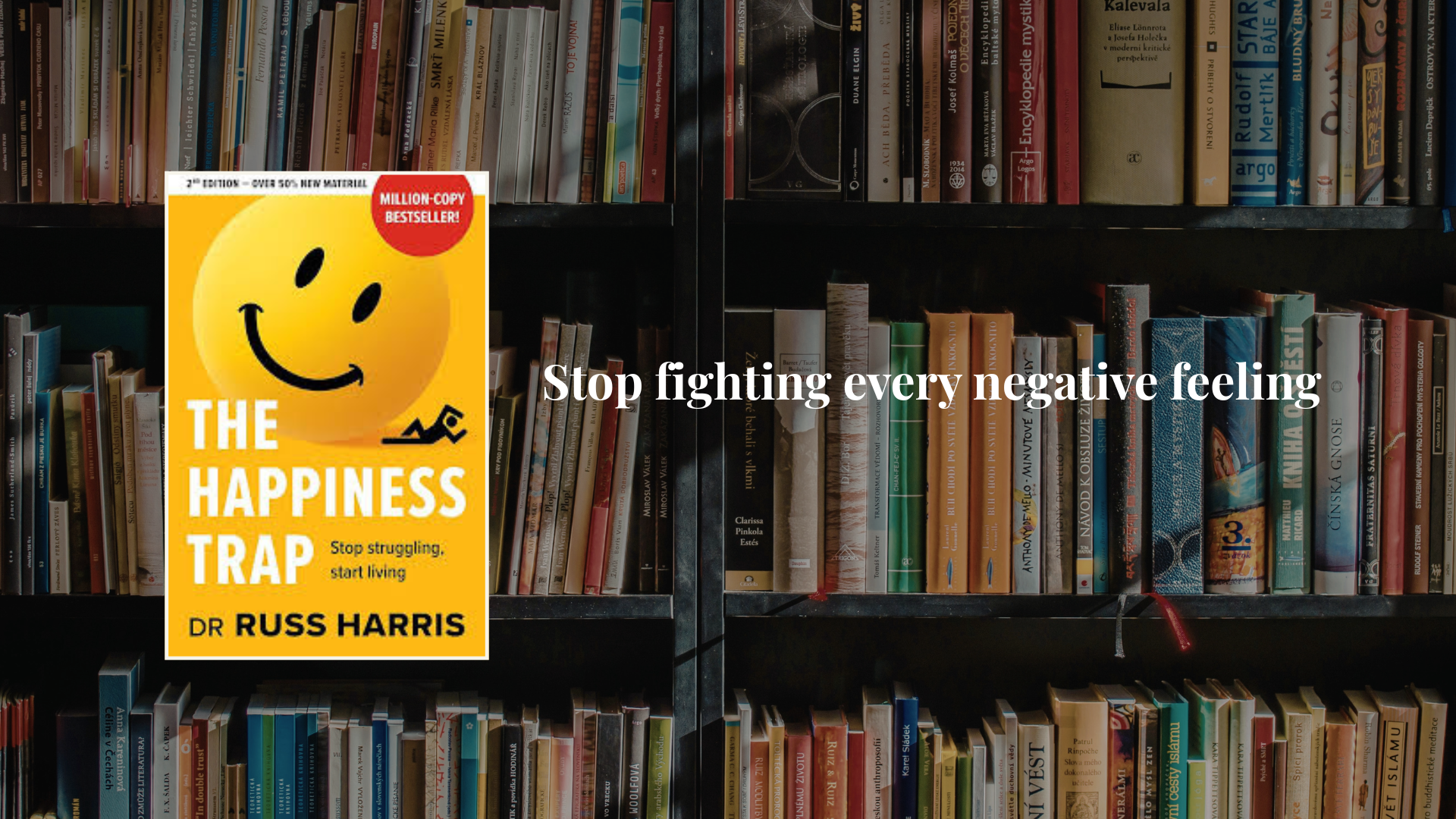
This is where The Happiness Trap by Russ Harris offers a refreshingly different perspective. Based on principles of Acceptance and Commitment Therapy (ACT), the book challenges the idea that happiness comes from eliminating negative thoughts. Instead, it teaches readers how to respond to thoughts differently, without letting them control life.
If you constantly find yourself overanalysing situations or mentally exhausting yourself, here are 5 valuable teachings from The Happiness Trap that can help you overthink less.
5 Practical teachings from The Happiness Trap
1. Thoughts are not always facts
One of the biggest lessons in the book is learning that just because you think something does not automatically make it true.
Overthinkers often treat thoughts like evidence. What if I fail? What if they dislike me? What if I made the wrong choice? These thoughts feel real, so they begin shaping emotions and actions.
Russ Harris encourages readers to create distance from thoughts instead of immediately believing them. A thought is simply a thought, not necessarily reality. Learning this shift can feel incredibly freeing because it reduces the power anxious thinking holds over daily life.
2. Stop fighting every negative feeling
Many people believe mental peace comes from avoiding discomfort. But according to the book, constantly fighting sadness, fear, anxiety, or stress often makes them stronger.
The teaching here is acceptance, not giving up, but allowing emotions to exist without constantly battling them. When you stop resisting every uncomfortable feeling, it often loses intensity naturally.
For overthinkers, this lesson is powerful because much mental exhaustion comes from trying to control emotions instead of understanding them.
3. Focus on the present moment
Overthinking usually lives in two places: regret about the past or fear about the future. Rarely does it stay in the present.
One of the strongest teachings in The Happiness Trap is learning to return attention to now. What is happening in this moment? What can you actually control today?
Simple mindfulness habits, paying attention to breathing, surroundings, or current tasks, can interrupt endless mental spirals. This doesn’t erase worries, but it prevents them from completely taking over.
4. You don’t have to control every thought
Many overthinkers believe mental peace means having only positive or calm thoughts. But the book argues something surprising: trying to control thoughts often makes them stronger.
The more you tell yourself don’t think about it, the more persistent the thought becomes. Instead of fighting thoughts, Russ Harris suggests observing them without attachment. Let them come and go without reacting immediately.
This teaching feels relieving because it removes pressure. You do not need a perfect mind to feel okay.
Also Read 5 books every overthinker needs for daily mental calm
5. Build a life around values, not fears
Perhaps the most powerful lesson in the book is this: stop letting fear make decisions for you.
Overthinking often creates hesitation. You delay opportunities, avoid risks, or overanalyse choices because fear feels overwhelming. But The Happiness Trap encourages readers to focus on values instead.
Ask yourself: What kind of person do I want to be? What truly matters to me? Decisions rooted in values often create more peace than decisions rooted in fear.
Final thoughts
The Happiness Trap offers an important reminder: the goal is not to stop thinking completely, but to stop being controlled by your thoughts. Overthinking often grows when people try too hard to eliminate uncertainty, discomfort, or fear. But peace usually comes from learning how to live alongside difficult thoughts without letting them run everything.
These teachings may seem simple, but practised consistently, they can create a quieter and healthier relationship with your mind. Because sometimes, mental clarity does not come from thinking more, it comes from finally learning when to let thoughts pass.
Original Article
(Disclaimer – This post is auto-fetched from publicly available RSS feeds. Original source: Yourstory. All rights belong to the respective publisher.)