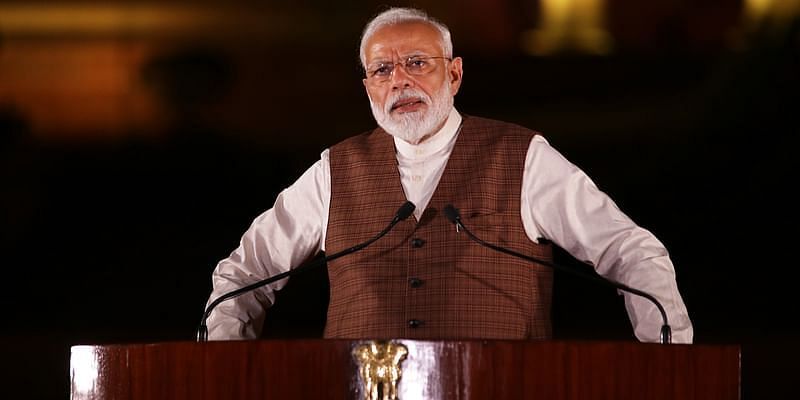
Prime Minister Narendra Modi’s visit to France next week will coincide with Bharat Innovates 2026, a major showcase of India’s deeptech startups, research institutions and innovation ecosystem that is set to take place in Nice from June 14 to 16.
According to the Ministry of External Affairs, PM Modi will visit France and Slovakia from June 13 to 18. During the France leg of the trip, Bharat Innovates 2026 is scheduled to bring together 120 Indian deeptech startups, leading academic institutions, investors, policymakers and industry leaders as part of the India-France Year of Innovation.
The event’s agenda states that its inaugural session will be held in the presence of Prime Minister Modi and French President Emmanuel Macron, underlining the importance both countries are placing on innovation, technology partnerships and research collaboration.
Organisers describe Bharat Innovates as a global platform designed to connect Indian innovation with international investors, institutions and markets, while creating opportunities for research partnerships, technology development and commercialisation.
Against the backdrop of PM Modi’s France visit, the event offers a window into how India is seeking to project its growing innovation ecosystem internationally, using higher education, scientific research and entrepreneurship as key pillars of engagement with Europe.
What it is meant to do
The initiative is a government programme with a deliberately broad ambition.
“It is designed as a global accelerator for innovations from Indian Higher Education Institutions, thereby, building a long-term collaboration bridge between India’s innovation ecosystem and global stakeholders,” according to Bharat Innovates site.
This is not just a trade fair for startups. It is an attempt to connect science, capital and policy across borders, with the Ministry of Education framing it as a national programme and the nodal institute listed as IIT Bombay.
The event is explicitly about turning research into deployable technology. The maiden edition will take India’s top 120 deeptech startups to Nice, France, “to catalyse pilots, co-development, investments, research partnerships, manufacturing and market access.”
Deeptech here means science-heavy ventures, often built on long research cycles and specialised engineering rather than quick consumer app models. The platform is therefore trying to move promising work from laboratories and incubators into commercial and institutional use, which is where many innovation systems succeed or fail.
Agenda and its signal
The opening day is the centre of gravity, with an inaugural session held in the presence of PM Modi and President Macron.
The agenda shows an opening keynote by N. R. Narayana Murthy, followed by a session titled “AI for Global Good: Building a Corridor for Trusted, Inclusive and Scalable AI” with Kris Gopalakrishnan, Rajan Anandan, Sandeep Bakshi and Henri Verdier.
Later sessions include “India & Europe: DeepTech Without Borders”, a mooted MoU exchange ceremony and a roundtable on the French Riviera as a hub for Indian French business and research cooperation.
The programme combines public leadership, private capital, university leadership and regional French innovation actors. The speaker list includes the Principal Scientific Adviser, Ajay Sood, the directors of IIT Kanpur, IIT Bombay and IIT Delhi, leaders from SIDBI, Peak XV, Prosus, Bertelsmann Investments and Sony Ventures, and French or France-based figures such as Michiel Scheffer of the European Innovation Council, Jean-Luc Barlet of CCI France International, Maureen Clerc of Inria, and representatives from Nice, Grenoble, MonacoTech and the Côte d’Azur innovation ecosystem.
Themes and what they reveal
Bharat Innovates lists 13 frontier technology areas, including semiconductors, biotechnology, space and defence, healthcare and medtech, advanced computing, next generation communications, advanced materials and critical minerals, manufacturing and Industry 4.0, energy, sustainability and climate, smart cities and mobility, blue economy, agri and food technologies, and disaster management and resilience.
The event is looking for technologies that can be piloted, validated and scaled, not merely admired.
The range of themes shows how India is presenting its innovation story to Europe. Semiconductors and advanced computing speak to strategic industrial capacity. Biotechnology, medtech and agri-tech speak to societal needs and commercial opportunity. Space and defence, critical minerals and advanced materials point to national capability and supply chain resilience. The inclusion of climate, blue economy and disaster resilience shows that the programme is not confined to high growth tech alone, but is also trying to position Indian innovation as useful for public problems and international partnerships.
The academia link
Bharat Innovates’ higher education page describes “a curated compendium of 42 high-impact innovations from India’s premier higher educational institutions.”
The institutions named include IIT Bombay, IIT Madras, IISc Bangalore, IIT Delhi, IIT Kanpur, IIT Roorkee, IIT Guwahati, IIT Hyderabad, IIT Indore, IIT Dhanbad, IIT Gandhinagar, IIT Ropar, IIT Tirupati, IIT Jammu, BITS Pilani, the Department of Biotechnology and BIRAC.
The event is being built around the research-to-market pathway, where universities and public laboratories supply the pipeline of ideas, patents and prototypes.
At a preparatory diplomatic interaction in May, Union Minister of Education Dharmendra Pradhan said Bharat Innovates 2026 “represents a national innovation movement and a global platform for collaboration among innovators, investors, institutions, industries and governments.”
He also said India is pursuing “innovation for inclusion”, and added, “India does not want to grow alone but seeks growth through partnership, cooperation and collaboration.”
Dr Vineet Joshi, the Secretary for Higher Education, said the initiative is closely connected to higher education institutions, laboratories, research parks and innovation systems, and that higher education in India is evolving beyond academics to drive entrepreneurship, technology development, problem-solving, and economic growth.
Broader picture
Bharat Innovates 2026 looks like an effort to internationalise India’s innovation system in a more structured way. The event is not only about showing Indian startups abroad. It is also about making research universities, government institutions, investors and foreign partners work through the same forum, with France used as a bridge to European networks.
The official line that 2026 has been declared the India-France Year of Innovation gives the event a diplomatic frame, while the agenda’s focus on AI, deeptech capital corridors and research cooperation gives it a commercial one. That combination makes the programme more interesting than a standard startup roadshow.
Original Article
(Disclaimer – This post is auto-fetched from publicly available RSS feeds. Original source: Yourstory. All rights belong to the respective publisher.)