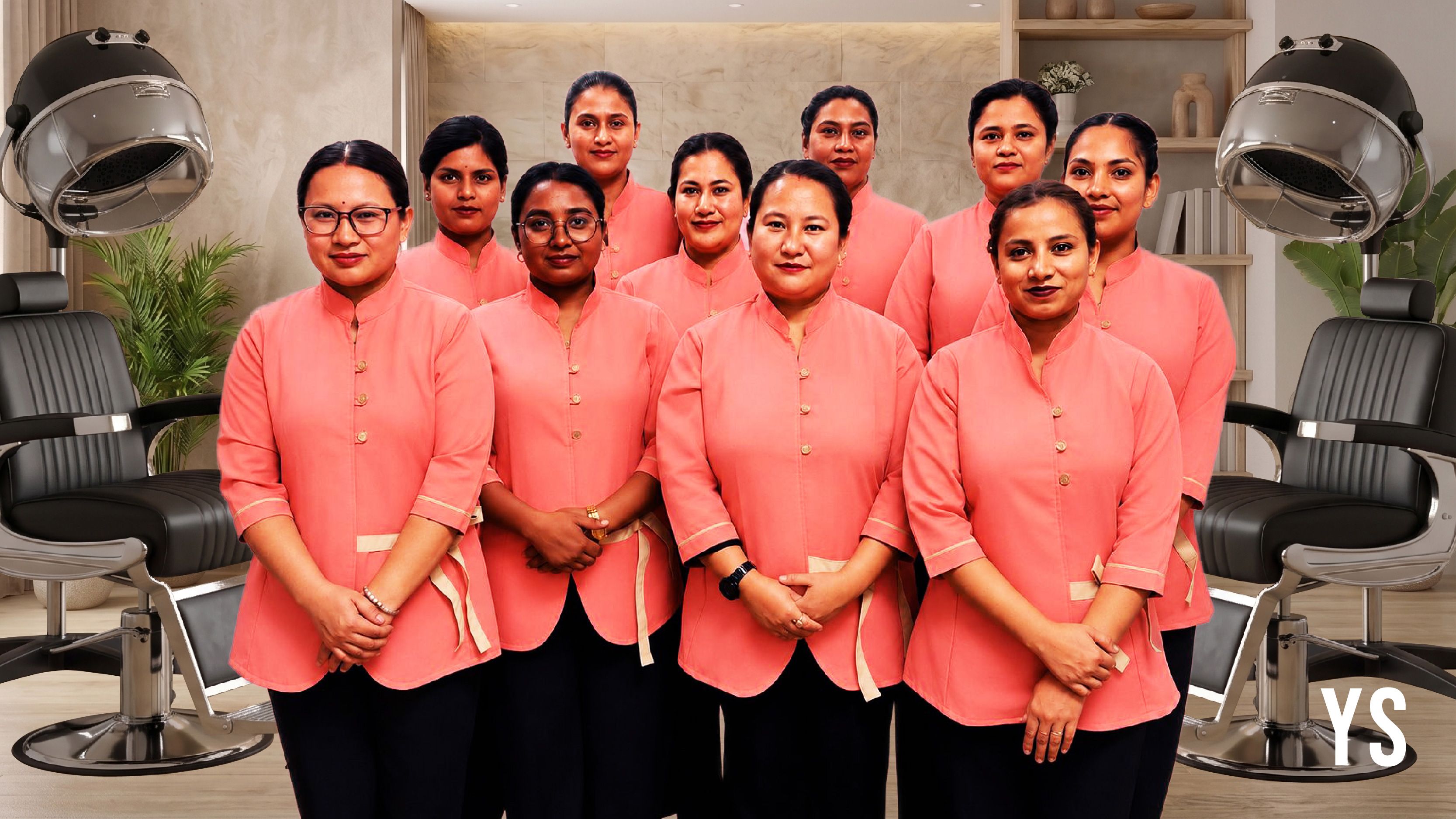
After building quick home services for daily chores, Snabbit is now testing instant salon-at-home services to see if it can become the next category that consumers can stop planning for.
Recently, the Bengaluru-based quick home services startup announced its entry into beauty services in Bengaluru, aiming to disrupt a category long dominated by Urban Company with its appointment-led model.
The move marks Snabbit’s first major expansion beyond daily household chores and cleaning services. Beauty, the company believes, is a “high-frequency category with a large addressable market”.
“This overlaps perfectly with the core category we have built,” says Aayush Agarwal, Founder and CEO, Snabbit.
“Consumers today expect convenience everywhere, but availing beauty services still involves long waiting periods. We see an opportunity to fundamentally rethink the experience through speed, reliability and hyperlocal fulfilment.”
The company has quietly piloted the sub-15-minute service over the last six weeks in Bengaluru’s Sarjapur micromarket, where it claims to have completed over 2,000 jobs so far. According to the company, the average fulfilment time during the pilot has remained under 15 minutes.
The pilot currently operates with 25 active beauty professionals and is averaging nearly 50 jobs a day, the company stated in a press release.
The idea is simple: if consumers can order food and groceries and get house help instantly, why not get a blow-dry, threading, waxing, or facial at home before stepping out?
But whether beauty services can actually flourish as an instant service category, and not something consumers prefer planning for, remains a question.
The next logical step?
India’s beauty and personal care (BPC) market is expected to nearly double to $40 billion by 2030, making it the fourth-largest BPC market globally, according to a report by Redseer Strategy Consultants.
The report notes that the market is undergoing a structural shift, driven by rapid digitisation, changing consumer behaviour, Gen Z-led spending, and the rise of convenience-first commerce models.
Within this broader ecosystem, at-home salon services have emerged as a fast-growing niche. Industry estimates peg India’s home salon segment at over Rs 3,000 crore within the country’s nearly Rs 30,000 crore salon industry.
The category is currently dominated by Urban Company, which popularised appointment-led salon-at-home services like waxing, threading, facials and clean-ups. Yes Madam, another notable player in the BPC segment, hasn’t made a significant dent in Urban Company’s dominance, industry experts believe.
Snabbit wants to challenge the market dominance.
“We are seeing a very strong surge in demand, driven almost entirely by organic word-of-mouth in the dense neighbourhoods we have launched in,” says Dev Priyam, Vice President, Business at Snabbit, who leads the beauty category.
He continues, “Consumers should not have to plan around basic beauty needs anymore. Whether it’s before office, after work, or ahead of stepping out, beauty is increasingly becoming an instant, convenience-led use case.
“Our focus right now is on perfecting the experience before folding the service into the Snabbit app and scaling it across our existing micromarkets.”
Is the salon category the next logical market for Snabbit to enter?
Satish Meena, Founder of research platform Datum Intelligence, believes so. “Urban Company has already created the market for beauty services at home. The problem Snabbit is now trying to solve is making it instant,” says Meena.
“Salon is already one of Urban Company’s largest categories. Order-wise, I don’t know the exact number, but it is a significant chunk. Beauty and salon services are already meaningful for them. And I think that’s a much bigger challenge for any company because this is UC’s bread and butter.”
That said, will Snabbit actually be able to make a significant dent in a category that Urban Company has already shaped and scaled?
Convenience, frequency, and use cases
For Snabbit, quick at-home beauty services could fundamentally change how often consumers interact with the platform, and potentially unlock an entirely new consumer behaviour around beauty and grooming.
Beauty services naturally come with higher ticket sizes, since consumers would book multiple treatments together when a beautician makes a house visit.
“If you are asking someone to come home, you usually take a combination of two-three services from that partner,” says Meena.
He adds, “Customers will be much more willing to order these services if someone can come in just 10 minutes and do your makeup, hair drying, or something else before a party. Otherwise, if you have to plan everything and book in advance, many times you don’t do it at all."
He also argues that this shift could move beauty services beyond occasion-led consumption into smaller, impulse-driven use cases.
“Earlier, if you had a big party or something, then makeup artists and others would come home. But now, because it is available instantly, people may start using it even for smaller occasions, like going to a friend’s house,” he says. “You are not necessarily doing full makeup every time. You can call for basic services too.”
Convenience could create frequency.
This shift is already visible, at least in part, in how Urban Company has evolved its salon business. Over the years, the listed company has steadily reduced fulfilment windows for beauty services—from bookings made hours or even days in advance to just 30-45 minutes prior in parts of Delhi-NCR today.
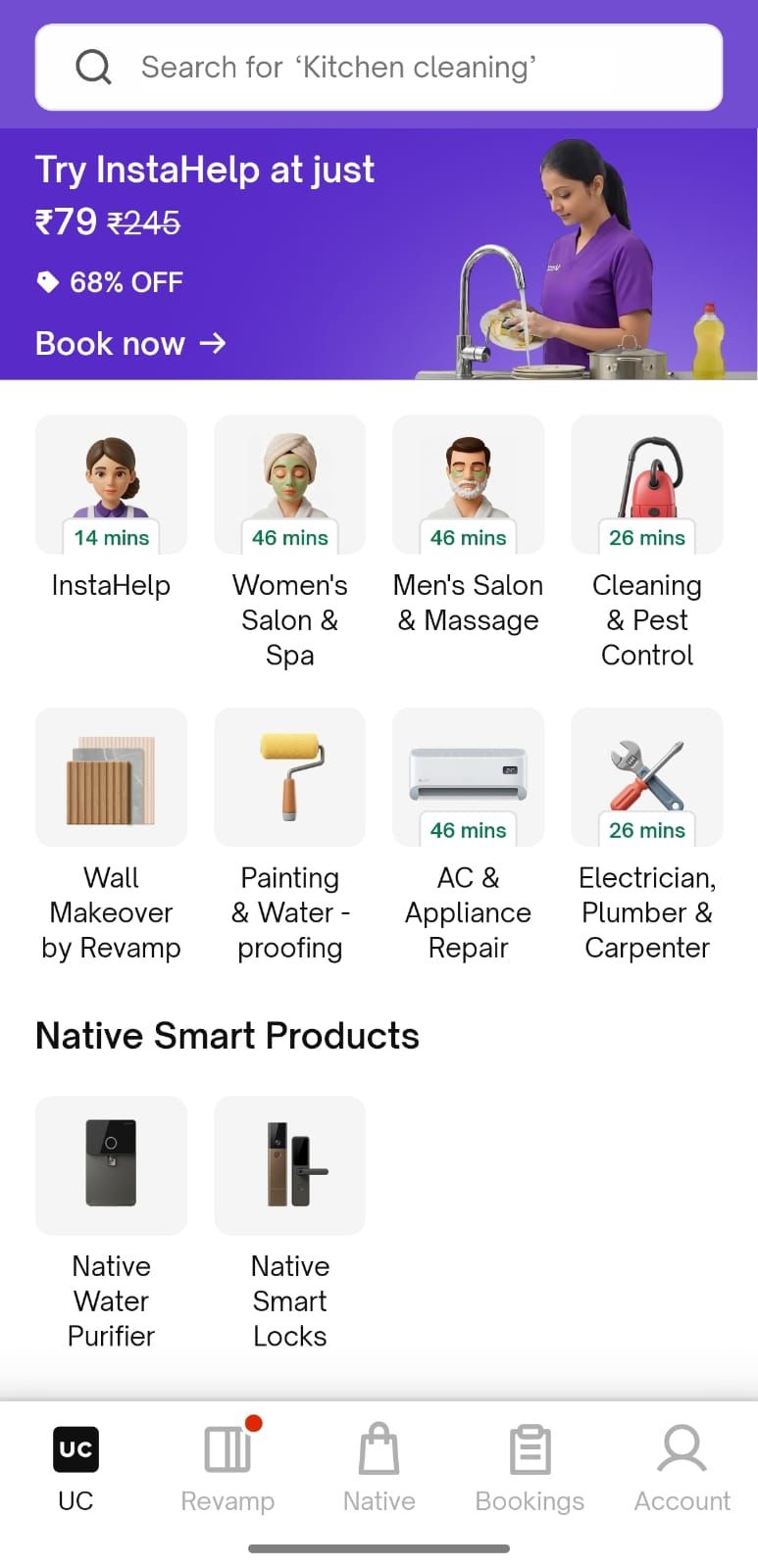
“UC realised that customer expectations have changed across categories. Customers now want everything much faster,” says Meena. “That’s why they anticipated that beauty services would also eventually shift in this direction.”
But not everyone is convinced there is a strong consumer need for instant beauty services.
A senior VC executive tracking consumer internet startups says their firm’s consumer research suggests that most beauty services remain inherently planned purchases.
“There’s no intuitive need for a quick beauty service. Most of these services tend to be planned because of the time it takes to finish them,” says the executive, requesting anonymity.
“The quick-commerce model also structurally restricts the amount of cross-sell possible since professionals are operating on a tight clock.”
The executive doesn’t think beauty and salon services are a natural extension of quick house-help services.
“It’s a good-to-have at best. The frequency of home services still makes a strong case given it needs to be done at least thrice a month. We don’t feel beauty is as high frequency but some particular use cases might have a higher frequency than others— blow drying was one such use case that came out when we spoke to consumers.”
Avantika Jain, a Mumbai-based advertising professional, thinks there is demand for instant beauty services, particularly for last-minute use cases.
“I think for threading and waxing, people need quick beauty services,” says Jain. “For example, on Urban Company, you still have to book fairly in advance for the next day, even on Yes Madam. A professional’s travel time is also long. So for quick things, say one has a flight or forgot to get something done, people can go for it.”
The perception challenge
Unlike traditional salon-at-home models that typically rely on advance scheduling and specialised professionals, Snabbit says it has built a leaner, instant-first operating model centred around high-frequency beauty use cases such as threading, waxing, clean-ups, facials, hair styling, saree draping, and head massages.
A key part of this strategy lies in training beauticians as multi-skilled “all-rounders” capable of delivering multiple services in a single visit, instead of sending separate specialists for different requirements.
However, beauty is a category where trust matters much more than convenience.
Consumer perception poses a major challenge, as most users still primarily associate Snabbit with household chores.
Despite the convenience, Jain says consumers may hesitate to trust newer platforms for personal grooming services.
“Snabbit has been very much established as a cleaning brand for me, so I am not sure how it will transition,” she adds. “Their Instagram and marketing are all around cleaning and household help."
For the past two years, Jain has relied on two regular beauticians from Urban Company for her needs, whom she trusts and knows well.
“I only book from Urban Company. I use Yes Madam when Urban Company isn’t available. For eyebrows and things like that, I don’t trust anyone else. Worst case, in an emergency, I would rather go to a salon downstairs,” she says.
Having said that, she also acknowledges that convenience and pricing could eventually influence consumer behaviour.
“People are not loyal to Zepto or Blinkit either. People switch based on where there are better discounts or availability. I am also that kind of customer. But with this category, trust matters a lot,” she explains.
This is where Snabbit’s biggest challenge may lie, and a lot depends on training, service quality, and trust.
“This is a very difficult category to build because customer expectations are very different. Beauty services are much more personal. Training and consistency will play a very significant role,” says Meena.
He says Urban Company has spent years building processes around beautician training, service quality, and consistency.
“That’s something Snabbit will also have to build. In cleaning services, that is comparatively easier. Beauty is a very different category because customer expectations are much higher,” he says.
For now, Meena says profitability appears to be secondary for Snabbit. “The focus is market share. If this pilot scales, it becomes easier for Snabbit to raise the next round because this is already a proven category thanks to Urban Company,” he adds.
He believes the beauty push is part of a larger ambition to move beyond household chores and become a broader instant-services platform.
“Eventually, I think Snabbit will enter most categories Urban Company is present in. The larger vision is becoming a platform that can provide instant manpower for any household task: beauty, yoga, baby care, elder care, or anything else,” he says.
The senior VC executive quoted earlier echoes this view. He says Snabbit wants to enter “everything that is of lower average order value (AOV)”. “Snabbit’s wedge is in entering markets that UC doesn’t concentrate as much on because of lower AOVs.”
The sub-15 salon-at-home service may give Snabbit access to customers. But whether it clocks in repeat usage depends entirely on the service quality, customer experience, and, more broadly, customers’ perception of the company itself.
Edited by Swetha Kannan
Original Article
(Disclaimer – This post is auto-fetched from publicly available RSS feeds. Original source: Yourstory. All rights belong to the respective publisher.)