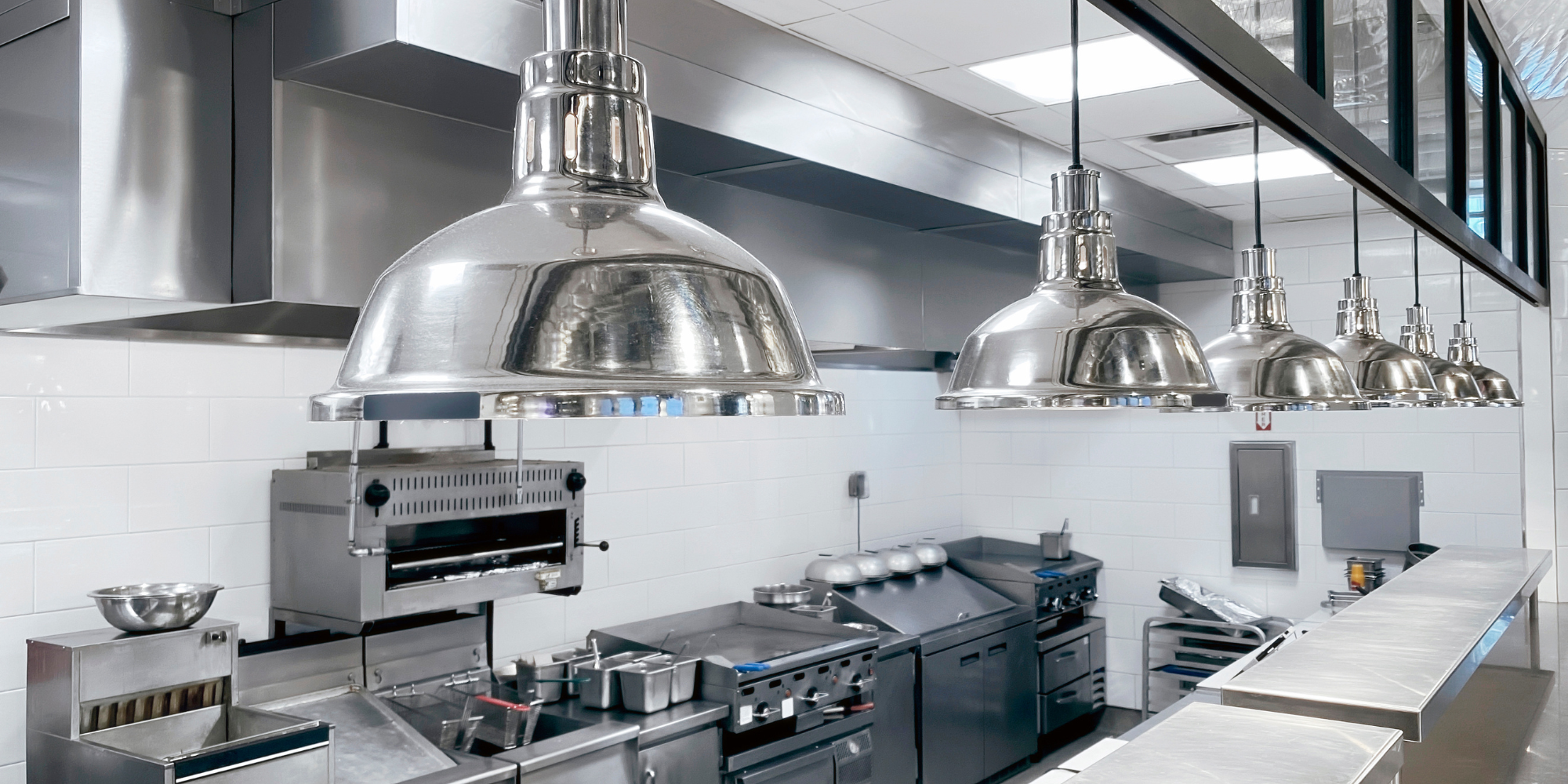
The ongoing conflict in West Asia has disrupted LPG shipments from the region which is a critical source of India’s cooking gas imports.
While the Indian government has prioritised the LPG (liquefied petroleum gas) requirements of essential businesses like educational institutes and hospitals as well as households, restaurant operators and small eateries are largely fending for themselves.
From tweaking the menu and focusing on essential food items to using domestic cylinders and alternative fuels, restaurants are resorting to various ways to keep their kitchens running.
Across the country—from New Delhi and Bengaluru to Coimbatore and Chennai—businesses in the F&B industry have reported difficulty in sourcing commercial cylinders. Even if they manage to procure cylinders, they come at jacked-up prices. All this has affected their ability to run operations at full capacity, say restaurant operators.
Restaurants generally run on a just-in-time inventory model and do not have many spare cylinders due to safety concerns and space constraints. So the sudden supply tightening has left them with very little cooking gas to run out the week.
“Usually restaurants running at decent volumes rely on a gas tank which can maximum hold 2-3 days of stock, not beyond that. As of now, supply is becoming a challenge,” says Japtej Singh Ahluwalia, who operates eight restaurants across Chennai, including the brands Savya Rasa and Soy Soi. His business requires 20-25 commercial cylinders a day, with a capacity of 25 kg each.
Abinash Panda, who runs two South Indian tiffin units in Bhubaneswar, says, “We are not getting enough gas, and have to adjust… We are paying Rs 500-600 extra per commercial cylinder, whatever we are getting from whatever source.”
Ahluwalia says some private gas distributors have hiked prices by 25%, while some have “flat-out” refused to sell. For now, he has removed food items cooked on equipment that guzzles gas, such as a pizza oven.
In fact, many restaurants have tweaked their menu to serve limited items. Some of them offer only items that don’t need cooking, such as beverages, salads and ice creams.
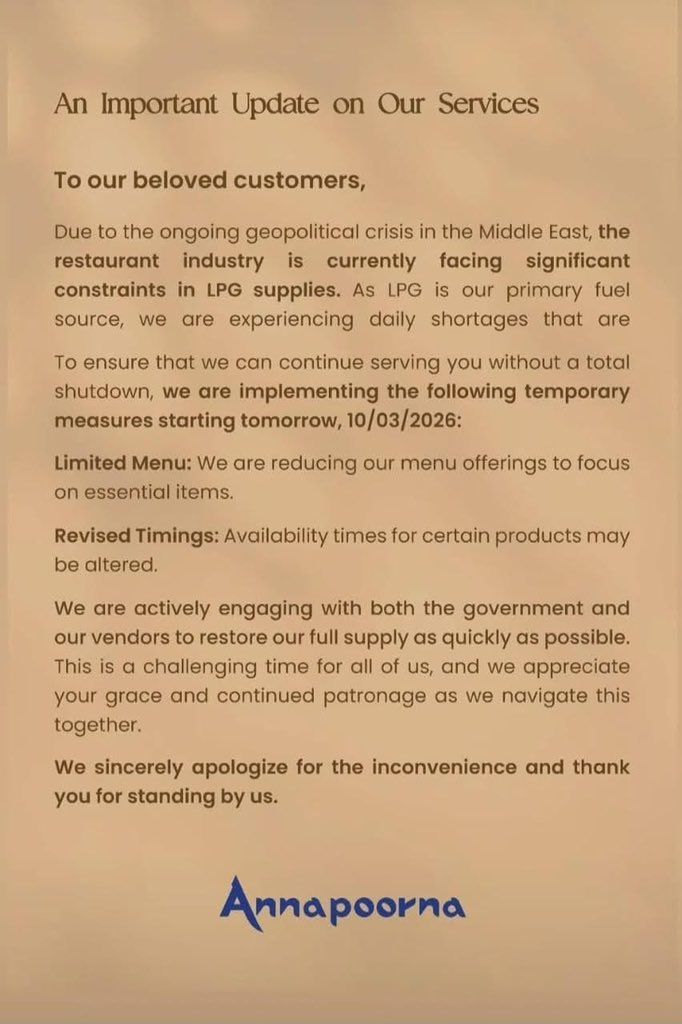
Coimbatore's Annapoorna has announced that it would offer a limited menu, focusing on essential food items.
The crisis has forced some restaurant operators to look at domestic cylinders to tide over the shortage.
“Since one cannot use domestic cylinders in the business premises, people are taking a domestic cylinder and refilling that gas into an empty commercial cylinder for use in their restaurants,” says a Jharkhand-based restaurant operator and caterer, on the condition of anonymity.
Some restaurants are also using electric grills and induction tawas.
Karana Verma, Director of Noida-based Bawarchi Baba, says his outlets are using alternative fuels such as coal, wood, and even cow dung for some of their needs.
However, given that flame-based cooking is an integral part of most Indian kitchens, one cannot redesign the entire setup overnight, says Anirudh Keny, Founder of Keen Mustard Ventures, which runs the Daysie and Serious Slice restaurants in Bengaluru.
The supply crunch is yet to impact restaurants with piped natural gas setups. However, only a small fraction of outlets use these.
Business impact
Panda’s business is already witnessing a 5-10% drop in revenue. “If things don’t change, the impact could be 20%, effectively eroding profit margins,” he says.
Ahluwalia too expects greater impact from tomorrow or the day after if the situation doesn’t improve.
Anshoo Sharma, CEO & Founder at magicpin, a food delivery platform, says small restaurants are likely to be affected badly. As they form a large part of magicpin’s base, Sharma says the company is offering them insights into order volume so that they can plan accordingly.
“Small restaurants operating with limited menus and reduced working hours will continue to receive demand support from our end. We will provide real-time AI-enabled support so that they have real-time volume insights and can prepare accordingly and judiciously,” says Sharma.
Catering businesses are also feeling the pinch.
“Even for a small wedding, we consume 15 to 20 cylinders a day. But it’s very difficult to manage that now,” shares the Jharkhand-based caterer quoted earlier.
Food delivery operators are also reportedly impacted by the situation. However, Swiggy and Zomato declined to respond to queries from YourStory.
If the supply situation doesn’t get better in the next few days, industry players fear black market activity.
Managing the economics
Apart from hiking the prices of cylinders, some gas distributors are also changing the terms of payment, asking for upfront cash payments as opposed to offering monthly credit.
Meanwhile, some restaurant owners are mulling an LPG surcharge to manage the increased costs.
Ahluwalia says, “We are looking at adding an LPG surcharge, but we have not finalised on it. This is a sensitive thing, because the moment you do it, and if other restaurateurs are not doing it, there is a backlash.”
Raising the prices of food items will be the last resort, say restaurants.
“We are absorbing and hedging these costs as of now through internal structural optimisations. Instead of passing the burden to the consumer, we are accelerating our shift towards electronic cookware, which allows us to maintain our price points while sustaining the premium quality our customers expect,” says Arjun Toor, Co-founder, RollsKing, which runs 130 service points across 15 cities.
Edited by Swetha Kannan
Original Article
(Disclaimer – This post is auto-fetched from publicly available RSS feeds. Original source: Yourstory. All rights belong to the respective publisher.)