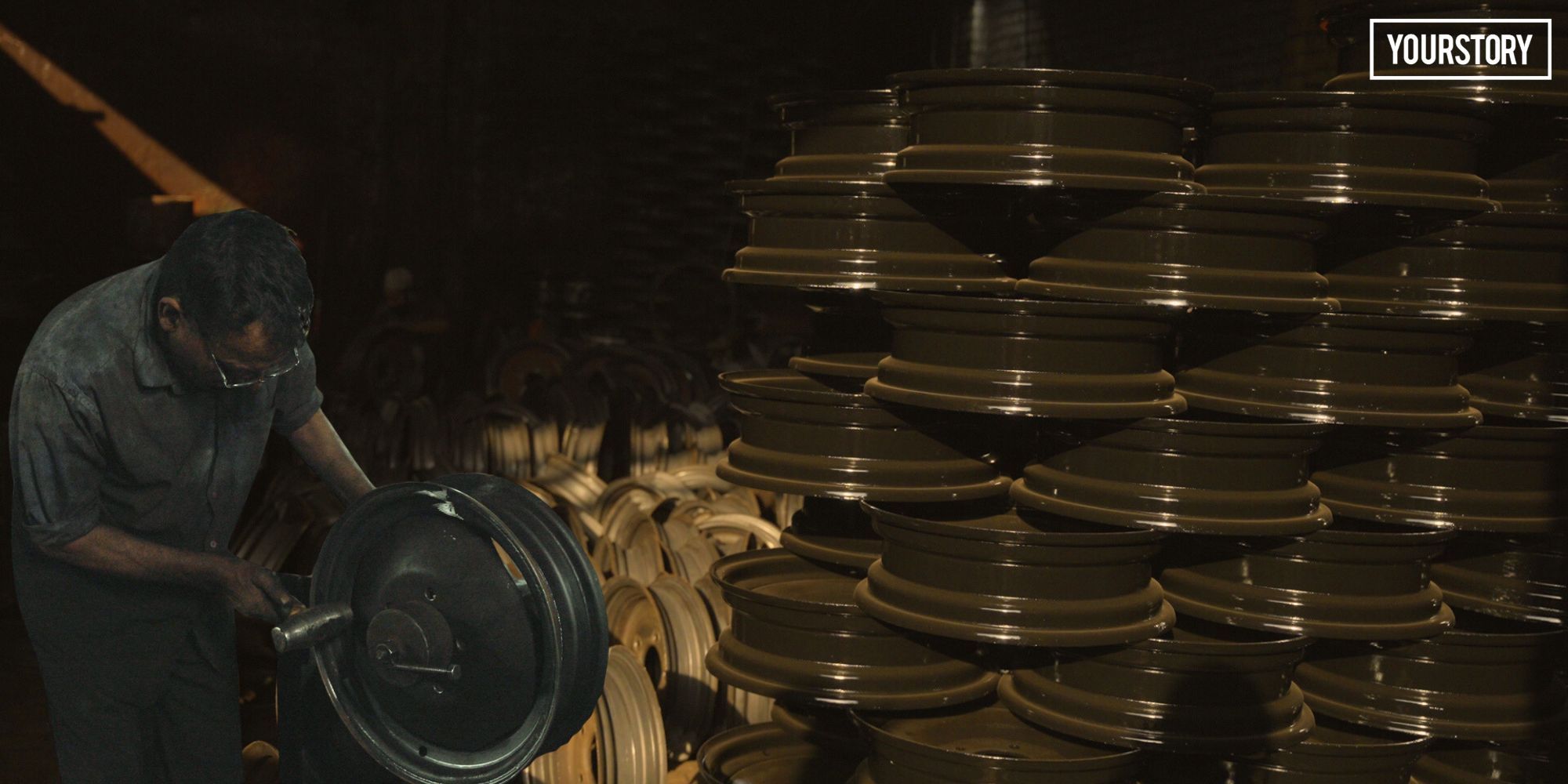
Across the fields and rural roads of western Uttar Pradesh, agriculture relies not only on crops but also on the tools and implements that make cultivation possible. From trolley rims and axle parts to equipment used with tractors and other farm vehicles, these components help farmers transport produce, move inputs, and carry out daily agricultural work efficiently.
In Baghpat district of Uttar Pradesh, one of the notified products under the One District One Product (ODOP) programme is Agriculture Implements & Related Accessories. The district hosts several small manufacturing units that produce functional hardware used in farm operations and rural transport systems. These units focus on utility-driven components where durability, load-bearing strength, and reliability are far more important than visual finish.
Among them is a unit operated by Pramod Jain, where rims and axle-linked components are manufactured for agricultural vehicles. The output includes parts used in trolleys, tractor-linked equipment, and in earlier years, animal-driven vehicles (ADV). While the technology of rural transport has evolved, the need for sturdy mechanical parts has remained constant, shaping the production work of such units.
Production process and technical flow
Manufacturing in this category is machine-based. The process begins with the procurement of raw metal material, which is inspected and prepared for processing. Fuel and other operational resources are arranged to keep machinery functioning without interruption, since consistency in machine cycles is important for maintaining shape and strength in metal parts.
The next stage involves rolling and shaping. Sheets or sections of metal are passed through rolling machines to gradually bend and form the curved structure required for rim components. Precision during this stage determines whether the rim will sit properly with the rest of the wheel assembly and withstand heavy agricultural loads.
After rolling, the shaped components move to a specialised rim plant where they are further processed and assembled for agricultural vehicle applications. At this point, the emphasis remains on strength, balance, and fit. Unlike decorative metalwork, these products are designed strictly as functional hardware meant to perform under demanding rural conditions such as uneven roads, heavy crop loads, and continuous field use.
A family-run manufacturing base
The unit managed by Pramod Jain reflects a long-standing family engagement with metal manufacturing in the district. Operations have been running for decades, adapting gradually to changing demand patterns in agriculture.
Earlier, many components were supplied for animal-driven vehicles used in rural transport. Over time, with the increasing use of tractors and trolleys, production requirements have shifted toward heavier and more durable rim structures suited for mechanised farm equipment. This transition illustrates how small manufacturing units often evolve alongside agricultural practices.
Market linkages and ODOP support
Products manufactured in the district are supplied not only within Uttar Pradesh but also to buyers across other states. Baghpat functions as part of a broader supply network for agricultural hardware, where small units collectively meet the demand generated by farming and rural transport sectors.
Like many small-scale manufacturing activities, the sector operates within price-sensitive markets. Competition from cheaper alternatives can influence purchasing decisions, especially for buyers who prioritise cost over durability. At the same time, machine-based production requires steady operational spending on machinery, fuel, and maintenance, making consistent order flows important for sustainability.
Under the ODOP programme, units in this category have received support in the form of financial assistance, skill training, and visibility for their products. These interventions aim to strengthen the district’s manufacturing base and help local enterprises connect with wider markets.
For Baghpat’s agriculture implement manufacturers, stability ultimately depends on steady demand from the farming sector. When orders remain consistent, units can maintain production cycles, sustain employment, and continue supplying the mechanical backbone that supports everyday agricultural mobility.
Original Article
(Disclaimer – This post is auto-fetched from publicly available RSS feeds. Original source: Yourstory. All rights belong to the respective publisher.)