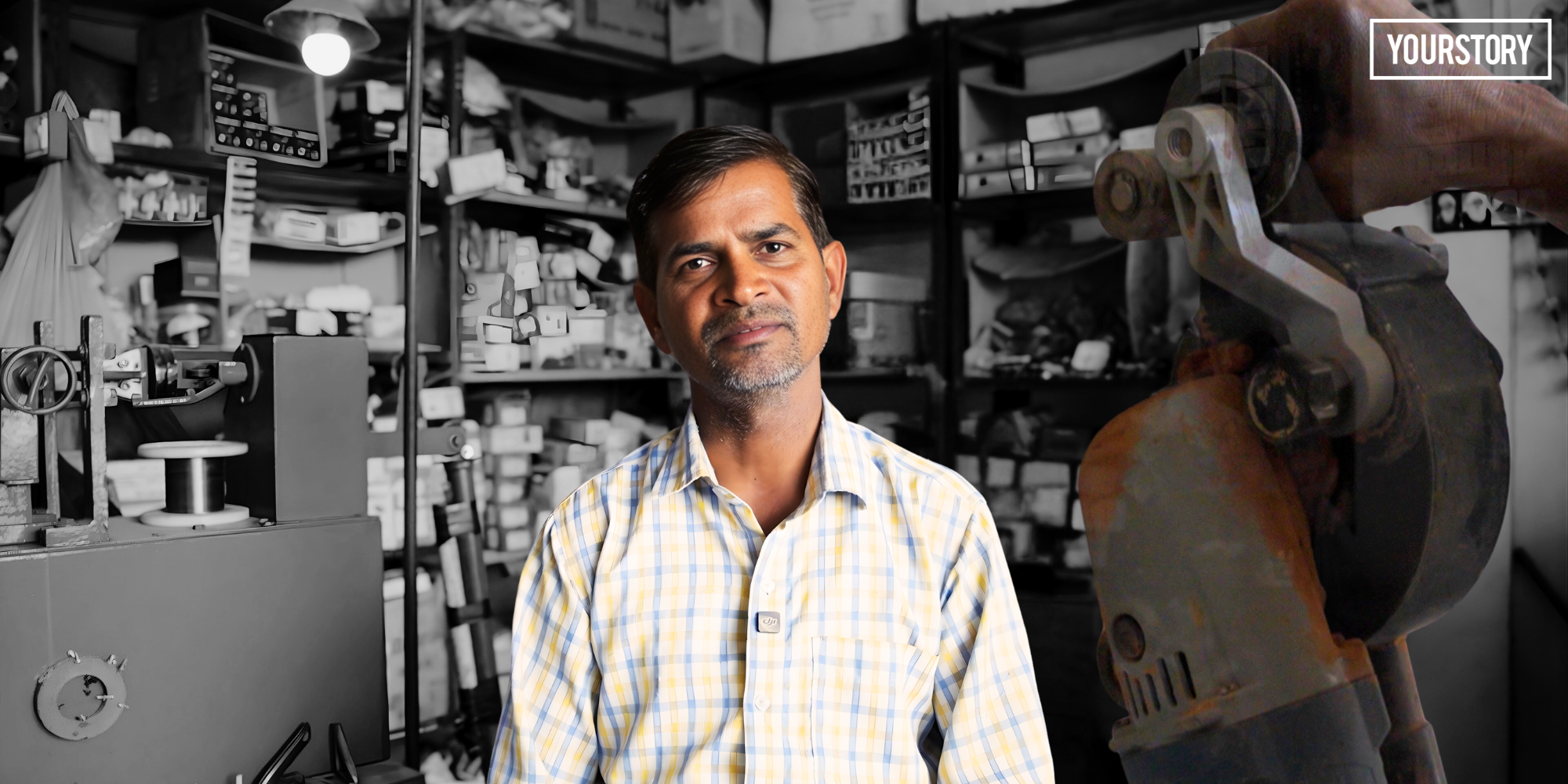
In Lakhanor, a village about seven kilometres from Saharanpur in Uttar Pradesh, electrician-turned-entrepreneur Veerpal Singh has built a steady livelihood around motor repairing and rewinding.
After nearly two decades in industrial jobs and a technical role at IMT College in Saharanpur, Singh quit salaried work around 2020 to open a small workshop.
The founder-owner now employs two to three helpers and mentors local ITI students who come to learn on the shopfloor.
Early years and a turning point
Singh, son of Amar Singh Kashyap, says the idea of building something of his own took root while he was on campus maintenance duty. A manager’s remark about growing one’s own work stayed with him, he recalls.
He prepared for nearly a year to stabilise revenues after resigning, and then committed fully to self-employment. Factory jobs are available, he says, but running one’s own enterprise matters for long-term stability and pride.
What the workshop does
The shop focuses on electric motor repair and rewinding, alongside related cutting and fitting work.
According to Singh, the business purchased essential equipment to improve throughput, including a motor rewinding set-up and a cutter machine used during rewinding and repairs.
As volumes rose, he added hands on the bench so that routine jobs and urgent breakdown calls could be handled in parallel.
Accessing finance without interest
During 2024-2025, Singh heard from a friend working in the MSME ecosystem about a state Chief Minister’s Yuva Udyami Vikas Abhiyan (CM YUVA) scheme, which offered Rs 5 lakh without interest.
He first checked his records at his bank, took guidance at the MSME and District Industries Centre office, and applied online.
The application was approved, and the interest subsidy is credited monthly, easing cash flows while he repays the principal. He used the funds to buy machines and to formalise a small team for field and bench work.
Jobs and skilling in the village
Many educated members of Singh’s extended family work outside Uttar Pradesh, especially in Punjab, but he chose to remain in Lakhanor. The shop employs two to three youths and doubles up as a training ground.
ITI students are encouraged to practise diagnostics, rewinding, and safety procedures, preparing them for either salaried roles or self-employment.
According to Singh, side businesses can be a sensible start for young people, with the aim of eventually building a primary enterprise.
A founder’s message to first-time entrepreneurs
Singh, the founder and hands-on manager of the workshop, advises peers to follow the process, keep clean records, and seek only the help that growth truly requires.
He says that verifying eligibility with one’s bank, applying online as per the rules, and investing in productive assets can make small shops more resilient.
Five years after leaving his job, he adds, the business now runs smoothly, with rising monthly receipts and steady work from repeat customers.
Original Article
(Disclaimer – This post is auto-fetched from publicly available RSS feeds. Original source: Yourstory. All rights belong to the respective publisher.)